
Stories about snakes chasing people have circulated for generations across the American South and Midwest. Among the most talked about are water moccasins, also known as cottonmouth snakes. In Kentucky, where rivers, wetlands, lakes, and forested streams create suitable reptile habitats, rumors about aggressive snake encounters occasionally surface. Someone swears a snake followed them down a trail. Another insists one charged across a shoreline. These accounts spread quickly, often becoming exaggerated with retelling.
Yet when wildlife biologists examine these claims, the picture becomes far more nuanced. Water moccasins are real, potentially dangerous venomous snakes, but their behavior is frequently misunderstood. Understanding whether they actually chase people requires examining biology, habitat, defensive behavior, human perception, and regional ecology in Kentucky.
This deeper look helps separate myth from reality while encouraging safe coexistence with native wildlife.
Table of Contents
- 1 Water Moccasins and Their Presence in Kentucky
- 2 Why People Think Water Moccasins Chase Them
- 3 Actual Behavior of Water Moccasins
- 4 Understanding Defensive Snake Psychology
- 5 Why Kentucky Encounters Are Increasing
- 6 Distinguishing Water Moccasins From Nonvenomous Water Snakes
- 7 Are Water Moccasins Dangerous?
- 8 What To Do If You Encounter One
- 9 Pet Safety Considerations
- 10 Seasonal Behavior Patterns
- 11 Why the “Chasing Snake” Myth Persists
- 12 Ecological Role of Cottonmouths
- 13 Habitat Conservation and Human Safety
- 14 Practical Prevention Tips
- 15 Medical Response to Snakebite
- 16 FAQs About Water Moccasins in Kentucky
- 17 Final Thoughts
Water Moccasins and Their Presence in Kentucky
Water moccasins, scientifically known as Agkistrodon piscivorus, are members of the pit viper family, the same group that includes copperheads and rattlesnakes. They are semi-aquatic venomous snakes that evolved to thrive in wetland ecosystems. In Kentucky, their presence is primarily concentrated in the western portion of the state, especially near the Mississippi River basin and large river systems.
These snakes prefer slow-moving or still water habitats. Swamps, marsh edges, oxbow lakes, ponds, floodplains, drainage ditches, and wooded riverbanks provide ideal shelter and hunting grounds. They are strong swimmers and often bask along muddy banks, fallen logs, or low vegetation near water.
However, they are not evenly distributed across Kentucky. Much of central and eastern Kentucky lacks established cottonmouth populations. Instead, those regions are home to nonvenomous water snakes, which are frequently mistaken for cottonmouths. This misidentification plays a major role in fueling stories of aggressive “chasing” behavior.
Understanding where water moccasins truly live is critical. Many reported encounters occur in areas outside their primary range, which suggests confusion rather than actual cottonmouth aggression.
Why People Think Water Moccasins Chase Them
The belief that cottonmouths chase people is widespread, but it often stems from misunderstanding snake behavior rather than documented pursuit.
Escape Routes Overlap With Humans
When startled, a snake’s first instinct is to flee toward cover. For water moccasins, that usually means water, dense vegetation, logs, or burrows. If a person stands between the snake and that escape path, the snake may move directly toward the person in an attempt to reach safety.
From the human perspective, this feels like being chased.
From the snake’s perspective, it is survival.
This directional coincidence creates many “chasing” stories.
Defensive Display Behavior
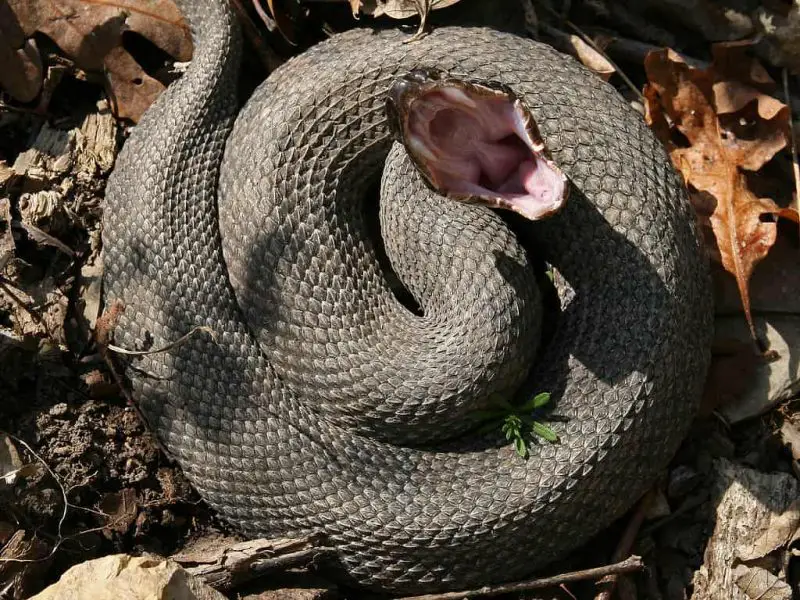
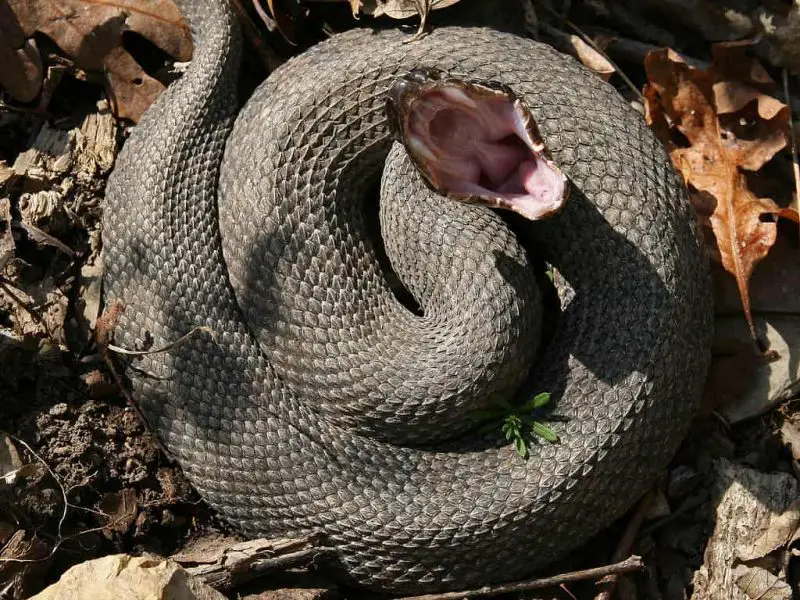
Cottonmouths are known for their defensive posture. When threatened and unable to retreat immediately, they may coil their bodies, vibrate their tails, and open their mouths wide to display the white interior that gives them their common name.
This open-mouth display is not an attack signal. It is a warning. The snake is essentially saying, “Do not come closer.”
Because the display looks dramatic, people often interpret it as aggressive intent.
Human Movement Escalates Perception
If a person panics and runs, the snake may also increase speed to reach safety. When both move quickly in the same direction, it can feel like pursuit. In reality, both are trying to escape each other.
Fear alters perception. Heightened adrenaline makes brief movements feel longer and closer than they actually are.
Misidentified Species
Many nonvenomous water snakes behave defensively when cornered. They may strike repeatedly, flatten their heads, and vibrate their tails. To someone unfamiliar with species differences, this behavior appears identical to cottonmouth aggression.
Because nonvenomous water snakes are more common across Kentucky, they are responsible for many reported “chasing” events.
Misidentification sustains the myth.
Actual Behavior of Water Moccasins
Scientific field studies consistently show that cottonmouths are defensive rather than aggressive toward humans.
Their primary responses include remaining motionless to avoid detection. Camouflage is often their best defense. If discovered, they typically attempt slow retreat toward water or dense cover.
When escape is blocked, they may adopt defensive posture. Striking usually occurs only when the snake is physically threatened, stepped on, handled, or cornered.
They do not actively pursue humans as prey. Humans are far too large and dangerous to be considered food.
Most recorded bites happen under preventable circumstances, such as attempting to kill the snake, stepping on it accidentally, or handling it.
Understanding this distinction is essential for accurate risk assessment.
Understanding Defensive Snake Psychology
Snakes operate under simple survival rules. Avoid detection. Escape if discovered. Defend if trapped.
Remaining still allows camouflage to work. Sudden movement is often what triggers defensive reactions. If the snake believes it has been spotted and cannot retreat safely, it must choose between bluffing and biting.
The open-mouth display, tail vibration, and coiling posture serve as warning mechanisms designed to avoid physical confrontation. Venom production requires energy. Biting exposes the snake to injury. Defense is a last resort.
From a snake’s perspective, humans represent potential predators. Their behavior reflects instinct, not malice.
Why Kentucky Encounters Are Increasing
Increased reports do not necessarily mean increased aggression. Several factors contribute to more frequent sightings.
Habitat Overlap
Development continues to expand into wetland and riparian zones. New housing subdivisions often border natural water systems where cottonmouths live. As human activity increases in these areas, encounters become more likely.
Outdoor Recreation Growth
Fishing, kayaking, paddleboarding, hiking, and shoreline recreation have grown in popularity. More people spending time near water increases chances of seeing snakes.
Greater exposure results in more reported sightings.
Climate Variation
Warmer temperatures can lengthen active seasons for reptiles. Mild winters and extended fall warmth may increase snake activity days.
This does not necessarily increase snake numbers, but it increases observation windows.
Social Media Amplification
A single dramatic video or story spreads quickly. Perception of frequency grows even if actual snake populations remain stable.
Stories travel faster than ecological change.
Distinguishing Water Moccasins From Nonvenomous Water Snakes
Proper identification reduces unnecessary panic.
Cottonmouth characteristics often include a heavy, thick body and a broad triangular head. Their pupils are vertical slits. Juveniles may have brighter banding patterns, while adults often appear darker with faded markings.
The signature white interior of the mouth becomes visible during defensive display.
Nonvenomous water snakes typically have narrower heads and round pupils. Their patterns can vary but often appear more sharply defined.
However, attempting close inspection for identification is unsafe. The safest approach is to assume any unknown snake near water could be venomous and maintain distance.
Are Water Moccasins Dangerous?
Yes, they are venomous and capable of delivering medically significant bites. Their venom can cause tissue damage, swelling, pain, and other serious symptoms.
However, fatalities are rare with prompt medical care. Modern antivenom treatment is highly effective when administered quickly.
Most bites occur due to avoidable actions. Intentional handling, accidental stepping, attempts to kill the snake, or pets provoking the animal account for the majority of incidents.
Simple avoidance drastically lowers risk.
What To Do If You Encounter One
If you see a cottonmouth:
Stop abruptly but remain calm.
Slowly increase distance without sudden movement.
Do not throw objects or attempt to strike it.
Allow it a clear path to retreat.
Most snakes will leave once they feel unthreatened.
Taking photos from a safe distance is acceptable, but never approach for a closer shot.
Pet Safety Considerations
Dogs are naturally curious and may approach or attempt to investigate snakes. Supervision near wetlands is crucial.
Keep dogs leashed when walking along rivers, lakes, or marshes. Avoid letting pets explore dense vegetation or tall grass where visibility is limited.
If a bite is suspected, seek immediate veterinary care. Swelling, pain, and lethargy can appear quickly.
Preventive awareness remains the best protection.
Seasonal Behavior Patterns
Cottonmouth activity changes throughout the year.
In spring, they emerge from winter dormancy and become more visible. Summer heat drives them toward water and shaded areas. Fall often brings increased movement before winter inactivity. During winter, sightings decrease significantly, though warm spells can trigger temporary activity.
Understanding these seasonal cycles helps anticipate when encounters are more likely.
Why the “Chasing Snake” Myth Persists
Human memory emphasizes fear. Dramatic events become memorable stories. Each retelling may add small embellishments.
Community folklore reinforces narratives. Over time, defensive escape becomes “aggressive chase.”
Scientific field observation rarely documents sustained pursuit of humans.
But compelling stories endure.
Ecological Role of Cottonmouths
Cottonmouths contribute meaningfully to wetland ecosystems. They help regulate rodent populations, consume fish and amphibians, and serve as prey for larger predators such as birds of prey and larger mammals.
Removing predators disrupts ecological balance. Every species plays a role.
Understanding ecological value encourages coexistence rather than eradication.
Habitat Conservation and Human Safety
Protecting wetlands supports biodiversity while reducing unnecessary encounters. Buffer zones between residential development and natural water systems help limit conflict.
Education programs teaching snake awareness improve safety outcomes.
Fear alone rarely solves ecological challenges. Knowledge does.
Practical Prevention Tips
Preventive habits reduce risk significantly.
Wear sturdy boots near water edges.
Watch carefully where you step.
Avoid placing hands into hidden crevices or under logs.
Maintain clear visibility in yard areas near wetlands.
Teach children to observe wildlife from a distance.
Preparedness lowers fear and increases safety.
Medical Response to Snakebite
If a bite occurs:
Seek immediate medical attention.
Remain calm and limit movement to slow venom spread.
Remove tight clothing or jewelry near the bite site.
Do not cut the wound or attempt suction.
Do not apply tourniquets.
Modern medical care provides effective treatment when sought quickly.
Prompt action saves tissue and reduces complications.
FAQs About Water Moccasins in Kentucky
Do water moccasins really chase people?
No reliable scientific evidence supports active chasing behavior. Apparent pursuit usually reflects escape direction overlap.
Are they common throughout Kentucky?
Mostly western regions with suitable wetland habitats.
Are they aggressive?
Primarily defensive, not aggressive.
Can they swim toward people?
Yes, if water direction aligns with escape route.
Should they be killed?
Generally unnecessary and often illegal without cause.
Are bites fatal?
Rare with modern medical treatment.
How can I identify one safely?
Maintain distance and rely on habitat awareness rather than close inspection.
Are pets at risk?
Unsupervised pets near wetlands face greater risk.
Final Thoughts
Water moccasins in Kentucky inspire strong reactions because they combine real venom potency with misunderstood behavior. The idea that they actively chase people persists largely due to misidentification, defensive movement interpretation, and storytelling traditions rather than biological reality.
These snakes prefer avoidance whenever possible. Most encounters end safely when humans allow space and remain calm. Understanding habitat patterns, seasonal behavior, and identification basics helps prevent unnecessary fear.
As Kentucky landscapes continue blending natural habitats with human activity, wildlife encounters will remain part of everyday life. Education, awareness, and respect allow coexistence while keeping both people and wildlife safe.
Knowledge reduces fear. And with snakes especially, that knowledge can make all the difference.