
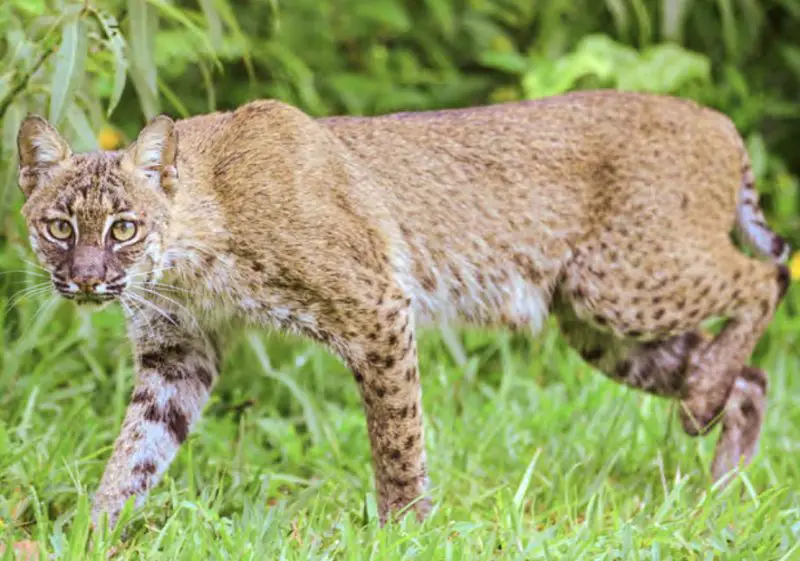
Residents in rural Missouri sometimes report unusually large “wild-looking” cats appearing near farms, wooded suburbs, or creek corridors. Some residents speculate these animals might be hybrids between bobcats and domestic cats. The idea sparks curiosity and sometimes concern, especially among pet owners who live near natural habitats.
Biologically, the question is fascinating. Bobcats are native wild felines widely established throughout Missouri, while domestic cats are common companions that sometimes roam outdoors. At first glance, the possibility of interbreeding may seem plausible simply because both belong to the cat family. However, when science, genetics, behavior, and ecology are considered together, the picture becomes much clearer.
Understanding whether bobcats in Missouri ever mate with domestic cats requires exploring species biology, habitat overlap, mating behavior, genetic compatibility, and the broader ecological context shaping wildlife interactions.
Table of Contents
- 1 Bobcats Are Well Established Across Missouri
- 2 Domestic Cats Are Widespread but Ecologically Different
- 3 Genetic Compatibility: A Key Scientific Barrier
- 4 Behavioral Differences Limit Interaction
- 5 Size Disparity Creates Physical Barriers
- 6 Territorial Instincts Influence Encounters
- 7 Predatory Dynamics Cannot Be Ignored
- 8 Misidentification Fuels Hybrid Rumors
- 9 Media and Folklore Amplify the Idea
- 10 Seasonal Activity Patterns Affect Sightings
- 11 Habitat Overlap in Missouri Is Increasing
- 12 Scientific Studies Support Separation
- 13 Conservation Considerations
- 14 Risks to Domestic Cats Near Bobcat Habitat
- 15 Ecological Role of Bobcats
- 16 Public Education Helps Reduce Myths
- 17 Future Research May Provide More Insight
- 18 Why the Question Persists
- 19 FAQs About Bobcats and Domestic Cats in Missouri
- 19.1 Can bobcats naturally breed with domestic cats
- 19.2 Why do people think bobcat hybrids exist
- 19.3 Are bobcats dangerous to domestic cats
- 19.4 Do bobcats live close to Missouri neighborhoods
- 19.5 Are bobcats aggressive toward humans
- 19.6 When are bobcats most active in Missouri
- 19.7 How can pet owners protect cats from bobcats
- 19.8 Are bobcats protected wildlife in Missouri
- 19.9 Why are bobcat sightings increasing recently
- 19.10 What should you do if you see a bobcat
- 20 Final Thoughts
Bobcats Are Well Established Across Missouri
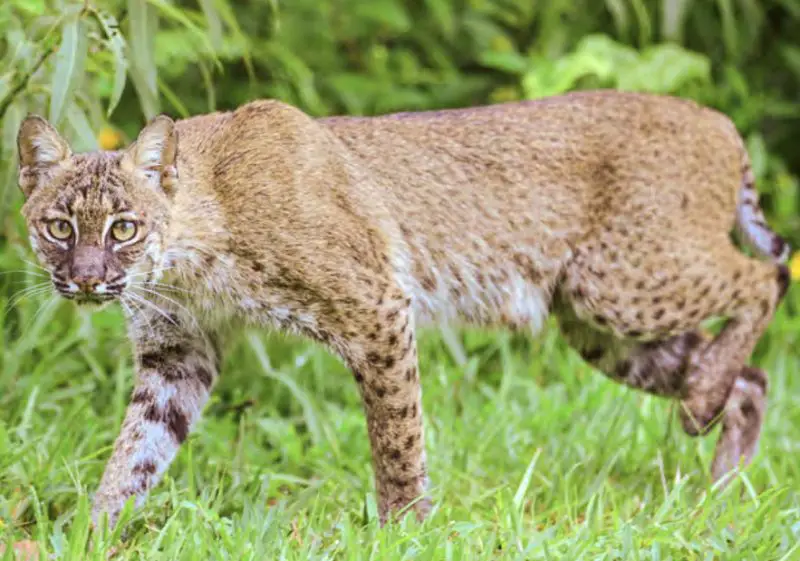
Bobcats are the only native wild cat species with a stable population throughout Missouri today. They inhabit forests, brushlands, river corridors, agricultural edges, and increasingly some suburban greenbelts. Their adaptability allows them to survive in a wide range of landscapes, provided there is sufficient cover, prey availability, and minimal human disturbance.
Historically, bobcats faced population declines due to habitat loss and unregulated hunting. Conservation regulations, habitat recovery, and changing land-use practices helped populations rebound during the late twentieth century. Today, sightings are more common, particularly in southern and central parts of the state, though they occur statewide.
Because bobcats now occupy areas closer to human settlement than in the past, encounters with domestic cats have become theoretically more possible. However, possibility does not equal probability.
Domestic Cats Are Widespread but Ecologically Different
Domestic cats exist in nearly every environment where humans live. Some remain indoor pets, while others roam freely in rural or suburban settings. Barn cats, feral colonies, and free-roaming pets often occupy edge habitats where forests meet farmland or residential areas.
Despite superficial similarity to wild cats, domestic cats differ substantially in behavior, social structure, hunting patterns, and risk tolerance. They tend to stay closer to human infrastructure, rely partly on human-provided food, and exhibit different territorial patterns.
These ecological differences reduce sustained interaction with bobcats even where ranges overlap.
Genetic Compatibility: A Key Scientific Barrier
One of the most important factors is genetics. Bobcats (Lynx rufus) belong to the genus Lynx, while domestic cats (Felis catus) belong to the genus Felis. Although both are felines, they are evolutionarily distinct enough that natural interbreeding is extremely unlikely.
Successful hybridization generally occurs between species within the same genus or those very closely related genetically. Examples include lions and tigers or wolves and domestic dogs. Bobcats and domestic cats diverged evolutionarily much earlier, creating reproductive incompatibilities.
To date, there is no confirmed scientific evidence of natural bobcat–domestic cat hybrids.
Genetics alone makes such breeding highly improbable.
Behavioral Differences Limit Interaction
Even if genetic barriers did not exist, behavioral factors strongly reduce mating likelihood. Bobcats are solitary, territorial predators with specific courtship behaviors, scent marking patterns, and vocal communication signals.
Domestic cats, especially free-roaming ones, have different mating cues, social tolerance levels, and territory sizes. Their breeding cycles and behavioral displays do not align closely with bobcat patterns.
Mating requires behavioral compatibility as much as biological capability. Without aligned signals, reproduction rarely occurs.
Behavior often prevents hybridization before genetics even come into play.
Size Disparity Creates Physical Barriers
Adult bobcats typically weigh between 15 and 35 pounds, sometimes more, while domestic cats generally weigh 8 to 12 pounds. This size difference affects mating feasibility, courtship interaction, and social dynamics.
Large size disparities can create stress, aggression, or avoidance responses rather than reproductive interaction.
Physical compatibility matters in wildlife reproduction.
Size differences reduce likelihood further.
Territorial Instincts Influence Encounters
Bobcats maintain defined territories, particularly adult males. These territories overlap with prey concentrations and habitat cover rather than human settlement centers.
Domestic cats tend to center their territory around human habitation.
When bobcats encounter domestic cats, the interaction is more likely territorial or predatory rather than reproductive.
Territory shapes interaction outcomes.
Space defines behavior.
Predatory Dynamics Cannot Be Ignored
Bobcats are opportunistic predators. Small mammals, birds, rabbits, rodents, and occasionally unattended domestic animals fall within their prey range.
While not common, domestic cats can be vulnerable in areas where bobcats live. From an ecological standpoint, bobcats are more likely to perceive a roaming domestic cat as prey than as a potential mate.
Predator-prey dynamics outweigh speculative hybridization.
Ecology guides behavior.
Misidentification Fuels Hybrid Rumors
Reports of supposed bobcat hybrids often stem from misidentification. Several scenarios contribute:
Large feral domestic cats with unusual coloration
Juvenile bobcats mistaken for hybrids
Mixed-breed domestic cats with wild-like markings
Poor lighting or distance observation
Human perception under uncertainty can fill gaps with speculation.
Genetic testing rarely confirms hybrid claims.
Evidence matters more than appearance.
Media and Folklore Amplify the Idea
Wildlife myths spread easily. Stories about mysterious animals capture public imagination, especially when they involve familiar pets and nearby wildlife.
Social media accelerates the spread of such stories. A single ambiguous photo can generate widespread speculation.
Folklore influences perception as much as biology.
Cultural storytelling shapes wildlife narratives.
Seasonal Activity Patterns Affect Sightings
Bobcats are most active during dawn, dusk, and nighttime hours. Domestic cats often share similar activity periods, particularly outdoor cats.
Seasonal mating periods for bobcats typically occur in late winter to early spring, while domestic cats may breed multiple times per year.
Timing overlap exists but does not guarantee interaction.
Temporal coincidence does not equal reproductive opportunity.
Habitat Overlap in Missouri Is Increasing
Urban expansion, suburban growth, and agricultural changes have created edge habitats where wildlife and domestic animals occasionally intersect.
Greenbelts, wooded subdivisions, river corridors, and farm edges provide travel pathways for bobcats while supporting feral cat populations.
Overlap increases visibility but not necessarily hybridization risk.
Proximity influences perception.
Ecology determines outcome.
Scientific Studies Support Separation
Wildlife biologists studying bobcat populations across North America consistently report lack of confirmed hybridization with domestic cats. Genetic analyses, population monitoring, and ecological research reinforce this conclusion.
Even in regions with high overlap between wild cats and domestic cats, evidence of interbreeding remains absent.
Scientific consensus matters.
Data outweigh speculation.
Conservation Considerations
Hybridization concerns arise more commonly with species such as wolves and coyotes or wildcats and domestic cats in certain regions. Bobcats, however, remain genetically distinct.
Conservation focus in Missouri emphasizes:
Habitat preservation
Population monitoring
Human-wildlife coexistence
Reducing unnecessary fear
Maintaining ecological balance supports long-term species health.
Risks to Domestic Cats Near Bobcat Habitat
While hybridization is unlikely, safety considerations for domestic cats remain important. Outdoor cats may face risks from predators, vehicles, disease, and environmental hazards.
Keeping cats indoors or supervised reduces risk significantly.
Responsible pet ownership supports coexistence.
Safety benefits pets and wildlife alike.
Ecological Role of Bobcats
Bobcats play important roles in Missouri ecosystems. As mid-sized predators, they help regulate rodent populations, rabbit numbers, and other prey species.
This regulation supports vegetation balance, reduces agricultural damage, and maintains ecological stability.
Predators contribute to healthy ecosystems.
Balance benefits biodiversity.
Public Education Helps Reduce Myths
Education programs focusing on wildlife identification, behavior, and coexistence help reduce misconceptions about bobcats and domestic animals.
Clear information replaces speculation with understanding.
Awareness fosters coexistence.
Knowledge reduces fear.
Future Research May Provide More Insight
Wildlife monitoring technology continues improving. GPS tracking, genetic sampling, and camera trap networks provide increasingly detailed data.
While current evidence shows no natural bobcat–domestic cat hybridization, ongoing research continues refining understanding.
Science evolves continuously.
Observation informs knowledge.
Why the Question Persists
Curiosity about wildlife interactions reflects genuine interest in nature. Questions about hybridization arise because humans observe overlapping habitats and wonder about biological possibilities.
The persistence of the question highlights the importance of accessible scientific communication.
Understanding builds trust.
Clear answers reduce uncertainty.
FAQs About Bobcats and Domestic Cats in Missouri
Can bobcats naturally breed with domestic cats
No confirmed scientific evidence shows natural breeding between bobcats and domestic cats due to genetic and behavioral differences.
Why do people think bobcat hybrids exist
Misidentification of large feral cats, unusual coat patterns, or brief wildlife sightings often lead to hybrid speculation.
Are bobcats dangerous to domestic cats
They can be, especially if a cat roams outdoors near wooded or rural areas where bobcats hunt.
Do bobcats live close to Missouri neighborhoods
Yes. They sometimes use wooded suburbs, river corridors, and farm edges where prey and cover are available.
Are bobcats aggressive toward humans
Generally no. They avoid people and attacks on humans are extremely rare.
When are bobcats most active in Missouri
They are usually most active at night, dawn, and dusk, which increases the chance of unnoticed proximity.
How can pet owners protect cats from bobcats
Keeping cats indoors, supervising outdoor time, and reducing attractants like food or prey helps reduce risk.
Are bobcats protected wildlife in Missouri
Yes. They are managed under wildlife regulations to maintain healthy populations and ecological balance.
Why are bobcat sightings increasing recently
Habitat overlap with human development and better wildlife monitoring technology make sightings more common.
What should you do if you see a bobcat
Observe from a distance, avoid approaching, secure pets, and allow the animal space to leave naturally.
Final Thoughts
Bobcats in Missouri do not naturally mate with domestic cats. Genetic incompatibility, behavioral differences, territorial instincts, size disparity, and ecological dynamics all make such hybridization extremely unlikely. Reports suggesting otherwise typically stem from misidentification, folklore, or misunderstanding of wildlife behavior.
As bobcat populations remain stable across Missouri and human development continues expanding into natural habitats, occasional encounters will continue. These encounters reflect coexistence rather than hybridization risk.
Understanding wildlife ecology helps separate myth from reality. With informed awareness, responsible pet management, and respect for natural habitats, people and wildlife can share landscapes safely. Bobcats remain an important part of Missouri’s ecosystems — not mysterious hybrids, but resilient native predators adapting quietly to changing environments.