
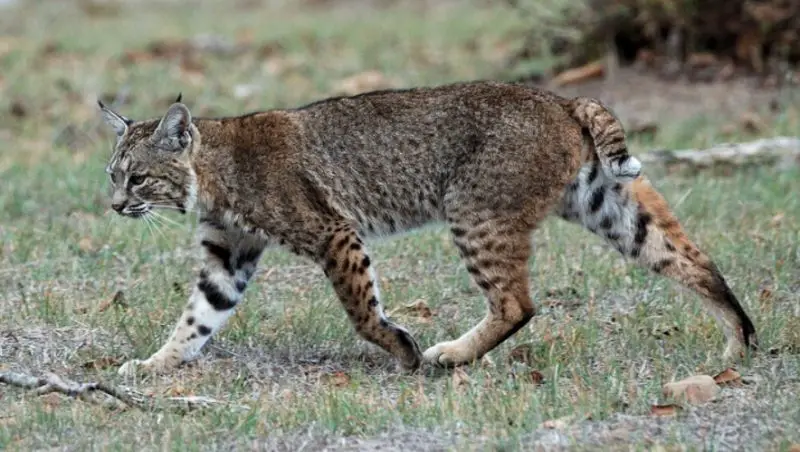
Across North Carolina, bobcats are no longer animals people only associate with deep forests or remote mountain ridges. They are now seen near subdivisions, farmland edges, coastal marshes, and even suburban greenbelts. As sightings increase, so do questions. One of the most persistent and controversial questions is whether bobcats can breed with domestic cats.
Stories circulate online about oversized feral cats with tufted ears. Others describe unusually large house cats with wild behavior. In neighborhoods where bobcats are known to pass through, these sightings quickly turn into speculation about hybrids.
This article takes a fact-based, science-driven look at whether bobcats in North Carolina can breed with domestic cats, why the idea is so widespread, and what biology actually tells us. The answer is more complex than a simple yes or no, and understanding it requires separating genetics, behavior, and ecology from rumor.
Table of Contents
- 1 Bobcats and Domestic Cats in North Carolina
- 2 Understanding Bobcat Biology
- 3 Understanding Domestic Cat Biology
- 4 Genetic Compatibility Between Bobcats and Domestic Cats
- 5 Has Bobcat–Domestic Cat Hybridization Ever Been Confirmed?
- 6 Why the Hybrid Myth Persists in North Carolina
- 7 Behavioral Barriers to Interbreeding
- 8 Size and Strength Differences Matter
- 9 What About Other Cat Hybrids?
- 10 Misidentified Animals Fueling the Confusion
- 11 Genetic Testing and What It Shows
- 12 Why Bobcats Do Not Need Hybridization to Thrive
- 13 The Role of Folklore and Local Storytelling
- 14 Why People Want the Hybrid Story to Be True
- 15 What Wildlife Experts Say in North Carolina
- 16 Could It Ever Happen in the Future?
- 17 Why This Question Matters
- 18 How to Identify a Bobcat Correctly
- 19 Living Alongside Bobcats in North Carolina
- 20 FAQs About Bobcats and Domestic Cats in North Carolina
- 20.1 Can bobcats mate with domestic cats?
- 20.2 Why do people think hybrids exist?
- 20.3 Are bobcats dangerous to pets?
- 20.4 Are bobcats increasing in North Carolina?
- 20.5 Should unusual cats be reported?
- 20.6 Do bobcats avoid humans?
- 20.7 Can DNA testing identify hybrids?
- 20.8 Are bobcats protected in North Carolina?
- 21 Final Thoughts
Bobcats and Domestic Cats in North Carolina
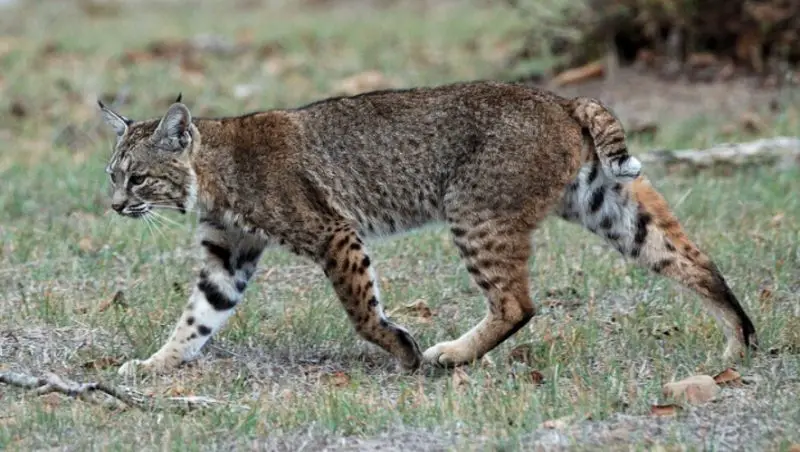
North Carolina supports a healthy and expanding bobcat population. Bobcats are found statewide, from the Appalachian Mountains to the Coastal Plain. They thrive in mixed habitats that include forests, wetlands, agricultural land, and suburban edges.
Domestic cats are equally widespread. Outdoor cats, feral colonies, barn cats, and free-roaming pets occupy the same landscapes. In many areas, bobcats and domestic cats share territory, sometimes passing within yards of one another.
This overlap fuels the question. When two similar-looking species live close together, people naturally wonder if they can interbreed.
Understanding Bobcat Biology
Bobcats belong to the species Lynx rufus. They are medium-sized wild cats with long legs, tufted ears, short tails, and muscular builds. Adult bobcats in North Carolina typically weigh between 15 and 35 pounds, with males larger than females.
They are solitary animals with strong territorial instincts. Bobcats rely on stealth, strength, and ambush hunting. Their behavior is cautious and highly tuned to avoiding humans.
Bobcats breed seasonally. In North Carolina, mating typically occurs between late winter and early spring. Females give birth after a gestation period of about 60 days.
Understanding Domestic Cat Biology
Domestic cats belong to Felis catus. They are significantly smaller, usually weighing between 8 and 12 pounds. Domestic cats have been selectively bred for thousands of years, resulting in wide variation in appearance but relatively consistent genetics.
Unlike bobcats, domestic cats breed year-round under favorable conditions. They mature quickly, reproduce often, and adapt easily to human environments.
Although domestic cats are predators, they are far less powerful and far more tolerant of social interaction than bobcats.
Genetic Compatibility Between Bobcats and Domestic Cats
From a genetic standpoint, bobcats and domestic cats are related but not closely enough to easily produce offspring.
Bobcats belong to the genus Lynx. Domestic cats belong to the genus Felis. While both fall under the broader family Felidae, their evolutionary paths diverged millions of years ago.
Chromosome counts matter. Domestic cats have 38 chromosomes. Bobcats also have 38 chromosomes, which is one reason the hybrid question persists. However, identical chromosome counts do not guarantee successful reproduction.
Gene structure, reproductive timing, and developmental compatibility all play critical roles.
Has Bobcat–Domestic Cat Hybridization Ever Been Confirmed?
Despite decades of speculation, there is no verified scientific evidence that bobcats and domestic cats produce viable offspring in the wild.
Claims of hybrids often rely on appearance alone. Larger size, tufted ears, spotted coats, or aggressive behavior are cited as proof. However, these traits can appear in pure domestic cats or feral populations without any bobcat ancestry.
Wildlife agencies, genetic studies, and zoological experts consistently state that confirmed bobcat–domestic cat hybrids do not exist.
Why the Hybrid Myth Persists in North Carolina
North Carolina’s geography plays a role in sustaining the myth. The state has dense forests, rural communities, and expanding suburban development. These landscapes increase wildlife visibility.
When people see a large cat near their home, the mind searches for explanation. A bobcat seems too wild. A house cat seems too small. The idea of a hybrid fills the gap.
Social media accelerates this effect. Photos taken at poor angles or low light conditions exaggerate size and features. Without scale references, cats appear much larger than they are.
Behavioral Barriers to Interbreeding
Even if genetics allowed it, behavior would still prevent breeding.
Bobcats are solitary and highly territorial. They avoid domestic cats rather than interact with them. A bobcat encountering a house cat is more likely to ignore it or view it as prey than a potential mate.
Domestic cats rely heavily on vocalizations and social cues that bobcats do not respond to. Courtship behaviors differ significantly between species.
Timing is another barrier. Bobcats breed in a narrow seasonal window. Domestic cats breed year-round. Synchronization is unlikely.
Size and Strength Differences Matter
Physical mismatch further reduces any chance of successful mating.
A bobcat is far larger and stronger than a domestic cat. Attempted mating would likely result in injury or death to the smaller animal.
In the wild, animals rarely engage in behavior that poses high risk without reproductive benefit. Evolution favors efficiency and safety.
This physical disparity alone makes hybridization extremely improbable.
What About Other Cat Hybrids?
Some people point to known hybrids like the Bengal cat or Savannah cat as evidence that wild-domestic hybrids are possible.
However, these hybrids involve species that are genetically much closer. Bengals come from domestic cats crossed with Asian leopard cats. Savannahs involve servals, which are still genetically compatible under controlled conditions.
Even these hybrids require human intervention, selective breeding, and careful management. They do not occur naturally.
Bobcats are genetically and behaviorally further removed.
Misidentified Animals Fueling the Confusion
Many animals mistaken for bobcat hybrids are actually something else entirely.
Large feral domestic cats can grow bigger than expected, especially males. Certain breeds like Maine Coons or mixed long-haired cats can appear wild.
Young bobcats are sometimes mistaken for hybrid cats when seen briefly. Conversely, domestic cats with spotted coats may be mistaken for bobcats.
Lighting, distance, and stress all distort perception.
Genetic Testing and What It Shows
When suspected hybrids are tested genetically, results consistently show either pure domestic cat DNA or pure bobcat DNA.
No confirmed genetic markers indicating bobcat–domestic cat mixing have been documented in peer-reviewed research.
Wildlife agencies rely on DNA testing to identify animals involved in livestock depredation or unusual sightings. These tests have never confirmed a hybrid.
Why Bobcats Do Not Need Hybridization to Thrive
Bobcats in North Carolina are thriving without genetic mixing.
Their populations are stable. Their reproductive success is strong. They adapt well to varied environments.
There is no evolutionary pressure pushing bobcats toward hybridization. They already fill their ecological niche effectively.
The Role of Folklore and Local Storytelling
Stories about animal hybrids are not new. Folklore often fills gaps in understanding wildlife behavior.
In rural North Carolina, stories about unusual animals have long been part of local culture. Hybrids are compelling because they feel mysterious and explain the unfamiliar.
These stories persist even when science contradicts them.
Why People Want the Hybrid Story to Be True
The idea of a bobcat–domestic cat hybrid is exciting. It feels rare and dangerous. It adds drama to everyday wildlife encounters.
People are more likely to share extraordinary explanations than ordinary ones. A big feral cat is mundane. A hybrid feels special.
Emotion often outweighs evidence.
What Wildlife Experts Say in North Carolina
North Carolina wildlife biologists consistently state that bobcats and domestic cats do not interbreed.
State agencies emphasize education over myth correction. They encourage residents to report sightings without drawing conclusions based on appearance.
Experts stress that unusual-looking cats should not be assumed to be hybrids.
Could It Ever Happen in the Future?
Based on current knowledge, natural hybridization remains extremely unlikely.
Even if rare mating attempts occurred, genetic incompatibility would almost certainly prevent viable offspring.
Evolutionary barriers exist for a reason. They maintain species integrity.
Why This Question Matters
Understanding the truth behind this myth matters for wildlife conservation.
Misunderstandings can lead to fear, unnecessary killing of animals, or demands for removal of harmless wildlife.
Accurate information promotes coexistence rather than conflict.
How to Identify a Bobcat Correctly
Bobcats have distinct traits. Short tails with black tips on top only. Large paws. Muscular legs. Tufted ears with white spots on the back.
Domestic cats lack these consistent combinations, even large ones.
Learning these differences reduces confusion.
Living Alongside Bobcats in North Carolina
Bobcats are shy, elusive, and rarely aggressive toward humans.
They play a valuable role in controlling rodent and rabbit populations.
Coexistence strategies focus on securing pets, avoiding feeding wildlife, and respecting natural behavior.
FAQs About Bobcats and Domestic Cats in North Carolina
Can bobcats mate with domestic cats?
There is no confirmed scientific evidence that they can produce viable offspring.
Why do people think hybrids exist?
Misidentification, folklore, and visual exaggeration drive the belief.
Are bobcats dangerous to pets?
They can pose a risk to small outdoor pets, especially at night.
Are bobcats increasing in North Carolina?
Yes. Populations have expanded due to habitat adaptation and conservation.
Should unusual cats be reported?
Yes. Reporting sightings helps wildlife monitoring efforts.
Do bobcats avoid humans?
Yes. They are naturally cautious and elusive.
Can DNA testing identify hybrids?
Yes. Genetic testing reliably distinguishes species.
Are bobcats protected in North Carolina?
Regulations vary by season and region. Wildlife agencies manage populations carefully.
Final Thoughts
The idea that bobcats in North Carolina breed with domestic cats is compelling but unsupported by science. Genetics, behavior, size differences, and reproductive timing all work against hybridization.
What people are seeing are bobcats adapting to shared landscapes and domestic cats that look larger or wilder than expected.
Understanding the facts replaces fear with clarity. Bobcats remain wild. Domestic cats remain domestic. Nature keeps its boundaries more firmly than rumors suggest.
In North Carolina, coexistence works best when knowledge guides perception rather than myth.