
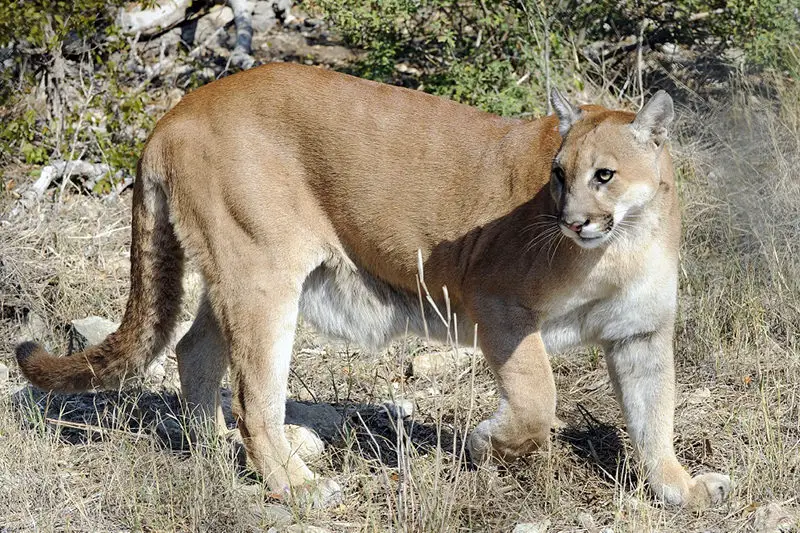
Mountain lions in Texas occupy a strange space between reality and rumor. Some Texans are convinced the cats are everywhere, silently reclaiming land from the deserts to the pine woods. Others believe they are nearly gone, reduced to a few isolated animals drifting in from Mexico. Official statements often sound cautious. Sightings continue to pour in. The truth sits somewhere in between, shaped by biology, geography, and the unique way Texas manages wildlife.
Understanding the real status of mountain lion populations in Texas requires stepping away from fear, politics, and social media stories and looking closely at facts on the ground. Where they live. How many likely exist. Why they are so hard to count. And why Texas feels different from every other state when it comes to these elusive predators.
Table of Contents
- 1 Mountain Lions Are Native to Texas
- 2 Where Mountain Lions Live in Texas Today
- 3 Why Texas Does Not Have an Official Population Estimate
- 4 How Many Mountain Lions Likely Live in Texas
- 5 Why Mountain Lions Are So Hard to Count
- 6 The Role of Dispersing Males
- 7 Why Sightings Feel More Common Than Before
- 8 Texas Has Unique Mountain Lion Regulations
- 9 Does Unregulated Killing Threaten Populations
- 10 Prey Availability Supports Stable Populations
- 11 Human Conflict Shapes Distribution
- 12 Are Mountain Lions Expanding Eastward
- 13 How Texas Compares to Other States
- 14 The Mexico Connection
- 15 Genetics Show Healthy Diversity in Core Areas
- 16 Why Rumors of Exploding Populations Persist
- 17 The Role of Fear in Public Perception
- 18 What Science Actually Tells Us
- 19 Why Data Gaps Matter
- 20 What the Future Likely Holds
- 21 Living Alongside Mountain Lions in Texas
- 22 FAQs About Mountain Lion Populations in Texas
- 22.1 Are mountain lions common in Texas
- 22.2 Does Texas have more mountain lions than other states
- 22.3 Are mountain lions protected in Texas
- 22.4 Do mountain lions live in East Texas
- 22.5 Are sightings increasing
- 22.6 Do mountain lions threaten people
- 22.7 Why does Texas not count them
- 22.8 Will mountain lions disappear from Texas
- 23 Final Thoughts
Mountain Lions Are Native to Texas
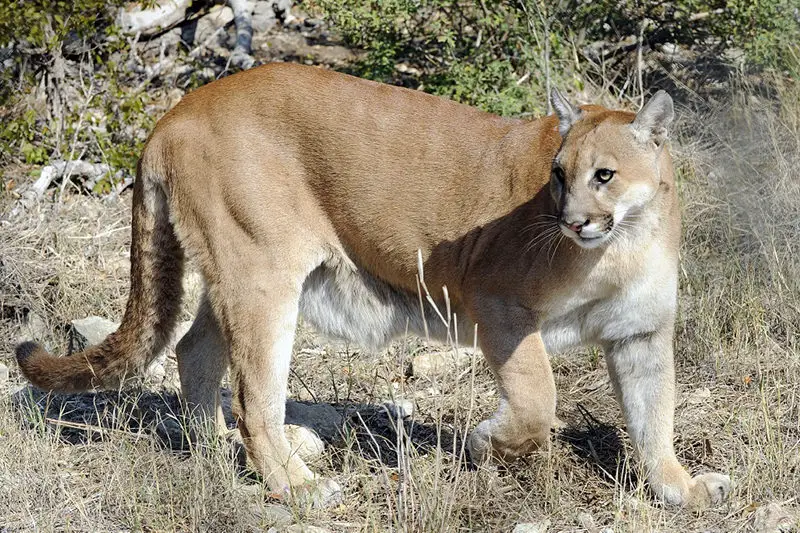
Mountain lions, also known as cougars or pumas, are not newcomers to Texas. They are native predators that occupied the region long before modern settlement. Historically, mountain lions ranged across nearly all of Texas, from the Hill Country to the coastal plains.
As settlement expanded, habitat loss and unregulated hunting pushed populations westward. By the mid twentieth century, mountain lions had disappeared from large portions of eastern and central Texas. What remained were strongholds in the western half of the state.
This historical contraction still shapes public perception today.
Where Mountain Lions Live in Texas Today
The core of Texas mountain lion habitat lies in West Texas and far South Texas. The Trans Pecos region, including the Davis Mountains, Big Bend area, and surrounding desert landscapes, supports the most consistent and self-sustaining population.
South Texas also holds a smaller but established population, particularly in brush country near the Rio Grande. These regions offer low human density, abundant prey, and large connected tracts of land.
Outside these areas, mountain lions appear sporadically. Central Texas, the Panhandle, and even East Texas see occasional sightings. These are typically young males dispersing in search of territory rather than evidence of permanent populations.
Why Texas Does Not Have an Official Population Estimate
Unlike many western states, Texas does not maintain a formal statewide population estimate for mountain lions. This fuels confusion and speculation.
There are several reasons for this. Most land in Texas is privately owned. Access for research is limited. Mountain lions are solitary, wide ranging, and naturally difficult to track. Without consistent statewide monitoring, precise numbers are impossible.
Texas Parks and Wildlife Department acknowledges mountain lion presence but avoids providing definitive population figures. This cautious approach is often misinterpreted as secrecy or denial.
In reality, it reflects the limits of available data.
How Many Mountain Lions Likely Live in Texas
While there is no official number, biologists use indirect methods to estimate population ranges.
Based on habitat quality, prey availability, and known densities in similar ecosystems, experts generally estimate that Texas supports several thousand mountain lions, with the majority concentrated in West Texas.
These estimates vary widely depending on assumptions. Some suggest numbers closer to two thousand. Others place the figure higher. What matters most is not the exact number, but the distribution.
Texas does not have one large connected population statewide. It has regional populations separated by vast areas of unsuitable or fragmented habitat.
Why Mountain Lions Are So Hard to Count
Mountain lions are built for invisibility. They travel mostly at night. They avoid humans. They leave little evidence behind.
A single adult can maintain a home range spanning hundreds of square miles. Females overlap minimally. Males overlap even less. This low density makes traditional counting methods ineffective.
Camera traps, track surveys, and genetic sampling help, but they require access and long-term investment. In Texas, private land ownership complicates all of these approaches.
As a result, sightings often feel more informative than they truly are.
The Role of Dispersing Males
Many mountain lion sightings outside West and South Texas involve young males dispersing from established populations.
When males reach maturity, they leave their birth territory to find unoccupied space. This can push them hundreds of miles from core habitat.
These dispersers pass through ranch land, suburbs, and even forested regions where permanent populations do not exist. They may remain for weeks or months before moving on or being killed.
This movement creates the impression of widespread population growth when the reality is temporary presence.
Why Sightings Feel More Common Than Before
Texas residents report more mountain lion sightings today than in past decades. Several factors explain this trend.
Trail cameras are widespread. Outdoor recreation has increased. Social media amplifies individual encounters. People are simply looking more closely and sharing more frequently.
At the same time, habitat fragmentation forces mountain lions to move through human dominated landscapes more often. Encounters that once happened unseen now occur near roads, fences, and homes.
Increased visibility does not necessarily mean increased population.
Texas Has Unique Mountain Lion Regulations
Texas stands apart from most states in how it manages mountain lions.
Mountain lions are not classified as game animals or protected wildlife in Texas. There is no closed season. There is no bag limit. Landowners may kill mountain lions at any time.
This regulatory approach is rooted in private property rights and livestock protection. It also makes population management difficult.
Without harvest reporting requirements, biologists lack basic data on mortality rates. This absence of information contributes heavily to uncertainty about population trends.
Does Unregulated Killing Threaten Populations
In core habitats, mountain lion populations appear resilient. West Texas still supports breeding populations despite decades of lethal control.
However, in fringe areas, unregulated killing likely prevents population establishment. Dispersing animals are often killed before they can reproduce.
This creates a dynamic where mountain lions are constantly present but rarely permanent outside strongholds.
The population persists, but expansion is limited.
Prey Availability Supports Stable Populations
Mountain lions depend heavily on deer. Texas has one of the largest white tailed deer populations in the country.
In West Texas, mule deer, javelina, and smaller mammals supplement the diet. This prey abundance supports stable reproduction and survival.
Where prey is scarce or heavily hunted, mountain lions struggle to establish territories.
Food availability remains one of the strongest indicators of where mountain lions can persist.
Human Conflict Shapes Distribution
Mountain lions avoid humans when possible, but conflict still occurs.
Livestock depredation drives much of the lethal control in Texas. Sheep and goat operations in particular experience losses that lead to targeted killing of mountain lions.
Public fear also plays a role. Sightings near homes often prompt calls for removal or immediate killing.
These responses shape where mountain lions can safely exist.
Are Mountain Lions Expanding Eastward
There is little evidence of a sustained eastward expansion in Texas.
While individual mountain lions occasionally appear in Central or East Texas, these sightings rarely lead to breeding populations. The combination of habitat fragmentation, human density, and lethal control creates barriers.
Expansion is possible under the right conditions, but current patterns suggest stability rather than growth.
How Texas Compares to Other States
In states like Colorado, Utah, and California, mountain lions are actively managed with regulated hunting and population monitoring.
These states maintain clearer data on population size and trends. Texas lacks this structure.
Ironically, this makes Texas mountain lions both more common in some regions and less understood statewide.
The cats persist, but the picture remains blurry.
The Mexico Connection
South Texas mountain lions are part of a larger cross-border population connected to northern Mexico.
Movement across the Rio Grande supports genetic diversity and long-term viability. Barriers that disrupt this movement could have serious consequences.
Conservation efforts on both sides of the border influence the future of these cats.
Genetics Show Healthy Diversity in Core Areas
Where populations are established, genetic studies suggest healthy diversity. This indicates regular breeding and sufficient population size.
In contrast, isolated individuals found far from core areas show limited genetic mixing.
This supports the idea that Texas mountain lions are stable where conditions allow, but not spreading widely.
Why Rumors of Exploding Populations Persist
Mountain lions capture imagination. They are powerful, secretive, and rarely seen clearly.
A single sighting can feel like evidence of something larger. Online stories magnify this effect. Misinformation spreads faster than data.
Without official numbers, rumors fill the gap.
The Role of Fear in Public Perception
Fear shapes how people interpret wildlife presence.
Mountain lions are capable predators, but attacks on humans are extremely rare. In Texas, verified attacks are almost nonexistent.
Despite this, fear remains high. This fear influences policy, personal behavior, and reporting.
Understanding risk realistically is essential to coexistence.
What Science Actually Tells Us
Science does not support the idea that Texas is overrun with mountain lions. It also does not support the idea that they are disappearing.
The truth is more balanced. Texas has stable, regionally concentrated populations that persist despite heavy human pressure.
Outside those regions, mountain lions appear intermittently but rarely establish long-term presence.
Why Data Gaps Matter
Without systematic monitoring, Texas cannot proactively manage mountain lions.
Lack of data makes it difficult to assess population health, prevent overharvest, or plan for future coexistence.
Improved reporting and research would benefit both wildlife and landowners.
What the Future Likely Holds
Mountain lions are adaptable. As long as large tracts of habitat and prey remain, they will persist in Texas.
Climate change, development, and policy choices will shape their future distribution.
The species is not on the brink, but neither is it expanding unchecked.
Living Alongside Mountain Lions in Texas
Coexistence depends on understanding behavior and reducing conflict.
Securing livestock, protecting pets, and avoiding feeding wildlife reduce risk. Education reduces fear.
Mountain lions prefer distance. Most conflicts are preventable.
FAQs About Mountain Lion Populations in Texas
Are mountain lions common in Texas
They are common in West and South Texas but uncommon elsewhere.
Does Texas have more mountain lions than other states
Texas likely has fewer than states with regulated management like Colorado.
Are mountain lions protected in Texas
No. They can be legally killed year round on private land.
Do mountain lions live in East Texas
Permanent populations are unlikely. Most sightings involve dispersing males.
Are sightings increasing
Sightings are reported more often, but population growth is unclear.
Do mountain lions threaten people
Attacks are extremely rare. Risk is very low.
Why does Texas not count them
Private land access and lack of reporting make counting difficult.
Will mountain lions disappear from Texas
Unlikely. Core populations remain resilient.
Final Thoughts
The truth about mountain lion populations in Texas is neither dramatic explosion nor silent disappearance. It is persistence under pressure.
Texas mountain lions survive because they are adaptable, elusive, and supported by strong prey bases in key regions. At the same time, lack of regulation and data keep their true numbers uncertain.
Understanding the reality behind the rumors allows Texans to replace fear with perspective. Mountain lions remain part of the state’s natural heritage. Quiet. Watchful. Still here.