
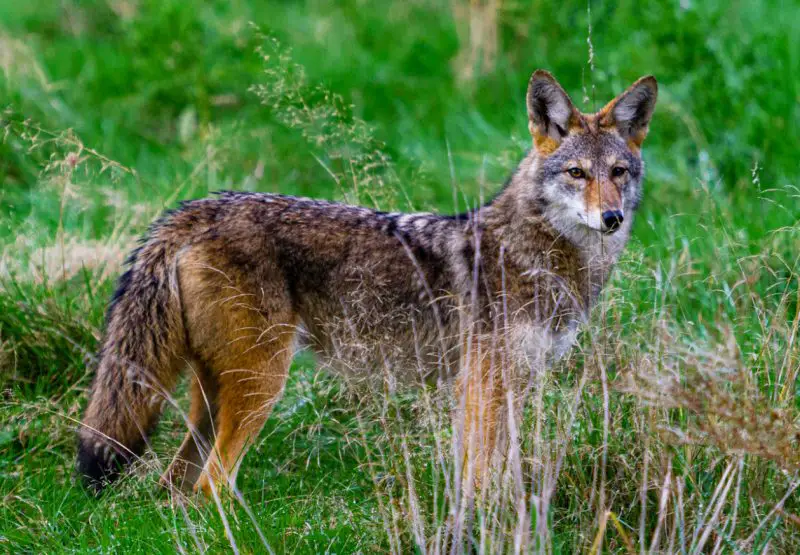
Coyotes are now a familiar part of Arkansas landscapes. Whether you live in the Ozark Mountains, the Delta farmlands, or suburban neighborhoods near growing cities, hearing coyotes howl at night is no longer unusual. As sightings increase, questions naturally follow. One of the most common — and often emotionally charged — questions is whether coyotes ever breed with domestic dogs.
The idea sparks curiosity, concern, and sometimes fear. Pet owners wonder if their dogs could interact with coyotes. Farmers worry about livestock safety. Wildlife observers debate whether certain animals they see might be hybrids rather than pure coyotes. Social media stories add to the intrigue, often mixing fact with speculation.
The truth is both scientifically fascinating and reassuring. Yes, coyotes and domestic dogs are biologically capable of breeding. However, successful hybridization in the wild remains relatively rare, especially compared with normal coyote reproduction. Understanding why requires exploring genetics, behavior, ecology, and the changing relationship between wildlife and human environments in Arkansas.
This article takes a detailed look at the science, myths, risks, and realities surrounding coyotes and domestic dogs — helping clarify what actually happens in Arkansas landscapes today.
Table of Contents
- 1 Coyotes in Arkansas Today
- 2 Biological Compatibility Between Coyotes and Dogs
- 3 Why Hybridization Happens Less Often Than People Think
- 4 Historical Evidence of Coydog Hybrids
- 5 Identifying Possible Coydog Hybrids
- 6 Behavior of Coydogs Compared With Coyotes
- 7 Risks Associated With Hybridization
- 8 Why Arkansas Landscapes Encourage Encounters
- 9 Myths About Coyotes Breeding With Dogs
- 10 Protecting Pets in Coyote Areas
- 11 Ecological Role of Coyotes in Arkansas
- 12 Human Perception Versus Reality
- 13 How Wildlife Agencies Monitor Coyotes
- 14 When Hybridization Is More Likely
- 15 The Future of Coyotes in Arkansas
- 16 FAQs About Coyotes Breeding With Domestic Dogs in Arkansas
- 17 Final Thoughts
Coyotes in Arkansas Today
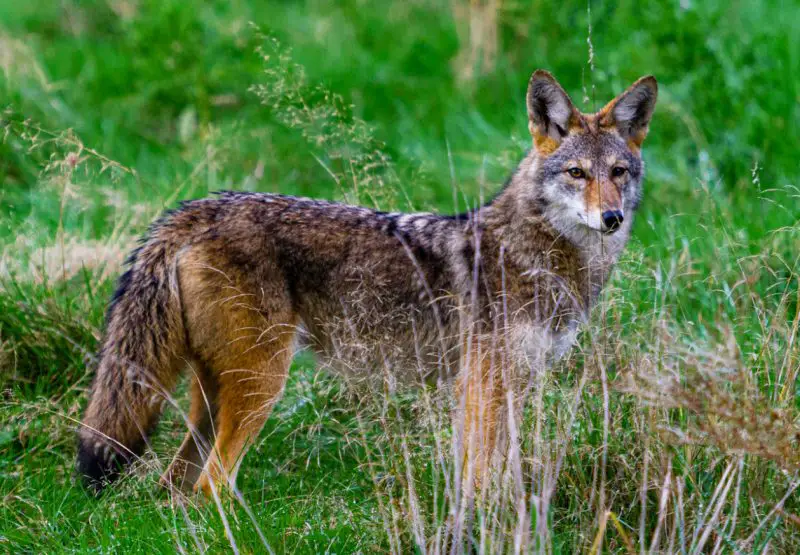
Coyotes are no longer considered newcomers in Arkansas. Over the past century, they have expanded steadily eastward and now occupy virtually every region of the state. From the Ozark highlands to the Mississippi Delta, from rural farmland to suburban neighborhoods outside Little Rock and Fayetteville, coyotes have adapted to a wide range of environments.
Their success comes from remarkable flexibility. Coyotes are opportunistic feeders. In Arkansas, they consume rodents, rabbits, squirrels, deer fawns, insects, fruit, carrion, and occasionally livestock or unattended pets. This varied diet allows them to survive even when one food source declines. During winter, they may rely more on carrion and small mammals. In spring, they may take advantage of newborn wildlife. In suburban settings, they sometimes exploit unsecured garbage or pet food.
Unlike wolves, coyotes tolerate human presence far more readily. They tend to avoid direct confrontation but learn to navigate human landscapes quietly, often traveling at night along fence lines, creek beds, railroad tracks, and wooded corridors. As development spreads into previously wild areas, sightings increase. With increased sightings comes increased curiosity — and concern — about how closely coyotes interact with domestic animals.
Biological Compatibility Between Coyotes and Dogs
Coyotes and domestic dogs belong to the same genus, Canis. This shared ancestry means they are genetically compatible. When interbreeding occurs, the offspring are usually fertile, capable of reproducing again.
These hybrids are commonly referred to as “coydogs.” However, biological possibility does not mean frequent occurrence. In Arkansas, confirmed cases of true coydog hybrids remain relatively rare compared with the overall coyote population.
Hybridization requires more than compatible DNA. It requires timing, proximity, and behavioral alignment. In the wild, those conditions do not align as often as many assume. Nature places several barriers in the way.
Understanding these barriers helps explain why hybridization remains uncommon despite biological compatibility.
Why Hybridization Happens Less Often Than People Think
Although coyotes and dogs can interbreed, natural behavioral patterns strongly limit how often it actually happens.
Seasonal Breeding Differences
Coyotes breed once a year, typically in late winter. This narrow breeding window lasts only a few weeks. Domestic dogs, on the other hand, may go into heat multiple times a year depending on breed and individual cycles.
If a free-roaming dog encounters a coyote outside that narrow seasonal window, mating is unlikely. The timing mismatch alone reduces hybridization opportunities significantly.
Coyote Social Structure
Coyotes typically form monogamous pairs during breeding season. Once bonded, pairs defend territory together and remain socially attached while raising pups. This strong pair bond discourages outside mating.
A mated coyote is far less likely to seek a domestic dog as a breeding partner. Territorial defense also limits prolonged interaction with unfamiliar canines.
Behavioral Differences
Domestic dogs vary widely in temperament, but many lack the caution and territorial patterns of wild coyotes. Coyotes are naturally wary and often avoid unfamiliar animals. Free-ranging dogs may behave unpredictably, which can lead to avoidance or conflict rather than mating.
Most interactions between coyotes and dogs involve brief encounters rather than sustained association.
Habitat Use Patterns
Coyotes frequently travel through edge habitats — the boundaries between forests and fields, wetlands and suburbs, agricultural land and wooded cover. Domestic dogs typically remain close to human homes unless allowed to roam freely.
This separation reduces opportunities for prolonged interaction necessary for breeding.
Historical Evidence of Coydog Hybrids
Coydog hybrids have been documented in North America for decades, though they remain relatively uncommon. Some eastern coyote populations show evidence of historical hybridization events involving wolves or domestic dogs many generations ago. This genetic mixing likely occurred during periods when wolf populations declined and coyotes expanded into new territories.
In Arkansas, however, confirmed recent hybrids remain sporadic rather than widespread. Wildlife biologists occasionally investigate suspected hybrids, often relying on genetic analysis rather than visual assessment.
Many animals mistakenly labeled as hybrids are simply larger eastern coyotes. Eastern populations tend to carry traces of wolf ancestry, which can increase body size slightly compared with western coyotes. This natural variation often fuels misunderstanding.
Identifying Possible Coydog Hybrids
Visual identification of hybrids is notoriously unreliable. Coyotes themselves show significant variation in coat color, body size, and facial features.
Possible hybrid indicators may include unusual coat patterns, slightly broader skulls, altered ear positioning, or intermediate body proportions. However, none of these traits alone confirm hybrid status.
Coat colors ranging from reddish to dark gray to nearly black can appear naturally in pure coyotes. Body size also varies based on food availability and regional genetics.
Without DNA testing, certainty remains impossible. Misidentification is far more common than true hybrid occurrence.
Behavior of Coydogs Compared With Coyotes
If hybridization does occur, behavior depends heavily on upbringing and environment. A hybrid raised in the wild by a coyote parent will likely behave much like a wild coyote — cautious, territorial, and nocturnal.
A hybrid raised near humans may show more tolerance of people, though this is not guaranteed. Behavior in canids depends as much on socialization as genetics.
Importantly, there is no strong evidence that hybrids are inherently more aggressive than pure coyotes. Aggression in wildlife typically arises from food competition, territorial defense, or habituation to human food sources.
Most coyotes, hybrid or not, prefer avoidance over confrontation.
Risks Associated With Hybridization
Although rare, hybridization can present management considerations.
Wildlife Management Challenges
If hybrids display unusual tolerance for human environments, management becomes more complicated. Wildlife agencies must assess whether behavior stems from genetics, human feeding, or other environmental factors.
However, isolated hybrid individuals rarely influence broader population genetics significantly.
Pet Safety Concerns
The greater risk to pets comes from territorial encounters rather than breeding attempts. Coyotes may view unfamiliar dogs as competitors or intruders, particularly during pup-rearing season.
Small dogs left unattended are more vulnerable. Supervision significantly reduces risk.
Disease Transmission
Any contact between wildlife and domestic animals carries potential disease concerns such as rabies or parasites. Vaccination remains the most effective preventive measure.
Hybridization itself does not substantially increase disease risk beyond normal wildlife exposure.
Why Arkansas Landscapes Encourage Encounters
Arkansas landscapes contain a mosaic of forest, farmland, suburban development, wetlands, and river corridors. This fragmentation creates ideal coyote habitat. Coyotes thrive in edge environments where prey species concentrate.
Suburban expansion increases wildlife-human overlap. Greenbelts, drainage ditches, wooded subdivisions, and agricultural boundaries create travel corridors.
As coyotes adapt to these environments, encounters with domestic dogs become more likely. However, proximity alone does not translate to frequent hybridization.
Opportunity for brief contact increases. Sustained reproductive interaction remains rare.
Myths About Coyotes Breeding With Dogs
Several myths continue to circulate.
Myth: Coydogs Are Common in Every Rural Area
In reality, confirmed hybrids represent a small fraction of the population.
Myth: Hybrids Are Extremely Aggressive
Scientific evidence does not support widespread increased aggression due to hybrid status alone.
Myth: Any Large Coyote Is a Hybrid
Eastern coyotes naturally vary in size. Larger body mass does not confirm hybrid ancestry.
Myth: Coyotes Actively Seek Domestic Dogs to Mate
More often, interactions involve territorial defense or avoidance rather than mating behavior.
Dispelling these myths reduces unnecessary fear.
Protecting Pets in Coyote Areas
Responsible pet management significantly reduces risk.
Keep dogs supervised, particularly at dawn and dusk when coyotes are most active.
Avoid leaving pet food outside overnight.
Secure garbage and compost.
Maintain fencing in good repair.
Spay and neuter pets to reduce roaming behavior.
Vaccinate regularly.
These steps protect pets and reduce opportunities for unwanted wildlife interaction.
Ecological Role of Coyotes in Arkansas
Coyotes provide valuable ecological services. They control rodent populations, reduce carrion buildup, and influence deer movement patterns. By limiting smaller predator populations in some areas, they can indirectly shape ecosystem balance.
Removing coyotes entirely would likely disrupt ecological systems. Instead, wildlife management focuses on coexistence and targeted control where necessary.
Coyotes are now a permanent component of Arkansas ecosystems.
Human Perception Versus Reality
Public perception often magnifies hybridization concerns beyond actual frequency. Social media posts, anecdotal sightings, and viral stories can distort understanding.
Scientific monitoring generally shows coyotes prefer natural prey and avoid human confrontation when possible.
Informed awareness replaces fear with perspective.
How Wildlife Agencies Monitor Coyotes
Wildlife agencies monitor coyote populations using field surveys, harvest reports, roadkill data, and occasionally genetic sampling. These tools help detect population trends and rare hybridization events.
Public reporting also contributes valuable information.
Responsible wildlife observation supports accurate data collection and management decisions.
When Hybridization Is More Likely
Certain conditions may slightly increase likelihood:
Free-roaming unspayed dogs
Isolated coyotes lacking mates
Low population density in new expansion zones
Human-provided food sources that increase interaction
Even in these situations, natural barriers often prevent frequent hybridization.
The Future of Coyotes in Arkansas
Coyotes are likely to remain part of Arkansas wildlife for generations to come. Their adaptability ensures continued presence across diverse habitats.
Hybridization may occur occasionally but is unlikely to dominate population genetics. Natural social structure, breeding timing, and behavioral barriers continue to limit widespread mixing.
Balanced management strategies emphasize coexistence, responsible pet ownership, and public education.
Understanding the science behind coyotes and domestic dogs helps communities respond calmly and thoughtfully rather than react based on myth.
FAQs About Coyotes Breeding With Domestic Dogs in Arkansas
Can coyotes and dogs produce offspring?
Yes, biologically they can. However, successful breeding in the wild is uncommon.
Are coydog hybrids common in Arkansas?
No. Confirmed cases are relatively rare.
Are hybrids more dangerous?
There is no consistent evidence supporting increased aggression.
How can I tell if I saw a hybrid?
Appearance alone is unreliable. Genetic testing is needed.
Do coyotes attack dogs to mate?
Usually not. Encounters often involve territory or prey behavior.
Should I worry about my pet dog?
Supervised pets face minimal risk.
Is hybridization increasing?
Current evidence suggests it remains sporadic.
Should hybrids be removed?
Wildlife agencies assess situations individually.
Final Thoughts
Coyotes and domestic dogs are biologically capable of breeding, but natural behavioral, seasonal, and ecological barriers make such events relatively uncommon in Arkansas. Increased sightings reflect expanding coyote populations and human development overlap rather than widespread hybridization.
Understanding the science helps replace fear with perspective. Coyotes play important ecological roles while generally avoiding direct human interaction. Responsible pet care, habitat awareness, and informed coexistence strategies minimize risk.
Arkansas landscapes continue evolving, and adaptable wildlife species like coyotes will remain part of that story. Awareness, respect, and education allow people and wildlife to share these environments safely and sustainably.