
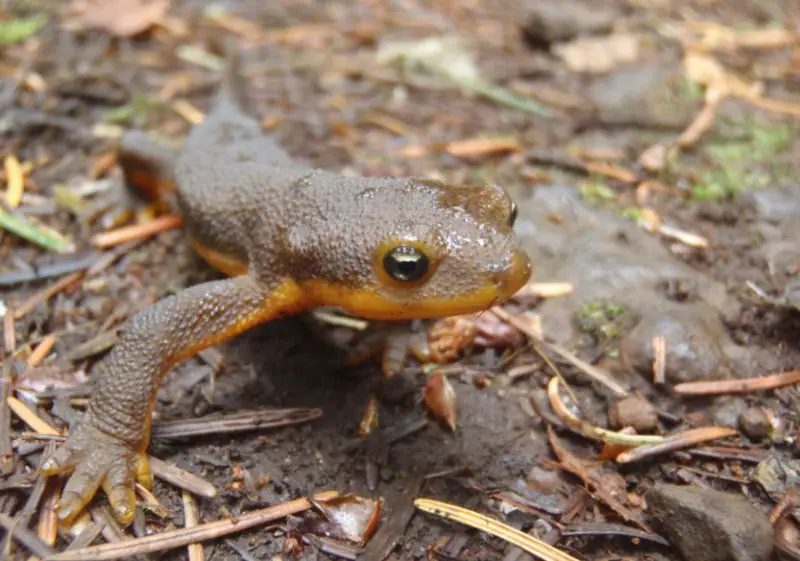
Many Oregon newts pass unnoticed, quietly sheltering beneath forest debris or in shallow, still water. Many people mistake them for salamanders, assume they are rare, or believe they live only in pristine wilderness. Others think of them as fragile little amphibians with simple lives.
Almost all of that is wrong.
Newts in Oregon are among the most resilient, chemically defended, behaviorally complex amphibians in North America. They survive freezing winters, navigate between land and water with astonishing accuracy, and possess one of the most powerful natural toxins found in any vertebrate. They are ancient survivors shaped by forests, rain, and time—and they are far more interesting than most people realize.
Table of Contents
- 1 Newts Are Not Just “Small Salamanders”
- 2 Oregon Is One of the Best Places in North America for Newts
- 3 Newts Live in Two Worlds
- 4 Newts Can Navigate Better Than You Think
- 5 Their Skin Is a Living Chemical Shield
- 6 Bright Colors Are a Warning, Not Decoration
- 7 Some Predators Have Evolved Resistance
- 8 Newts Breathe in Multiple Ways
- 9 Newts Can Survive Cold Better Than Expected
- 10 Regeneration Is Real—and Remarkable
- 11 Their Life Cycle Is Longer Than Most People Think
- 12 Newts Are Indicators of Ecosystem Health
- 13 Roads Are a Hidden Threat
- 14 Newts Do Not Spread Disease to Humans
- 15 Handling Newts Harms Them Too
- 16 Newts Play an Important Ecological Role
- 17 Climate Change Poses New Challenges
- 18 Why Newts Still Persist in Oregon
- 19 Why Most People Never Notice Them
- 20 What Most People Should Know Instead
- 21 FAQs about Hidden Facts of Oregon Newts
- 21.1 Are newts in Oregon poisonous?
- 21.2 Can people get sick from touching a newt?
- 21.3 Are newts just another type of salamander?
- 21.4 Do Oregon newts live on land or in water?
- 21.5 How do newts find the same ponds every year?
- 21.6 Are newts active during winter?
- 21.7 Do any animals eat toxic newts?
- 21.8 How long do newts live?
- 21.9 Do newts regenerate lost body parts?
- 21.10 Why are roads dangerous for newts?
- 22 Final Thoughts
Newts Are Not Just “Small Salamanders”
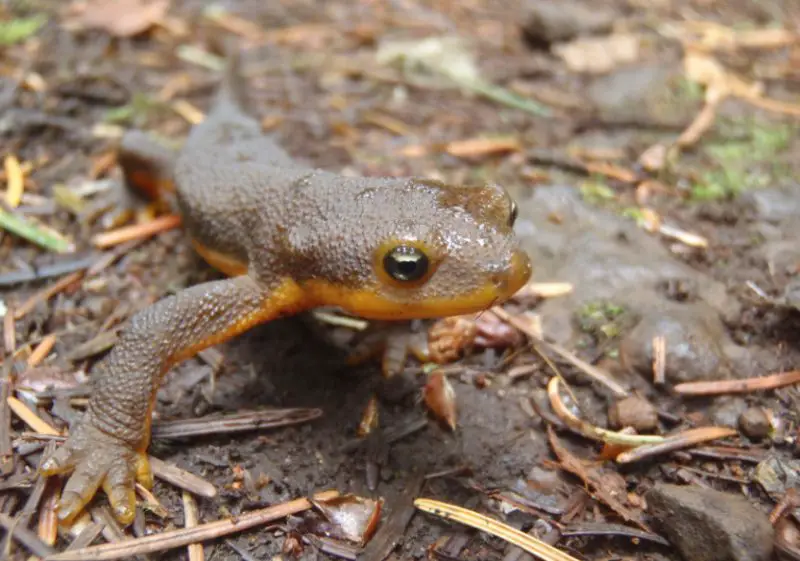
One of the most common misunderstandings is that newts are simply a type of salamander.
While newts are technically salamanders, they represent a distinct group with very different life strategies. Most salamanders spend their lives hidden in moist environments and rarely venture far. Newts, by contrast, move between habitats and actively interact with their surroundings.
In Oregon, newts are often seen walking across forest floors, crossing trails, or swimming openly in ponds and slow streams. This visibility makes them feel more familiar, yet their biology is far more specialized than most people assume.
Newts are built for transition. Their lives are defined by movement, not concealment.
Oregon Is One of the Best Places in North America for Newts
Oregon’s climate is almost ideal for newts.
Cool temperatures, frequent rainfall, dense forests, and abundant freshwater habitats create conditions where newts can thrive. From coastal forests to the western Cascades and into some foothill regions, newts occupy a wide range of environments.
They are especially common in moist woodlands with access to ponds, lakes, and slow-moving streams. Fallen logs, leaf litter, and shaded ground provide shelter during their terrestrial phases, while clean water supports breeding and larval development.
Because of this, Oregon supports some of the most stable newt populations in the country—even as amphibians decline elsewhere.
Newts Live in Two Worlds
What many people don’t realize is that newts spend large portions of their lives on land.
Although they reproduce in water, adult newts in Oregon often live terrestrially for much of the year. They hunt insects, worms, and small invertebrates under logs and within forest debris. Their skin remains moist enough to allow respiration even far from water.
During breeding season, they return to ponds and streams, sometimes traveling surprising distances to reach the same water bodies year after year.
This dual lifestyle requires precise timing, navigation, and physiological flexibility.
Newts are remarkably good at finding their way.
Studies have shown that newts can return to specific breeding ponds even after being displaced. They use a combination of environmental cues, including moisture gradients, landscape features, and possibly Earth’s magnetic field.
In Oregon’s complex forest terrain, this navigation ability is critical. Ponds may dry partially, shift edges, or become obscured by vegetation, yet newts consistently locate them.
This homing behavior suggests a level of spatial memory that surprises many people.
Their Skin Is a Living Chemical Shield
Perhaps the most shocking fact about Oregon’s newts is their toxicity.
The rough-skinned newt, common in much of western Oregon, produces tetrodotoxin—a neurotoxin powerful enough to stop nerve signals and cause paralysis. This is the same toxin found in pufferfish.
Even tiny amounts can be deadly to predators.
This toxin is not injected. It is secreted through the skin. Any animal that bites or swallows a newt risks severe poisoning or death.
Newts do not need to flee quickly. Their defense is chemical, not physical.
Bright Colors Are a Warning, Not Decoration
When threatened, newts often display bright orange or yellow undersides.
This behavior, known as the “unken reflex,” exposes their warning colors to predators. The message is clear: do not eat me.
This coloration is not meant to attract mates or camouflage. It is a biological billboard advertising danger.
In Oregon’s forests, where visual predators like birds and mammals are common, this warning system is highly effective.
Some Predators Have Evolved Resistance
Despite their toxicity, newts are not invincible.
Certain predators, particularly garter snakes in parts of Oregon, have evolved partial resistance to tetrodotoxin. This evolutionary arms race has produced snakes that can tolerate doses that would kill other animals.
Even so, these snakes are not immune. Eating newts often slows them dramatically, affecting movement and survival.
This ongoing chemical battle is one of the most fascinating predator-prey relationships in Oregon’s ecosystems.
Newts Breathe in Multiple Ways
Newts do not rely solely on lungs.
They absorb oxygen directly through their skin and through the lining of their mouths. This allows them to remain underwater for extended periods without surfacing and to survive in damp terrestrial environments.
Their skin must stay moist for this to work, which is why they are closely tied to Oregon’s cool, wet climate.
Dry conditions are dangerous. Moisture is life.
Newts Can Survive Cold Better Than Expected
Many people assume amphibians are helpless in cold weather.
In reality, Oregon’s newts are well adapted to winter. They reduce activity, seek shelter, and enter a state of dormancy. In aquatic environments, they remain active under cold water where temperatures are more stable.
Some newts can tolerate near-freezing conditions without harm.
This cold tolerance allows them to persist in regions where other amphibians struggle.
Regeneration Is Real—and Remarkable
Newts can regenerate body parts.
Lost toes, tails, and even damaged eyes can regrow over time. This ability is not just a curiosity. It plays a real role in survival, allowing newts to recover from predator attacks or injuries.
Scientists study newt regeneration to better understand tissue repair and healing. What happens naturally in a forest pond could one day inform human medicine.
Newts carry ancient biological secrets.
Their Life Cycle Is Longer Than Most People Think
Newts are not short-lived.
Many individuals live for well over a decade. Some may survive 15 years or more under favorable conditions.
This long lifespan means that population stability depends on adult survival more than rapid reproduction. When adults are lost, recovery is slow.
Protecting habitat is essential for long-term persistence.
Newts Are Indicators of Ecosystem Health
Because newts rely on clean water and intact forests, their presence is a sign of environmental quality.
Pollution, habitat fragmentation, and water diversion all threaten newt populations. When newts disappear, it often signals broader ecological problems.
In Oregon, where land use changes rapidly in some areas, monitoring newts helps scientists understand ecosystem health.
They are quiet messengers of change.
Roads Are a Hidden Threat
One of the biggest dangers to newts is not predators—it is roads.
During breeding migrations, newts often cross roads to reach ponds. Many are killed by vehicles, especially during rainy nights when movement peaks.
These losses add up over time, fragmenting populations and reducing genetic diversity.
Small animals face big obstacles.
Newts Do Not Spread Disease to Humans
Despite their toxicity, newts are not dangerous to people if left alone.
They do not bite. They do not attack. The toxin on their skin is only harmful if ingested or introduced into wounds.
Simple precautions—such as not handling them and washing hands—are sufficient.
Fear is unnecessary. Respect is enough.
Handling Newts Harms Them Too
Another overlooked fact is that human handling can injure newts.
Oils, lotions, and salts on human skin can damage their sensitive skin and interfere with respiration. Stress from handling can also be fatal.
Observing from a distance is always best.
Wildlife does not need to be touched to be appreciated.
Newts Play an Important Ecological Role
Newts help control insect populations and serve as prey for specialized predators. They move nutrients between aquatic and terrestrial systems through their migrations.
Their presence links forests and water in subtle but important ways.
Remove newts, and the balance shifts.
Climate Change Poses New Challenges
Changing rainfall patterns and warmer temperatures threaten newt habitats.
Dry summers can shrink breeding ponds. Warmer winters can disrupt dormancy cycles. Extreme weather events increase mortality.
Oregon’s relatively cool climate offers some protection, but change is already being felt.
Adaptation has limits.
Why Newts Still Persist in Oregon
Despite threats, newts remain widespread in Oregon.
Their flexibility, chemical defenses, and long lifespans give them advantages many amphibians lack. Forest cover and conservation efforts also help maintain habitat.
Persistence is not luck. It is biology meeting environment.
Why Most People Never Notice Them
Newts are active when humans are not.
They move during rain, at night, or under cover. Their colors blend into forest floors. Their lives unfold quietly.
This invisibility fuels misunderstanding.
What Most People Should Know Instead
Newts are not fragile curiosities. They are chemically defended, behaviorally sophisticated survivors of deep evolutionary time.
They are not rare accidents of nature. They are integral parts of Oregon’s ecosystems.
Once you understand them, they stop being background creatures—and start being remarkable.
FAQs about Hidden Facts of Oregon Newts
Are newts in Oregon poisonous?
Yes. The rough-skinned newt produces tetrodotoxin, a powerful neurotoxin that deters predators.
Can people get sick from touching a newt?
Touching alone is usually not dangerous, but toxins can enter through cuts or the mouth. Avoid handling and wash hands.
Are newts just another type of salamander?
They are salamanders, but newts have distinct life cycles, behaviors, and ecological roles.
Do Oregon newts live on land or in water?
Both. Adults spend much of the year on land and return to water to breed.
How do newts find the same ponds every year?
They use environmental cues and strong homing abilities, possibly including magnetic sensing.
Are newts active during winter?
Yes, though activity slows. Many remain active underwater where temperatures are stable.
Do any animals eat toxic newts?
Some garter snakes in Oregon have evolved partial resistance and can prey on them.
How long do newts live?
Many live over 10 years, and some may reach 15 years or more.
Do newts regenerate lost body parts?
Yes. They can regrow tails, toes, and even damaged eyes over time.
Why are roads dangerous for newts?
During breeding migrations, many are killed crossing roads, which threatens local populations.
Final Thoughts
What most people don’t know about newts in Oregon is not one single fact.
It is the combination of resilience, toxicity, navigation, regeneration, and quiet persistence that defines them.
They survive where others fail. They defend themselves without fleeing. They return to the same waters year after year, guided by cues we barely understand.
In Oregon’s forests and ponds, newts are not just living.
They are enduring.