

In many parts of Florida, seeing a large green lizard sunning itself on a seawall or darting across a sidewalk is no longer unusual. Iguanas have become a common sight in cities like Miami, Fort Lauderdale, and Key West. They climb trees in suburban neighborhoods, bask on rooftops, and sometimes wander through parks or golf courses as if they belong there.
Yet despite how familiar they may appear, most Florida residents know surprisingly little about these reptiles.
Many people assume iguanas are native wildlife that have always lived in the state. Others view them simply as pests that invade yards and damage landscaping. The truth is far more complex. Iguanas represent one of the most fascinating examples of how non-native species can adapt to new environments.
Originally from Central and South America, green iguanas arrived in Florida through the pet trade during the twentieth century. Over time, escaped or released animals began establishing wild populations. Florida’s warm climate, abundant vegetation, and extensive waterways created nearly perfect conditions for them to survive.
Today, iguanas are part of Florida’s urban wildlife landscape. Their presence raises questions about ecology, climate, invasive species, and the ways animals adapt to human environments.
Behind their prehistoric appearance lies a creature with remarkable biological traits. Iguanas possess specialized vision, complex social behavior, powerful climbing abilities, and an unusual strategy for surviving cold temperatures.
For Florida residents who encounter these reptiles regularly, understanding how iguanas live reveals a fascinating story about resilience, adaptation, and the unexpected wildlife that thrives in one of the most unique environments in the United States.
Table of Contents
- 1 Iguanas Are Not Native to Florida
- 2 Florida’s Climate Helps Iguanas Thrive
- 3 Iguanas Are Excellent Climbers and Swimmers
- 4 Iguanas Are Strictly Herbivores
- 5 Iguanas Can Survive Short Periods of Cold Weather
- 6 Iguanas Have Remarkable Vision
- 7 Iguanas Grow Much Larger Than Most People Expect
- 8 Iguanas Play a Complicated Role in Florida Ecosystems
- 9 Iguanas Can Live for Many Years
- 10 FAQs About Iguanas in Florida
- 11 Final Thoughts
Iguanas Are Not Native to Florida
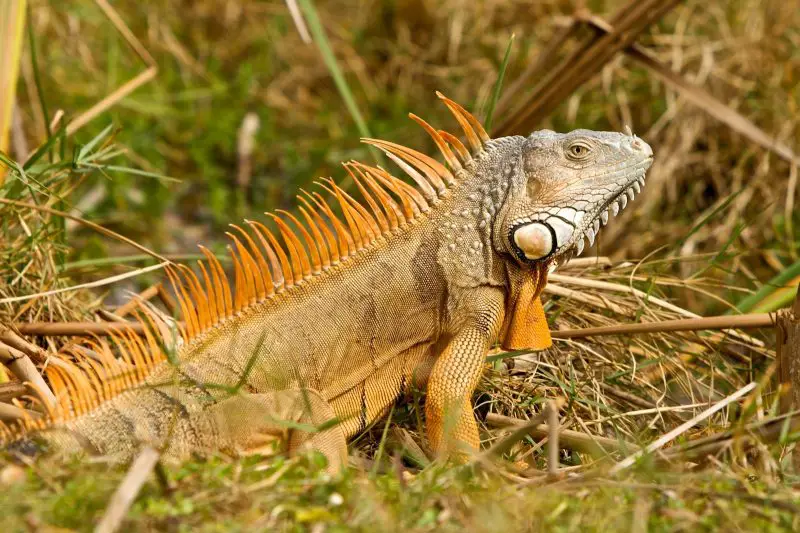
One of the biggest misconceptions about iguanas is that they are part of Florida’s natural wildlife.
In reality, green iguanas (Iguana iguana) evolved in tropical regions of Central America, northern South America, and the Caribbean. These reptiles are naturally adapted to warm climates, dense vegetation, and environments near rivers or coastal areas.
Iguanas first appeared in Florida primarily through the exotic pet trade during the 1960s and 1970s. At the time, small juvenile iguanas were commonly sold in pet stores. They were attractive, colorful, and relatively inexpensive, making them popular pets.
However, many owners were unprepared for how large these reptiles eventually become.
Adult iguanas can grow more than five feet long, including their tail. They require specialized diets, large enclosures, and consistent care.
As the animals matured, some owners released them into the wild rather than continue caring for them.
Others escaped accidentally from outdoor enclosures.
Over time, these released iguanas began reproducing in the wild. Because Florida’s climate resembles their native tropical habitats, the animals adapted quickly.
By the early 2000s, established populations existed in many parts of southern Florida.
Today, they are considered an invasive species in the state.
Florida’s Climate Helps Iguanas Thrive
Florida’s environment plays a major role in the success of wild iguana populations.
Green iguanas are ectothermic reptiles, meaning their body temperature depends on the surrounding environment. Warm temperatures allow them to remain active, digest food efficiently, and grow.
South Florida’s tropical climate closely matches the conditions found in the iguana’s native range.
Average winter temperatures rarely drop low enough to threaten long-term survival, and abundant sunlight provides ideal basking conditions.
Waterways, canals, and coastal areas also provide perfect habitat.
In the wild, iguanas often live near water because it offers both food sources and protection from predators.
When threatened, an iguana can leap from trees into water and swim away quickly.
Florida’s extensive canal systems mimic the rivers and wetlands where iguanas naturally live.
This combination of warm weather, vegetation, and water has allowed iguanas to expand their populations across large areas of the state.
Iguanas Are Excellent Climbers and Swimmers
Although they often appear slow while basking, iguanas are surprisingly agile animals.
Their long claws allow them to climb trees, fences, and even building walls with ease. Many residents spot iguanas perched high in palm trees or resting on rooftops.
Trees serve as both feeding grounds and safe resting places.
Leaves, flowers, and fruit make up a large portion of the iguana diet, so remaining near vegetation provides easy access to food.
When danger appears, iguanas often drop from branches directly into nearby water.
Despite their heavy appearance, they are strong swimmers.
Their powerful tails act like rudders that help propel them through the water.
Swimming provides an important escape strategy because many predators cannot pursue them underwater.
Young iguanas are especially skilled climbers and may spend much of their time in trees where they are less vulnerable.
Iguanas Are Strictly Herbivores
Unlike many reptiles that hunt insects or small animals, green iguanas are primarily herbivores.
Their diet consists mainly of leaves, flowers, fruits, and tender plant shoots.
In Florida’s urban environments, this means iguanas often feed on landscaping plants, ornamental shrubs, and garden vegetables.
This feeding behavior is one reason some homeowners view iguanas as pests.
Certain plants such as hibiscus, bougainvillea, and orchids are particularly attractive to them.
However, their herbivorous diet also plays an ecological role.
In their native environments, iguanas help disperse seeds by consuming fruits and depositing seeds elsewhere through their waste.
This process contributes to plant regeneration in tropical ecosystems.
Even in Florida, iguanas may inadvertently help spread plant species through similar behavior.
Iguanas Can Survive Short Periods of Cold Weather
Although iguanas thrive in warm climates, they are surprisingly resilient when temperatures drop.
During cold snaps in Florida, residents sometimes observe iguanas falling from trees.
This phenomenon occurs because reptiles rely on external heat to regulate body temperature.
When temperatures fall below about 40°F (4°C), iguanas become sluggish and temporarily immobilized.
They may lose their grip on branches and fall to the ground.
However, many of these animals are not dead.
When temperatures rise again, their bodies gradually warm and they regain movement.
This unusual behavior has gained widespread attention during winter cold fronts in Florida.
While prolonged cold can kill iguanas, short cold periods usually result only in temporary inactivity.
Iguanas Have Remarkable Vision
Vision plays an essential role in the survival of iguanas.
Their eyes are positioned on the sides of their head, allowing them to observe a wide field of view. This helps them detect predators approaching from multiple directions.
Iguanas also possess excellent color vision.
Research suggests they can perceive ultraviolet light, which may help them identify plants and other iguanas.
Another unusual feature is the parietal eye, sometimes called the “third eye.”
This light-sensitive structure sits on top of the iguana’s head and detects changes in light and shadow.
Although it does not form images like normal eyes, it helps the reptile sense overhead movement that could signal predators such as birds of prey.
This additional sensory system provides an early warning mechanism in the wild.
Iguanas Grow Much Larger Than Most People Expect
One reason many pet iguanas were released into the wild is their unexpected growth.
Baby iguanas sold in pet stores may measure only a few inches long. Over several years, however, they can grow into impressive reptiles.
Adult green iguanas often reach lengths of four to six feet including their tail.
Males are typically larger than females and may develop prominent spines along their back as well as large dewlaps under their chin.
Their muscular tails make up a significant portion of their total length.
The tail serves several purposes including balance while climbing and defense against predators.
If threatened, an iguana may whip its tail with surprising force.
Although they generally avoid confrontation, this defensive behavior can discourage predators or other threats.
Iguanas Play a Complicated Role in Florida Ecosystems
Because iguanas are not native to Florida, their presence has created ecological challenges.
Large populations can damage vegetation, particularly in areas where they concentrate around water sources.
Their burrowing behavior also causes problems.
Iguanas sometimes dig tunnels in sandy soil near seawalls, sidewalks, and building foundations. Over time, these burrows can contribute to erosion or structural damage.
At the same time, iguanas have become integrated into local food webs.
Predators such as raccoons, birds of prey, and large snakes occasionally prey on young iguanas.
Some native animals have adapted to using this new food source.
However, the long-term ecological impact of iguanas remains an ongoing topic of study among wildlife biologists.
Iguanas Can Live for Many Years
In the wild, green iguanas may live 10 to 15 years or longer if conditions are favorable.
In captivity, where predators and environmental hazards are absent, they may survive for 20 years or more.
Their long lifespan means that even moderate reproduction rates can lead to large population growth over time.
Female iguanas lay eggs in underground nests.
A single clutch may contain 20 to 70 eggs depending on the size and health of the female.
Young iguanas hatch after several months and must survive numerous threats including predators and environmental challenges.
Despite these dangers, enough individuals survive to maintain growing populations in suitable habitats.
FAQs About Iguanas in Florida
Are iguanas native to Florida?
No. Green iguanas are native to Central and South America and were introduced to Florida through the pet trade.
Are iguanas dangerous to people?
Iguanas generally avoid humans and rarely pose any threat. However, large individuals may defend themselves with tail strikes if cornered.
What do iguanas eat?
Iguanas primarily eat plants, including leaves, flowers, and fruits.
Why do iguanas fall from trees in winter?
Cold temperatures temporarily slow their metabolism, causing them to lose their grip on branches.
How big can iguanas grow?
Adult green iguanas can reach five to six feet in length including their tail.
Can iguanas swim?
Yes. Iguanas are strong swimmers and often escape predators by jumping into water.
Where do iguanas live in Florida?
They are most common in southern Florida, especially near canals, coastal areas, and suburban neighborhoods.
How long do iguanas live?
In the wild, they typically live 10 to 15 years, though some may live longer.
Final Thoughts
Iguanas have become one of the most recognizable reptiles in Florida’s urban landscapes.
Their presence highlights how wildlife can adapt to new environments in unexpected ways.
While they are not native to the state and sometimes create ecological challenges, iguanas also represent a fascinating example of survival and adaptation.
Their climbing abilities, herbivorous diets, specialized vision, and unique responses to cold weather make them one of the most intriguing reptiles living in North America.
For Florida residents, encountering an iguana basking in the sun or climbing through a palm tree offers a reminder that nature continues to evolve even in heavily developed areas.
Sometimes the most surprising wildlife stories unfold not in remote wilderness, but in the neighborhoods, canals, and city parks where humans and animals now share the same landscape.