
In Oklahoma, there are insects people expect to fear. Ticks. Mosquitoes. Wasps. But every few summers, a different name quietly circulates through rural conversations, gardening forums, and emergency room anecdotes. The wheel bug.
It does not swarm. It does not chase. It does not announce itself with a buzz or a rattle. Yet when people are bitten, they remember it with startling clarity. Locals describe the pain with the same words again and again. Burning. Electric. Deep. Immediate.
Wheel bugs are not aggressive by nature, but their presence across Oklahoma has made them one of the most misunderstood and quietly feared insects in the state. To understand why, you have to look closely at how they live, where they hide, and what actually happens when human skin crosses the wrong boundary.
Table of Contents
- 1 Where Wheel Bugs Live in Oklahoma
- 2 What Makes a Wheel Bug Instantly Recognizable
- 3 The Role Wheel Bugs Play in Oklahoma’s Ecosystem
- 4 The Mouthpart That Causes the Burn
- 5 How Most People in Oklahoma Get Bitten
- 6 What the Bite Feels Like According to Locals
- 7 Medical Risk Versus Perceived Danger
- 8 Why Wheel Bugs Are Often Misidentified
- 9 Seasonal Patterns in Oklahoma
- 10 Wheel Bugs and Oklahoma Gardens
- 11 Indoor Encounters and How They Happen
- 12 First Aid After a Wheel Bug Bite
- 13 Myths and Exaggerations
- 14 Why Oklahoma Has So Many Encounters
- 15 How to Reduce the Risk Around Your Home
- 16 The Psychological Impact of the Bite
- 17 FAQs About Wheel Bugs in Oklahoma
- 17.1 Are wheel bugs common in Oklahoma
- 17.2 Do wheel bugs attack humans
- 17.3 Why does a wheel bug bite burn so badly
- 17.4 Is a wheel bug bite dangerous
- 17.5 How long does wheel bug bite pain last
- 17.6 Can wheel bugs spread disease
- 17.7 What should I do if I get bitten
- 17.8 Are wheel bugs beneficial insects
- 17.9 How can I avoid wheel bug bites
- 18 Final Thoughts
Where Wheel Bugs Live in Oklahoma

Wheel bugs are widely distributed across Oklahoma, from wooded eastern counties to mixed farmland and suburban edges in central regions. They are most common in places where trees, shrubs, and tall vegetation remain undisturbed for long stretches of time.
You are unlikely to encounter them in manicured lawns or open fields. Instead, they favor transitional zones. Wood piles behind sheds. Tree trunks near fence lines. Overgrown hedges bordering creeks. The quiet spaces people rarely inspect until they reach in with bare hands.
Eastern Oklahoma, with its higher humidity and forest cover, tends to support larger populations. However, wheel bugs are also reported regularly around Oklahoma City suburbs, Tulsa neighborhoods with mature trees, and rural homesteads throughout the state.
Their distribution is steady rather than explosive. They do not appear in outbreaks. One wheel bug at the wrong moment is usually enough to leave an impression.
What Makes a Wheel Bug Instantly Recognizable
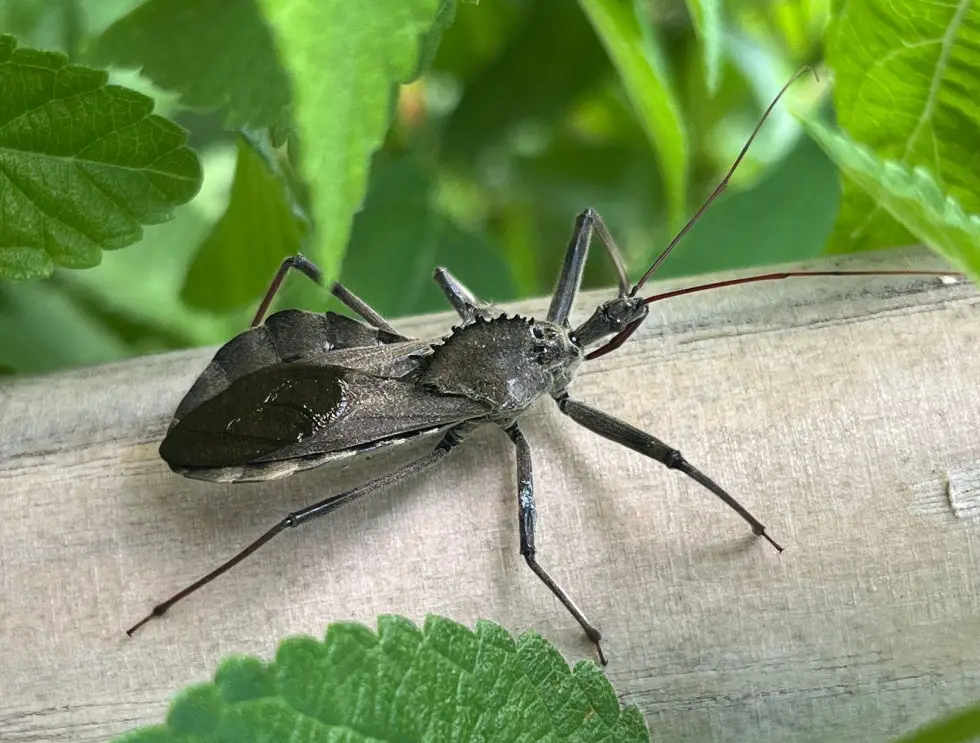
Wheel bugs are among the largest true bugs found in Oklahoma, often measuring more than an inch in length. Their bodies are grayish to brown, with long legs and a narrow head that gives them a slightly prehistoric appearance.
What truly sets them apart is the structure rising from their thorax. A semicircular, gear-like crest that resembles a saw blade or cogwheel. This “wheel” is unique among North American insects and makes identification straightforward once you know what to look for.
Nymphs look very different. Juveniles are bright red and black, smaller, and lack the wheel entirely. Many people encounter these nymphs first and never connect them to the adult form later in the season.
Adults appear most frequently from late spring through early fall, with peak sightings during hot summer months when insect prey is abundant.
The Role Wheel Bugs Play in Oklahoma’s Ecosystem
Despite their fearsome reputation, wheel bugs are highly beneficial predators. They feed on a wide range of insects that damage crops, trees, and ornamental plants.
Their prey includes caterpillars, beetles, aphids, leafhoppers, and even other predatory insects. In orchards and gardens, wheel bugs quietly reduce pest populations without the need for chemicals.
They hunt using patience rather than speed. A wheel bug will remain motionless for long periods, blending into bark or foliage. When prey passes close enough, it strikes with precision, using its piercing mouthpart to inject enzymes that immobilize and liquefy internal tissues.
This feeding method is also the reason their bite is so painful to humans.
The Mouthpart That Causes the Burn
Wheel bugs belong to a group known as assassin bugs. Their defining feature is a rigid, needle-like beak designed to pierce tough exoskeletons.
This beak is not used for chewing. It is a biological syringe.
When a wheel bug bites prey, it injects digestive saliva containing enzymes that break down tissue from the inside. The insect then feeds on the liquefied contents.
When this same mechanism is applied to human skin, the result is immediate and intense pain. Unlike stings that cause surface irritation, a wheel bug bite introduces enzymes deep into tissue.
This is why victims describe a burning sensation that seems to spread rather than fade.
How Most People in Oklahoma Get Bitten
Wheel bugs do not bite casually. Nearly all confirmed bites in Oklahoma occur under similar circumstances.
Someone reaches into a wood pile. Someone grabs a branch without looking. Someone attempts to remove a strange insect by hand. Someone disturbs outdoor furniture that has sat unused for weeks.
The wheel bug’s defense is last-resort. It does not chase, leap, or fly toward people. But if trapped against skin or grasped, it will bite.
Children are bitten most often when playing near trees or handling insects out of curiosity. Adults are bitten during yard work, gardening, or firewood handling.
Nighttime encounters also occur when wheel bugs are attracted to porch lights and accidentally pressed against skin.
What the Bite Feels Like According to Locals
Descriptions from Oklahoma residents are remarkably consistent.
People report an immediate sharp pain, followed by a spreading burn that intensifies over several minutes. Some compare it to touching a hot wire. Others describe it as a deep needle of heat radiating outward.
The pain often peaks within 10 to 20 minutes and may linger for hours. In some cases, localized swelling, redness, and hardness develop at the bite site.
Unlike bee stings, which fade relatively quickly, wheel bug bites can remain tender for days. Some individuals experience numbness or tingling around the area.
While severe allergic reactions are rare, the pain alone is enough to make the bite memorable.
Medical Risk Versus Perceived Danger
Wheel bug bites are not considered medically dangerous for most people. They are not venomous in the traditional sense, and they do not transmit known diseases in Oklahoma.
However, the bite can break skin and introduce bacteria, increasing the risk of secondary infection if not cleaned properly.
People with sensitive skin, compromised immune systems, or strong inflammatory responses may experience prolonged swelling or delayed healing.
In rare cases, individuals report nausea, dizziness, or generalized discomfort following a bite, likely due to pain response rather than toxicity.
Emergency treatment is usually unnecessary unless signs of infection or allergic reaction develop.
Why Wheel Bugs Are Often Misidentified
Many Oklahoma residents confuse wheel bugs with cicadas, leaf-footed bugs, or even small beetles. Nymphs are frequently mistaken for fire ants or beetles due to their red coloration.
This misidentification contributes to bites. People are more likely to handle an insect they believe is harmless.
Another factor is size. Wheel bugs are large enough to be mistaken for toys, debris, or bark fragments when motionless.
Education is the simplest way to prevent bites.
Seasonal Patterns in Oklahoma
Wheel bug activity follows Oklahoma’s temperature cycle closely.
Nymphs emerge in late spring. Adults dominate summer landscapes. By early fall, mating occurs, and females lay clusters of eggs on tree bark, fence posts, or siding.
These egg masses remain visible through winter, resembling small brown clumps. Many people notice them without realizing what they belong to.
Adult wheel bugs die off with the first hard frosts, but their presence returns each year without fail.
Hot summers tend to increase sightings, particularly during drought years when insects congregate around remaining vegetation.
Wheel Bugs and Oklahoma Gardens
Gardeners often encounter wheel bugs while pruning, harvesting, or tying plants. While alarming, their presence usually indicates a healthy ecosystem.
They control caterpillars that chew leaves and beetles that damage fruit. In this sense, they are allies.
The safest approach is coexistence. Avoid removing them unless absolutely necessary. If relocation is required, use gloves and long tools.
Never crush a wheel bug against bare skin.
Indoor Encounters and How They Happen
Wheel bugs do not seek shelter indoors, but they occasionally wander inside through open doors or windows.
Porch lights attract their prey, which in turn draws wheel bugs closer to homes. Once inside, they become disoriented and may crawl along walls or floors.
Most indoor bites occur when someone attempts to pick one up with bare hands or accidentally traps it under clothing.
The best response is simple containment. Use a container and stiff paper to trap and release it outside.
First Aid After a Wheel Bug Bite
If bitten, immediate action can reduce discomfort.
Wash the area thoroughly with soap and water. Apply a cold compress to limit swelling. Over-the-counter pain relievers may help manage discomfort.
Topical antihistamines or hydrocortisone cream can reduce inflammation. Avoid scratching, as broken skin increases infection risk.
Monitor the area for redness that spreads, warmth, pus, or fever. Seek medical attention if these symptoms appear.
Most bites heal without complication within a week.
Myths and Exaggerations
Wheel bugs are often described online as deadly or extremely venomous. These claims are exaggerated.
They are not aggressive hunters of humans. They do not inject neurotoxins. They do not pursue people.
The pain is real. The fear is understandable. But the danger is largely overstated.
Understanding the insect removes much of its power to alarm.
Why Oklahoma Has So Many Encounters
Oklahoma’s mix of wooded areas, agricultural land, and expanding suburbs creates ideal overlap between humans and wheel bugs.
As people move into formerly undisturbed habitats, encounters increase. Firewood storage, garden beds, and decorative trees all provide shelter.
Climate trends also play a role. Warmer seasons extend insect activity, increasing the window for encounters.
Wheel bugs are not invading. They have always been there.
How to Reduce the Risk Around Your Home
Simple precautions are effective.
Wear gloves when handling firewood or pruning trees. Shake outdoor furniture before sitting. Inspect wood piles visually before reaching in.
Reduce unnecessary outdoor lighting at night. Seal gaps around doors and windows.
Education within households is critical, especially for children who may be tempted to handle insects.
Awareness, not eradication, is the solution.
The Psychological Impact of the Bite
What makes wheel bugs infamous is not their danger, but the intensity of the experience.
People remember pain that arrives without warning. A single bite can shape perception for years.
This explains why stories spread quickly, even though bites are relatively rare.
Fear thrives on surprise.
FAQs About Wheel Bugs in Oklahoma
Are wheel bugs common in Oklahoma
Yes. Wheel bugs are widely found across Oklahoma, especially in wooded areas, gardens, farms, and older suburban neighborhoods with mature trees and shrubs.
Do wheel bugs attack humans
No. Wheel bugs are not aggressive and do not seek out people. Almost all bites happen when the insect is accidentally handled, trapped against skin, or disturbed.
Why does a wheel bug bite burn so badly
The burning pain comes from digestive enzymes injected through the beak. These enzymes are meant to liquefy prey tissue and cause intense pain when introduced into human skin.
Is a wheel bug bite dangerous
For most people, no. The bite is painful but not life-threatening. Medical attention is only needed if signs of infection or allergic reaction appear.
How long does wheel bug bite pain last
Severe pain usually peaks within 10–20 minutes, but tenderness, redness, or swelling can last several days depending on individual sensitivity.
Can wheel bugs spread disease
Wheel bugs in Oklahoma are not known to transmit diseases to humans. The main risk is pain and possible secondary infection if the bite is not cleaned properly.
What should I do if I get bitten
Wash the area with soap and water, apply a cold compress, and use antihistamine or hydrocortisone cream if needed. Avoid scratching and monitor for infection.
Are wheel bugs beneficial insects
Yes. Wheel bugs are predators that help control garden pests such as caterpillars, beetles, and leaf-feeding insects, making them ecologically valuable.
How can I avoid wheel bug bites
Wear gloves when handling firewood or pruning plants, check outdoor furniture before use, avoid handling insects bare-handed, and reduce nighttime outdoor lighting.
Final Thoughts
Wheel bugs are a quiet part of Oklahoma’s landscape. Ancient in appearance, efficient in purpose, and misunderstood by most.
Their bite deserves respect, not panic. It is painful, memorable, and avoidable with basic awareness.
In gardens and woodlands, they serve an important role, keeping insect populations in balance. Indoors and on bare skin, they become a problem.