

Table of Contents
- 1 Types of Dangerous Bugs Found in Wyoming
- 1.1 Velvet Ant (Cow Killer)
- 1.2 Black Widow Spider
- 1.3 Brown Recluse Spider
- 1.4 Yellowjacket Wasp
- 1.5 Paper Wasp
- 1.6 Bald-Faced Hornet
- 1.7 Tarantula Hawk Wasp
- 1.8 Deer Tick
- 1.9 Rocky Mountain Wood Tick
- 1.10 Assassin Bug (Wheel Bug)
- 1.11 Blister Beetle
- 1.12 Kissing Bug
- 1.13 Mosquito
- 1.14 Horse Fly
- 1.15 Sand Fly (Biting Midge)
- 1.16 Flea
- 1.17 Fire Ant (Occasional Range Expansion)
- 1.18 Wolf Spider
- 1.19 Scorpion (Plains & Stray Individuals)
- 1.20 Centipede
- 2 Tips to Avoid Dangerous Bugs in Wyoming
- 3 FAQs About Dangerous Bugs in Wyoming
- 3.1 Are most dangerous bugs in Wyoming aggressive?
- 3.2 Which bugs in Wyoming cause the most painful stings?
- 3.3 Are spider bites common in Wyoming?
- 3.4 Are ticks a serious health concern in Wyoming?
- 3.5 Can mosquitoes in Wyoming spread disease?
- 3.6 Are fire ants established in Wyoming?
- 3.7 What should I do if I am stung or bitten?
- 3.8 Who is most at risk from insect stings and bites?
- 4 Final Thoughts
Types of Dangerous Bugs Found in Wyoming
Velvet Ant (Cow Killer)

The velvet ant is not an ant at all but a wingless female wasp, easily recognized by its fuzzy, bright red or orange body contrasted with black markings. Its dense hair gives it a “velvet” appearance and also makes it look deceptively harmless. Adults are stout and compact, with a hard exoskeleton that protects them from predators and makes them difficult to crush.
In terms of size, velvet ants in Wyoming usually measure about ½ to 1 inch long. They move quickly across open ground and are often seen walking alone rather than flying. Males have wings and are less commonly noticed, while females are wingless and responsible for the infamous sting.
Behaviorally, velvet ants are solitary and non-aggressive. They do not build nests or defend colonies like social wasps. Most stings occur when the insect is accidentally stepped on, trapped in clothing, or handled. When threatened, they may produce a squeaking sound as a warning before stinging.
The sting of the velvet ant is considered one of the most painful insect stings in North America, earning it the nickname “cow killer.” While the venom is not medically dangerous to most people, the pain can be intense and long-lasting. In Wyoming’s dry grasslands, prairies, and sandy soils, the main risk to humans is accidental contact rather than aggressive behavior.
Black Widow Spider

The black widow spider is easily identified by its glossy black body and the red hourglass marking on the underside of the abdomen. Females are much larger and more dangerous than males, which are smaller, lighter in color, and rarely bite humans. In Wyoming, this spider often goes unnoticed due to its preference for hidden spaces.
Adult females typically measure about ½ inch in body length, with long, slender legs extending their overall size. Black widows build irregular, tangled webs close to the ground, often in dark, undisturbed areas such as woodpiles, sheds, crawl spaces, and rock piles.
Black widows are shy and avoid confrontation. Bites usually occur when a spider is pressed against skin, such as when reaching into gloves, moving debris, or sitting in an undisturbed area. They are not aggressive and will only bite as a last defense.
Their venom is neurotoxic and can cause severe muscle cramps, abdominal pain, sweating, nausea, and weakness. While bites are rarely fatal, they can be especially dangerous for children, elderly individuals, and people with underlying health conditions. In Wyoming’s dry, sheltered environments, black widows pose a real but manageable risk when precautions are taken.
Brown Recluse Spider
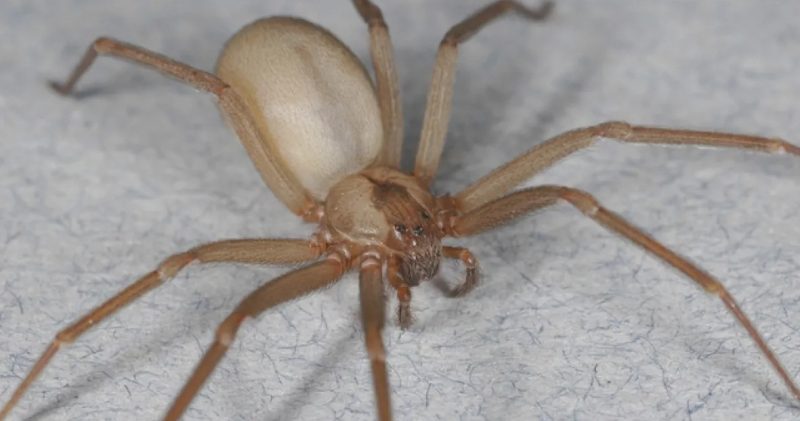
The brown recluse spider is less common in Wyoming but can occasionally appear indoors through transported goods or accidental introduction. It is identified by its light to dark brown color and the violin-shaped marking on its back. Unlike many spiders, it has six eyes arranged in pairs rather than eight.
Brown recluses are medium-sized spiders, with body lengths around ¼ to ½ inch. Their legs are long and thin, and their overall appearance is plain, lacking bold patterns or bright colors. Because of this, they are often misidentified as harmless house spiders.
True to their name, brown recluses are secretive and avoid human contact. They prefer quiet, dark spaces such as closets, cardboard boxes, basements, and storage areas. Bites usually happen when the spider is trapped against the skin during sleep or while handling stored items.
The venom of the brown recluse is cytotoxic and can cause tissue damage. Some bites remain mild, but others may develop into necrotic wounds that heal slowly and can leave scars. Although serious cases are rare, the potential for delayed symptoms makes brown recluse bites a medical concern in Wyoming homes where they appear.
Yellowjacket Wasp

Yellowjackets are aggressive social wasps with bright yellow and black striping, making them easy to recognize. They are often mistaken for bees but have a slimmer body, smooth appearance, and more erratic flight pattern. In Wyoming, they are among the most troublesome stinging insects.
Workers are about ½ inch long and extremely fast and agile. Yellowjackets build large colonies, with nests hidden underground, inside wall voids, or in hollow trees. By late summer, populations peak and aggression increases.
Unlike many insects, yellowjackets actively defend their nests and food sources. They are attracted to sugary drinks, meat, and human food, which brings them into frequent contact with people. Disturbing a nest can result in multiple wasps attacking at once.
Their sting is painful and venomous, and unlike bees, yellowjackets can sting repeatedly. Multiple stings can cause severe reactions, and for people with allergies, even a single sting may trigger anaphylaxis. In Wyoming, yellowjackets pose one of the highest insect-related risks to humans, especially during outdoor activities in late summer and early fall.
Paper Wasp

Paper wasps are slender, long-legged wasps with narrow waists and muted colors ranging from brown and reddish tones to yellow and black. They are best recognized by their open, umbrella-shaped nests made of paper-like material, with visible hexagonal cells. Their overall appearance is less stocky than yellowjackets, giving them a calmer look at first glance.
Adults typically measure between 0.6 and 1 inch in length. In Wyoming, paper wasps are commonly found around eaves, porches, barns, fence posts, and other sheltered outdoor structures. Their nests are usually exposed and easy to spot once you know what to look for.
Paper wasps are generally less aggressive than yellowjackets and rarely sting unless provoked. However, they are highly protective of their nests. If a nest is disturbed or approached too closely, multiple wasps may respond quickly and defensively.
Their sting is painful and causes immediate burning, swelling, and redness. Unlike bees, paper wasps can sting repeatedly. While most stings are not medically dangerous, multiple stings or allergic reactions can pose serious risks. In Wyoming, most incidents occur during home maintenance or yard work near hidden nests.
Bald-Faced Hornet

Bald-faced hornets are large black-and-white wasps with striking white facial markings and bold body patterns. Despite their name, they are not true hornets but a type of aerial yellowjacket. Their nests are large, gray, football-shaped structures often suspended high in trees or attached to buildings.
Workers typically grow to about 0.75 to 1 inch long. Their nests can house hundreds of individuals and are constructed from chewed wood fibers, giving them a layered, papery appearance. In Wyoming, these nests are often found in wooded areas, shelterbelts, and suburban landscapes.
Bald-faced hornets are extremely defensive and territorial. They react aggressively to vibrations, movement, or perceived threats near their nests. When alarmed, they can coordinate group attacks and pursue intruders for considerable distances.
Their sting is very painful and delivers a potent venom. Bald-faced hornets can sting repeatedly and release alarm pheromones that trigger further attacks. For people with allergies, stings can be life-threatening. In Wyoming, they are considered among the most dangerous stinging insects due to their aggressive nest defense.
Tarantula Hawk Wasp

Tarantula hawk wasps are unmistakable due to their massive size, metallic blue-black bodies, and bright orange or dark iridescent wings. Their long legs and slow, deliberate flight make them highly visible and intimidating. Few insects in Wyoming attract as much attention when spotted.
Adults typically range from 1.5 to 2 inches long, making them one of the largest wasps in North America. They are most often found in dry, open habitats such as grasslands, sandy soils, and desert-like regions of Wyoming.
Despite their fearsome appearance, tarantula hawk wasps are solitary and generally non-aggressive. They do not defend nests and rarely interact with humans. Most stings occur only when the wasp is stepped on, grabbed, or trapped against the skin.
When a sting does occur, it is considered one of the most painful insect stings known. The pain is immediate, intense, and overwhelming, though typically short-lived. The venom is not considered medically dangerous, but the severity of the pain alone makes this species a significant concern in Wyoming.
Deer Tick

Deer ticks are very small, flat-bodied ticks with dark brown to black coloring. Due to their size, especially in immature stages, they are easy to miss on skin or clothing. Their compact shape allows them to attach firmly and feed unnoticed for long periods.
Adult deer ticks are usually about the size of a sesame seed, while nymphs can be as small as a poppy seed. In Wyoming, they are found in grassy areas, brush, forest edges, and places frequented by deer and small mammals.
Deer ticks do not bite aggressively but attach to hosts while passing through vegetation. They often crawl to warm, hidden areas of the body before feeding. Because their bite is painless, many people do not realize they have been bitten until symptoms appear later.
This species is a known carrier of Lyme disease and other tick-borne illnesses. Infection risk increases the longer the tick remains attached. In Wyoming, deer ticks pose a serious health risk during warmer months, especially for hikers, hunters, and outdoor workers.
Rocky Mountain Wood Tick

The Rocky Mountain wood tick is a large, robust tick with a brown body and lighter markings on the back. It is easier to spot than deer ticks, particularly when fully engorged. This species is strongly associated with the Rocky Mountain region, including Wyoming.
Adults typically measure 0.2 to 0.6 inches depending on feeding status. They are commonly found in shrublands, grassy fields, trails, and areas where livestock and wildlife are present. Spring and early summer are peak activity periods.
These ticks actively seek hosts and readily attach to humans, pets, and large mammals. Unlike smaller ticks, their bites are more noticeable, though still not immediately painful. They can remain attached for several days if undetected.
Rocky Mountain wood ticks are known vectors of Rocky Mountain spotted fever and Colorado tick fever. Their bites can also cause localized irritation and, in rare cases, tick paralysis. In Wyoming, they represent one of the most medically important tick species due to the diseases they can transmit.
Assassin Bug (Wheel Bug)
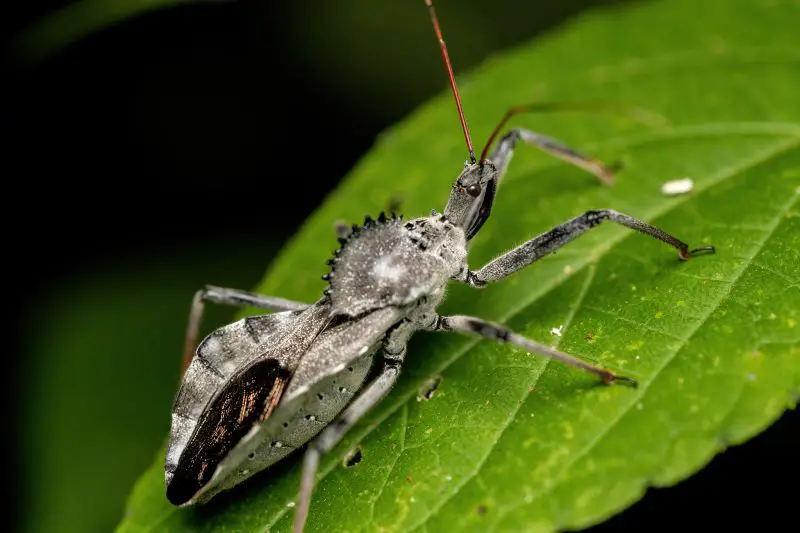
The wheel bug is one of the largest and most recognizable assassin bugs in North America. It has a gray to brown body, long legs, and a distinctive semicircular crest on its back that looks like a cog or wheel. This unusual feature makes it easy to identify once seen up close.
Adults typically measure between 1 and 1.5 inches long. In Wyoming, wheel bugs are most often found outdoors on trees, shrubs, fences, and near lights where other insects gather. They are more active during the warmer months, especially late summer.
Wheel bugs are solitary predators that hunt other insects using a sharp, piercing beak. They are not aggressive toward humans and do not seek out bites. Most incidents occur when the bug is accidentally handled, trapped against skin, or mistaken for a harmless insect.
Their bite is extremely painful and often described as burning, stabbing, or crushing. While the venom is not dangerous, the pain can last for hours and swelling may persist for days. In Wyoming, wheel bugs are a low-risk insect overall, but they are among the most painful biters if mishandled.
Blister Beetle

Blister beetles are elongated, soft-bodied insects with narrow heads and flexible wing covers. Their colors vary widely and may include black, gray, striped, or brightly patterned bodies. Despite their simple appearance, they possess a powerful chemical defense.
Most blister beetles range from 0.5 to 1 inch in length. In Wyoming, they are commonly found in grasslands, agricultural fields, gardens, and along roadsides, especially during dry summers when vegetation is abundant.
These beetles are slow-moving and non-aggressive. They do not bite or sting. Instead, they release a defensive toxin called cantharidin when crushed or threatened. Contact often happens when people brush against them or handle contaminated plants.
Cantharidin causes painful skin blistering, redness, and irritation upon contact. If transferred to the eyes or mouth, it can cause serious injury. In Wyoming, blister beetles pose a moderate risk during farming, gardening, or hay handling rather than through direct insect attacks.
Kissing Bug

Kissing bugs are large, flat-bodied insects with dark brown or black coloring accented by red or orange markings along the edges of their bodies. They have cone-shaped heads and long, thin mouthparts designed for piercing skin.
Adults usually measure between 0.75 and 1.25 inches long. In Wyoming, sightings are rare but possible, especially in rural areas or homes near wildlife habitats. They tend to hide in cracks, woodpiles, animal nests, and occasionally indoors.
Kissing bugs are nocturnal and feed on blood while hosts sleep. They often bite exposed areas of the face, which is how they earned their name. The bite itself is usually painless at first, making it easy to overlook.
While Chagas disease transmission is not considered a major risk in Wyoming, kissing bugs can trigger strong allergic reactions. Some people experience severe swelling, itching, or anaphylaxis. Their medical importance lies more in allergic risk than in disease spread locally.
Mosquito

Mosquitoes are small, slender insects with long legs, narrow wings, and a high-pitched buzzing flight. Females are the biters, using needle-like mouthparts to feed on blood. Despite their size, they are among the most dangerous insects in the state.
Most mosquitoes measure less than 0.5 inches long. In Wyoming, they thrive near standing water such as ponds, irrigation ditches, wetlands, and flooded fields. Population spikes occur after snowmelt and heavy summer rains.
Mosquitoes are persistent and opportunistic feeders, active mostly at dawn and dusk. They are attracted to body heat, carbon dioxide, and movement. Multiple bites in a short time are common in high-density areas.
Beyond itching and swelling, mosquitoes in Wyoming can transmit West Nile virus. Most infections are mild, but severe neurological illness can occur in some individuals. Their ability to spread disease makes mosquitoes one of the most serious insect threats in the region.
Horse Fly

Horse flies are large, heavy-bodied flies with wide heads and often brightly colored eyes. Their wings are strong, and their flight is fast and direct. Unlike many flies, they are aggressive biters rather than scavengers.
Adults typically range from 0.75 to 1.25 inches in length. In Wyoming, horse flies are most common near livestock, wetlands, rivers, and open pastureland during summer months.
Female horse flies bite to obtain blood, using blade-like mouthparts that cut the skin rather than pierce it. They often attack during daylight hours and may chase hosts repeatedly. Their bites are sudden and difficult to ignore.
Horse fly bites are extremely painful, often bleed, and can swell significantly. Open wounds increase the risk of secondary infection. While they are not major disease vectors in Wyoming, their bites pose a real problem for people working outdoors or around animals.
Sand Fly (Biting Midge)

Sand flies, often called biting midges or “no-see-ums,” are extremely small insects with slender bodies and short wings. Because of their tiny size, they are easy to overlook until the itching begins. Many people never see the insect that bit them, only the reaction it leaves behind.
Most sand flies measure just 1–3 millimeters long. In Wyoming, they are most common near wetlands, riverbanks, irrigated fields, and damp low-lying areas. They are especially active during warm evenings and calm, humid conditions.
Sand flies feed in swarms and are persistent biters. They are attracted to exposed skin and tend to target ankles, legs, arms, and the neck. Their bites are often painless at first, allowing multiple bites to occur before a person reacts.
The real danger comes from the aftermath. Sand fly bites can cause intense itching, swelling, redness, and welts that last for days. Some people develop strong allergic reactions. While they are not major disease vectors in Wyoming, their bites can significantly affect comfort and outdoor activities.
Flea

Fleas are small, wingless insects with flattened bodies that allow them to move easily through fur and clothing. They are dark brown and equipped with powerful hind legs for jumping. Although commonly associated with pets, fleas readily bite humans.
Adult fleas are typically 1–3 millimeters long. In Wyoming, they are most often found in homes with pets, barns, wildlife dens, and areas where rodents are present. Fleas thrive in warm, dry indoor environments once introduced.
Fleas are active feeders and can bite repeatedly, often in clusters or lines. They prefer the lower legs, ankles, and waistline. Their bites occur quickly, and the insect often moves on before being noticed.
Flea bites cause itching, redness, and small raised bumps. In sensitive individuals, bites can trigger allergic dermatitis with severe itching and swelling. Fleas are also known to transmit disease among animals and can occasionally pose health concerns for humans and pets in Wyoming.
Fire Ant (Occasional Range Expansion)

Fire ants are small to medium-sized ants with reddish-brown bodies and aggressive behavior. While they are not firmly established in Wyoming, occasional sightings may occur due to accidental transport or shifting environmental conditions.
Workers usually measure between 0.1 and 0.25 inches long. In regions where they appear, they build mound-like nests in open soil. Any confirmed presence in Wyoming is considered unusual and closely monitored.
Fire ants are highly defensive and attack in large numbers when disturbed. They swarm quickly and bite to anchor themselves before delivering repeated stings. This coordinated behavior makes even brief encounters dangerous.
Their stings inject venom that causes intense burning pain followed by raised pustules that can become infected. For people with allergies, fire ant stings may lead to anaphylactic shock. Even rare encounters in Wyoming would represent a serious medical concern.
Wolf Spider

Wolf spiders are large, hairy spiders with mottled brown, gray, or black coloring that provides excellent camouflage. They have prominent eyes arranged in rows, giving them strong night vision. Their size and speed often alarm people.
Adults typically range from 0.5 to 1.5 inches long, including legs. In Wyoming, wolf spiders are found in grasslands, fields, basements, garages, and crawl spaces. Unlike web-building spiders, they roam freely while hunting.
Wolf spiders are active hunters and do not spin capture webs. They are fast and may run suddenly when disturbed, which often startles homeowners. They are not aggressive and prefer to flee rather than bite.
Bites are uncommon and usually occur only when the spider is trapped or handled. When they do bite, the pain can be sharp and noticeable, accompanied by swelling and redness. While not medically dangerous, wolf spider bites can be distressing due to their size and suddenness.
Scorpion (Plains & Stray Individuals)
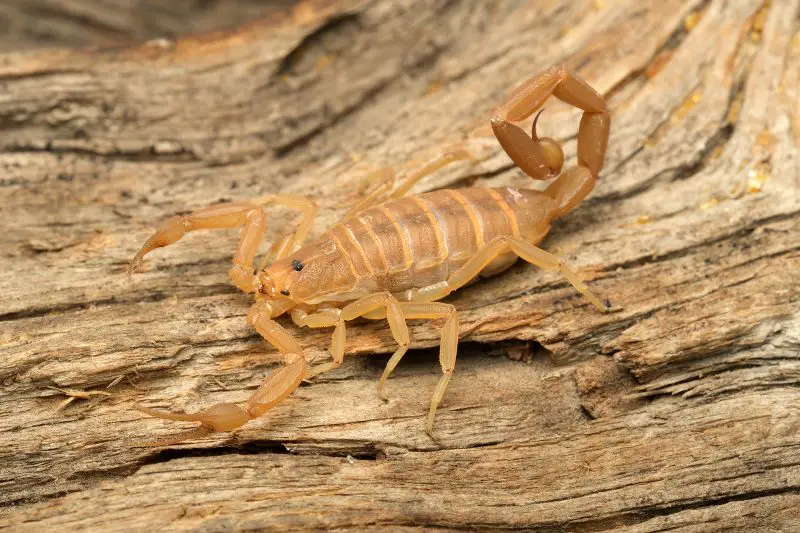
Scorpions are arachnids with elongated bodies, pincers, and a curved tail ending in a stinger. They are far more common in the southwestern United States, but rare individuals may appear in Wyoming, particularly in plains regions or through accidental transport.
Most scorpions encountered measure between 1.5 and 3 inches long. In Wyoming, sightings are uncommon and usually isolated. They may shelter under rocks, woodpiles, or inside boxes and shoes brought from other regions.
Scorpions are nocturnal and avoid human contact. Stings typically occur when someone accidentally touches or steps on one. They use their stinger defensively rather than aggressively.
A scorpion sting causes immediate localized pain, tingling, numbness, and mild swelling. Severe reactions are rare in Wyoming, but the pain can be intense. Children and sensitive individuals should seek medical advice if stung.
Centipede

Centipedes are long, flattened arthropods with many legs, typically one pair per body segment. They are fast-moving and often provoke fear due to their appearance. Indoor encounters are especially unsettling.
Most centipedes found in Wyoming range from 1 to 6 inches long. They prefer dark, damp environments such as basements, bathrooms, crawl spaces, and under debris. They are more active at night and during humid conditions.
Centipedes are predators that feed on insects and spiders. They do not seek out humans and usually bite only when handled or trapped. Their speed and sudden movements often lead to accidental contact.
Their bite injects venom through modified front legs, causing sharp pain, swelling, redness, and warmth. While rarely dangerous, bites can be painful and alarming. In Wyoming homes, centipedes pose more of a nuisance risk than a serious medical threat.
Tips to Avoid Dangerous Bugs in Wyoming
Awareness is your first line of defense. Many dangerous bugs in Wyoming only become a problem when they are surprised, handled, or allowed to live too close to human activity. Learning where these insects prefer to hide helps reduce accidental encounters.
When outdoors, wear long sleeves, pants, and closed shoes, especially in tall grass, brushy areas, or near water. Light-colored clothing makes it easier to spot ticks, fleas, and crawling insects before they reach the skin. Insect repellent is especially important during summer evenings and in wet habitats.
Around the home, seal cracks, reduce clutter, and keep basements, garages, and crawl spaces dry. Remove old wood piles, debris, and unused containers that attract spiders, centipedes, and wasps. Regularly check eaves, sheds, and fences for developing nests.
Never handle unfamiliar insects with bare hands. Many painful bites and stings occur when people attempt to remove or kill bugs directly. If a nest or infestation is discovered, professional removal is often the safest option.
FAQs About Dangerous Bugs in Wyoming
Are most dangerous bugs in Wyoming aggressive?
No. Most species bite or sting only when threatened, handled, or accidentally pressed against the skin. Aggression is usually defensive, not intentional.
Which bugs in Wyoming cause the most painful stings?
Velvet ants, tarantula hawk wasps, bald-faced hornets, and yellowjackets are known for extremely painful stings, even though some are rarely aggressive.
Are spider bites common in Wyoming?
Spider bites are uncommon. Even large spiders like wolf spiders or black widows prefer to avoid humans. Most bites happen indoors when spiders are trapped against skin.
Are ticks a serious health concern in Wyoming?
Yes. Deer ticks and Rocky Mountain wood ticks can transmit serious illnesses. Prompt removal and monitoring for symptoms are critical after a bite.
Can mosquitoes in Wyoming spread disease?
Yes. Mosquitoes in Wyoming are known carriers of West Nile virus, which can cause serious illness in some individuals.
Are fire ants established in Wyoming?
No. Fire ants are not well established, but rare sightings may occur due to accidental transport. Any suspected fire ant nest should be reported.
What should I do if I am stung or bitten?
Clean the area immediately, apply cold compresses, and monitor symptoms. Seek medical care if pain worsens, swelling spreads, or allergic reactions appear.
Who is most at risk from insect stings and bites?
Children, elderly adults, outdoor workers, hikers, and people with allergies face higher risks from severe reactions.
Final Thoughts
Dangerous bugs in Wyoming are part of the state’s natural ecosystem, not constant threats lurking everywhere. Most incidents happen because of surprise contact, lack of awareness, or proximity to nests and hiding places.
Understanding how these insects look, behave, and defend themselves makes a huge difference. Simple precautions like protective clothing, habitat awareness, and safe home maintenance can greatly reduce risk.
Respect rather than fear is the best approach. When people give these creatures space and take basic preventive steps, serious encounters remain rare. Wyoming’s landscapes can be enjoyed safely with knowledge, preparation, and a little caution.