
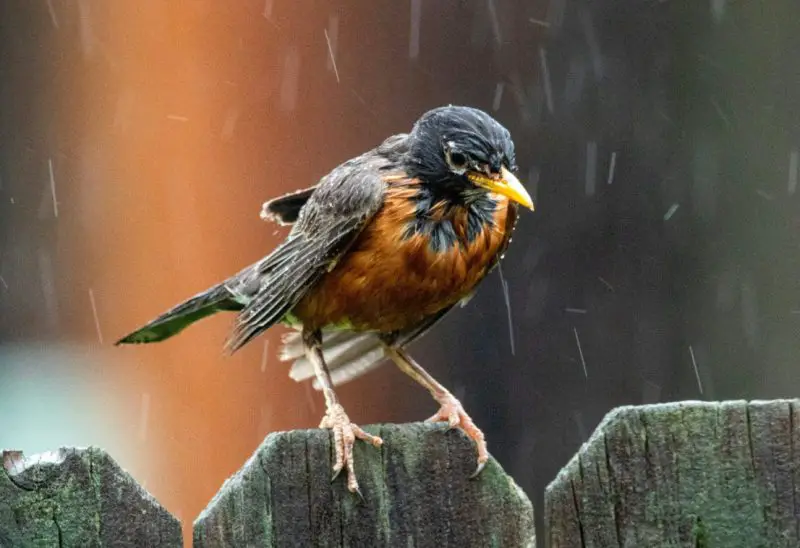
In Florida, hurricanes are not rare, once-in-a-generation events. They are a regular force that reshapes coastlines, wetlands, forests, and even cities. For people, hurricanes bring evacuations, boarded windows, and emergency alerts. For birds, they bring something far more immediate: a test of survival against wind, rain, flooding, and sudden habitat destruction.
Yet year after year, after the storm passes, birds reappear. Shorelines refill with pelicans and gulls. Songbirds resume calling from battered trees. Wading birds stalk flooded fields as if nothing happened. This raises a compelling question. How do birds actually survive hurricanes in Florida?
The answer is not simple flight or luck. Birds use a combination of instinct, landscape knowledge, physical adaptations, and strategic sheltering behaviors that evolved specifically for living in storm-prone environments. Hurricanes are violent, but they are also predictable in certain ways. Florida’s birds have learned how to respond.
This article explores how birds detect approaching hurricanes, where they go, what kinds of shelter they use, and why Florida’s unique geography plays such a critical role in their survival.
Table of Contents
- 1 Birds Sense Hurricanes Long Before Humans Do
- 2 Why Most Birds Do Not Fly Away From Hurricanes
- 3 Forest Birds Retreat Deep Into Dense Vegetation
- 4 Mangroves Are Hurricane Refuges for Coastal Birds
- 5 Shorebirds Move Inland, Not Away
- 6 Waterbirds Ride Out Storms on Water
- 7 Seabirds and the Eye of the Storm
- 8 Urban Environments Offer Unexpected Shelter
- 9 Why Birds Go Quiet During Hurricanes
- 10 Nesting Birds Face the Greatest Risk
- 11 Juvenile Birds Use Different Strategies
- 12 Birds Do Not Panic the Way Humans Do
- 13 Florida’s Flat Landscape Shapes Shelter Choices
- 14 Hurricanes Reshape Habitat, Not Just Threaten It
- 15 Why Mortality Is Lower Than Expected
- 16 How Migration Timing Reduces Risk
- 17 Birds Use Experience and Memory
- 18 Human Actions Can Help or Harm
- 19 What Happens After the Storm
- 20 Why Florida Birds Are Especially Resilient
- 21 FAQs about How Birds Find Shelter During Hurricanes in Florida
- 21.1 How do birds find shelter during hurricanes in Florida?
- 21.2 How early do birds look for shelter before a hurricane?
- 21.3 How do coastal birds survive hurricanes in Florida?
- 21.4 How do forest birds shelter during hurricanes?
- 21.5 How do water birds shelter during Florida hurricanes?
- 21.6 How do urban birds find shelter during hurricanes?
- 21.7 How important are mangroves for birds during hurricanes?
- 21.8 How do birds behave while sheltering during hurricanes?
- 22 Final Thoughts
Birds Sense Hurricanes Long Before Humans Do
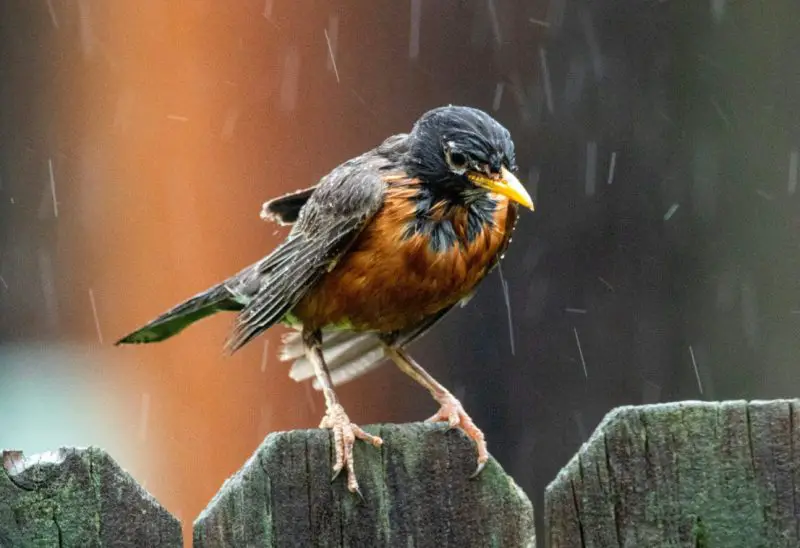
Birds do not need weather apps or forecasts. They detect hurricanes through subtle environmental cues long before the first bands of rain arrive.
Barometric pressure is one of the most important signals. As a hurricane approaches, air pressure drops rapidly. Birds are extremely sensitive to these changes and often alter their behavior one to two days before a storm makes landfall.
Changes in wind patterns, humidity, and infrasound also play a role. Hurricanes generate low-frequency sounds that travel long distances. Birds can perceive these vibrations even when skies are still clear.
As a result, many birds stop feeding, abandon exposed perches, and begin moving toward shelter well ahead of the storm.
Why Most Birds Do Not Fly Away From Hurricanes
A common misconception is that birds simply fly away from hurricanes. In reality, this is rarely an option.
Hurricanes cover enormous areas. Attempting to outrun one would require flying hundreds of miles into strong headwinds, often at night or in deteriorating weather. For most birds, this would be far more dangerous than staying put.
Instead of fleeing, birds seek shelter within their existing range. Survival depends on knowing where to hide, not where to escape.
Only a few species, particularly large seabirds with exceptional flight endurance, may alter their position significantly ahead of major storms.
Forest Birds Retreat Deep Into Dense Vegetation
Songbirds and woodland species rely heavily on forest structure during hurricanes.
As winds increase, birds move downward. They abandon canopy branches and settle into dense understory vegetation, vine tangles, palmetto thickets, and young tree clusters. These areas reduce wind speed dramatically.
Inside forests, wind behaves differently. Instead of sweeping horizontally, it becomes chaotic and fragmented. Dense foliage breaks gusts into smaller, less damaging currents.
Birds press close to trunks, wedge themselves into forked branches, or cling to vines and saplings that flex rather than snap.
This strategy reduces the risk of being blown away or struck by falling debris.
Mangroves Are Hurricane Refuges for Coastal Birds
Florida’s mangrove ecosystems are among the most important hurricane shelters for birds.
Mangroves grow in dense, interwoven stands along coastlines and estuaries. Their tangled roots and low, flexible canopies absorb wind energy while remaining structurally intact during storms.
Wading birds, herons, egrets, ibises, and even some shorebirds retreat deep into mangrove interiors when hurricanes approach. These areas may flood, but flooding is less deadly than exposure to wind.
Mangroves also reduce wave energy, protecting birds from storm surge impacts that devastate open beaches.
In many coastal regions, mangroves function as living storm shelters.
Shorebirds Move Inland, Not Away
Shorebirds face some of the most dangerous conditions during hurricanes. Open beaches and tidal flats offer no protection from wind or waves.
As storms approach, shorebirds shift inland, often just a few miles. They seek sheltered lagoons, flooded fields, inland wetlands, and even urban retention ponds.
During hurricanes, Florida’s low elevation means water spreads widely across the landscape. While this flooding is destructive for humans, it creates temporary inland refuges for birds adapted to shallow water.
After the storm, these flooded areas often become rich feeding grounds.
Waterbirds Ride Out Storms on Water
Large waterbirds such as ducks, geese, and some pelicans use an unexpected strategy. They remain on water.
On large lakes, reservoirs, and protected bays, birds position themselves away from shorelines and obstacles. Wind over open water can be intense, but waves are often less dangerous than flying debris on land.
Birds lower their profile, face into the wind, and ride out the storm’s energy. Their buoyant bodies and waterproof feathers allow them to remain afloat even during heavy rain.
This strategy works best in large, open water bodies with minimal obstructions.
Seabirds and the Eye of the Storm
Seabirds are uniquely adapted to extreme weather, but hurricanes still pose serious risks.
Some species, such as frigatebirds, shearwaters, and tropicbirds, are capable of flying long distances and may skirt the outer edges of storms. Others are swept inland unintentionally by hurricane winds.
In rare cases, seabirds have been observed within the eye of a hurricane, where winds are calmer. However, this is not a deliberate strategy for most species and is considered extremely risky.
Many seabirds survive hurricanes by remaining over open ocean, where wind patterns are more predictable than on land.
Urban Environments Offer Unexpected Shelter
Florida’s cities play an accidental role in bird survival during hurricanes.
Birds often shelter in dense ornamental vegetation, hedges, and landscaped areas. Parking garages, bridges, and building alcoves provide windbreaks.
Palm trees, despite their height, are surprisingly resilient. Their flexible trunks and fronds bend rather than break, creating usable shelter for some species.
However, urban environments also introduce dangers such as glass collisions and debris. Birds that shelter successfully in cities tend to use vegetation rather than buildings themselves.
Why Birds Go Quiet During Hurricanes
One of the most noticeable changes before and during hurricanes is silence.
Birds stop singing and calling almost entirely. This is not fear, but energy conservation. Vocalizing requires movement, exposure, and energy, all of which increase risk during storms.
Silence also reduces detection by predators that may be disoriented but still hunting.
The quiet before a hurricane is one of the clearest signs that birds have entered survival mode.
Nesting Birds Face the Greatest Risk
Hurricanes are especially dangerous during breeding season.
Nests in trees, shrubs, and marsh vegetation are vulnerable to wind, flooding, and destruction. Eggs and chicks cannot relocate.
Adult birds may survive by sheltering nearby, but nesting success often drops sharply after major storms.
However, many Florida birds compensate by renesting quickly. Long breeding seasons allow multiple attempts, reducing the long-term impact on populations.
Juvenile Birds Use Different Strategies
Young birds behave differently than adults during hurricanes.
Recently fledged birds often remain closer to ground level and rely heavily on dense vegetation. Their smaller size makes them more vulnerable to wind but allows them to fit into tighter shelter spaces.
Juveniles that have not yet learned strong flight skills may actually benefit from staying hidden rather than attempting to move.
Survival rates vary, but many juveniles make it through storms using instinctive sheltering behaviors.
Birds Do Not Panic the Way Humans Do
Bird behavior during hurricanes may appear calm or passive, but it is highly intentional.
Birds reduce movement, tuck feathers tightly to maintain body heat, and adopt stable postures. Their skeletal and muscular systems are adapted to gripping branches and perches even under strong wind pressure.
Rather than frantic escape, birds rely on stillness.
This calm response is one of the most important survival traits.
Florida’s Flat Landscape Shapes Shelter Choices
Florida’s geography strongly influences bird sheltering behavior.
The state’s flat terrain means there are few steep slopes or rocky refuges. Instead, shelter comes from vegetation density, water distribution, and elevation changes of only a few feet.
Birds have adapted to this reality. They use trees, shrubs, wetlands, and man-made features rather than cliffs or caves.
Flood-tolerant strategies are more important than wind avoidance alone.
Hurricanes Reshape Habitat, Not Just Threaten It
While hurricanes are destructive, they also create new habitat.
Downed trees open forest canopies, encouraging new growth. Flooded areas create temporary wetlands rich in invertebrates. Storm surge deposits nutrients into marshes.
Birds that survive hurricanes often benefit from the ecological reset that follows.
Florida’s bird populations evolved alongside storms, not in spite of them.
Why Mortality Is Lower Than Expected
Despite the violence of hurricanes, mass bird die-offs are less common than people assume.
Most bird deaths occur due to secondary factors such as starvation, exposure after habitat loss, or collisions, not wind itself.
Birds that successfully shelter during the storm often survive the immediate event, even if their environment is heavily altered afterward.
Adaptation, not immunity, explains their survival.
How Migration Timing Reduces Risk
Many migratory birds are absent from Florida during peak hurricane months.
Species that breed farther north pass through Florida before the most intense storm season. Winter migrants arrive after hurricane frequency decreases.
This timing reduces exposure for many species, leaving primarily resident birds to face the strongest storms.
Migration patterns evolved in part to avoid seasonal risks like hurricanes.
Birds Use Experience and Memory
Adult birds remember past storms.
They recognize safe shelter locations and return to them during subsequent hurricanes. This learned behavior improves survival over time.
Birds that survive one major storm are often better prepared for the next.
Experience matters.
Human Actions Can Help or Harm
Human landscaping choices affect bird shelter availability.
Native vegetation, dense shrubs, and preserved wetlands provide critical refuge. Removing undergrowth and clearing natural areas reduces shelter options.
After storms, delaying cleanup allows birds to continue using damaged but functional habitat.
Small decisions have large impacts during extreme weather.
What Happens After the Storm
Once winds subside, birds emerge cautiously.
They assess damage, locate food, and reestablish territories. Some species disperse temporarily to find better resources, while others remain and adapt.
The days following a hurricane are often as challenging as the storm itself.
Survival does not end at landfall.
Why Florida Birds Are Especially Resilient
Florida birds live with hurricanes as a constant presence.
Over thousands of years, species that could not cope with storms disappeared or adapted. Those that remain are resilient, flexible, and behaviorally sophisticated.
Hurricanes are not anomalies in Florida. They are part of the ecological rhythm.
Birds have learned to move with that rhythm rather than fight it.
FAQs about How Birds Find Shelter During Hurricanes in Florida
How do birds find shelter during hurricanes in Florida?
Birds move into dense vegetation, mangroves, wetlands, and other protected areas before the storm arrives.
How early do birds look for shelter before a hurricane?
Most birds respond one to two days early when air pressure and wind patterns begin to change.
How do coastal birds survive hurricanes in Florida?
They shift inland to mangroves, lagoons, flooded fields, and sheltered wetlands away from storm surge.
How do forest birds shelter during hurricanes?
They drop into lower forest layers, gripping flexible branches, vines, and thick undergrowth.
How do water birds shelter during Florida hurricanes?
Many remain on large lakes or sheltered bays, riding out the storm on open water.
How do urban birds find shelter during hurricanes?
They use parks, dense landscaping, hedges, and protected green spaces within cities.
How important are mangroves for birds during hurricanes?
Mangroves are among the safest natural shelters because they reduce wind and wave energy.
How do birds behave while sheltering during hurricanes?
They stay quiet, minimize movement, and conserve energy until conditions improve.
Final Thoughts
So how do birds find shelter during hurricanes in Florida?
They listen.
They move early.
They go low, go dense, and stay still.
Birds use forests, mangroves, wetlands, water bodies, and even human-altered landscapes to survive storms that reshape entire regions. They rely on instinct sharpened by generations of experience, not last-minute escape.
Hurricanes are among the most powerful forces birds face, yet Florida’s skies continue to fill with wings after every storm. Their survival is not accidental. It is the result of evolution, behavior, and an intimate understanding of a landscape shaped by wind and water.