
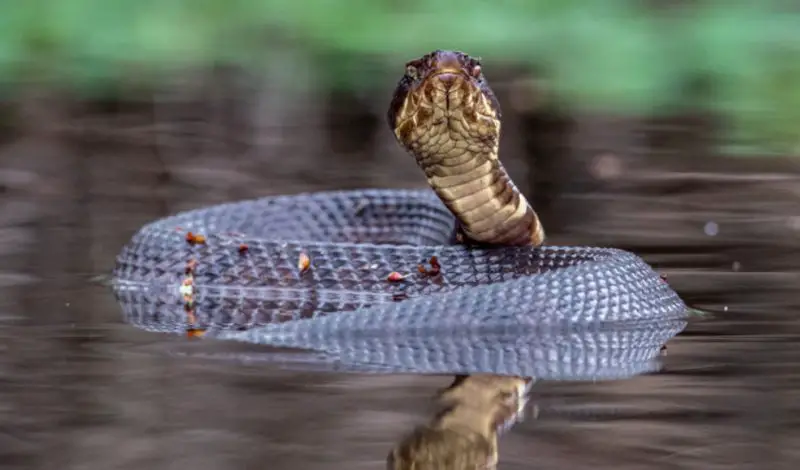
Accounts of water moccasins chasing people have circulated across the American South for generations. Alabama wetlands, with their extensive marshes, rivers, swamps, and coastal habitats, are often mentioned in these accounts. A sudden snake encounter near water can be startling, and that shock sometimes turns into dramatic storytelling.
Yet scientific observation, wildlife research, and field reports paint a more measured picture. Water moccasins, also called cottonmouths, are defensive reptiles adapted to aquatic environments. Their behavior usually reflects survival instincts rather than aggression toward humans. Understanding those instincts helps separate myth from biological reality.
Alabama residents and outdoor visitors frequently share these landscapes with wildlife. Knowing how cottonmouths behave reduces fear, prevents risky reactions, and supports safe coexistence with native species that play important ecological roles.
Table of Contents
- 1 What Water Moccasins Actually Are
- 2 Do Water Moccasins Really Chase People?
- 3 Alabama Wetlands Provide Ideal Habitat
- 4 Why Encounters Sometimes Feel Sudden
- 5 Behavioral Traits That Influence Public Perception
- 6 Comparing Cottonmouths With Harmless Water Snakes
- 7 Ecological Importance of Cottonmouths
- 8 Human Expansion Into Wetland Areas
- 9 Are Water Moccasins Aggressive Toward Humans?
- 10 Typical Encounter Scenarios in Alabama
- 11 Practical Safety Tips in Wetland Areas
- 12 What To Do If You Encounter One
- 13 Understanding Venom Risk Realistically
- 14 Seasonal Patterns Across Alabama
- 15 Why the Chasing Myth Persists
- 16 Climate Influence on Visibility
- 17 Identifying Real Risk Versus Perceived Risk
- 18 Living Safely Alongside Native Wildlife
- 19 FAQs About Water Moccasins in Alabama Wetlands
- 19.1 Do water moccasins actively chase people?
- 19.2 Are cottonmouths aggressive by nature?
- 19.3 Where are they most common in Alabama?
- 19.4 How dangerous is their venom?
- 19.5 How can encounters be prevented?
- 19.6 Do they enter residential areas often?
- 19.7 Are harmless water snakes often mistaken for cottonmouths?
- 19.8 Should a cottonmouth be killed if seen?
- 20 Final Thoughts
What Water Moccasins Actually Are
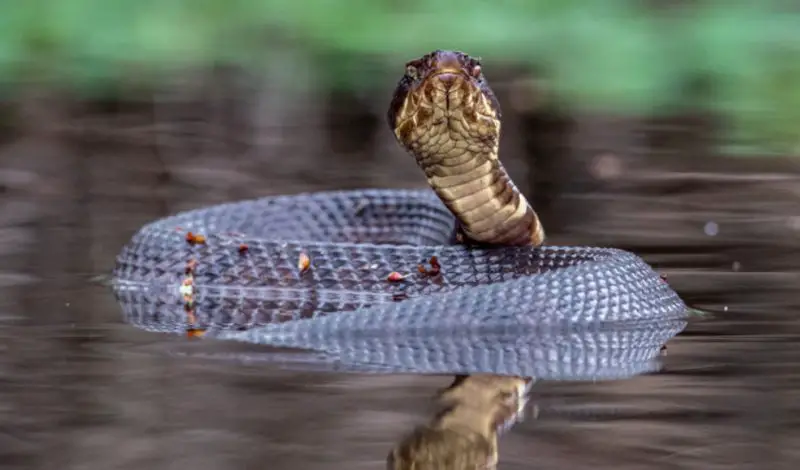
Venomous Semi-Aquatic Pit Vipers
Water moccasins (Agkistrodon piscivorus) belong to the pit viper family, which also includes rattlesnakes and copperheads. They possess heat-sensing facial pits that help detect prey even in low light conditions. Their thick bodies, keeled scales, and muscular build make them strong swimmers well suited to wetlands.
Unlike strictly terrestrial snakes, cottonmouths spend significant time in or near water. They may float with only their heads visible, bask on logs, or move along muddy shorelines searching for prey. Fish, frogs, small mammals, birds, carrion, and even other snakes form part of their diet.
This dietary flexibility helps them thrive in Alabama’s diverse aquatic ecosystems. Wetlands provide food, shelter, temperature regulation, and concealment from predators.
The Cottonmouth Warning Display
The name “cottonmouth” comes from the bright white interior of the snake’s mouth. When threatened, the snake may coil and open its mouth wide, exposing that pale lining. This is not an attack posture. It is a warning signal intended to avoid physical conflict.
Many predators recognize this display as a sign to keep distance. Humans sometimes interpret it as aggression, but biologically it serves the opposite purpose. It reduces the need for biting by communicating discomfort clearly.
Do Water Moccasins Really Chase People?
Defensive Movement Often Misinterpreted
Reports of snakes “chasing” people usually stem from misunderstanding movement patterns. Cottonmouths prefer retreat when possible. Their escape routes often lead toward water, dense vegetation, or shaded cover.
If a person unknowingly stands between the snake and its preferred refuge, the snake may move in that direction to escape. From the human perspective, this can feel like pursuit. In reality, the snake is trying to leave the encounter quickly.
Wildlife biologists repeatedly observe avoidance behavior rather than active pursuit.
Energy Conservation and Risk Avoidance
Predators conserve energy carefully. Chasing large animals like humans would expose snakes to injury without nutritional benefit. Evolution favors caution rather than unnecessary confrontation.
Venom primarily functions for prey capture. Defensive bites occur only when escape fails. From a survival standpoint, avoidance remains the safest strategy for the snake.
Alabama Wetlands Provide Ideal Habitat
Abundant Aquatic Ecosystems
Alabama contains extensive wetland habitats including river floodplains, coastal marshes, swamps, oxbow lakes, reservoirs, and slow moving creeks. These environments offer essential resources for cottonmouth survival:
Stable water access
Dense shoreline vegetation
Abundant amphibian and fish populations
Warm basking sites
Natural shelter
Because these resources are widespread, cottonmouth sightings are relatively common in suitable regions.
Regional Distribution Patterns
Cottonmouths occur throughout much of Alabama, especially in southern and central areas where wetlands dominate. Northern upland regions may see fewer individuals due to cooler climates and different habitat structure.
Understanding geographic distribution helps explain why some communities report frequent encounters while others rarely see them.
Why Encounters Sometimes Feel Sudden
Seasonal Activity Peaks
Snake activity increases during warmer months. Spring warming stimulates movement after winter inactivity. Summer heat may push snakes toward shaded shorelines, docks, or residential water features.
Autumn dispersal before cooler weather can also increase sightings. These seasonal patterns often create the impression of population spikes even when numbers remain stable.
Human Recreation Overlaps With Habitat
Fishing, kayaking, boating, hiking, and wildlife photography all occur in cottonmouth habitat. Increased human presence naturally leads to more observations.
Visibility increases, not necessarily snake abundance.
Behavioral Traits That Influence Public Perception
Freeze-Then-Move Response
Cottonmouths often remain motionless when first detected. Camouflage protects them from predators. Only when a perceived threat approaches closely do they move quickly.
That sudden movement can startle observers and create the illusion of aggressive intent. In reality, it is a delayed escape response.
Warning Signals Before Biting
Common defensive behaviors include:
Coiling posture
Mouth gaping display
Head elevation
Tail vibration
Slow repositioning toward cover
These signals aim to prevent physical contact. Most bites occur only when the snake feels cornered or handled.
Comparing Cottonmouths With Harmless Water Snakes
Frequent Misidentification
Alabama hosts many non-venomous water snakes that resemble cottonmouths. Species in the genus Nerodia often share coloration, aquatic behavior, and habitat.
Harmless water snakes may flee quickly toward water, sometimes directly past a person. This can reinforce the chasing myth even when the snake is non-venomous.
Key Identification Differences
Cottonmouth characteristics often include:
Heavy, muscular body
Broad triangular head
Vertical slit pupils
Subtle banding patterns
Distinct defensive display
Harmless water snakes usually appear slimmer, with round pupils and more vivid patterning. Correct identification reduces unnecessary fear.
Ecological Importance of Cottonmouths
Predator Balance in Wetlands
Cottonmouths help regulate amphibian, fish, and rodent populations. Balanced predator presence supports ecosystem stability, vegetation health, and disease control among prey species.
Their role contributes to healthy wetland functioning.
Scavenging Contribution
They also consume carrion, helping recycle nutrients and reduce decomposition buildup. This often overlooked role supports ecological balance.
Human Expansion Into Wetland Areas
Residential Development Trends
Population growth in Alabama increasingly places housing near wetlands for recreation, aesthetics, and economic development. This expansion naturally increases wildlife encounters.
Often, wildlife has not moved closer to people. People have moved closer to wildlife habitat.
Artificial Water Features
Stormwater ponds, irrigation canals, decorative lakes, and drainage systems create additional aquatic habitat. These features attract prey species, indirectly attracting snakes.
Are Water Moccasins Aggressive Toward Humans?
Scientific Observations
Field studies consistently show cottonmouths prefer avoidance. Most bites result from:
Accidental stepping
Attempted handling
Cornering situations
Direct provocation
Unprovoked attacks remain rare. Maintaining distance prevents nearly all incidents.
Defensive Biology Explained
Venom production requires energy. Using venom defensively without necessity would reduce hunting efficiency. Evolution favors restraint.
Typical Encounter Scenarios in Alabama
Fishing Locations
Anglers often encounter cottonmouths because both occupy productive aquatic environments. Most snakes quietly slip into water when approached.
Calm awareness helps prevent surprise reactions.
Boating and Kayaking
Floating logs, vegetation mats, and shorelines serve as basking sites. Passing boats may startle snakes into the water. This retreat can appear sudden but reflects escape behavior.
Residential Wetland Edges
Homes near creeks or marshes may occasionally see passing snakes. Movements usually relate to seasonal dispersal or prey availability rather than attraction to humans.
Practical Safety Tips in Wetland Areas
Stay on clear paths near water.
Wear sturdy footwear outdoors.
Use flashlights at night.
Avoid reaching into concealed spaces.
Supervise pets near wetlands.
Simple precautions significantly reduce risk while allowing outdoor enjoyment.
What To Do If You Encounter One
Remain calm. Sudden movement can intensify defensive reactions.
Slowly step back and give the snake an escape route.
Never attempt to handle or kill it.
Most encounters resolve quickly once distance increases.
Understanding Venom Risk Realistically
Cottonmouth venom can cause pain, swelling, and tissue effects. Modern medical care significantly reduces serious outcomes. Prompt evaluation after any suspected bite remains essential.
Prevention through awareness remains the best strategy.
Seasonal Patterns Across Alabama
Spring brings increased basking and feeding.
Summer supports peak activity.
Autumn involves dispersal before cooler weather.
Mild winters allow occasional movement in southern regions.
Understanding seasonal patterns helps anticipate encounters.
Why the Chasing Myth Persists
Unexpected wildlife encounters become memorable stories. Human psychology emphasizes dramatic events. Social media spreads anecdotes rapidly, often without context.
Over time, repeated storytelling can overshadow scientific evidence. Balanced information helps correct misconceptions.
Climate Influence on Visibility
Weather patterns affect prey populations, vegetation cover, and water levels. These environmental factors influence snake movement. Extended warm seasons may increase activity periods.
Environmental context shapes encounter frequency.
Identifying Real Risk Versus Perceived Risk
Statistically, snake bites remain rare compared with other outdoor hazards such as heat exposure, insect stings, or water accidents.
Perspective helps maintain balanced caution rather than fear. Preparedness improves confidence outdoors.
Living Safely Alongside Native Wildlife
Education reduces unnecessary conflict. Awareness of habitat, behavior, and seasonal activity supports coexistence.
Wetlands represent complex ecosystems where predators play essential roles. Removing them indiscriminately can disrupt ecological balance.
FAQs About Water Moccasins in Alabama Wetlands
Do water moccasins actively chase people?
No. Most apparent chasing incidents result from escape behavior when humans block a preferred retreat path.
Are cottonmouths aggressive by nature?
They are defensive rather than aggressive. They prefer avoidance when given space.
Where are they most common in Alabama?
Wetlands, marshes, slow rivers, swamps, and coastal areas provide ideal habitat.
How dangerous is their venom?
Venomous bites require medical attention but serious outcomes are uncommon with prompt treatment.
How can encounters be prevented?
Awareness, proper footwear, avoiding tall vegetation near water, and giving snakes space greatly reduce risk.
Do they enter residential areas often?
Occasionally near wetlands or water features, usually following prey rather than seeking human contact.
Are harmless water snakes often mistaken for cottonmouths?
Yes. Misidentification contributes significantly to chasing myths.
Should a cottonmouth be killed if seen?
Wildlife experts generally advise leaving it alone unless it poses immediate danger. Most encounters resolve peacefully.
Final Thoughts
Water moccasins are an established part of Alabama’s wetland ecosystems. While their venomous status deserves respect, scientific evidence shows they rarely pursue humans intentionally. Most so-called chasing incidents reflect escape behavior, habitat overlap, or misidentification.
Understanding cottonmouth biology helps replace fear with informed caution. Awareness, habitat respect, and simple safety habits allow people to enjoy Alabama’s rich wetlands without unnecessary anxiety.
Balanced coexistence benefits both communities and ecosystems. When knowledge replaces myth, wildlife encounters become manageable experiences rather than alarming mysteries.