
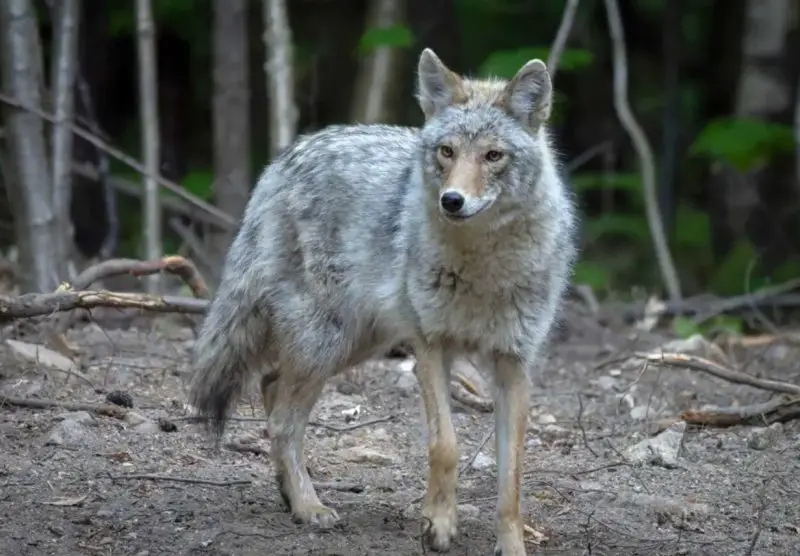
Throughout Maine, tales of unusual canids have been shared for generations. Farmers describe animals that look like coyotes but act like dogs. Hunters report tracks that seem too large for a coyote yet too lean for a wolf. Rural homeowners claim they have seen animals that bark like dogs, move like coyotes, and linger closer to people than expected.
These encounters often lead to one familiar explanation: coydogs.
The idea of a hybrid animal part coyote, part domestic dog feels intuitive in a place like rural Maine. Coyotes are widespread. Free-ranging dogs exist in some areas. Forests, fields, and low-density settlements blur the line between wild and domestic spaces.
But intuition does not equal biology.
So do coydogs really exist in rural Maine, or is the idea mostly a myth shaped by misidentification, folklore, and misunderstanding of canid behavior?
The answer is more nuanced than many expect. Coydogs are biologically possible. But their real-world presence, persistence, and ecological impact in Maine are very different from popular belief.
Table of Contents
- 1 Why the Coydog Idea Took Root in Maine
- 2 Understanding What a Coydog Actually Is
- 3 The Breeding Barrier Most People Overlook
- 4 Behavioral Differences Matter More Than Genetics
- 5 What Science Says About Coydogs in the Wild
- 6 Coyotes in Maine Are Already Hybrids of Sorts
- 7 Why Coydogs Are Often Misidentified Coyotes
- 8 The Role of Feral and Free-Ranging Dogs
- 9 Trail Cameras and the Illusion of Hybrids
- 10 Could Coydogs Be Born but Not Persist?
- 11 Why Coyotes Prefer Coyotes
- 12 The Fear Factor Behind Coydog Stories
- 13 What Wildlife Agencies Say in Maine
- 14 Coywolves vs Coydogs: A Common Mix-Up
- 15 Why Rural Maine Feels Like the Perfect Place for Coydogs
- 16 What People Are Actually Seeing
- 17 Why the Myth Persists Despite Evidence
- 18 Should People Be Concerned About Coydogs?
- 19 Coexisting With Coyotes in Maine
- 20 FAQs About Coydogs in Maine
- 21 Final Thoughts
Why the Coydog Idea Took Root in Maine
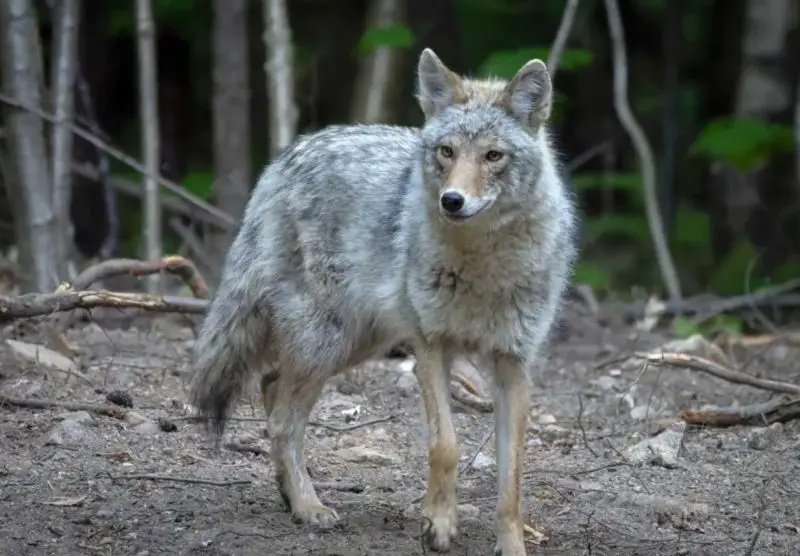
Maine’s landscape plays a major role in why coydog stories persist.
Large tracts of forest, long winters, sparse human populations, and abundant wildlife create ideal conditions for coyotes to thrive. At the same time, rural living means dogs are often allowed to roam freely, especially in farming or logging communities.
When people encounter an unfamiliar canid in this setting, they instinctively look for an explanation that fits both worlds. A hybrid seems to make sense.
Historically, Maine also has a strong oral storytelling culture. Wildlife stories are passed down through families, hunting camps, and small communities. Once the idea of coydogs entered local conversation, it spread easily, reinforced by anecdotal sightings rather than scientific evidence.
Understanding What a Coydog Actually Is
A coydog is a hybrid offspring produced by a mating between a coyote and a domestic dog.
From a purely genetic standpoint, coydogs are possible. Coyotes and dogs belong to the same genus and share compatible chromosome counts. In controlled or unusual circumstances, mating can occur.
However, biological possibility does not mean ecological likelihood.
For a coydog population to exist naturally, multiple conditions must align: overlapping breeding cycles, compatible mating behavior, repeated successful reproduction, and survival of offspring in the wild.
This is where theory begins to break down.
The Breeding Barrier Most People Overlook
One of the biggest obstacles to coydog formation is timing.
Coyotes have a very strict breeding season. In Maine, coyotes typically breed in late winter, often January through February. Females come into heat once per year for a very short window.
Domestic dogs, on the other hand, have flexible breeding cycles. Females can come into heat multiple times a year, often outside the coyote breeding season.
This mismatch dramatically reduces the chance of successful mating. Even when coyotes and dogs live near each other, their reproductive clocks rarely align.
Behavioral Differences Matter More Than Genetics
Even when timing overlaps, behavior creates another major barrier.
Coyotes are highly selective when it comes to mates. They form strong pair bonds, defend territories aggressively, and follow complex courtship rituals that domestic dogs do not share.
A wild coyote does not view an unfamiliar dog as a natural mate. More often, it views the dog as a threat, competitor, or prey.
Domestic dogs, especially pets, also lack the survival behaviors needed to interact safely with wild coyotes during breeding season.
These behavioral mismatches make natural mating extremely rare.
What Science Says About Coydogs in the Wild
Despite decades of rumors, confirmed cases of coydogs in the wild are exceptionally scarce.
When suspected hybrids are genetically tested, results almost always show pure coyote DNA, pure domestic dog DNA, or mixtures involving wolves rather than dogs.
Wildlife biologists across the northeastern United States consistently report the same pattern: coydogs may occur in isolated, short-lived cases, but they do not form stable, self-sustaining populations.
In other words, even if a coydog is born, it is unlikely to reproduce successfully in the wild or contribute meaningfully to the gene pool.
Coyotes in Maine Are Already Hybrids of Sorts
One reason coydogs feel believable is that Maine coyotes do not look exactly like western coyotes.
Eastern coyotes, including those in Maine, already carry genetic contributions from wolves. This occurred generations ago as coyotes expanded eastward and interbred with remnant wolf populations.
The result is a larger, more robust coyote with varied coat colors, longer legs, and broader skulls.
Many animals labeled as “coydogs” are actually these eastern coyotes, whose appearance naturally blurs the line between classic coyote and wolf.
Why Coydogs Are Often Misidentified Coyotes
Physical traits are deceptive.
Eastern coyotes can weigh significantly more than western coyotes. Their fur is thicker, especially in winter. Coat colors range from gray and tan to reddish or nearly black.
Behaviorally, coyotes can also surprise people. They may bark, howl, yip, or even display curiosity near human structures, especially in food-rich environments.
When people expect coyotes to look small and shy, these traits feel unnatural, leading to hybrid assumptions.
The Role of Feral and Free-Ranging Dogs
Feral dogs contribute heavily to coydog confusion.
In rural Maine, some dogs live partially wild lives. They roam long distances, hunt small animals, and avoid people. Over time, they develop leaner builds, longer legs, and cautious behavior.
Seen at a distance or on trail cameras, these dogs are frequently mistaken for hybrids or coyotes.
When a feral dog and a coyote occupy the same area, sightings multiply, reinforcing the belief that hybrids must exist.
Trail Cameras and the Illusion of Hybrids
Modern trail cameras have intensified coydog myths.
Nighttime images distort size and proportions. Motion blur elongates legs and snouts. Infrared lighting flattens depth perception.
A medium-sized coyote photographed at the right angle can look enormous. A lean dog can appear wild and predatory.
Without scale references, people often interpret these images through expectation rather than biology.
Could Coydogs Be Born but Not Persist?
This is where nuance matters.
Yes, it is possible that an occasional coydog has been born in rural Maine. Biology does not forbid it entirely.
But rarity is key.
These animals would face enormous challenges. They may inherit behavioral traits that make survival difficult. They may not integrate well with coyote packs or dog groups. They may struggle to reproduce.
As a result, even if coydogs appear occasionally, they disappear just as quickly, leaving no lasting population.
Why Coyotes Prefer Coyotes
Coyotes evolved to survive by sticking to what works.
Pair bonding, cooperative parenting, and territorial defense are central to their success. Mating with dogs undermines these systems.
Coyotes that attempt to mate outside their species risk social rejection, failed reproduction, and reduced survival.
Natural selection strongly favors coyotes that mate with other coyotes.
The Fear Factor Behind Coydog Stories
Coydog myths are not just about biology. They are about fear.
Hybrids are often imagined as more aggressive, less predictable, and more dangerous than either parent species.
In rural communities where livestock, pets, and children are part of daily life, the idea of a “half-wild, half-domestic” predator taps into deep anxieties.
Unfortunately, this fear can lead to unnecessary killing of coyotes or dogs based on misidentification.
What Wildlife Agencies Say in Maine
Wildlife officials in Maine consistently emphasize that coydogs are not a significant or established presence.
They acknowledge rare hybridization events are theoretically possible but stress that most sightings involve eastern coyotes or free-ranging dogs.
Management strategies focus on understanding coyote behavior, not hybrid threats.
From a conservation standpoint, coydogs are not considered an ecological factor.
Coywolves vs Coydogs: A Common Mix-Up
Many people confuse coydogs with coywolves.
Coywolves, also known as eastern coyotes, are real, well-documented hybrids of coyotes and wolves that occurred generations ago.
Coydogs, by contrast, involve domestic dogs and do not show the same genetic stability or ecological success.
This confusion keeps the coydog myth alive.
Why Rural Maine Feels Like the Perfect Place for Coydogs
Maine feels remote, wild, and lightly monitored. This creates the sense that anything could be living just beyond the tree line.
But wildlife biology does not change with scenery.
Even in vast forests, natural laws govern reproduction, survival, and population dynamics.
Rural isolation fuels mystery, not evidence.
What People Are Actually Seeing
In most cases, sightings attributed to coydogs fall into three categories.
Large eastern coyotes with wolf ancestry.
Feral or free-ranging domestic dogs.
Poor lighting or brief encounters that exaggerate size and behavior.
Once these explanations are considered, the need for a hybrid disappears.
Why the Myth Persists Despite Evidence
Coydog stories persist because they are compelling.
They offer a simple explanation for complex wildlife changes. They turn ordinary sightings into extraordinary encounters.
And they spread easily through word of mouth and social media.
Science moves slower than stories.
Should People Be Concerned About Coydogs?
From a practical standpoint, no.
Coyotes in Maine behave like coyotes, regardless of genetic history. Their interactions with humans, pets, and livestock are shaped by food availability and human behavior, not hybrid myths.
Understanding real coyote ecology does far more to improve safety than worrying about rare or nonexistent hybrids.
Coexisting With Coyotes in Maine
Coyotes are now a permanent part of Maine’s ecosystem.
They control rodent populations, influence deer behavior, and adapt quickly to human landscapes.
Education, responsible pet management, and habitat awareness reduce conflict far more effectively than fear-driven responses.
Coydogs do not change this reality.
FAQs About Coydogs in Maine
Do coydogs really exist in rural Maine?
Coydogs are biologically possible, but confirmed cases in the wild are extremely rare and not self-sustaining.
Are most “coydogs” actually coyotes?
Yes. Most sightings involve eastern coyotes, which already have wolf ancestry and can look larger or different.
Can coyotes and dogs mate naturally?
In theory yes, but different breeding seasons and behaviors make it very unlikely in nature.
Why do people think they see coydogs?
Feral dogs, large eastern coyotes, and poor lighting often lead to misidentification.
Do wildlife agencies recognize coydogs as a population?
No. Maine wildlife officials do not consider coydogs an established or significant presence.
Are coydogs more dangerous than coyotes?
No evidence supports this. Coyotes behave like coyotes, not unpredictable hybrids.
Final Thoughts
So, do coydogs really exist in rural Maine?
In theory, yes. In practice, almost never.
There is no evidence of stable coydog populations, no genetic data showing widespread hybrids, and no ecological need to invoke them to explain what people see.
What Maine residents are encountering are eastern coyotes shaped by wolf ancestry, feral dogs living on the margins, and the powerful influence of expectation.
The myth of the coydog endures because it feels right in a wild place. But biology tells a quieter, clearer story.
In rural Maine, coyotes are real. Dogs are real. Coydogs, for the most part, remain a myth.