
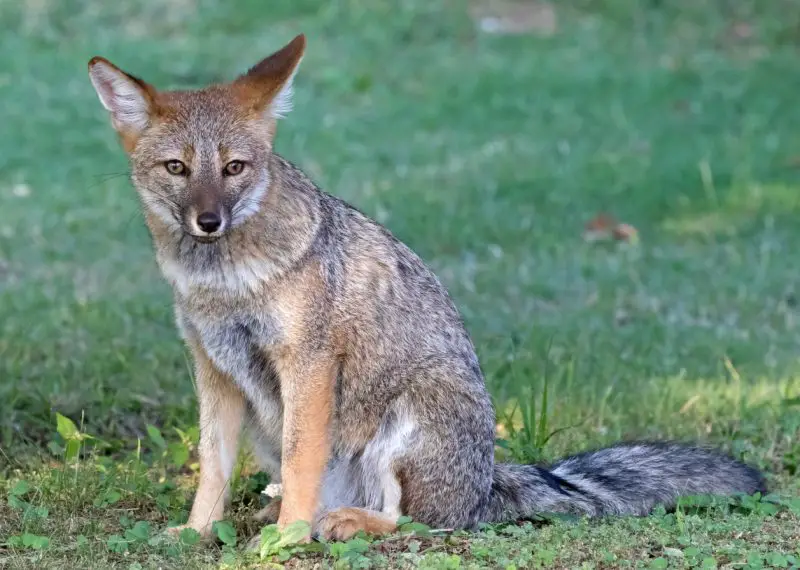
From desert basins to rural town edges, Nevada residents occasionally describe encounters with fox-looking dogs. Some observers swear they saw animals with fox faces but dog-sized bodies. Others describe dogs with bushy tails and narrow muzzles behaving more like wildlife than pets. From these encounters, one idea often emerges: dog–fox hybrids.
It sounds plausible on the surface. Dogs and foxes both belong to the canid family. They share pointed ears, long legs, sharp muzzles, and adaptable behavior. Nevada’s vast landscapes create long stretches where wildlife and domestic animals overlap, encouraging speculation that hybrids could exist unnoticed.
But genetics tells a very different story.
Despite appearances, dog–fox hybrids are not just rare. They are biologically impossible. No verified hybrid has ever existed anywhere, including Nevada. The reason has nothing to do with geography or behavior alone. It comes down to deep genetic barriers that cannot be crossed, no matter how often dogs and foxes encounter one another.
To understand why, we have to look closely at how species are defined, how genetics governs reproduction, and why foxes and dogs are far more distant relatives than most people realize.
Table of Contents
- 1 Why Nevada Feels Like the Right Place for Hybrid Myths
- 2 What People Usually Mean by “Dog–Fox Hybrid”
- 3 Dogs and Foxes Are Not Closely Related
- 4 Chromosomes: The First Genetic Wall
- 5 Why Chromosome Mismatch Matters So Much
- 6 Different Genera, Different Rules
- 7 Why Coyotes Can Hybridize but Foxes Cannot
- 8 Nevada’s Fox Species Add to the Confusion
- 9 Fox Behavior Feels “Dog-Like” at Times
- 10 Fox-Like Dog Breeds Are Common
- 11 Feral Dogs Blur the Line Further
- 12 Trail Cameras Distort Reality
- 13 Why Science Has Never Found a Hybrid
- 14 Why Nevada’s Environment Does Not Change Genetics
- 15 Why the Myth Persists Anyway
- 16 The Psychological Side of Hybrid Beliefs
- 17 Real Consequences of the Myth
- 18 How Biologists Identify Species Reliably
- 19 Why Nevada’s Wildlife Is Already Remarkable
- 20 What People Are Actually Seeing
- 21 Genetics Draws a Hard Line
- 22 FAQs About Dog–Fox Hybrids in Nevada
- 23 Final Thoughts
Why Nevada Feels Like the Right Place for Hybrid Myths
Nevada’s geography encourages mystery.
Large portions of the state are sparsely populated. Vast deserts, basins, and mountain ranges create the impression that unknown animals could exist just beyond view. Foxes move silently through sagebrush. Free-roaming dogs appear in rural communities, mining areas, and agricultural valleys.
Encounters are often brief. Lighting is poor at dawn or dusk. Distances are hard to judge in open terrain. When an animal does not fit neatly into familiar categories, the human mind fills the gap.
Hybrid explanations feel satisfying because they explain the unfamiliar without requiring detailed biological knowledge.
What People Usually Mean by “Dog–Fox Hybrid”
Most people do not mean a scientifically defined hybrid when they say dog–fox.
They mean an animal that looks like a fox but seems too large. Or a dog that looks unusually sleek, narrow-faced, and wild. Or an animal whose behavior doesn’t match expectations for either species.
In reality, appearance and behavior are shaped by environment, genetics within species, and human perception. Hybridization is not required.
Dogs and Foxes Are Not Closely Related
Although dogs and foxes both belong to the family Canidae, that relationship is more distant than it seems.
Dogs descend from gray wolves. Foxes belong to entirely different evolutionary branches that split off millions of years earlier. This separation allowed their genetic structures to drift far apart over time.
They may look similar because evolution favors certain shapes for hunting and survival, not because they are closely related enough to reproduce.
Superficial resemblance does not equal genetic compatibility.
Chromosomes: The First Genetic Wall
One of the strongest barriers to hybridization is chromosome number.
Domestic dogs have 78 chromosomes. Fox species have very different counts. Red foxes, for example, have far fewer chromosomes, and those chromosomes are structured differently.
Successful reproduction requires chromosomes to pair correctly during cell division. When chromosome numbers and structures do not align, embryos cannot develop normally.
This mismatch alone makes dog–fox hybrids impossible.
Why Chromosome Mismatch Matters So Much
Chromosomes are not interchangeable parts.
During reproduction, chromosomes must line up precisely to exchange genetic material and create viable cells. Even small differences can disrupt development.
The differences between dogs and foxes are not small. They are fundamental. Cells cannot compensate for them.
This is why no confirmed dog–fox embryo has ever developed, let alone survived to birth.
Different Genera, Different Rules
Dogs belong to the genus Canis. Foxes belong to genera such as Vulpes and Urocyon.
Hybridization between species sometimes occurs within the same genus. Between different genera, it becomes dramatically less likely. Between these genera, it becomes impossible.
This taxonomic separation reflects deep genetic divergence, not arbitrary naming.
Why Coyotes Can Hybridize but Foxes Cannot
People often ask why dogs can interbreed with coyotes or wolves but not foxes.
Coyotes, wolves, and dogs are all within the genus Canis. Their chromosome numbers are compatible. Their evolutionary separation is relatively recent.
Foxes are outside this group entirely. Their genetics follow a different blueprint.
Hybridization is not about family resemblance. It is about genetic alignment.
Nevada’s Fox Species Add to the Confusion
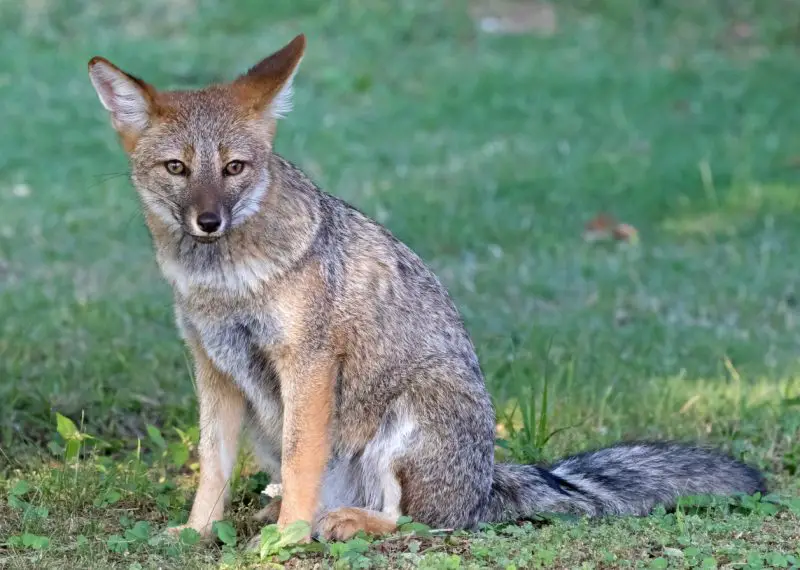
Nevada hosts both red foxes and gray foxes.
Gray foxes are especially confusing. They are smaller than coyotes but larger than many expect. They can climb trees. They move with agility that feels dog-like.
Red foxes in Nevada can appear larger and heavier-coated in winter. Seen at a distance, they may appear dog-sized.
These foxes do not need hybrid ancestry to look unusual. They are already adapted to varied environments.
Fox Behavior Feels “Dog-Like” at Times
Behavior contributes strongly to misidentification.
Foxes are intelligent and adaptable. In areas with low hunting pressure, they may tolerate human presence. They may pause, observe, or move calmly rather than fleeing.
This contradicts the stereotype of foxes as always shy and elusive. When behavior breaks expectation, people look for explanations.
Hybrid myths step in where understanding ends.
Fox-Like Dog Breeds Are Common
Many dog breeds were intentionally developed to resemble foxes.
Pointed ears, narrow muzzles, curled or bushy tails, and red or sable coats are all traits humans selected for.
In Nevada, breeds like Shiba Inu, Finnish Spitz, Basenjis, and mixed breeds with similar traits are not uncommon. Seen briefly or from a distance, these dogs can easily be mistaken for fox hybrids.
Feral Dogs Blur the Line Further
Free-roaming and feral dogs complicate identification.
Over time, dogs living without human care become leaner and more cautious. Their movements grow efficient and quiet. Their behavior shifts toward survival.
In Nevada’s rural areas, these dogs may hunt small prey, avoid people, and move primarily at dawn or dusk.
To an observer, they feel wild.
Trail Cameras Distort Reality
Trail cameras are notorious for creating illusions.
Infrared lighting removes color cues. Motion blur elongates bodies. Angles exaggerate proportions.
A fox close to the camera can look dog-sized. A dog further away can look fox-like.
Without scale or context, images invite speculation.
Why Science Has Never Found a Hybrid
Genetic testing has been performed on countless animals suspected to be hybrids.
Every time, results fall into known categories: dog, fox, coyote, or wolf. Never a dog–fox combination.
If hybrids were even occasionally viable, genetics would reveal traces. It has not.
Absence of evidence over decades of study is not coincidence.
Why Nevada’s Environment Does Not Change Genetics
Some believe Nevada’s harsh conditions might force unusual pairings.
Environment influences behavior, not genetic compatibility. No amount of proximity or pressure can overcome chromosomal incompatibility.
Animals cannot “adapt” their genetics to reproduce with distant relatives.
Nature enforces its boundaries strictly.
Why the Myth Persists Anyway
Dog–fox hybrids persist in stories because they feel logical.
They explain unfamiliar animals. They add mystery to wide-open landscapes. They circulate easily online.
Myths thrive where knowledge gaps exist.
The Psychological Side of Hybrid Beliefs
Humans are pattern-seekers.
When something does not fit a known category, the mind invents a new one. Hybrids are especially appealing because they combine familiar elements.
This is not foolishness. It is human nature.
But biology does not bend to perception.
Real Consequences of the Myth
Belief in dog–fox hybrids can cause harm.
Foxes may be persecuted as imagined threats. Dogs may be abandoned or feared. Wildlife agencies may receive unnecessary reports.
Understanding reality promotes coexistence rather than conflict.
How Biologists Identify Species Reliably
Professionals rely on anatomy, behavior, genetics, and context.
Skull shape, gait, tail carriage, dentition, and habitat use all provide reliable clues.
No hybrid explanation is needed when these tools are used correctly.
Why Nevada’s Wildlife Is Already Remarkable
Nevada hosts adaptable foxes, resilient coyotes, and dogs that thrive in extreme environments.
These animals are interesting without mythical hybrids.
Reality is more complex and impressive than fiction.
What People Are Actually Seeing
In nearly every case, sightings attributed to dog–fox hybrids fall into one of three explanations.
A fox behaving confidently.
A fox-like dog breed.
A feral or free-roaming dog.
Once these are considered, the mystery dissolves.
Genetics Draws a Hard Line
Evolution allows some species to blur boundaries. Others are separated by walls that cannot be crossed.
Dogs and foxes sit on opposite sides of one such wall.
No matter how often they encounter one another in Nevada’s deserts or valleys, genetics prevents hybridization.
FAQs About Dog–Fox Hybrids in Nevada
Can dogs and foxes interbreed in Nevada?
No. Genetic differences make dog–fox hybridization biologically impossible anywhere, including Nevada.
Has a dog–fox hybrid ever been confirmed?
No. There has never been a verified or genetically proven dog–fox hybrid.
Why do some animals look like fox dogs?
Most sightings involve fox-like dog breeds, feral dogs, or foxes seen under poor lighting or at a distance.
No. They belong to different genera and have incompatible chromosome structures.
Why can dogs hybridize with coyotes but not foxes?
Dogs and coyotes share the same genus and similar chromosomes. Foxes do not.
Are “fox dogs” recognized by wildlife agencies?
No. Wildlife officials classify such sightings as known species or domestic dogs, not hybrids.
Final Thoughts
So why do genetics make dog–fox hybrids impossible in Nevada?
Because the blueprint of life does not allow it.
Dogs and foxes are separated by incompatible chromosomes, distant evolutionary histories, and fundamental biological barriers. No environment, behavior, or anecdote can overcome those facts.
What Nevada residents see are real animals, behaving naturally in a shared landscape. The mystery lies not in hybrids, but in how perception, environment, and expectation shape what we think we see.
Once genetics enters the conversation, the answer becomes clear.
Dog–fox hybrids do not exist.