
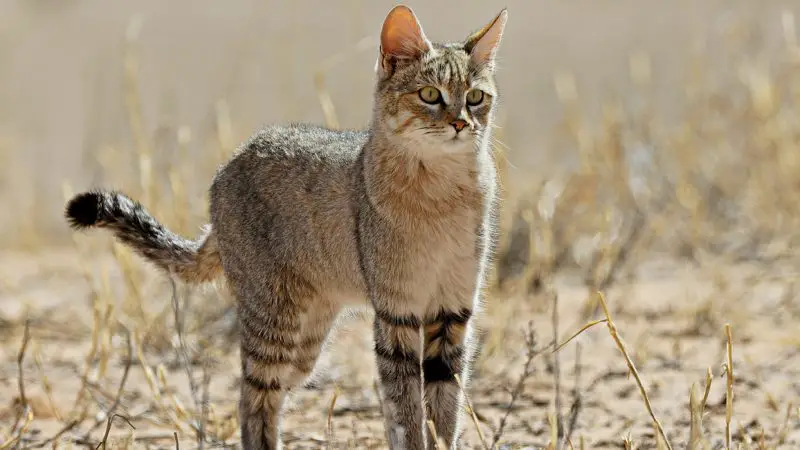
In Wyoming, wildcats and free-roaming domestic cats are frequently spotted in the same areas. Ranchlands, sagebrush basins, forest edges, and even the outskirts of small towns create shared spaces where wildlife and human-associated animals cross paths. This overlap fuels a persistent and fascinating question: can domestic cats actually interbreed with wildcats in Wyoming?
At first glance, the idea feels plausible. Wildcats and house cats look similar at a distance, share hunting behaviors, and sometimes occupy the same terrain. Stories circulate online about mysterious large “hybrid” cats, unusual coat patterns, or aggressive feral cats mistaken for wild species. But biology does not run on appearances alone.
The real answer is more complex than a simple yes or no. Genetics, behavior, size differences, territorial instincts, and ecology all play critical roles. Some wildcats are biologically compatible with domestic cats. Others are separated by millions of years of evolution, making hybridization impossible.
This article explores which wildcats exist in Wyoming, which interbreeding scenarios are biologically possible, which are myths, and why confusion around this topic persists.
Table of Contents
- 1 Wildcats That Live in Wyoming
- 2 Understanding Hybridization in Cats
- 3 Domestic Cats and Bobcats: The Core Question
- 4 Why Bobcat–Domestic Cat Hybrids Are So Unlikely
- 5 Mountain Lions and Domestic Cats: A Biological No
- 6 Lynx and Domestic Cats: Theoretical but Practically Absent
- 7 The Role of Feral Cats in Hybrid Myths
- 8 Why Some Cats Look “Wild”
- 9 What Genetic Testing Actually Shows
- 10 Why the Idea Persists
- 11 Can Hybridization Ever Happen in Captivity?
- 12 Ecological Barriers Matter More Than Genetics
- 13 Why Wildlife Agencies Reject the Hybrid Claim
- 14 Risks of Believing the Myth
- 15 What Actually Interbreeds in Wyoming
- 16 How to Tell a Bobcat From a Domestic Cat
- 17 The Legal Perspective in Wyoming
- 18 The Emotional Element
- 19 What Science Actually Says
- 20 FAQs About Domestic Cats Interbreed With Wildcats in Wyoming
- 21 Final Thoughts
Wildcats That Live in Wyoming
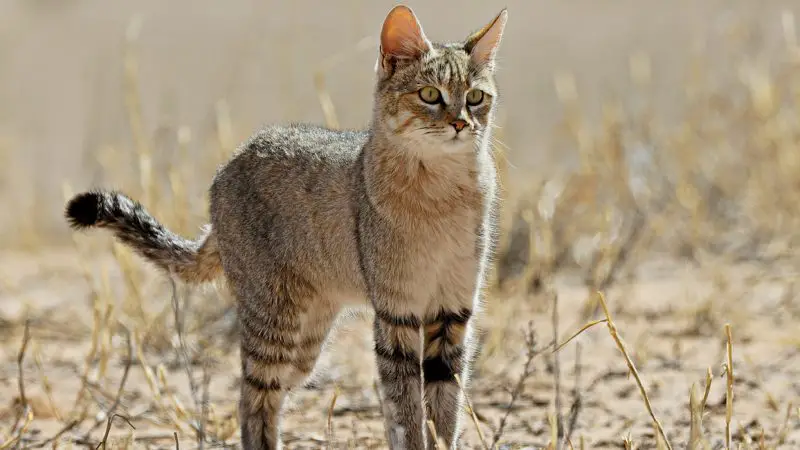
Wyoming supports several native wild cat species, but they are not all equal when it comes to hybridization potential.
The most common wildcat encountered across the state is the bobcat. These medium-sized predators thrive in deserts, forests, foothills, and agricultural edges. Bobcats frequently pass near human development, especially at night.
Mountain lions also live throughout Wyoming, but they are far larger, more solitary, and far less likely to interact with domestic cats in any meaningful way.
Occasional reports of Canada lynx occur in high-elevation forests, particularly in the western and northwestern portions of the state. Lynx are rare, elusive, and ecologically specialized.
Each of these species interacts very differently with domestic cats, both behaviorally and genetically.
Understanding Hybridization in Cats
Hybridization occurs when two different species mate and produce offspring. For this to happen successfully, several biological conditions must align.
The two species must be genetically close enough to produce viable embryos. Their chromosome numbers must be compatible. Their reproductive timing must overlap. Their mating behaviors must not be fundamentally incompatible.
Even if mating occurs, offspring must be viable, able to develop fully, and ideally capable of reproduction themselves.
In the cat family, some species are closely related and can hybridize. Others are so distant that mating is either impossible or results in non-viable embryos.
Domestic Cats and Bobcats: The Core Question
The most commonly discussed scenario in Wyoming involves domestic cats and bobcats.
Domestic cats belong to a different species than bobcats, but they share a relatively recent evolutionary ancestor compared to larger cats like mountain lions. This genetic proximity fuels speculation about interbreeding.
However, confirmed cases of domestic cat–bobcat hybrids are extraordinarily rare and controversial. Despite decades of research, wildlife agencies and genetic studies have found no clear, repeatable evidence of naturally occurring, fertile hybrids between domestic cats and bobcats in the wild.
The barriers are not just genetic. They are behavioral and ecological.
Bobcats are significantly larger than domestic cats. Adult bobcats weigh two to three times more. Their mating behaviors are aggressive, seasonal, and highly territorial. Domestic cats do not share these patterns.
Even when their ranges overlap, bobcats typically view domestic cats as prey or competitors, not potential mates.
Why Bobcat–Domestic Cat Hybrids Are So Unlikely
Several factors strongly limit the likelihood of interbreeding.
First, size disparity matters. Bobcat mating involves physical dominance and aggression that smaller domestic cats cannot tolerate safely.
Second, reproductive timing differs. Bobcats have a defined breeding season tied to daylight length and prey cycles. Domestic cats can breed year-round.
Third, communication signals differ. Vocalizations, scent marking, and mating rituals do not align well enough to trigger successful pairing.
Finally, even if mating were attempted, genetic incompatibility likely prevents successful embryo development.
As a result, what people often interpret as hybrids are usually large feral cats, unusual coat variations, or young bobcats mistaken for something else.
Mountain Lions and Domestic Cats: A Biological No
Mountain lions are sometimes included in hybrid rumors, but from a biological standpoint, this pairing is impossible.
Mountain lions diverged from the domestic cat lineage millions of years ago. Their chromosome structures, reproductive biology, and sheer size differences prevent hybridization entirely.
A mountain lion weighs ten to twenty times more than a domestic cat. Their mating behaviors are incompatible, and no credible scientific evidence supports any form of hybrid offspring.
When people report “half mountain lion” cats, they are almost always misidentifying bobcats, juvenile mountain lions, or large feral cats seen under poor lighting.
Lynx and Domestic Cats: Theoretical but Practically Absent
Canada lynx are genetically closer to bobcats than to mountain lions. In theory, lynx and domestic cats are closer enough to raise questions about hybridization.
In practice, however, lynx are extremely specialized. They live in deep forest habitats, rely heavily on snowshoe hares, and avoid human-altered landscapes.
Domestic cats rarely venture into lynx habitat, and lynx rarely tolerate proximity to human settlements. Their mating seasons, behaviors, and ecological niches barely overlap.
No confirmed natural hybrids between domestic cats and lynx have been documented in Wyoming.
The Role of Feral Cats in Hybrid Myths
Feral cats play a central role in hybrid confusion.
In rural Wyoming, feral cats can grow large, muscular, and highly skilled hunters. Their coats may appear thick, striped, or mottled, especially in winter.
These cats often display wary, aggressive behavior more typical of wildlife than pets. When encountered unexpectedly, they are frequently mistaken for hybrids or wildcats.
Trail cameras exacerbate this confusion. Low-resolution nighttime images distort size and proportions, making feral cats appear larger or more “wild” than they truly are.
Why Some Cats Look “Wild”
Physical traits alone are unreliable indicators of hybridization.
Many domestic cats carry genes for tabby striping, spotted coats, tufted ears, and thick tails. These traits overlap visually with bobcats.
Cold climates like Wyoming’s encourage dense fur growth, making domestic cats appear bulkier in winter.
Injuries, scars, and behavioral aggression further contribute to the illusion of wild ancestry.
Without genetic testing, visual identification is notoriously inaccurate.
What Genetic Testing Actually Shows
When suspected hybrids are genetically tested, results almost always show pure domestic cat DNA or pure wildcat DNA.
In the rare cases where mixed ancestry appears, it typically involves closely related wildcat species interbreeding with each other, not with domestic cats.
The absence of confirmed domestic–bobcat hybrids after extensive testing strongly suggests that natural hybridization is not occurring at meaningful levels in Wyoming.
Why the Idea Persists
Despite scientific evidence, the hybrid myth persists for several reasons.
Human brains are wired to seek explanations for unusual sightings. A strange-looking cat feels more satisfying as a hybrid than as a feral animal.
Social media amplifies anecdotal stories without verification. A single blurry photo can circulate for years.
There is also a cultural fascination with hybrids, creatures that blur boundaries between wild and domestic.
Wyoming’s vast landscapes and strong wildlife identity make it fertile ground for such stories.
Can Hybridization Ever Happen in Captivity?
In controlled environments, humans have intentionally hybridized domestic cats with certain small wildcats, such as Asian leopard cats, to create breeds like the Bengal.
These pairings involve species far smaller and genetically closer than bobcats or lynx.
Even in captivity, domestic cat–bobcat hybrid attempts are extraordinarily rare and ethically controversial, with no stable hybrid lineage established.
What can happen under human intervention does not necessarily translate to natural conditions.
Ecological Barriers Matter More Than Genetics
Even when species are genetically compatible, ecological separation often prevents hybridization.
Different prey preferences, habitat use, activity patterns, and territorial behaviors keep species apart.
In Wyoming, domestic cats cluster around human habitation. Wildcats largely avoid those areas.
This spatial separation is one of the strongest barriers preventing interbreeding.
Why Wildlife Agencies Reject the Hybrid Claim
State and federal wildlife agencies consistently reject claims of widespread domestic cat–wildcat hybrids.
Their conclusions are based on decades of field data, genetic testing, necropsies, and population monitoring.
If hybridization were occurring at meaningful levels, it would show up in genetic surveys. It does not.
Instead, agencies emphasize public education to reduce misidentification and fear-driven responses to wildlife.
Risks of Believing the Myth
Belief in hybrid cats can lead to harmful consequences.
People may kill feral cats believing them to be dangerous hybrids. They may fear harmless wildlife or spread misinformation.
It can also undermine conservation efforts by distracting from real ecological issues, such as habitat loss and human-wildlife conflict.
Understanding reality helps promote coexistence rather than fear.
What Actually Interbreeds in Wyoming
While domestic cats do not meaningfully hybridize with wildcats in Wyoming, other animals do interbreed naturally.
Canids such as wolves, coyotes, and domestic dogs show well-documented hybridization in certain regions.
These examples often fuel assumptions that similar processes occur in cats, even though feline biology differs significantly.
Hybridization is species-specific, not universal.
How to Tell a Bobcat From a Domestic Cat
Many hybrid reports stem from misidentification.
Bobcats have proportionally shorter tails with black tips, longer legs, broader faces, and distinctive ear tufts.
Domestic cats, even large ones, retain longer tails, narrower faces, and different gait patterns.
Behavior also differs. Bobcats move deliberately, avoid direct eye contact, and disappear quickly when detected.
Learning these differences reduces confusion.
The Legal Perspective in Wyoming
Wyoming law treats domestic cats and wildlife very differently.
Killing or harassing wildcats is regulated. Domestic cats fall under local animal ordinances.
Misidentifying one as the other can result in legal consequences.
This is another reason wildlife officials emphasize accurate identification and caution.
The Emotional Element
Hybrid stories often carry emotional weight.
They tap into fear of the wild encroaching on domestic life or fascination with untamed nature.
In rural states like Wyoming, where wildlife is part of identity, these stories gain traction quickly.
Separating emotion from evidence is essential for clear understanding.
What Science Actually Says
Based on genetics, behavior, ecology, and decades of data, the scientific consensus is clear.
Domestic cats do not meaningfully interbreed with wildcats in Wyoming.
While theoretical possibilities exist at the margins, real-world conditions prevent such hybrids from forming or persisting.
What people see are feral cats, wildcats, or misinterpretations, not hybrids.
FAQs About Domestic Cats Interbreed With Wildcats in Wyoming
Can domestic cats interbreed with wildcats in Wyoming?
No. There is no verified scientific evidence that domestic cats naturally interbreed with Wyoming wildcats.
Are bobcat–domestic cat hybrids real?
No confirmed cases exist. Most “hybrids” turn out to be feral cats or misidentified bobcats.
Can domestic cats breed with mountain lions?
No. They are too genetically distant for hybridization to occur.
What about domestic cats and Canada lynx?
No confirmed hybrids. Different habitats and behaviors prevent interbreeding.
Why do some cats look like wildcats?
Large feral cats, thick winter coats, and tabby patterns often cause confusion.
Can DNA testing confirm hybrids?
Yes. Genetic tests reliably show whether a cat is domestic or wild.
Final Thoughts
The question “Can domestic cats interbreed with wildcats in Wyoming?” captures a deep curiosity about where the wild and domestic worlds meet.
The honest answer is that biology sets firm boundaries. Despite shared landscapes and superficial similarities, domestic cats and Wyoming’s wildcats remain separate.
Understanding this reality helps reduce fear, prevent misinformation, and promote respect for both wildlife and animals living alongside humans.
In Wyoming’s wide-open spaces, wildcats remain wild, domestic cats remain domestic, and the line between them, while visually confusing at times, is biologically clear.