
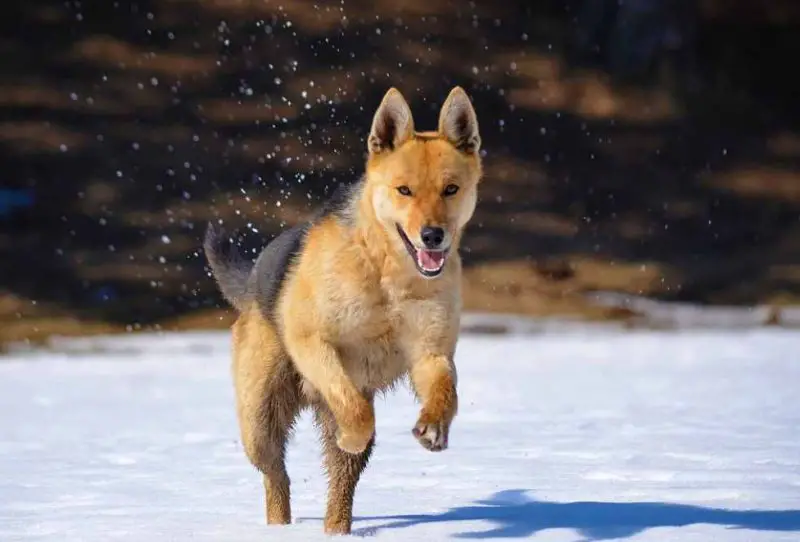
All across California, people repeatedly report sightings of animals they call “fox dogs.” Homeowners describe animals with bushy tails, narrow muzzles, and quick, fox-like movements that don’t quite match any familiar dog breed. Hikers post trail-camera photos of sleek canids that seem too large to be foxes, yet too small or too delicate to be coyotes. Online forums fill with speculation. Are these animals real hybrids, or is something else going on?
The term fox dog is not a scientific one. It has no standing in wildlife biology or veterinary genetics. Yet the idea persists, especially in a state as large, ecologically varied, and culturally diverse as California. From coastal scrub and suburban hillsides to deserts, farmland, and mountain forests, California offers countless places where wild canids and domestic dogs occupy overlapping space.
So what are people actually seeing? Are fox dogs real animals, or are they simply misidentified dog breeds, feral dogs, or wild species seen under confusing conditions?
The answer lies at the intersection of genetics, behavior, appearance, and human perception.
Table of Contents
- 1 Why the Idea of “Fox Dogs” Took Hold in California
- 2 What People Usually Mean by “Fox Dog”
- 3 Foxes That Live in California
- 4 Coyotes Add to the Confusion
- 5 Can Dogs and Foxes Hybridize?
- 6 Why Fox-Like Dog Breeds Exist
- 7 Common Fox-Like Dog Breeds Seen in California
- 8 Feral and Free-Roaming Dogs Complicate Things
- 9 Trail Cameras and Visual Illusions
- 10 Behavior Shapes Perception More Than Appearance
- 11 Why California Sightings Are So Common
- 12 Cultural Influence and Social Media
- 13 Why Wildlife Agencies Reject the Term
- 14 Why the Myth Persists Anyway
- 15 The Real Risks of Misidentification
- 16 How to Tell a Fox From a Dog
- 17 Why “Fox Dog” Is a Catch-All Term
- 18 Science Leaves Little Room for Debate
- 19 The Role of Human Curiosity
- 20 California’s Wildlife Is Interesting Enough
- 21 FAQs About “fox dogs” real in California?
- 22 Final Thoughts
Why the Idea of “Fox Dogs” Took Hold in California
California is uniquely suited to generate wildlife confusion.
The state supports multiple wild canid species, including foxes and coyotes, while also hosting one of the largest and most diverse dog populations in the world. Add in year-round outdoor activity, dense trail-camera use, and constant social media sharing, and unusual sightings are almost guaranteed.
California’s climate also plays a role. Mild winters allow animals to remain active all year. Dogs that roam freely or escape human care can survive long enough to develop semi-wild behaviors. Over time, they may look and act less like pets and more like wildlife.
When people encounter an unfamiliar canid, especially one that doesn’t behave like a typical dog, the label fox dog feels like a convenient explanation.
What People Usually Mean by “Fox Dog”
When Californians say they saw a fox dog, they are usually describing one of three things.
A dog that looks fox-like.
A fox behaving in an unexpected way.
A brief or distant sighting that defies easy identification.
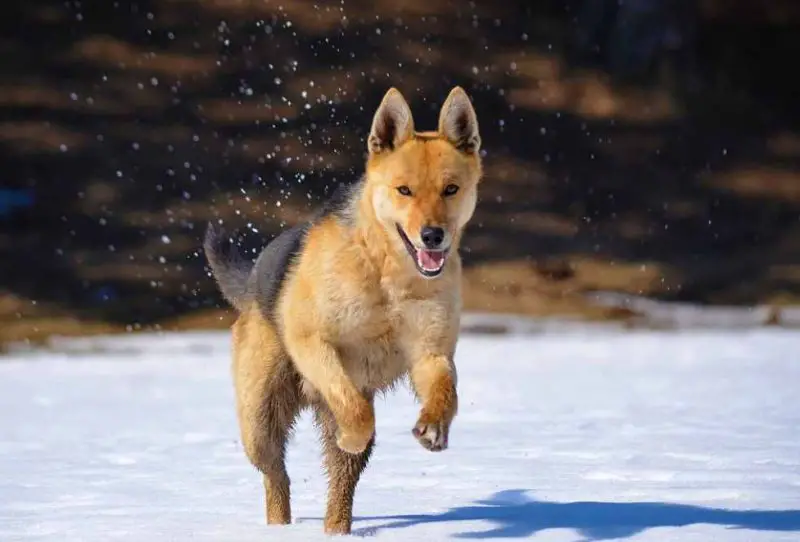
The term often emerges when the animal appears dog-sized but carries fox traits such as a narrow face, pointed ears, reddish or silver fur, and a bushy tail.
But appearance alone is a poor guide to species identity.
Foxes That Live in California
California is home to several fox species, each with distinct traits.
The most widespread is the gray fox, a species comfortable in forests, chaparral, farmland, and even suburban edges. Gray foxes are agile climbers and often move in ways people don’t expect from canids.
Red foxes also exist in parts of California, particularly in agricultural areas and along the coast. Some populations are native, while others were introduced historically.
These foxes are smaller than most dogs but can appear larger under certain conditions, especially when seen briefly or at night.
Coyotes Add to the Confusion
Coyotes are abundant throughout California, from deserts to cities.
Young or small coyotes can resemble foxes in body shape. Conversely, coyotes with thick winter coats or unusual coloration can look dog-like.
Coyotes are also behaviorally flexible. They may trot confidently through neighborhoods, pause to observe humans, or move with a relaxed gait that feels less “wild” than expected.
This behavioral overlap fuels fox dog assumptions.
Can Dogs and Foxes Hybridize?
This is the central biological question.
Despite both being canids, domestic dogs and foxes are not genetically compatible in a way that allows hybridization. They belong to different genera and have incompatible chromosome structures.
No verified case of a dog-fox hybrid has ever been documented. Not in California. Not anywhere.
From a biological standpoint, fox dogs do not exist.
Why Fox-Like Dog Breeds Exist
If fox dogs aren’t real, why do some dogs look so much like foxes?
Selective breeding is the answer.
Many dog breeds were intentionally developed to resemble foxes in shape, color, or expression. Narrow muzzles, erect ears, curled or bushy tails, and red or sable coats are all traits humans have emphasized over generations.
In California, where these breeds are common, encounters with fox-like dogs are inevitable.
Common Fox-Like Dog Breeds Seen in California
Several breeds are frequently mistaken for foxes or fox hybrids.
Shiba Inu are compact, agile, and famously fox-like. Their red coats and alert posture often cause confusion.
Finnish Spitz have bright red fur and expressive faces that closely resemble foxes, especially at a distance.
Basenjis have narrow heads, pointed ears, and quick, quiet movements that feel more wild than domestic.
Certain mixed-breed dogs inherit combinations of these traits, making them even harder to identify.
Feral and Free-Roaming Dogs Complicate Things
Not all dogs in California live as pets.
In rural areas, deserts, and some agricultural regions, free-roaming or feral dogs exist. Over time, these dogs change.
They become leaner. Their coats adapt to the environment. Their behavior shifts toward caution and independence.
Seen briefly, these dogs may look nothing like the friendly animals people expect. They may move silently, avoid eye contact, and vanish quickly.
To an observer, they feel wild.
Trail Cameras and Visual Illusions
Trail cameras play a major role in fox dog myths.
Nighttime images distort proportions. Infrared lighting flattens features. Motion blur exaggerates limbs and tails.
A medium-sized dog captured mid-stride can look fox-shaped. A fox closer to the camera can look dog-sized.
Without context, the brain fills in gaps with assumptions.
Behavior Shapes Perception More Than Appearance
People often identify animals based on behavior, not anatomy.
Dogs are expected to approach humans or act friendly. Foxes are expected to flee.
When a fox lingers, watches, or moves calmly, it challenges expectations. When a dog avoids people, it feels wrong.
This mismatch leads to hybrid explanations.
Why California Sightings Are So Common
California’s sheer size matters.
The state spans deserts, forests, mountains, coastlines, and megacities. Each region hosts different combinations of wildlife and domestic animals.
High human population density means more observers. More observers mean more reports.
Fox dogs feel common because sightings are common, not because the animals are real.
Cultural Influence and Social Media
Social media amplifies mystery.
A single blurry video labeled “fox dog spotted in California” can spread rapidly. Viewers bring their own expectations and fears.
Once the label exists, it becomes self-reinforcing. Future sightings are filtered through the same idea.
Biology struggles to compete with virality.
Why Wildlife Agencies Reject the Term
Wildlife professionals do not recognize fox dogs because there is no genetic or ecological basis for them.
When agencies investigate unusual sightings, they consistently identify known species or domestic animals.
This does not make sightings uninteresting. It simply places them within reality.
Why the Myth Persists Anyway
Fox dogs occupy a psychological space.
They feel like a bridge between wild and domestic life. They embody the uncertainty people feel as wildlife adapts to human environments.
In a state where nature and urban life collide daily, that uncertainty is powerful.
The Real Risks of Misidentification
Misidentifying animals can have consequences.
Foxes may be harmed unnecessarily. Dogs may be abandoned or feared. Wildlife may be persecuted based on false beliefs.
Clear understanding promotes coexistence, not conflict.
How to Tell a Fox From a Dog
There are reliable differences.
Foxes have narrower chests, longer legs relative to body size, and lighter, more fluid movement. Their tails are bushy but carried low.
Dogs vary widely but often show broader chests, heavier movement, and different tail carriage.
Behavior over time tells more than a single glance.
Why “Fox Dog” Is a Catch-All Term
The term survives because it is vague.
It doesn’t require proof. It accommodates uncertainty. It feels descriptive without being technical.
But vagueness is not evidence.
Science Leaves Little Room for Debate
From genetics to field observation, the conclusion is consistent.
Fox dogs are not real animals.
What people see are foxes, dogs, coyotes, or combinations of lighting, distance, and expectation.
The Role of Human Curiosity
Curiosity is not the enemy.
Wondering about unusual animals is natural. Asking questions leads to learning.
The problem arises when speculation replaces evidence.
California’s Wildlife Is Interesting Enough
California does not need mythical hybrids to be fascinating.
Gray foxes climbing trees. Coyotes navigating cities. Dogs adapting to rural life.
Reality is already complex.
FAQs About “fox dogs” real in California?
Are “fox dogs” real animals?
No. There is no scientific evidence that fox–dog hybrids exist anywhere, including California.
Can foxes and dogs interbreed?
No. Foxes and dogs are genetically incompatible and cannot produce offspring together.
What are people actually seeing?
Most sightings involve fox-like dog breeds, feral dogs, foxes, or coyotes misidentified at a distance.
Why do some dogs look like foxes?
Selective breeding created many dog breeds with fox-like faces, ears, and bushy tails.
Do wildlife agencies recognize fox dogs?
No. Wildlife officials consistently identify these sightings as known species or domestic dogs.
Are fox dogs dangerous?
Since fox dogs are not real, there is no added risk beyond normal interactions with wildlife or dogs.
Final Thoughts
So, are “fox dogs” real in California?
No. They are not biological hybrids, nor a distinct animal.
What exists is a perfect storm of look-alike dog breeds, adaptable wild canids, feral dogs, visual distortion, and human imagination.
In a state as vast and varied as California, misidentification is inevitable. Understanding that reality helps people appreciate wildlife for what it truly is, not what mystery suggests.
Fox dogs may feel real. But science tells a clearer story.