
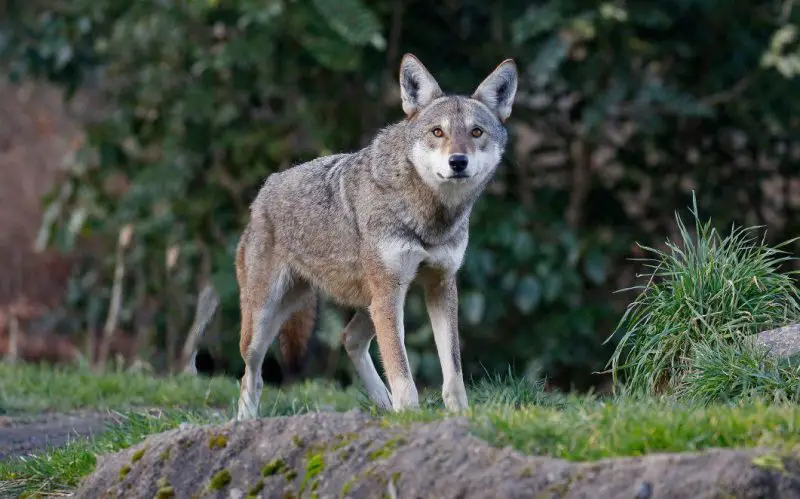
In parts of Idaho, wolves and coyotes occupy the same terrain, sparking long-standing questions about how the two species interact. When people see a canid that looks too big to be a coyote but too small to be a wolf, the explanation often jumps straight to hybridization.
Can wolves in Idaho really breed with coyotes, or is this mostly a myth shaped by perception, fear, and unfamiliar sightings?
The answer sits at the intersection of genetics, behavior, ecology, and long-term scientific monitoring. Hybridization between wolves and coyotes is biologically possible in theory, but what matters far more is whether it actually happens in Idaho’s wild landscapes in any meaningful way.
Table of Contents
- 1 Wolves Have Reestablished a Foothold in Idaho
- 2 Coyotes Are Native and Extremely Adaptable
- 3 Wolves and Coyotes Are Closely Related, But Not the Same
- 4 Yes, Wolves and Coyotes Can Hybridize in Theory
- 5 Behavioral Barriers Are the Primary Obstacle
- 6 Size and Power Create a Physical Barrier
- 7 Breeding Timing Rarely Aligns
- 8 Idaho Wolves Are Not Mate-Limited
- 9 Genetic Monitoring Shows Clear Separation
- 10 Why Some Canids Look “In Between”
- 11 Eastern Coyotes Fuel Western Confusion
- 12 Wolves Tend to Suppress Coyotes, Not Blend With Them
- 13 Why Hybridization Occurs Elsewhere but Not Here
- 14 No Evidence of Stable Hybrid Populations in Idaho
- 15 What Idaho Wildlife Experts Say
- 16 Why the Hybrid Question Persists
- 17 Why This Matters
- 18 What To Do If You See an Unusual Canid
- 19 Wolves and Coyotes Remain Distinct in Idaho
- 20 FAQs About Wolves and Coyotes in Idaho
- 20.1 Can wolves and coyotes interbreed biologically
- 20.2 Is wolf–coyote hybridization common in Idaho
- 20.3 Have wolf–coyote hybrids ever been confirmed in Idaho
- 20.4 Why is hybridization rare in Idaho
- 20.5 Do wolves see coyotes as potential mates
- 20.6 Are large coyotes often mistaken for wolf hybrids
- 20.7 Are young wolves sometimes mistaken for coyotes
- 20.8 Do trail camera photos prove hybridization
- 20.9 Are coywolves present in Idaho
- 20.10 What do Idaho wildlife experts say
- 21 Final Thoughts
Wolves Have Reestablished a Foothold in Idaho
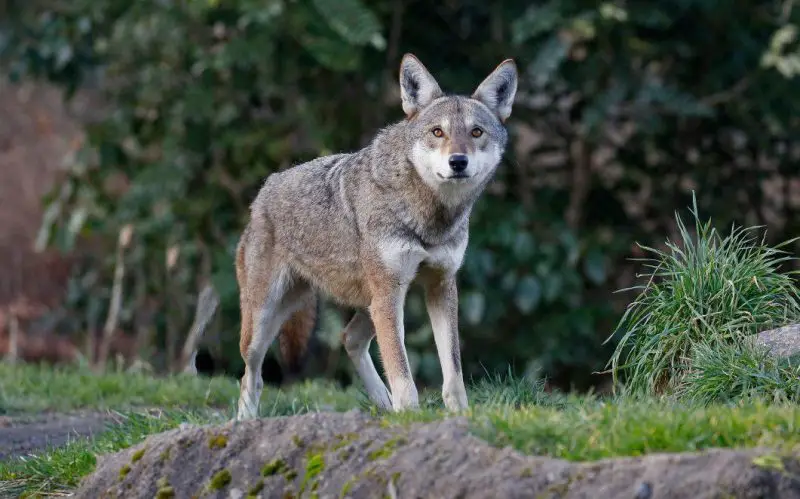
Gray wolves were once widespread throughout Idaho before being eliminated by predator control programs in the early 20th century. Their return began in the mid-1990s through reintroduction efforts and natural dispersal from neighboring regions.
Today, wolves occupy large portions of central and northern Idaho, particularly in forested mountains, wilderness areas, and remote public lands. Packs form stable family units with defined territories, and breeding is tightly regulated within those packs.
Wolf populations in Idaho are closely monitored through GPS collars, aerial surveys, genetic sampling, and field observation. Few large carnivores in North America are studied as intensively.
This level of monitoring matters when evaluating claims of hybridization.
Coyotes Are Native and Extremely Adaptable
Coyotes have lived in Idaho for thousands of years and are among the most adaptable predators on the continent. They occupy deserts, rangeland, forests, agricultural valleys, foothills, and even the edges of towns.
Unlike wolves, coyotes thrive alongside human development. They adjust their diet easily, shifting between rodents, rabbits, carrion, fruit, insects, and livestock when available. Their flexibility allows them to persist almost everywhere.
Because coyotes are present statewide, they inevitably overlap with wolves in some regions.
Overlap alone, however, does not mean interbreeding.
Wolves and Coyotes Are Closely Related, But Not the Same
Wolves and coyotes belong to the same genus, Canis. They share a relatively recent evolutionary ancestor and have compatible chromosome counts. This genetic closeness means hybridization is biologically possible under certain conditions.
That fact is not disputed by scientists.
What matters far more is whether the ecological and behavioral conditions that allow hybridization actually exist in Idaho.
Yes, Wolves and Coyotes Can Hybridize in Theory
Wolf–coyote hybrids have been documented elsewhere in North America, most notably in parts of eastern Canada and the northeastern United States. These hybrids are often referred to as eastern coyotes or coywolves.
Those hybrid populations formed under very specific circumstances. Wolves were heavily persecuted and nearly eliminated. Remaining individuals were isolated and mate-limited. Coyotes expanded into vacant ecological niches.
Under those pressures, hybridization became more likely.
Idaho’s situation is fundamentally different.
Behavioral Barriers Are the Primary Obstacle
Behavior is the most important factor limiting hybridization.
Wolves are highly social animals that live in tightly bonded family packs. Breeding typically occurs only between the dominant male and female. Packs aggressively defend their territories from other wolves and from competing predators.
Coyotes, by contrast, are smaller, more cautious, and often avoid wolves entirely. In areas where wolves are present, coyotes are frequently displaced, harassed, or killed.
Wolves do not view coyotes as potential mates. They view them as competitors.
This behavioral hostility makes prolonged interaction unlikely and mating even less so.
Size and Power Create a Physical Barrier
The physical difference between wolves and coyotes is substantial.
Adult gray wolves in Idaho often weigh 80 to 120 pounds or more. Coyotes typically weigh between 25 and 45 pounds. That size disparity creates serious risk, particularly for coyotes.
Animals rarely engage in behaviors that carry high injury risk without clear reproductive benefit. Natural selection discourages such interactions strongly.
Even when animals are genetically compatible, size differences alone can prevent hybridization.
Breeding Timing Rarely Aligns
Timing matters.
Wolves have a very narrow breeding window, usually occurring once per year in late winter. Coyotes also breed seasonally, but their estrus timing does not always align perfectly with wolves.
Even small mismatches in breeding timing reduce the chance of successful mating dramatically. For hybridization to occur, genetics, behavior, timing, and opportunity must all align.
In Idaho, they rarely do.
Idaho Wolves Are Not Mate-Limited
Hybridization is most likely when animals cannot find suitable mates of their own species.
This is not the case for wolves in Idaho.
As wolf populations have grown, dispersing individuals typically encounter other wolves. Packs form, territories stabilize, and breeding occurs within species. There is little evolutionary pressure pushing wolves toward cross-species mating.
When mate availability exists, hybridization becomes unnecessary and unlikely.
Genetic Monitoring Shows Clear Separation
Idaho’s wolves are among the most genetically monitored carnivores in the country.
Biologists collect DNA from scat, hair, tissue samples, and deceased animals. These samples are analyzed to track ancestry, relatedness, and population structure.
So far, genetic testing has not revealed widespread wolf–coyote hybridization in Idaho’s wild wolf population. Wolves test as wolves. Coyotes test as coyotes.
If hybridization were occurring at meaningful levels, genetic evidence would be unmistakable.
Why Some Canids Look “In Between”
Most hybrid rumors begin with appearance.
Large coyotes with thick winter coats can look wolf-like, especially at a distance. Young or dispersing wolves can appear slimmer and smaller than people expect. Lighting, distance, and motion distort size perception.
Trail cameras add another layer of confusion. Wide-angle lenses distort proportions. Night imagery exaggerates eyes and body length. Lack of scale makes accurate identification difficult.
Visual impression alone is unreliable.
Eastern Coyotes Fuel Western Confusion
Stories about coywolves in the Northeast often spill into western conversations.
Eastern coyotes carry some wolf ancestry and are larger than western coyotes. They are sometimes used as examples when people assume similar hybrids must exist everywhere.
Idaho does not have eastern coyotes.
Western coyotes dominate the state, and they do not carry significant wolf ancestry.
Applying eastern wildlife narratives to western ecosystems creates misunderstanding.
Wolves Tend to Suppress Coyotes, Not Blend With Them
Where wolves return, a consistent ecological pattern appears.
Coyote numbers often decline or shift behaviorally. Coyotes become more cautious, more nocturnal, and more fragmented. Wolves outcompete them for space and prey.
This dynamic reduces interaction rather than increasing it.
Wolves limit coyote expansion far more often than they interbreed with them.
Why Hybridization Occurs Elsewhere but Not Here
Hybridization between wolves and coyotes occurred more frequently in regions where wolves were nearly eliminated and coyotes filled the ecological vacuum.
Small, isolated wolf populations lacked mates. Coyotes were abundant. Under those conditions, hybridization became a survival pathway.
Idaho’s wolves are not isolated remnants.
They recolonized from healthy source populations and continue to expand with strong genetic diversity.
No Evidence of Stable Hybrid Populations in Idaho
Even when wolf–coyote hybrids occur elsewhere, they rarely form stable, long-term populations.
Hybrids often struggle with social integration. They may not fit well into wolf packs or coyote family units. Hunting strategies, communication cues, and territorial behavior can conflict.
Natural selection tends to eliminate poorly adapted combinations.
There is no evidence of stable hybrid populations in Idaho.
What Idaho Wildlife Experts Say
Wildlife biologists in Idaho are clear and consistent.
While wolf–coyote hybridization is biologically possible, it is rare and not occurring at levels that influence population dynamics. Genetic monitoring does not support widespread hybridization.
Management efforts focus on wolf recovery, livestock conflict mitigation, and ecosystem balance, not hybrid concerns.
Why the Hybrid Question Persists
The idea of hybrids is compelling.
It explains unfamiliar animals. It adds mystery and danger. It spreads easily through storytelling and social media. Corrections spread more slowly than rumors.
In a state as wild and expansive as Idaho, rare events can feel common.
Emotion travels faster than data.
Why This Matters
Misunderstanding hybridization can shape public perception and policy.
Fear of hybrids can increase hostility toward wolves or coyotes. It can distract from real conservation issues such as habitat connectivity, prey availability, and coexistence strategies.
Accurate understanding supports informed discussion and better wildlife management.
What To Do If You See an Unusual Canid
If you encounter a large canid, observe calmly and from a distance.
Note size, tail carriage, ear shape, movement, and behavior. Avoid assuming hybrid status based on appearance alone.
If appropriate, report sightings to wildlife authorities and allow experts to evaluate evidence.
Wolves and Coyotes Remain Distinct in Idaho
Idaho’s canids are not blending into something new.
Wolves remain wolves. Coyotes remain coyotes. Their interactions are shaped by competition, territoriality, and ecological balance, not widespread reproduction.
Hybridization is not shaping Idaho’s wild canid populations.
FAQs About Wolves and Coyotes in Idaho
Can wolves and coyotes interbreed biologically
Yes. Wolves and coyotes are genetically close enough that hybridization is biologically possible.
Is wolf–coyote hybridization common in Idaho
No. There is no evidence of widespread or ongoing hybridization in Idaho’s wild populations.
Have wolf–coyote hybrids ever been confirmed in Idaho
No confirmed, genetically verified hybrids have been documented in Idaho’s wild wolf population.
Why is hybridization rare in Idaho
Strong wolf pack structure, territorial aggression, size differences, and available wolf mates prevent most crossbreeding.
Do wolves see coyotes as potential mates
No. Wolves typically view coyotes as competitors or prey, not breeding partners.
Are large coyotes often mistaken for wolf hybrids
Yes. Thick winter coats, good nutrition, and distance can make coyotes appear wolf-like.
Are young wolves sometimes mistaken for coyotes
Yes. Dispersing or juvenile wolves can look smaller and slimmer than people expect.
Do trail camera photos prove hybridization
No. Camera angle, night mode, and lack of scale often distort size and proportions.
Are coywolves present in Idaho
No. Coywolves are primarily found in the northeastern United States and eastern Canada.
What do Idaho wildlife experts say
They state hybridization is possible but extremely rare and not a current management concern.
Final Thoughts
So, can wolves in Idaho breed with coyotes, or is it mostly a myth?
In theory, hybridization is possible. In practice, it is rare to nonexistent in Idaho’s wild populations. Strong behavioral barriers, size differences, mate availability, and extensive genetic monitoring all point to the same conclusion.
What people are seeing are wolves and coyotes behaving exactly as evolution shaped them to, separate species sharing space but not a gene pool.