
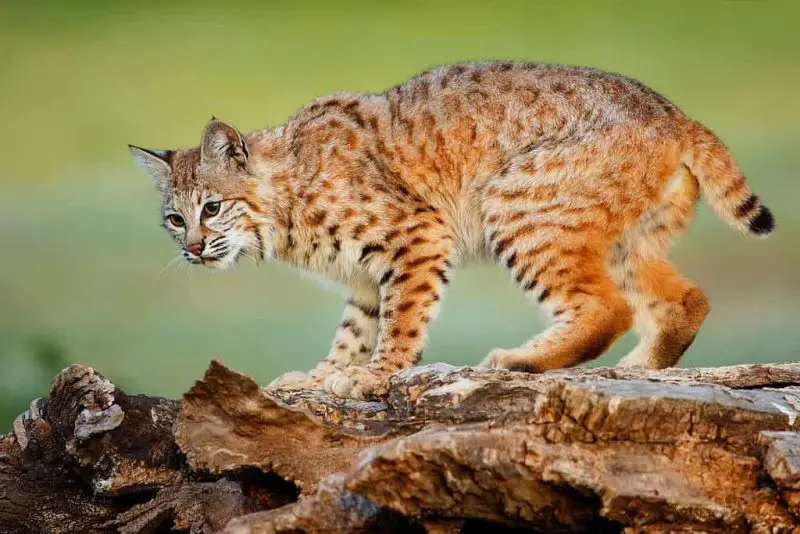
Across Tennessee, bobcats are being seen more often than they were a generation ago. Trail cameras capture them slipping through hardwood forests. Drivers glimpse them crossing rural roads at dawn. Homeowners occasionally spot one near the edge of a field or creek bottom. As sightings increase, so does a familiar question, especially when people notice unusually large or oddly patterned cats: are bobcats in Tennessee mating with house cats?
The idea sounds alarming and intriguing at the same time. A wild predator mixing with pets feels like a boundary being crossed. Stories circulate online about “half bobcat” cats, aggressive hybrids, or mysterious animals that do not quite look right. Yet when this question is examined through biology, genetics, and documented research, the answer becomes far clearer than the rumors suggest.
The reason this myth persists in Tennessee lies in the gap between biological theory and real-world wildlife behavior.
Table of Contents
- 1 Bobcats Are Native and Well Established in Tennessee
- 2 House Cats Are a Completely Different Biological Line
- 3 Genetic Incompatibility Prevents Hybridization
- 4 Why Similar Chromosome Numbers Cause Confusion
- 5 No Documented Evidence Exists Anywhere
- 6 Behavior Creates an Additional Barrier
- 7 Size and Risk Make Mating Unrealistic
- 8 Why the Myth Persists in Tennessee
- 9 Misidentified Domestic Cats Fuel Rumors
- 10 Bobcats Look Different Depending on Season
- 11 Feral Cats Add Another Layer of Confusion
- 12 Why Tennessee Sightings Feel More Frequent
- 13 What Wildlife Agencies Say
- 14 The Role of Media and Online Stories
- 15 Why Hybrid Myths Appear With Many Species
- 16 Real Hybrids Often Involve Different Species
- 17 Why Understanding This Matters
- 18 What To Do If You See an Unusual Cat
- 19 Protecting Pets in Bobcat Country
- 20 Bobcats Play an Important Ecological Role
- 21 Why Bobcats Are Not Becoming Domestic
- 22 What Science Tells Us Clearly
- 23 FAQs About Bobcats and House Cats in Tennessee
- 24 Final Thoughts
Bobcats Are Native and Well Established in Tennessee
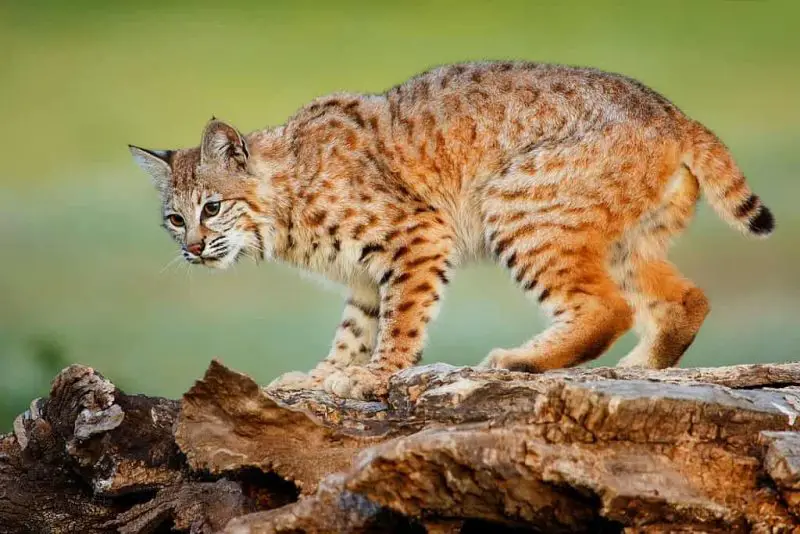
Bobcats (Lynx rufus) are not newcomers to Tennessee. They are a native species that has occupied the region for thousands of years, long before modern development altered the landscape. Fossil records and historical accounts confirm their long-term presence across the Southeast.
Today, bobcats inhabit nearly every region of Tennessee. They range from the Appalachian foothills in the east to the Mississippi River bottomlands in the west. They are present in hardwood forests, mixed woodland edges, rocky ridges, swamp margins, and even agricultural transition zones where prey is abundant.
Bobcats thrive where rabbits, rodents, and small mammals are plentiful. They are adaptable predators, capable of adjusting their activity patterns and hunting strategies to local conditions. However, adaptability does not mean visibility. Bobcats remain elusive by nature. Even in areas where they are common, most people never see one clearly.
As legal protections increased and habitat conditions improved over recent decades, bobcat populations gradually recovered. With that recovery came more frequent sightings. Increased sightings often lead people to assume something new or unusual is happening, even when the species itself has not changed.
House Cats Are a Completely Different Biological Line
Domestic cats (Felis catus) belong to a completely different evolutionary lineage than bobcats. House cats descend from the African wildcat and were domesticated thousands of years ago through a long process of human association.
Although domestic cats retain hunting instincts and predatory behavior, their genetics place them firmly within the genus Felis. Bobcats belong to the genus Lynx. This separation reflects millions of years of independent evolution.
Physical resemblance does not equal biological closeness. While both animals are cats, they diverged long before domestication occurred. Their genetic instructions, reproductive systems, and developmental pathways are fundamentally different.
This evolutionary distance is far more important than coat patterns, ear shape, or body size.
Genetic Incompatibility Prevents Hybridization
The most important scientific fact is straightforward. Bobcats and domestic cats cannot interbreed.
While both species have 38 chromosomes, compatibility is not determined by chromosome count alone. The structure, pairing behavior, and genetic organization of those chromosomes differ significantly between the two species.
Even if mating behavior were attempted, fertilization would not proceed normally. Embryos would fail to develop or would not implant successfully. Viable offspring would not be produced.
This is not speculation. It is supported by decades of genetic research and reproductive biology. There are no scientifically verified cases of bobcat and domestic cat hybrids anywhere in the world.
Why Similar Chromosome Numbers Cause Confusion
The shared chromosome number often fuels misunderstanding.
Many people assume that if two animals share the same number of chromosomes, hybridization must be possible. This is incorrect. Chromosome compatibility depends on structure, gene alignment, and reproductive signaling, not just number.
Numerous species across the animal kingdom share chromosome counts yet cannot interbreed. Successful reproduction requires precise genetic matching that bobcats and domestic cats do not possess.
This nuance is frequently lost in casual conversation and online discussion, allowing myths to persist.
No Documented Evidence Exists Anywhere
Wildlife biologists, geneticists, and zoological institutions have extensively investigated claims of bobcat–house cat hybrids.
Modern DNA testing has been applied to animals that appeared unusual or were rumored to be hybrids. In every confirmed case, results showed either pure domestic cats, pure bobcats, or hybrids involving other wild species used intentionally in breeding programs.
Bengal cats originate from Asian leopard cats. Savannah cats originate from servals. These are controlled, intentional hybrids involving species with known compatibility.
Bobcats are not involved in domestic hybrid breeds, and no verified genetic evidence suggests otherwise.
Behavior Creates an Additional Barrier
Even if genetic incompatibility did not exist, behavior alone would prevent mating.
Bobcats are solitary, territorial predators. They avoid unnecessary contact with other animals and rely on specific communication cues that domestic cats do not recognize or respond to.
Domestic cats, including feral individuals, do not share bobcat mating behaviors or social signals. Bobcats do not view domestic cats as potential mates.
Encounters are far more likely to result in avoidance or aggression than courtship.
Nature places multiple barriers between species, not just one.
Size and Risk Make Mating Unrealistic
Bobcats are significantly larger and stronger than domestic cats.
A mating attempt would pose extreme injury risk to a house cat. Evolution discourages behaviors that offer high risk without reproductive reward.
From a survival perspective, there is no incentive for either animal.
Why the Myth Persists in Tennessee
Tennessee’s landscape contributes to the persistence of the myth.
The state features a mix of forests, farmland, and suburban development. This creates frequent edge habitats where wildlife and human activity overlap. Bobcats occasionally pass near barns, yards, or outbuildings. Domestic cats often roam freely in rural areas.
When people encounter a large cat near home, especially one with a spotted coat or short tail, assumptions form quickly. Familiarity with pets blurs perception.
Misidentified Domestic Cats Fuel Rumors
Many domestic cats resemble bobcats more than expected.
Large mixed-breed cats, spotted coat patterns, muscular builds, and naturally short tails can mimic wild appearance. Feral cats are often leaner, more alert, and more nocturnal than pets.
Lighting, distance, and brief sightings exaggerate size and shape. A cat seen at dusk or in motion may appear much larger than it truly is.
Once the idea of hybrids exists, misidentification reinforces belief.
Bobcats Look Different Depending on Season
Bobcats themselves vary widely in appearance.
Winter coats are thicker and fluffier, making animals appear larger. Summer coats are sleeker. Color ranges from pale gray to deep brown. Spotting patterns vary between individuals.
Large male bobcats in winter often appear especially imposing. Observers unfamiliar with seasonal variation may assume they are seeing something unusual.
Natural variation within species is frequently underestimated.
Feral Cats Add Another Layer of Confusion
Feral domestic cats behave differently from pets.
They are cautious, nocturnal, and skilled hunters. Many avoid human contact entirely. Their behavior appears wild to casual observers.
When people encounter feral cats in wooded or rural areas, they may assume hybrid ancestry based on behavior alone.
Behavior does not indicate genetics.
Why Tennessee Sightings Feel More Frequent
Increased sightings do not reflect biological change.
Trail cameras are now widespread. Social media encourages sharing wildlife encounters. Outdoor recreation has increased.
Visibility increases perception, not hybridization.
The animals themselves remain unchanged.
What Wildlife Agencies Say
Tennessee wildlife officials are clear and consistent.
Bobcats and domestic cats do not interbreed. There is no evidence supporting hybrid claims. Unusual animals are investigated using photographs, tracks, and genetic samples when possible.
Results consistently confirm known species.
The Role of Media and Online Stories
Online platforms amplify unusual claims.
Hybrid stories generate engagement. Corrections spread slowly. Repetition builds familiarity, and familiarity builds belief.
This dynamic sustains myths even when science is clear.
Why Hybrid Myths Appear With Many Species
Bobcat–house cat myths are part of a broader pattern.
Similar rumors exist about foxes and dogs, wolves and dogs, and mountain lions and house cats. In most cases, genetics or behavior makes hybridization impossible or extremely rare.
Humans are drawn to boundary-crossing narratives.
Nature maintains boundaries.
Real Hybrids Often Involve Different Species
Some domestic hybrids are real.
Bengals, Savannahs, and other designer breeds involve wild species with known genetic compatibility. These hybrids are created under controlled conditions.
Bobcats are not part of this group.
Why Understanding This Matters
Belief in hybrids can lead to fear, unnecessary killing of wildlife, or abandonment of pets.
It can distract from real conservation issues such as habitat protection, responsible pet ownership, and coexistence.
Accurate understanding supports balanced decision making.
What To Do If You See an Unusual Cat
Observe calmly. Do not assume hybrid ancestry.
Photographs with size reference help. Note behavior, habitat, and time of day.
Report concerns to wildlife officials if needed. Avoid approaching wild animals.
Let experts identify what you see.
Protecting Pets in Bobcat Country
Bobcats do not mate with house cats, but they can prey on small pets.
Keeping cats indoors or supervised reduces risk. Removing attractants like outdoor food helps prevent visits.
Understanding real risks is more important than imagined ones.
Bobcats Play an Important Ecological Role
Bobcats regulate rodent and rabbit populations.
They contribute to ecological balance across Tennessee’s forests and fields.
Protecting them requires separating fact from fiction.
Why Bobcats Are Not Becoming Domestic
Bobcats remain wild animals.
They do not seek domestication. They do not adapt toward living with humans the way some species do.
Their biology and behavior remain unchanged.
What Science Tells Us Clearly
Science offers a definitive answer.
Bobcats and domestic cats do not mate. They cannot produce offspring. There are no verified hybrids.
This conclusion is supported by genetics, behavior, and decades of observation.
FAQs About Bobcats and House Cats in Tennessee
Can bobcats mate with house cats
No. They are genetically incompatible.
Have any hybrids ever been confirmed
No confirmed cases exist anywhere.
Why do some cats look like bobcats
Domestic variation, feral behavior, and misidentification.
Are bobcats dangerous to pets
They can prey on small pets if given opportunity.
Do bobcats live near homes
They may pass through rural or suburban edges.
Should unusual cats be reported
Yes, without assuming hybrid status.
Can DNA testing confirm hybrids
Yes, but testing has never confirmed this hybrid.
Are bobcats protected in Tennessee
Yes. They are managed and protected wildlife.
Final Thoughts
The idea that bobcats in Tennessee are mating with house cats is understandable but incorrect. Genetics alone makes it impossible, and behavior further reinforces the separation.
What people are seeing are bobcats reclaiming habitat, domestic cats showing natural variation, and human perception filling gaps with imagination.
In Tennessee’s woods and fields, boundaries remain intact. Bobcats stay wild. House cats remain domestic. And nature draws a line that rumor cannot erase.