

On warm summer evenings across Georgia, a quiet natural light show begins to appear. Small flashes of yellow or green flicker across backyards, forests, and open fields. For many people, these glowing insects are simply part of childhood memories. Fireflies drifting across the air have long symbolized summer nights in the American South.
Yet despite how familiar they seem, most Georgia residents know surprisingly little about these remarkable insects.
Fireflies, often called lightning bugs, are far more complex than their gentle glow suggests. They belong to a unique group of beetles capable of producing light through a chemical reaction known as bioluminescence. Their flashing signals are not random decorations of the night sky but an intricate communication system used to find mates.
Georgia’s warm climate and diverse landscapes provide excellent habitat for many firefly species. From dense forests in the Appalachian foothills to wetlands and suburban backyards, these insects thrive in environments that provide moisture, vegetation, and darkness.
However, fireflies are not just charming summer visitors. They are predators, ecological indicators, and part of a delicate natural system that depends on clean habitats and healthy ecosystems.
In recent years, scientists and conservationists have become increasingly concerned about declining firefly populations in many parts of the world. Habitat loss, pesticide use, and light pollution all threaten the delicate conditions these insects require.
Understanding fireflies reveals a hidden world of communication, survival strategies, and ecological relationships that unfold each night across Georgia’s landscapes.
What appears to be a simple blinking light in the dark is actually the result of one of nature’s most fascinating biological processes.
And the more people learn about fireflies, the more extraordinary these tiny glowing insects become.
Table of Contents
- 1 Fireflies Are Actually Beetles, Not Flies
- 2 Fireflies Create Light Through a Chemical Reaction
- 3 Flashing Patterns Are a Language for Finding Mates
- 4 Georgia Is Home to Many Firefly Species
- 5 Firefly Larvae Are Skilled Predators
- 6 Fireflies Depend on Dark Nights
- 7 Fireflies Are Sensitive Indicators of Environmental Health
- 8 Climate and Weather Influence Firefly Activity
- 9 Fireflies Inspire Scientific Research and Innovation
- 10 FAQs About Fireflies in Georgia
- 11 Final Thoughts
Fireflies Are Actually Beetles, Not Flies
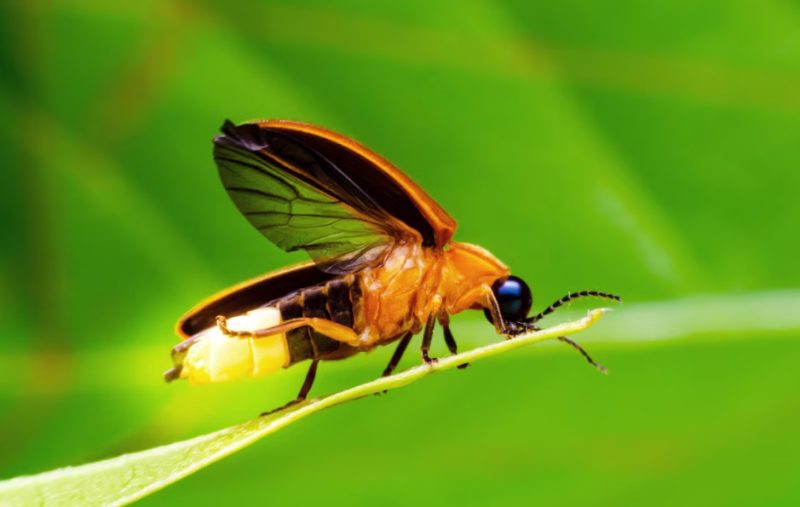
Despite their common name, fireflies are not flies at all.
They belong to the beetle family Lampyridae, which includes more than 2,000 species worldwide. Like other beetles, fireflies have hardened wing covers called elytra that protect their delicate flying wings beneath.
These insects undergo a complete life cycle that includes egg, larval, pupal, and adult stages.
The adult fireflies seen flashing in the night sky represent only a small portion of their overall lives.
In fact, much of a firefly’s life is spent in its larval stage, living quietly in soil or leaf litter.
Larval fireflies are sometimes called glowworms because they can also produce faint light. During this stage, they act as predators, feeding on small invertebrates such as snails, slugs, and worms.
The adult stage is relatively short, often lasting only a few weeks.
During this time, the primary goal of adult fireflies is reproduction.
The glowing signals that light up Georgia nights are actually part of a complex courtship display used to attract mates.
Fireflies Create Light Through a Chemical Reaction
One of the most remarkable features of fireflies is their ability to produce light.
This glow comes from a chemical process known as bioluminescence, which occurs in specialized organs located in the insect’s abdomen.
The reaction involves several components including a molecule called luciferin, an enzyme known as luciferase, oxygen, and energy stored in the insect’s cells.
When these elements combine, they produce light without generating significant heat.
This type of light production is extremely efficient.
In fact, nearly 100 percent of the energy involved in the reaction is converted into visible light.
By comparison, traditional incandescent light bulbs waste most of their energy as heat.
Fireflies can also control when their lights turn on and off.
They regulate oxygen flow within the light-producing organs, allowing them to flash signals in precise patterns.
These flashes form the basis of firefly communication.
Flashing Patterns Are a Language for Finding Mates
To human observers, fireflies may appear to blink randomly across the night sky.
However, each species of firefly has its own unique flash pattern.
These patterns serve as a form of communication between males and females.
Typically, males fly through the air producing specific flashing sequences. Females, often perched on vegetation, watch for these signals.
If a female recognizes the correct pattern from her species, she responds with a flash of her own.
This exchange helps the male locate her position.
Different species may vary in flash timing, brightness, or rhythm.
These differences prevent fireflies from mating with the wrong species.
In Georgia, where multiple firefly species coexist, these distinct flashing languages help maintain clear communication.
Watching a summer field filled with fireflies actually reveals dozens of individual conversations taking place simultaneously.
Georgia Is Home to Many Firefly Species
The southeastern United States supports a rich diversity of firefly species, and Georgia is no exception.
Researchers have documented more than 30 species within the state.
These species vary in appearance, behavior, and flashing patterns.
Some produce bright yellow flashes, while others emit green or pale orange light.
Certain species even produce continuous glows rather than blinking patterns.
One of the most famous firefly species in the region is the synchronous firefly, known for its remarkable ability to flash in coordinated waves with other individuals.
Although this phenomenon is best known from the Great Smoky Mountains, similar behaviors occasionally appear in other parts of the Southeast.
Georgia’s mixture of forests, wetlands, and grasslands provides suitable habitat for many firefly species.
Moist environments with abundant vegetation are especially important.
These areas support both adult fireflies and the invertebrates that their larvae feed on.
Firefly Larvae Are Skilled Predators
While adult fireflies often focus on reproduction, their larvae are active hunters.
Living in soil, leaf litter, or damp environments, these larvae feed on small invertebrates.
Snails and slugs are particularly common prey.
Firefly larvae possess specialized mouthparts that allow them to inject digestive enzymes into their prey.
These enzymes break down the prey’s tissues, allowing the larva to consume the liquefied nutrients.
This hunting strategy is highly effective.
Because snails and slugs can damage gardens and crops, firefly larvae actually provide a natural form of pest control.
Their presence contributes to the balance of ecosystems where they live.
Although these larvae are rarely seen, they play a crucial role in the firefly life cycle.
Fireflies Depend on Dark Nights
One factor that many people overlook is how strongly fireflies depend on darkness.
Artificial lighting can interfere with their communication signals.
Streetlights, porch lights, and illuminated buildings may disrupt the ability of fireflies to see each other’s flashes.
When flash signals become difficult to detect, mating success can decline.
In heavily urbanized areas, firefly populations sometimes decrease due to this type of light pollution.
In rural parts of Georgia where night skies remain darker, firefly displays tend to be more abundant.
Reducing unnecessary outdoor lighting during peak firefly seasons can help support local populations.
Simple actions such as turning off unused lights or using shielded fixtures may make a difference.
Fireflies Are Sensitive Indicators of Environmental Health
Because fireflies depend on clean soil, moisture, and healthy vegetation, their presence often reflects the condition of local ecosystems.
Areas with thriving firefly populations usually support diverse plant and animal life.
Conversely, declining firefly numbers may indicate environmental problems.
Pesticides, habitat loss, and water pollution can all affect firefly survival.
Their larvae are particularly vulnerable because they live in soil and rely on small invertebrates for food.
Protecting firefly habitats often benefits many other organisms as well.
Conservation efforts aimed at preserving forests, wetlands, and natural landscapes help maintain conditions where fireflies can thrive.
Climate and Weather Influence Firefly Activity
Firefly activity varies depending on seasonal weather patterns.
Warm, humid evenings typically produce the most dramatic displays.
In Georgia, firefly activity often peaks during late spring and early summer.
Rainfall also plays a role.
Moist soil supports the snails and slugs that firefly larvae consume.
Extended drought periods can reduce larval survival and limit future populations.
Temperature influences the timing of adult emergence as well.
Warmer temperatures often trigger earlier activity in spring.
As climate patterns shift, researchers continue studying how changing weather conditions may influence firefly populations across the southeastern United States.
Fireflies Inspire Scientific Research and Innovation
The chemistry behind firefly bioluminescence has fascinated scientists for decades.
The luciferase enzyme used by fireflies has become an important tool in biological research.
Scientists use this enzyme in laboratory experiments to study gene expression, detect infections, and monitor cellular processes.
Because the reaction produces visible light, researchers can observe biological activity in real time.
This technology has contributed to advances in medicine, biotechnology, and environmental monitoring.
The humble firefly has therefore played a surprising role in scientific discovery.
What began as a natural curiosity glowing in the night sky has become a powerful tool in modern research.
FAQs About Fireflies in Georgia
Are fireflies common in Georgia?
Yes. Georgia’s warm climate and diverse habitats support many firefly species.
Why do fireflies glow?
Fireflies glow due to a chemical reaction involving luciferin, luciferase, oxygen, and cellular energy.
Do fireflies bite or sting?
No. Fireflies are harmless to humans and do not bite or sting.
When are fireflies most active?
Fireflies are most visible during warm evenings in late spring and early summer.
What do fireflies eat?
Larvae eat snails, slugs, and worms, while adult diets vary depending on the species.
Why are fireflies disappearing in some areas?
Habitat loss, pesticides, and light pollution can reduce firefly populations.
Are fireflies beneficial?
Yes. Firefly larvae help control populations of garden pests such as slugs and snails.
How long do fireflies live?
Most of their life is spent as larvae, which may last one to two years before adulthood.
Final Thoughts
Fireflies have long been symbols of summer evenings across Georgia, but their quiet flashes represent far more than simple beauty.
These remarkable insects combine complex chemistry, intricate communication, and delicate ecological relationships.
From the glowing larvae hidden in soil to the flashing adults dancing through warm night air, fireflies reveal a hidden world of life unfolding after sunset.
Their presence reminds us that even small creatures can hold extraordinary secrets.
Protecting the habitats that support fireflies ensures that future generations will continue to witness the gentle lights drifting across Georgia’s night skies.
Because sometimes the most magical moments in nature arrive not with roaring sounds or towering animals, but with the soft glow of a tiny insect blinking in the dark.