
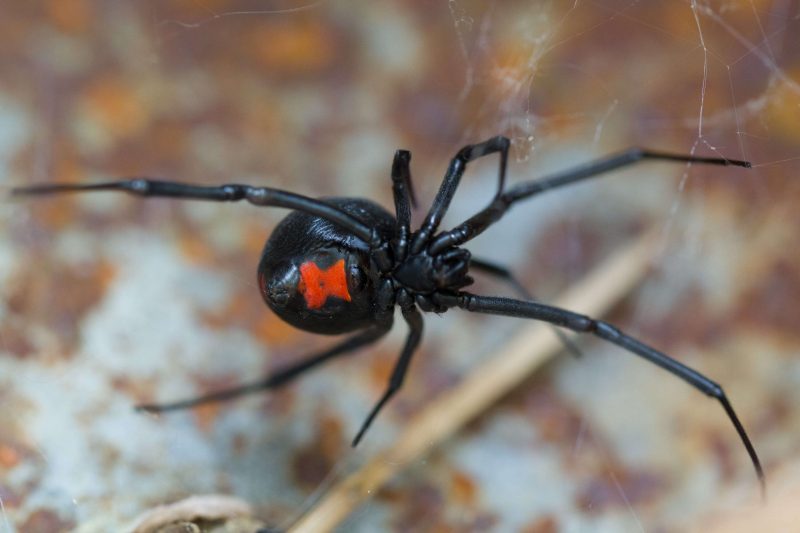
In Colorado, few creatures inspire as much immediate fear as the black widow spider. Its glossy black body, the red hourglass marking, and its reputation for potent venom have turned it into a symbol of danger across the American West. For many residents, simply hearing the name triggers anxiety. Finding one near a home can spark panic, extermination efforts, and lingering worry about personal safety.
Yet the reality behind Colorado’s most feared “poisonous spider” is far less dramatic than its reputation suggests.
Black widow spiders do live in Colorado. They do possess venom. But despite decades of fear-driven stories, they are rarely responsible for bites, and even more rarely for serious medical outcomes. In fact, the black widow’s danger has been consistently exaggerated, while its actual behavior has been widely misunderstood.
This article takes a deep, evidence-based look at the black widow spider in Colorado, separating fear from fact and explaining why this notorious arachnid is far less aggressive and far less dangerous than most people believe.
Table of Contents
- 1 The Spider Behind the Fear: Black Widow in Colorado
- 2 Venomous, Not Poisonous — A Crucial Distinction
- 3 Why Black Widows Rarely Bite Humans
- 4 Bite Statistics Tell a Different Story
- 5 What a Black Widow Bite Actually Feels Like
- 6 Why Black Widows Look So Threatening
- 7 Female vs Male Black Widows
- 8 Black Widows Prefer Avoidance Over Confrontation
- 9 Why Colorado Homes Sometimes Host Black Widows
- 10 Myths About Black Widows That Refuse to Die
- 11 Why Other Bites Are Blamed on Black Widows
- 12 Medical Treatment Is Highly Effective
- 13 Why Fear Persists Despite Evidence
- 14 Black Widows Play an Ecological Role
- 15 How to Reduce Risk Without Panic
- 16 Why Black Widows Are Not Colorado’s Biggest Spider Threat
- 17 Education Changes Perception
- 18 Why “Rarely Causes Bites” Is Accurate
- 19 FAQs about Colorado’s Most Feared Spider
- 19.1 Is the black widow spider actually found in Colorado?
- 19.2 Is the black widow spider poisonous or venomous?
- 19.3 Do black widow spiders commonly bite people in Colorado?
- 19.4 Are black widow bites usually dangerous?
- 19.5 Why do people in Colorado fear black widows so much?
- 19.6 Where are black widows most often found around homes?
- 19.7 Are male black widow spiders dangerous?
- 19.8 Do black widows aggressively attack humans?
- 19.9 Why are many bites misattributed to black widows?
- 19.10 How can people reduce the risk of black widow encounters?
- 20 Final Thoughts
The Spider Behind the Fear: Black Widow in Colorado
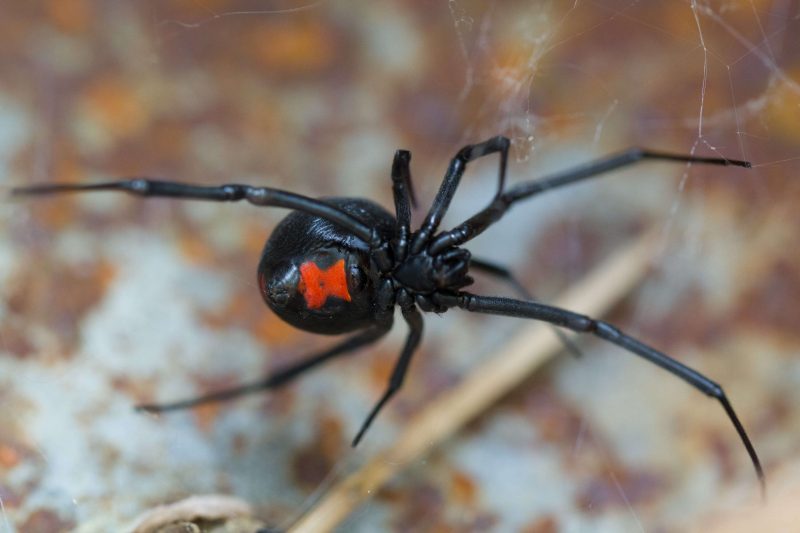
The black widow species found in Colorado is the western black widow, scientifically known as Latrodectus hesperus. This species is native to much of the western United States and is well adapted to Colorado’s dry climate, temperature swings, and mixed natural and human-altered landscapes.
Black widows are most common in lower elevations, arid regions, and semi-urban environments. They favor places that are dry, undisturbed, and protected from wind and rain.
Common habitats include garages, sheds, crawl spaces, woodpiles, rock crevices, fence corners, irrigation boxes, and outdoor storage areas. Inside homes, they are far less common and usually appear only when conditions force them inward.
Despite their presence, encounters that lead to bites remain uncommon.
Venomous, Not Poisonous — A Crucial Distinction
One of the most persistent misconceptions surrounding black widows is the label “poisonous.”
Black widows are not poisonous. They are venomous.
Poisonous organisms harm when touched or eaten. Venomous organisms inject toxins through a bite or sting. This distinction matters because it reflects how unlikely harm actually is.
Black widow venom is delivered only through a bite, and bites occur only under specific conditions. The spider does not release venom into the air, onto surfaces, or through casual contact.
Fear often begins with incorrect language, and the word “poisonous” amplifies that fear unnecessarily.
Why Black Widows Rarely Bite Humans
Black widows are not aggressive spiders.
They do not hunt humans. They do not chase. They do not bite defensively unless they feel directly threatened. Their first instinct is retreat, not attack.
Most confirmed black widow bites occur when the spider is accidentally pressed against skin. This includes situations such as putting on gloves that have been left outdoors, reaching into dark storage areas, lifting debris, or disturbing a hidden web.
If given space, black widows almost always flee.
This behavior alone explains why bites are rare despite the spider’s widespread presence.
Bite Statistics Tell a Different Story
Medical data paints a clear picture.
Across the United States, thousands of spider bite reports are made each year. Only a small fraction are confirmed black widow bites. In Colorado specifically, confirmed cases are uncommon and severe outcomes are rarer still.
Most reported “black widow bites” turn out to be something else entirely. Skin infections, allergic reactions, insect stings, and bites from other arthropods are frequently misattributed to spiders.
When a black widow bite does occur, it is usually identified because the spider is seen biting or is found immediately afterward. Without this confirmation, diagnosis becomes unreliable.
What a Black Widow Bite Actually Feels Like
Black widow bites are often misunderstood.
Contrary to popular belief, the bite itself is usually mild or barely noticeable at first. Some people feel a sharp pinprick. Others feel nothing initially.
Symptoms typically develop over time and may include muscle cramping, localized pain, sweating, nausea, or stiffness. These symptoms result from the venom’s effect on the nervous system.
Severe complications are rare and typically occur in children, the elderly, or individuals with underlying health conditions. Modern medical treatment is highly effective at managing symptoms.
Deaths from black widow bites in the United States are extraordinarily rare.
Why Black Widows Look So Threatening
The black widow’s appearance plays a major role in its fearsome reputation.
Its jet-black coloration, bulbous abdomen, and striking red hourglass marking are visual warning signals. In nature, such coloration often indicates toxicity, and humans instinctively respond with caution.
This warning coloration evolved to deter predators, not to threaten humans.
Ironically, the very traits that make black widows easy to identify also make them more feared than far more aggressive but less recognizable insects.
Female vs Male Black Widows
Not all black widows are equally capable of biting.
The large, iconic black widow is the female. She is the one with medically significant venom. Male black widows are much smaller, lighter in color, and possess venom that is not considered dangerous to humans.
Males are rarely noticed and almost never bite. Most encounters involve females because they remain stationary in webs, while males roam briefly during mating seasons.
This further reduces the likelihood of dangerous encounters.
Black Widows Prefer Avoidance Over Confrontation
Black widows are web-dwelling spiders.
They do not actively roam floors or walls searching for prey. They build irregular webs in sheltered locations and wait for insects to become trapped.
This stationary lifestyle keeps them out of human pathways. Unlike some spiders that wander indoors, black widows remain tucked away unless disturbed.
Most people who live near black widows never see them.
Why Colorado Homes Sometimes Host Black Widows
When black widows appear near homes, it is usually due to environmental factors.
Dry conditions, insect availability, and shelter draw them to garages, basements, and outdoor structures. Renovations, cleaning, or seasonal changes can displace them, briefly increasing visibility.
Colorado’s climate, with its dry air and sharp seasonal shifts, creates ideal outdoor habitats but limits how often black widows venture indoors.
Their presence does not indicate infestation or unsanitary conditions.
Myths About Black Widows That Refuse to Die
Several myths continue to fuel fear.
One myth claims black widows aggressively chase people. This is false.
Another claims all bites are deadly. This is also false.
Some believe black widows frequently infest beds, clothing, or furniture. In reality, such occurrences are extremely rare.
These myths persist because fear spreads faster than correction.
Why Other Bites Are Blamed on Black Widows
Black widows often receive blame for bites they did not cause.
Many skin reactions develop overnight, leading people to assume a spider bite occurred during sleep. However, black widows are unlikely to bite sleeping humans unless trapped directly against skin.
Conditions such as bacterial infections, allergic reactions, and bites from other insects often resemble spider bites but have entirely different causes.
Without seeing the spider, attribution is guesswork.
Medical Treatment Is Highly Effective
Modern medicine has dramatically reduced the risk associated with black widow bites.
Pain management, muscle relaxants, and supportive care address symptoms effectively. Antivenom exists but is rarely needed and reserved for severe cases.
Most people recover fully within days, even without hospitalization.
This reality stands in stark contrast to the spider’s reputation.
Why Fear Persists Despite Evidence
Fear is emotional, not statistical.
Black widows combine several fear triggers: dark appearance, venom, cultural myths, and dramatic naming. Stories spread more easily than data.
Once fear becomes ingrained, evidence struggles to dislodge it.
In Colorado, where outdoor lifestyles and rural settings increase the chance of encountering wildlife, fear narratives travel quickly.
Black Widows Play an Ecological Role
Black widows are not villains.
They control insect populations, including pests that damage crops and spread disease. They are part of a balanced ecosystem that benefits human environments more than it harms them.
Eliminating spiders indiscriminately often leads to increased insect problems.
Understanding their role shifts the perspective from fear to coexistence.
How to Reduce Risk Without Panic
Avoiding bites does not require extreme measures.
Simple steps are effective: wearing gloves when handling debris, shaking out stored clothing, keeping storage areas organized, and reducing insect populations near homes.
These practices reduce contact without resorting to fear-driven responses.
Respect, not panic, is the most effective strategy.
Why Black Widows Are Not Colorado’s Biggest Spider Threat
Ironically, black widows are not responsible for most spider-related injuries in Colorado.
Other insects and arachnids cause more frequent problems, but lack the same cultural notoriety.
The black widow’s reputation overshadows more common risks.
Education Changes Perception
When people learn how black widows actually behave, fear often decreases.
Understanding that the spider prefers isolation, avoids confrontation, and bites only under extreme provocation reframes the narrative.
Knowledge does not eliminate caution. It replaces panic with proportion.
Why “Rarely Causes Bites” Is Accurate
The phrase “rarely causes bites” is not a minimization. It is a factual statement supported by decades of data.
Black widows live in Colorado. People live near them. Bites remain uncommon.
This is not coincidence. It is behavior.
FAQs about Colorado’s Most Feared Spider
Is the black widow spider actually found in Colorado?
Yes. The western black widow (Latrodectus hesperus) is native to Colorado and commonly found in dry, sheltered areas.
Is the black widow spider poisonous or venomous?
It is venomous, not poisonous. Harm occurs only through a bite, not through touch or proximity.
Do black widow spiders commonly bite people in Colorado?
No. Bites are rare and usually happen only when the spider is accidentally pressed against the skin.
Are black widow bites usually dangerous?
Most bites cause mild to moderate symptoms that are treatable. Severe reactions are uncommon, and deaths are extremely rare.
Why do people in Colorado fear black widows so much?
Their appearance, venom reputation, and long-standing myths have exaggerated the actual risk they pose.
Where are black widows most often found around homes?
They prefer garages, sheds, woodpiles, crawl spaces, and undisturbed outdoor areas rather than living spaces.
Are male black widow spiders dangerous?
No. Male black widows are smaller and do not pose a medical risk to humans.
Do black widows aggressively attack humans?
No. They avoid confrontation and bite only as a last defense when trapped or disturbed.
Why are many bites misattributed to black widows?
Skin infections, allergic reactions, and other insect bites are often mistaken for spider bites without confirmation.
How can people reduce the risk of black widow encounters?
Wearing gloves, avoiding reaching into dark spaces, and keeping storage areas organized greatly reduces risk.
Final Thoughts
Colorado’s most feared “poisonous spider” is feared far more than it deserves.
The black widow spider is real, venomous, and deserving of respect. But it is not aggressive, not invasive, and not responsible for the majority of bites attributed to it.
In Colorado, black widows quietly coexist with people, controlling pests and remaining hidden unless disturbed. When fear is replaced with understanding, the spider becomes less of a menace and more of a misunderstood neighbor.
The danger surrounding black widows has been magnified by myth. The reality is far calmer—and far less frightening—than the legend suggests.