
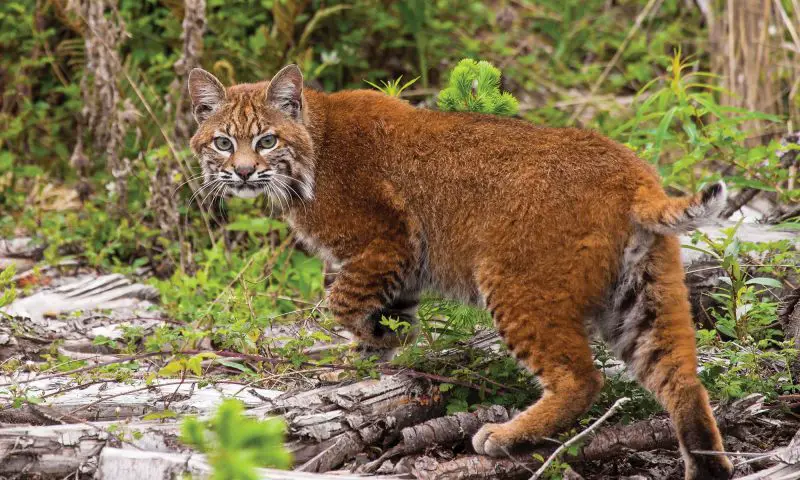
Every so often, a rumor spreads through neighborhoods in Maryland. Someone spots a large, muscular cat with a short tail moving silently along a tree line. Another person notices a strangely built stray cat with unusual markings. Before long, questions begin circulating. Could bobcats be breeding with domestic cats? Is there such a thing as a bobcat–house cat hybrid roaming suburban Maryland?
The idea sounds dramatic. It carries a certain mystery. Wild predator meets backyard pet. Forest meets suburb. But when we move past rumor and into biology, the answer becomes much clearer.
In short, bobcats in Maryland do not breed with domestic cats in the wild. While the two animals may occasionally cross paths in overlapping habitats, true hybridization between them is biologically improbable and unsupported by credible wildlife evidence. Understanding why requires a closer look at species classification, reproductive biology, behavior, and ecology.
Table of Contents
- 1 Bobcats in Maryland: Who They Really Are
- 2 Domestic Cats: A Different Species Entirely
- 3 Can They Physically Breed?
- 4 Behavioral Barriers to Breeding
- 5 Why the Myth Persists
- 6 Could It Happen in Captivity?
- 7 Ecological Implications If It Did Happen
- 8 What Actually Happens When They Meet?
- 9 How to Identify a Real Bobcat
- 10 Safety and Coexistence in Maryland
- 11 FAQs About Bobcats and Domestic Cats in Maryland
- 11.1 Has a bobcat–domestic cat hybrid ever been confirmed in Maryland?
- 11.2 Could they breed if they tried?
- 11.3 Why do some cats look like bobcats?
- 11.4 Are bobcats dangerous to house cats?
- 11.5 Should I report a suspected hybrid?
- 11.6 Do bobcats live in suburban Maryland?
- 11.7 Are bobcats protected?
- 11.8 Can DNA testing prove hybridization?
- 11.9 Are black or large feral cats hybrids?
- 11.10 Should residents be concerned?
- 12 Conclusion
Bobcats in Maryland: Who They Really Are
The native wild cat of the region
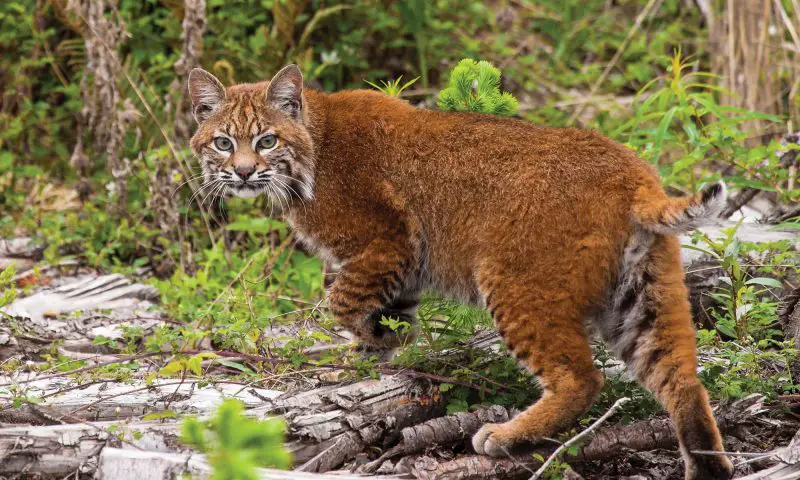
The bobcat is Maryland’s only native wild feline species. Scientifically known as the bobcat, it is a medium-sized predator distributed across much of North America. In Maryland, bobcats are most commonly found in the western counties, particularly in forested and mountainous areas, though occasional sightings have been reported in more central regions as habitat connectivity improves.
Bobcats are solitary animals. Each adult maintains a defined territory that may overlap slightly with individuals of the opposite sex but is otherwise defended against rivals. They prefer landscapes that offer thick cover such as forests, brushy edges, rocky outcrops, wetlands, and regenerating woodlands. Their name comes from their short, “bobbed” tail, usually only a few inches long with a dark tip.
Physically, bobcats are built for predation. They possess strong hind legs, sharp retractable claws, keen night vision, and excellent hearing. Their diet in Maryland includes rabbits, squirrels, rodents, birds, and occasionally young deer. They are ambush hunters, relying on stealth and patience rather than speed alone.
Maryland habitat and distribution
Western Maryland provides ideal bobcat habitat due to its forest density, mountainous terrain, and lower human population density. However, as forests regenerate in other parts of the state and wildlife corridors reconnect fragmented landscapes, bobcats have slowly expanded their range.
Even when they approach suburban edges, bobcats remain elusive. They are primarily nocturnal or crepuscular, meaning they are most active at dawn and dusk. Their cautious nature helps them avoid direct interaction with people.
Because of this secretive behavior, sustained close contact between bobcats and domestic cats is rare. Most bobcats prefer to move through areas quickly and quietly rather than linger in residential neighborhoods.
Domestic Cats: A Different Species Entirely
The modern house cat
The domestic cat, scientifically classified as the domestic cat, descends from the African wildcat and has lived alongside humans for thousands of years. Unlike bobcats, domestic cats have undergone domestication, meaning they have adapted behaviorally and genetically to coexist with people.
Selective breeding has produced a wide range of coat patterns, body sizes, and temperaments. Even feral domestic cats, which may live independently outdoors, are still genetically domestic animals. Their evolutionary path diverged significantly from that of wild North American cats millions of years ago.
While domestic cats retain strong hunting instincts and may survive outdoors, they are biologically distinct from native wild species like the bobcat.
Major genetic differences
Bobcats and domestic cats are not simply different breeds of the same animal. They belong to different genera within the cat family. Bobcats are part of the genus Lynx, while domestic cats belong to the genus Felis.
Although both are members of the broader Felidae family, their evolutionary lines separated millions of years ago. That divergence created genetic, behavioral, and reproductive distinctions that function as natural barriers between the species.
Successful reproduction between species requires more than physical compatibility. It depends on chromosomal alignment, gene interaction, hormonal timing, and species-specific mating behaviors. These biological systems evolved separately in bobcats and domestic cats, making hybridization highly improbable.
Can They Physically Breed?
The chromosome question
Both bobcats and domestic cats possess 38 chromosomes. At first glance, this similarity may seem to suggest that breeding is possible. However, chromosome number alone does not determine compatibility.
Chromosomes must not only match in number but also align structurally. Gene sequences, regulatory regions, and reproductive timing must be compatible to produce viable, healthy offspring. Species separated for millions of years often accumulate genetic differences that prevent successful embryo development.
Even when two species share the same chromosome count, subtle structural differences can prevent fertilization or lead to nonviable offspring. Thus, identical chromosome numbers do not guarantee hybrid viability.
Lack of verified hybrids
There are no scientifically confirmed, genetically verified cases of wild bobcat–domestic cat hybrids in Maryland. Wildlife agencies and researchers have not documented stable hybrid populations or confirmed DNA evidence of such crosses.
Occasionally, reports circulate online showing unusually large or muscular domestic cats claimed to be hybrids. In nearly every instance, these animals are later identified as large feral domestic cats, mixed-breed domestic cats with wild-like markings, or misidentified juvenile bobcats.
Without genetic testing, physical appearance alone cannot confirm hybrid status. To date, credible scientific documentation supporting natural hybridization between bobcats and domestic cats in Maryland does not exist.
Behavioral Barriers to Breeding
Territorial separation
Bobcats maintain large territories that can span several square miles. Males overlap with multiple females but defend boundaries from rivals. Domestic cats, especially owned pets, typically roam within a much smaller radius centered around homes.
Because of these different range sizes and habitat preferences, encounters during breeding season are limited. Bobcats also avoid areas with high human activity, further reducing contact with domestic pets.
Even when habitat overlap occurs, territorial instincts make cooperative interaction unlikely.
Mating behavior differences
Bobcats have a defined breeding season, generally occurring in late winter to early spring. Domestic cats can enter estrus multiple times throughout the year, particularly in warmer climates or indoor environments.
Species-specific mating signals, vocalizations, scent marking, and behavioral cues guide reproduction. These signals evolved within each species and are not necessarily recognized across species lines.
Even if a bobcat and a domestic cat encountered one another during overlapping reproductive periods, behavioral incompatibility would likely prevent mating attempts.
Size and physical differences
Bobcats are significantly larger, heavier, and more muscular than domestic cats. Adult bobcats may weigh between 15 and 35 pounds or more, with strong limbs and powerful jaws. Most domestic cats weigh far less.
This size disparity creates practical barriers. In nature, animals generally select mates of comparable size and strength. A bobcat encountering a domestic cat is far more likely to perceive it as prey or competition rather than a reproductive partner.
Physical incompatibility combined with behavioral differences makes successful mating extremely unlikely.
Why the Myth Persists
Wild-looking domestic cats
Some domestic cats naturally display features that resemble wild felines. Tufted ears, short tails, spotted or striped coats, and muscular builds can create the illusion of hybrid ancestry.
Certain breeds, such as Maine Coons, or large feral cats with thick fur and bold markings, may appear especially wild. Without genetic testing, observers often assume unusual appearance indicates bobcat heritage.
However, domestic cat genetics alone can produce a wide variety of physical traits that mimic wild characteristics.
Social media amplification
Images of large feral cats labeled as “bobcat hybrids” circulate widely online. Dramatic claims attract attention and spread quickly, often without verification.
Once a rumor gains traction, it becomes difficult to correct. Wildlife myths tend to persist because they combine familiar animals with a sense of mystery.
In reality, extraordinary claims require extraordinary evidence, and such evidence has not emerged.
Rare hybrid examples in other species
Some closely related wild cat species can hybridize under specific circumstances. Domestic cats have hybridized with certain small wildcats in controlled environments.
However, those species are more closely related genetically than bobcats are to domestic cats. The evolutionary distance between Lynx and Felis significantly reduces compatibility.
Genetic proximity matters greatly in hybrid viability, and bobcats are simply too distant from domestic cats for natural hybridization to be realistic.
Could It Happen in Captivity?
Theoretical but unproven
In highly controlled experimental settings, researchers have explored hybridization among certain species. However, there is no reliable evidence of stable, fertile bobcat–domestic cat hybrids even in captivity.
Most wildlife institutions do not attempt such crosses due to ethical concerns and low likelihood of success. Theoretical possibility does not equal practical viability.
Ethical and biological barriers
Even if rare fertilization occurred, offspring viability would be questionable. Hybrid animals often face health complications, infertility, or developmental instability.
Nature typically enforces reproductive isolation between distinct species. These mechanisms prevent genetic mixing that could reduce species fitness or survival.
In the case of bobcats and domestic cats, these natural barriers appear to function effectively.
Ecological Implications If It Did Happen
Genetic dilution concerns
If hybridization were common, it could threaten the genetic integrity of wild bobcat populations. Hybrid offspring might alter inherited traits or disrupt ecological balance.
However, because confirmed hybrid populations do not exist, this concern remains hypothetical rather than practical in Maryland.
Wildlife management perspective
Maryland wildlife authorities monitor bobcat populations using tracking methods, camera surveys, and occasional genetic sampling. If hybrids were present, genetic anomalies would likely be detected.
To date, research has not revealed evidence supporting hybridization. Bobcat populations in the state remain genetically consistent with known species characteristics.
What Actually Happens When They Meet?
Predation risk
In rare cases where bobcats and domestic cats encounter one another, the dynamic is more likely predatory than reproductive. Bobcats are opportunistic hunters. A small outdoor cat may be perceived as potential prey.
This reality highlights the importance of keeping domestic cats indoors, especially at night in areas known to host bobcats.
Avoidance behavior
Most interactions never occur because both species avoid one another. Bobcats steer clear of heavy human presence. Domestic cats tend to retreat from larger predators when detected.
Mutual avoidance drastically reduces meaningful interaction.
How to Identify a Real Bobcat
Physical features
True bobcats display distinct characteristics: a short bobbed tail with a dark tip, tufted ears, a spotted coat, muscular build, and proportionally longer hind legs. Their faces appear broader and more angular than domestic cats.
Domestic cats rarely replicate this complete combination of features naturally.
Behavioral cues
Bobcats move with cautious, deliberate steps. They typically avoid lingering in open daylight and prefer edges of forest cover.
Domestic cats, even feral ones, often display more relaxed body language around residential structures. Observing behavior alongside physical features improves identification accuracy.
Safety and Coexistence in Maryland
Protecting pets
Keeping domestic cats indoors, especially overnight, greatly reduces risk. Supervised outdoor time and secure enclosures provide safer alternatives.
Securing small livestock and removing attractants such as unsecured trash also helps prevent unwanted wildlife visits.
Respecting wildlife
Bobcats play an important ecological role in controlling rodent and rabbit populations. They help maintain balance within forest ecosystems.
They are not aggressive toward humans under normal circumstances. Coexistence relies on awareness, habitat respect, and responsible pet management rather than fear.
FAQs About Bobcats and Domestic Cats in Maryland
Has a bobcat–domestic cat hybrid ever been confirmed in Maryland?
No scientifically confirmed cases exist.
Could they breed if they tried?
Biological and behavioral barriers make it extremely unlikely.
Why do some cats look like bobcats?
Certain domestic breeds and feral cats have wild-like features that resemble bobcats.
Are bobcats dangerous to house cats?
They can prey on small animals, including outdoor cats.
Should I report a suspected hybrid?
Wildlife agencies can evaluate sightings, but visual resemblance alone is not proof.
Do bobcats live in suburban Maryland?
Occasionally, especially near wooded corridors.
Are bobcats protected?
Yes, wildlife regulations manage their populations.
Can DNA testing prove hybridization?
Yes, but confirmed hybrid cases have not been documented.
Are black or large feral cats hybrids?
Almost always they are simply domestic cats.
Should residents be concerned?
Concern should focus on pet safety, not hybrid threats.
Conclusion
The idea that bobcats in Maryland breed with domestic cats captures imagination, but biology tells a different story. Despite overlapping habitats and occasional sightings near suburbs, the two species remain genetically and behaviorally distinct.
While both belong to the broader cat family, evolutionary separation, reproductive barriers, territorial behavior, and ecological differences prevent meaningful hybridization. There are no scientifically confirmed bobcat–domestic cat hybrids in Maryland.
What often appears mysterious usually has a simpler explanation: large feral cats, misidentification, or the natural expansion of bobcat populations into suitable habitat.
Understanding the science replaces myth with clarity. And in Maryland, bobcats remain what they have always been — elusive native predators, not secret hybrid experiments hiding in suburban shadows.