
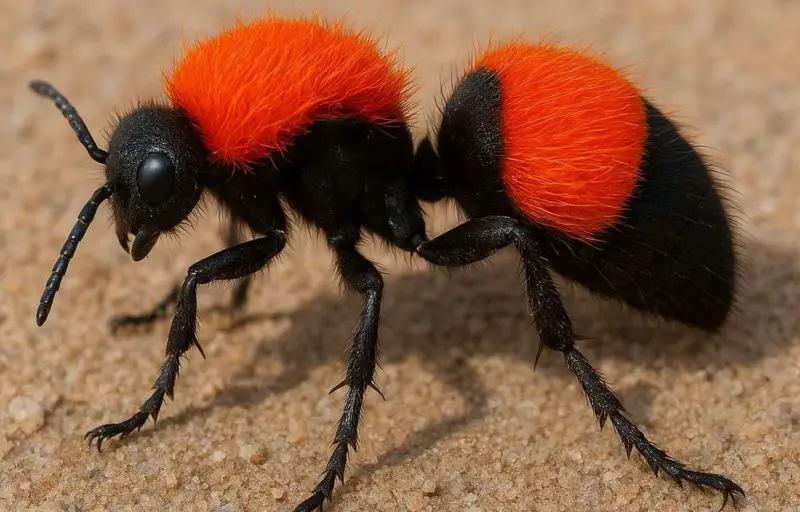
Velvet ants are among the most misunderstood insects people encounter outdoors in the eastern United States. In Connecticut, sightings are not extremely common, but when they do happen, they often trigger strong reactions. Their bright red or orange coloring, fuzzy appearance, and sudden movement across lawns or trails easily catch attention. Then someone hears the nickname “cow killer.” Panic tends to follow.
Despite the dramatic name, velvet ants are not ants at all. They are actually wingless female wasps capable of delivering a powerful defensive sting. That sting, while rarely dangerous medically, is famously painful. Many people describe it as shocking, intense, and memorable. Understanding why the sting hurts so much — and why fear spreads quickly when these insects appear — helps separate biological fact from rumor.
This article explores the science behind velvet ant stings, their presence in Connecticut, how pain perception works, common myths, real risks, and how to respond calmly if you encounter one.
Table of Contents
- 1 What Velvet Ants Actually Are
- 2 Why Velvet Ant Stings Hurt So Much
- 3 Why People Panic After Seeing One
- 4 Velvet Ants in Connecticut Specifically
- 5 How Dangerous Is the Sting Really?
- 6 Psychological Factors Behind Panic
- 7 How to Avoid Getting Stung
- 8 What to Do If Stung
- 9 Ecological Importance of Velvet Ants
- 10 Common Myths About Velvet Ants
- 11 Coexisting With Velvet Ants in Connecticut
- 12 FAQs About Velvet Ant Stings in Connecticut
- 12.1 Are velvet ants common in Connecticut?
- 12.2 Can they sting multiple times?
- 12.3 Do males sting?
- 12.4 Are they aggressive toward humans?
- 12.5 How long does the pain last?
- 12.6 Should I kill one if I see it?
- 12.7 Do they enter houses?
- 12.8 Are pets at risk?
- 12.9 Is professional pest control needed?
- 12.10 Why are they brightly colored?
- 13 Conclusion
What Velvet Ants Actually Are
Not ants but solitary wasps
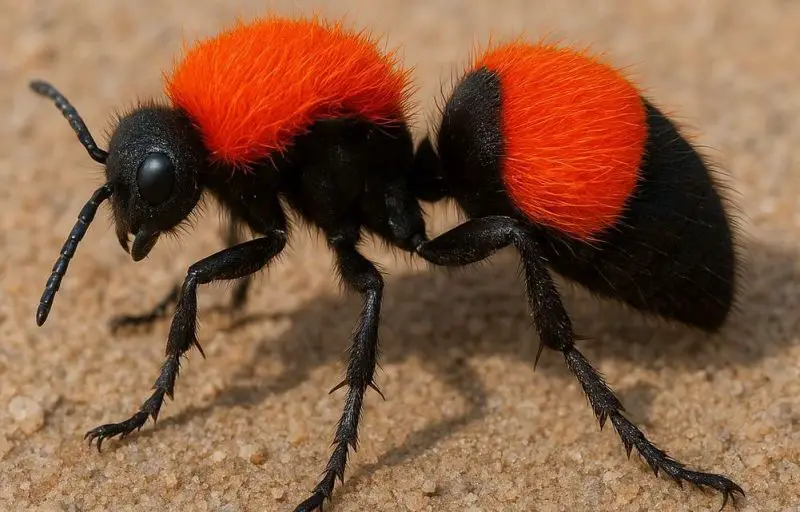
Velvet ants are not ants at all, despite what their common name suggests. They belong to a family of solitary wasps, and the females lack wings, which makes them resemble large ants when they move quickly across the ground. Their bodies are covered with dense, brightly colored hairs, often red, orange, yellow, or black, giving them a soft, velvety appearance that inspired their name.
Male velvet ants do have wings and look more like traditional wasps, but they cannot sting. Only the wingless females possess a functional stinger, which evolved mainly as a defense mechanism rather than for hunting. When disturbed or accidentally touched, females may sting to protect themselves.
Because they move fast on the ground and look unusual compared with common backyard insects, many people mistakenly assume they are aggressive ants or unfamiliar invasive pests. In reality, they are native insects that generally avoid human contact whenever possible.
Their life cycle explains their behavior
Velvet ants are parasitoids, meaning their reproductive cycle involves using other insects as hosts. A female searches for nests of ground-nesting bees or wasps, enters the nest, and lays eggs inside. When the larvae hatch, they consume the host larvae and develop safely inside that protected environment.
This life cycle explains why velvet ants spend much of their time wandering alone on the ground. They are not searching for humans or food scraps but rather for suitable host nests. Most human encounters occur accidentally during gardening, mowing, hiking, or other outdoor activities.
Unlike social insects such as ants or yellowjackets, velvet ants do not form colonies that aggressively defend territory. Seeing one typically means a solitary insect passing through rather than a nearby infestation.
Warning coloration signals defense
The bright coloration seen in velvet ants serves as a biological warning. This type of coloration, called aposematic coloration, signals to predators that the insect has strong defenses. Bright reds, oranges, and yellows often indicate toxicity or painful defense mechanisms in nature.
Predators like birds, reptiles, and small mammals quickly learn to associate these colors with unpleasant experiences. After one painful encounter, they tend to avoid similar insects in the future.
Humans may not recognize this warning instinctively, especially if unfamiliar with the species. However, the striking coloration essentially functions as nature’s “do not touch” label.
Why Velvet Ant Stings Hurt So Much
Exceptionally potent venom composition
Velvet ant venom contains compounds designed to produce rapid, intense pain. Unlike predatory wasps that use venom to paralyze prey, velvet ants use their sting almost entirely for defense. The goal is not to incapacitate but to create a memorable deterrent.
The venom triggers pain receptors in the skin almost immediately. This causes a sharp burning sensation that many people describe as surprisingly intense relative to the insect’s size.
From an evolutionary perspective, pain effectiveness increases survival. Predators that experience severe discomfort are unlikely to attack again.
Stinger size and penetration
Female velvet ants possess relatively strong, long stingers compared with many similar-sized wasps. This allows them to penetrate thick skin or fur effectively.
The physical puncture contributes to the pain sensation alongside the venom. Mechanical penetration combined with chemical irritation creates a stronger overall effect than many common insect stings.
People often expect a mild ant-like bite but instead experience a deeper, sharper sting. That mismatch between expectation and reality amplifies the perceived intensity.
Neurological pain response
Human skin contains specialized nerve endings called nociceptors that detect potentially harmful stimuli. Velvet ant venom activates these receptors strongly, sending rapid pain signals to the brain.
Sudden, unexpected pain typically feels more intense than anticipated discomfort. The brain reacts quickly, triggering both physical and emotional responses. Fear, surprise, and stress can further amplify perceived pain.
This neurological response explains why velvet ant stings are often remembered as exceptionally painful even if lasting damage is minimal.
Why People Panic After Seeing One
The “cow killer” nickname
One major cause of public anxiety is the nickname “cow killer.” Although memorable, it is misleading. The name refers only to the sting’s intense pain, not to any ability to harm cattle or large animals.
There is no scientific evidence that velvet ants kill livestock. The nickname likely developed from folklore exaggerating the sting’s severity.
Once people hear such a dramatic label, fear often overrides rational assessment, increasing panic during encounters.
Visual appearance triggers alarm
Velvet ants look strikingly different from typical backyard insects. Their bright coloration, fuzzy bodies, and rapid ground movement naturally attract attention.
Humans tend to react strongly to unfamiliar animals, especially those with warning coloration. This instinctive caution evolved as a survival mechanism against potentially dangerous species.
Even without prior knowledge, many people feel an immediate urge to avoid touching the insect.
Social media amplification
Photos and dramatic stories about velvet ants circulate widely online. Some posts exaggerate toxicity or danger, sometimes without scientific context.
Repeated exposure to alarming content shapes expectations. When people later encounter a velvet ant locally, those prior impressions influence their reaction.
Misinformation often spreads faster than balanced scientific explanations, contributing to unnecessary panic.
Velvet Ants in Connecticut Specifically
Regional presence and habitat
Velvet ants do occur in parts of the northeastern United States, including Connecticut, although they are less common than in warmer southern states. They prefer sandy soil, open woodland, grassland edges, coastal dunes, and disturbed ground where host insect nests are present.
In Connecticut, sightings often happen in dry fields, suburban lawns, gardens, hiking trails, and coastal sandy areas. Their presence usually indicates healthy insect ecosystems rather than infestation problems.
Seasonal activity patterns
Most sightings occur during warmer months, particularly late summer. This period coincides with peak activity of ground-nesting bees and wasps, which velvet ants parasitize.
Warmer temperatures increase insect movement generally, raising the likelihood of human encounters. During colder months, velvet ants remain inactive or hidden underground.
This seasonal pattern explains why sightings may seem sudden or sporadic.
Population stability
Velvet ants are not considered invasive in Connecticut. Their populations fluctuate naturally depending on weather conditions, habitat availability, and host insect abundance.
They play a small but meaningful ecological role by regulating populations of certain ground-nesting insects. Occasional sightings are part of normal ecosystem dynamics rather than a sign of infestation.
How Dangerous Is the Sting Really?
Painful but usually not medically serious
For most healthy adults, a velvet ant sting causes intense pain but limited lasting harm. Swelling, redness, and localized soreness may last several hours or occasionally longer.
Pain severity does not necessarily correlate with venom toxicity. In most cases, symptoms resolve without medical intervention.
Allergy considerations
Individuals with allergies to bee or wasp venom may experience stronger reactions. Symptoms can include severe swelling, breathing difficulty, dizziness, or rapid heartbeat.
Such reactions require immediate medical attention. Fortunately, severe allergic responses remain relatively uncommon overall.
Infection risk
Any skin puncture carries a small infection risk, especially if scratched excessively. Cleaning the sting site and avoiding irritation helps prevent complications.
Basic first aid is typically sufficient for recovery.
Psychological Factors Behind Panic
Fear of unfamiliar insects
Humans naturally fear unfamiliar creatures, particularly those that move quickly or display bright warning colors. Velvet ants combine both traits, increasing perceived threat.
Education and familiarity often reduce this fear significantly.
Pain anticipation effect
Knowing an insect has a painful sting can cause anxiety even before contact occurs. Anticipated pain often feels worse psychologically than the actual injury.
Understanding realistic risk levels helps moderate this response.
Cultural storytelling influence
Folklore, dramatic anecdotes, and exaggerated stories shape public perception strongly. These narratives often persist longer than scientific explanations.
Consistent education helps correct misconceptions over time.
How to Avoid Getting Stung
Simple awareness strategies
Avoid handling brightly colored insects. Wear gloves when gardening in sandy soil or wooded areas. Check outdoor seating areas before sitting down.
Basic awareness prevents most stings.
Clothing protection
Closed-toe shoes, long pants, and gloves reduce accidental contact risk. Velvet ants typically sting only when touched or trapped.
Protective clothing provides a simple, effective barrier.
Respect wildlife boundaries
Leaving insects undisturbed usually prevents conflict. Velvet ants do not chase humans. Calm observation from a distance is safe.
What to Do If Stung
Immediate first aid
Wash the area gently with soap and water. Apply a cold compress to reduce swelling and discomfort. Over-the-counter pain relief may help if needed. Avoid scratching.
Monitor symptoms
Watch for signs of allergic reaction. Seek medical care if symptoms worsen or breathing difficulties occur. Most stings resolve without complications.
Emotional reassurance
The pain, although intense, is temporary. Understanding the biological purpose of the sting often reduces lingering anxiety. Knowledge helps restore calm quickly.
Ecological Importance of Velvet Ants
Natural pest regulation
By parasitizing other insects, velvet ants help maintain ecological balance. They prevent overpopulation of certain ground-nesting species.
Healthy ecosystems rely on such natural regulation.
Indicators of habitat health
Their presence often reflects functioning insect communities and stable habitats. Biodiversity contributes to environmental resilience.
Common Myths About Velvet Ants
Myth: They are aggressive
Velvet ants are defensive rather than aggressive. They sting mainly when threatened or handled. Most encounters remain harmless.
Myth: They are deadly
Despite dramatic nicknames, fatalities are extremely rare. Pain intensity does not equal lethal toxicity.
Myth: They infest homes
They do not form indoor colonies. Indoor sightings are usually accidental, and pest control is rarely necessary.
Coexisting With Velvet Ants in Connecticut
Understanding reduces fear
Learning about their biology replaces panic with perspective. They are part of regional biodiversity and rarely pose serious risk.
Community education helps
Sharing accurate information counters misinformation. Public awareness improves tolerance and supports coexistence with local wildlife.
FAQs About Velvet Ant Stings in Connecticut
Are velvet ants common in Connecticut?
They are present but not extremely common. Sightings tend to be seasonal and localized.
Can they sting multiple times?
Yes. Unlike honeybees, velvet ants can sting more than once.
Do males sting?
No. Only wingless females have stingers.
Are they aggressive toward humans?
They usually avoid contact unless threatened.
How long does the pain last?
Severe pain typically subsides within hours, though mild soreness may persist longer.
Should I kill one if I see it?
Not necessary. Simply avoid handling it.
Do they enter houses?
Rarely. They prefer outdoor environments.
Are pets at risk?
Curious pets may get stung, but serious complications are uncommon.
Is professional pest control needed?
Usually not, unless unusual numbers appear indoors.
Why are they brightly colored?
The coloration warns predators of their defensive sting.
Conclusion
Velvet ant stings in Connecticut may be painful, but they are rarely dangerous. These insects are solitary parasitic wasps using powerful defensive venom to deter predators rather than attack humans. Their striking appearance, dramatic nickname, and strong sting combine to create disproportionate fear.
Understanding their biology helps replace panic with perspective. They are not invasive pests, aggressive attackers, or lethal threats. They are simply part of the region’s natural insect diversity, playing ecological roles that often go unnoticed.
When people recognize why the sting hurts, why sightings occur seasonally, and how to avoid contact, encounters become manageable rather than alarming. Knowledge transforms fear into respect — and that makes living alongside wildlife much easier.