
Warm seasons in Kentucky bring dramatic changes to the landscape. Forests grow thick with green foliage, creeks wind through wooded valleys, and fields fill with tall grasses and wildflowers. These environments support an enormous range of wildlife, including mammals, birds, insects, and reptiles.
Among the reptiles living quietly in these landscapes is one snake that many residents recognize by name but rarely encounter directly.
The copperhead.
Copperheads are one of the most widely distributed venomous snakes in the eastern United States, and Kentucky lies directly within the heart of their natural range. Yet despite this familiarity, many people misunderstand how these snakes behave, when they are most active, and why they appear around homes or trails.
What most Kentucky residents don’t realize about copperhead activity is that these snakes spend the majority of their lives hidden from view. Their presence often goes unnoticed because they rely on camouflage, patience, and stillness rather than aggression.
Understanding how copperheads move through Kentucky landscapes helps explain why encounters sometimes occur and why these snakes are far less aggressive than their reputation suggests.
Table of Contents
- 1 The Copperhead Snake of Kentucky
- 2 Why Kentucky Provides Ideal Copperhead Habitat
- 3 The Copperhead’s Camouflage Advantage
- 4 How Copperheads Hunt
- 5 When Copperheads Are Most Active
- 6 Why Copperheads Sometimes Appear Near Homes
- 7 The Copperhead’s Defensive Behavior
- 8 Why Copperhead Bites Occur
- 9 Natural Predators of Copperheads
- 10 Copperheads and Kentucky Ecosystems
- 11 Why Many Copperheads Go Unnoticed
- 12 FAQs About Copperhead Activity in Kentucky
- 13 Final Thoughts
The Copperhead Snake of Kentucky
The species most commonly encountered across Kentucky is the Eastern Copperhead. This snake belongs to the pit viper family, a group of venomous snakes that also includes rattlesnakes and cottonmouths.
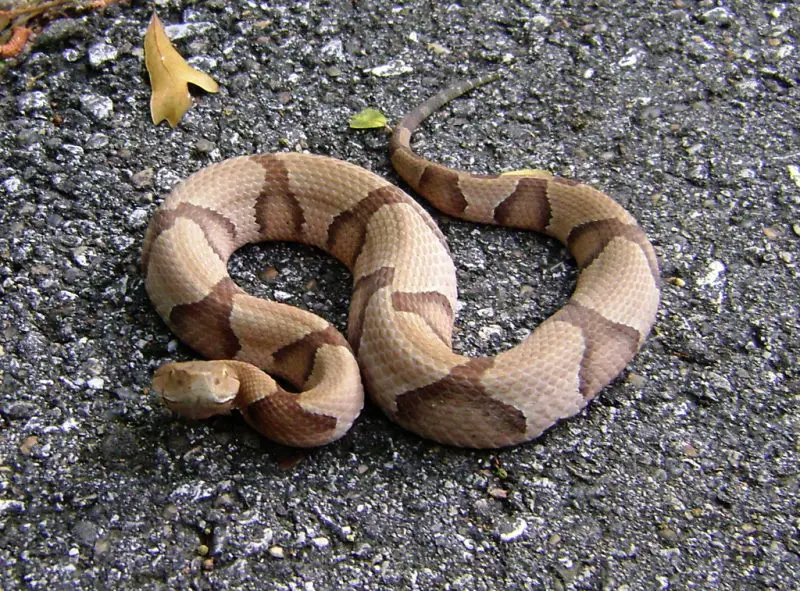
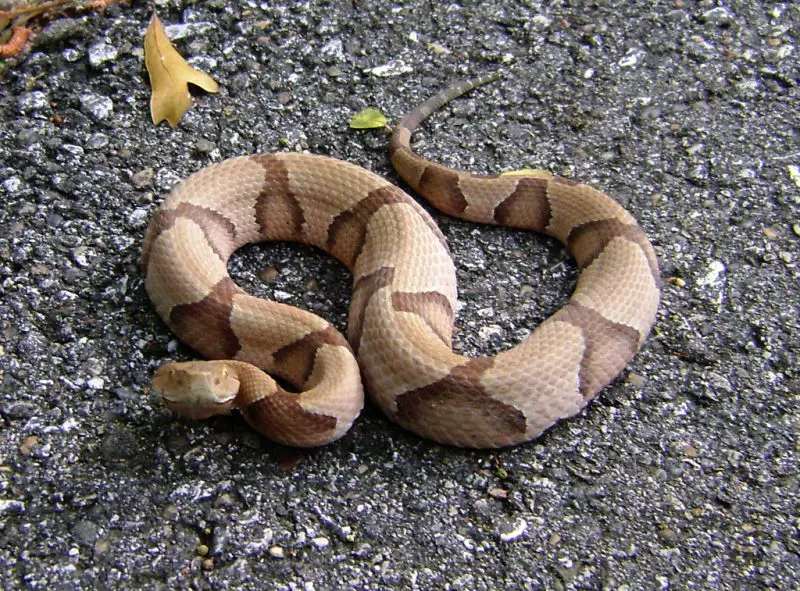
Copperheads are medium-sized snakes, typically growing between two and three feet long. Their bodies are thick and muscular, and their heads form a distinctive triangular shape that is common among pit vipers.
The snake’s coloration is one of its most recognizable features.
Copperheads possess a tan or light brown background color overlaid with darker chestnut-colored bands shaped somewhat like hourglasses. These markings help the snake blend perfectly into forest leaf litter.
When lying motionless among fallen leaves, sticks, and soil, a copperhead can become almost impossible to detect.
This camouflage is the snake’s primary defense. Rather than fleeing quickly like many other snakes, copperheads often rely on remaining perfectly still when potential threats approach.
Why Kentucky Provides Ideal Copperhead Habitat
Kentucky’s geography creates ideal environments for copperheads to live and hunt.
Much of the state contains a mix of hardwood forests, rocky hillsides, farmland, and waterways. These diverse habitats support the prey animals copperheads depend on for survival.
Wooded hills and forests provide cover where snakes can hide beneath fallen logs, rocks, and thick layers of leaf litter.
Creek banks and river valleys also support copperheads because moisture and vegetation attract rodents and amphibians.
Old fields, brush piles, and forest edges create transitional zones where small animals move frequently. These areas often become hunting grounds for copperheads.
The state’s climate also plays a role.
Warm summers allow snakes to remain active for long periods, while mild spring and fall temperatures extend the seasons during which they can hunt and move.
Because these habitats exist throughout Kentucky, copperheads can live in both rural wilderness and suburban areas where forests meet residential neighborhoods.
The Copperhead’s Camouflage Advantage
One reason copperheads are rarely seen despite living near people is their remarkable camouflage.
The pattern on their bodies closely resembles the colors and shapes found in forest leaf litter.
Dry oak leaves, small twigs, and soil create complex patterns across the ground. The copperhead’s hourglass markings blend into this environment so effectively that the snake can disappear visually even when lying in plain sight.
This camouflage allows the snake to avoid predators and also helps it capture prey.
Copperheads often remain completely motionless while waiting for small animals to approach.
Rodents and frogs may move through leaf litter without noticing the snake until it is too late.
Because of this strategy, copperheads do not need to travel constantly in search of food.
They simply wait.
This stillness also explains why people sometimes step very close to a copperhead before noticing it.
How Copperheads Hunt
Copperheads are ambush predators.
Instead of actively chasing prey, they rely on patience and camouflage to capture animals that wander nearby.
Their diet includes a wide variety of small creatures common in Kentucky landscapes.
Rodents such as mice and voles form a major part of their diet. These animals are abundant in fields, forests, and agricultural areas.
Copperheads also eat frogs, lizards, insects, and occasionally small birds.
The snake’s hunting strategy relies heavily on stealth.
It positions itself along animal pathways or near areas where prey frequently travels.
When an animal approaches within striking distance, the snake strikes quickly, injecting venom that immobilizes the prey.
The snake then releases the animal and waits for the venom to take effect before swallowing it.
This strategy reduces the risk of injury from struggling prey.
When Copperheads Are Most Active
Copperhead activity changes throughout the year depending on temperature and environmental conditions.
In Kentucky, snakes usually emerge from winter shelters in early spring when temperatures begin to rise.
During cooler spring months, copperheads may be active during daylight hours as they bask in sunlight to warm their bodies.
As summer temperatures increase, their activity shifts toward evening and nighttime.
Hot daytime temperatures can cause snakes to remain hidden under rocks, logs, or vegetation where the ground stays cooler.
Once temperatures drop in the evening, copperheads begin moving again.
This shift in activity often explains why encounters occur during evening walks, gardening, or nighttime outdoor activities.
Why Copperheads Sometimes Appear Near Homes
Many Kentucky residents are surprised when copperheads appear in residential areas.
However, homes located near forests, fields, or creeks often lie within natural snake habitats.
Yards may contain features that attract the animals copperheads prey upon.
Woodpiles, brush piles, stone walls, and thick landscaping provide hiding places for rodents.
Bird feeders can also attract small mammals that gather spilled seeds.
When prey animals become abundant near homes, predators may follow.
Copperheads may occasionally move through yards while hunting for rodents or seeking shelter in shaded areas.
Despite this possibility, snakes usually remain hidden and avoid human activity whenever possible.
The Copperhead’s Defensive Behavior
Copperheads are not aggressive snakes.
Their primary defense is to remain still and rely on camouflage.
If disturbed, they may attempt to move slowly away from the threat.
When escape is not possible, a copperhead may coil its body and raise its head slightly as a warning posture.
Some individuals vibrate their tails against dry leaves, producing a sound that can resemble the warning rattle of a rattlesnake.
This display is meant to discourage predators from approaching.
In many cases, the snake will attempt to escape once it senses an opportunity.
Bites usually occur when someone accidentally steps on or handles the snake.
Why Copperhead Bites Occur
Most copperhead bites happen during accidental encounters.
Because their camouflage is so effective, people may step close to a snake without realizing it is present.
When startled or threatened, the snake may strike defensively.
Copperheads possess venom designed primarily for subduing prey.
Although bites can cause pain and swelling, serious medical complications are relatively rare when prompt treatment is received.
The snake’s venom evolved to immobilize small animals rather than defend against large mammals.
Because of this, copperheads generally prefer to avoid conflict whenever possible.
Natural Predators of Copperheads
Even venomous snakes face threats from other animals.
Several predators may feed on copperheads.
Birds of prey such as hawks and owls occasionally capture young snakes.
Certain mammals, including raccoons and foxes, may also prey on snakes.
One particularly notable predator is the Eastern Kingsnake, a snake known for eating other snakes, including venomous species.
Kingsnakes possess natural resistance to pit viper venom, allowing them to hunt and consume copperheads.
These predator-prey relationships help maintain ecological balance within Kentucky’s wildlife communities.
Copperheads and Kentucky Ecosystems
Copperheads play an important role in Kentucky ecosystems.
By feeding on rodents and other small animals, they help regulate populations that might otherwise grow rapidly.
Rodents can damage crops, spread disease, and disrupt ecosystems when populations become too large.
Predators such as snakes help keep these populations balanced.
Copperheads also serve as prey for larger predators, contributing to complex food webs that sustain biodiversity.
Although they may be feared because of their venom, copperheads remain an important part of Kentucky’s natural environment.
Why Many Copperheads Go Unnoticed
Because copperheads rely on camouflage and stillness, most people pass near them without ever realizing it.
A snake resting among leaves may remain motionless as people walk nearby.
Only when it moves or someone looks carefully does it become visible.
This behavior helps explain why sightings seem rare despite the snake’s wide distribution.
Many copperheads likely remain undetected throughout their lives.
Their quiet presence within forests, fields, and hillsides often goes unnoticed by the people living nearby.
FAQs About Copperhead Activity in Kentucky
Are copperheads common in Kentucky?
Yes. Kentucky lies within the natural range of copperheads, and they are found across much of the state.
Are copperheads aggressive toward humans?
No. Copperheads usually rely on camouflage and avoidance rather than aggression.
When are copperheads most active?
They are often active in spring and fall during the day, and in summer during evening and nighttime hours.
What do copperheads eat?
Their diet includes rodents, frogs, insects, and small reptiles.
Why are copperheads hard to see?
Their body patterns blend perfectly with leaf litter on the forest floor.
Final Thoughts
What most Kentucky residents don’t realize about copperhead activity is that these snakes spend most of their lives quietly hidden within natural landscapes.
Their camouflage allows them to blend perfectly into forests and fields, while their patient hunting strategy keeps them largely out of sight.
Encounters between humans and copperheads remain relatively rare considering how widely these snakes live across Kentucky.
When sightings do occur, they often reflect the natural overlap between human environments and wildlife habitats.
Understanding how copperheads live and behave reveals that these snakes are not aggressive invaders but quiet predators playing an important role in the ecosystems of Kentucky’s forests and fields.