
Across Texas, warm weather lasts much longer than in most parts of the United States. Spring arrives early, summers stretch for months, and mild fall temperatures allow many insects to remain active well into the year. In neighborhoods across the state, homeowners often notice certain insects returning again and again to familiar places around their houses.
One of the most common of these insects is the paper wasp.
Many Texas homeowners have seen them before. They appear beneath roof eaves, along porch ceilings, under deck railings, or attached to garage frames. Their nests hang openly in small umbrella-shaped structures made of thin gray material that looks almost like weathered paper.
Because the nests are so visible, paper wasps often attract concern.
People may worry about stings, especially when nests appear close to entryways or outdoor seating areas. Yet despite their visibility, many homeowners misunderstand how these insects behave and why they choose certain places around homes.
What most Texas homeowners don’t realize about paper wasps is that the insects building those small nests are usually far less aggressive than their reputation suggests. In many cases, the wasps are simply responding to environmental conditions that make homes convenient nesting locations.
Understanding how paper wasps live reveals why they appear so frequently around houses across Texas.
Table of Contents
- 1 The Paper Wasp Species Found in Texas
- 2 How Paper Wasps Build Their Nests
- 3 Why Texas Homes Attract Paper Wasps
- 4 The Paper Wasp Colony Cycle
- 5 What Paper Wasps Eat
- 6 Why Paper Wasps Appear Around Gardens
- 7 Are Paper Wasps Aggressive?
- 8 Why Nests Often Appear in the Same Places
- 9 Natural Predators of Paper Wasps
- 10 Why Paper Wasps Are Important for Ecosystems
- 11 Why Paper Wasps Prefer Warm Regions
- 12 Why Homeowners Notice Wasps More in Summer
- 13 FAQs About Paper Wasps
- 14 Final Thoughts
The Paper Wasp Species Found in Texas
The insects commonly seen around homes belong to several species within the genus Polistes. These wasps are widely distributed across North America and are especially common in warm southern climates.
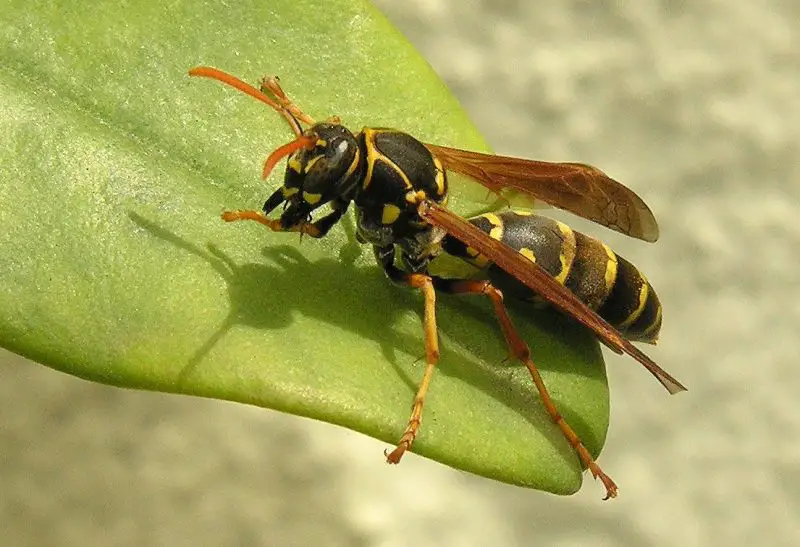
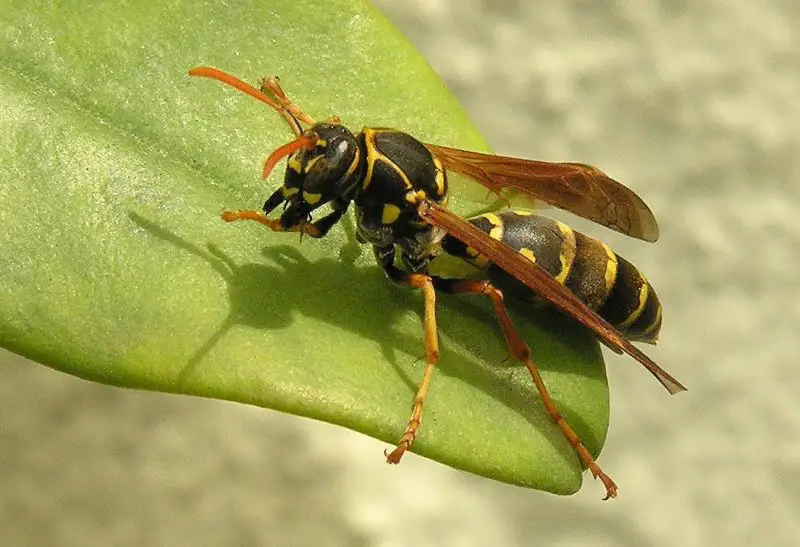
Paper wasps are medium-sized insects with slender bodies, long legs, and narrow waists connecting their thorax and abdomen. Their coloration often includes combinations of brown, red, black, and yellow.
One of their most distinctive features is the way their long legs hang downward during flight.
Unlike many other wasps, which tuck their legs tightly beneath their bodies, paper wasps allow their legs to dangle visibly as they move through the air.
This behavior often makes them easy to identify when flying near houses or gardens.
The insects also possess powerful jaws that allow them to chew plant fibers while building nests.
These fibers are mixed with saliva to create the thin paper-like material that gives the insects their name.
How Paper Wasps Build Their Nests
Paper wasp nests are remarkable structures created entirely from natural materials.
The process begins when a female wasp collects tiny fibers from wood surfaces such as tree bark, fence posts, or weathered lumber. Using her jaws, she scrapes these fibers into small bundles.
Back at the nest site, the fibers are mixed with saliva and chewed into a soft pulp.
This pulp is then shaped into thin layers that harden into the papery material forming the nest.
Unlike the enclosed nests built by hornets, paper wasp nests remain open.
They resemble small umbrellas hanging upside down, with a cluster of hexagonal cells visible from below.
Each cell functions as a nursery where a developing larva grows.
The entire nest is attached to a surface by a thin stalk called a pedicel.
This design keeps the nest suspended away from surfaces where predators might approach.
Why Texas Homes Attract Paper Wasps
Paper wasps choose nesting sites based on several environmental factors.
Protection from weather is one of the most important.
In Texas, intense sunlight and sudden storms can damage exposed nests. Areas beneath roof overhangs, porch ceilings, and eaves provide shelter from rain and direct sunlight.
Homes naturally provide these protected spaces.
Another important factor is height.
Paper wasps prefer nesting locations elevated above the ground where predators have difficulty reaching them.
The structures of houses often provide ideal elevated surfaces.
Eaves, beams, and gutters create perfect anchor points where nests can hang safely.
Because homes provide both shelter and elevation, they become attractive nesting sites throughout Texas neighborhoods.
The Paper Wasp Colony Cycle
The life of a paper wasp colony follows a predictable seasonal pattern.
In early spring, a fertilized female known as a queen emerges from winter shelter.
These queens spent the winter hidden in protected locations such as tree bark, attic spaces, or crevices in buildings.
Once temperatures rise, the queen begins searching for a suitable place to build a nest.
She constructs the first few cells alone and lays eggs inside them.
After the eggs hatch, the larvae remain inside the cells while the queen gathers food to feed them.
When these larvae mature into adult wasps, they become workers that help expand the nest and care for new larvae.
As summer progresses, the colony grows larger.
More cells are added, and additional generations of wasps emerge.
By late summer, the colony may contain dozens of individuals.
Eventually the cycle ends as cooler weather approaches.
New queens leave the nest to find winter shelter while the rest of the colony gradually dies off.
What Paper Wasps Eat
Paper wasps play an important role as predators in many ecosystems.
Adult wasps feed primarily on sugary substances such as nectar from flowers or plant sap.
However, their larvae require protein to grow.
To provide this protein, adult wasps hunt insects.
They capture caterpillars, beetle larvae, and other soft-bodied insects that live in gardens or trees.
The captured prey is chewed into small pieces and fed to developing larvae inside the nest.
Because of this hunting behavior, paper wasps often help reduce populations of garden pests.
In many landscapes, they act as natural pest control agents by feeding on insects that damage plants.
Why Paper Wasps Appear Around Gardens
Gardens and yards provide excellent hunting grounds for paper wasps.
Flowering plants supply nectar for adult wasps.
Vegetation also supports caterpillars and other insects that serve as prey.
Because many Texas homeowners maintain gardens or landscaping around their houses, these areas attract both prey insects and the wasps that hunt them.
This connection explains why nests often appear near gardens or patios where plants grow close to structures.
The wasps simply respond to the availability of food nearby.
Are Paper Wasps Aggressive?
Paper wasps are often feared because they possess stingers.
However, their behavior is usually defensive rather than aggressive.
Most paper wasps do not attack humans unless their nests are threatened.
When a person approaches a nest too closely, the wasps may become alert and fly nearby as a warning.
If the nest is disturbed, they may sting to defend it.
Away from the nest, paper wasps are usually uninterested in people.
They spend most of their time searching for food or collecting materials for nest building.
Because of this behavior, many homeowners coexist with paper wasps without ever experiencing a sting.
Why Nests Often Appear in the Same Places
Some homeowners notice paper wasp nests appearing in similar locations year after year.
This pattern occurs because the environmental conditions remain favorable.
Protected areas under eaves or porch ceilings continue providing shelter from rain and sun.
Even though the previous colony dies off in winter, new queens searching for nesting sites may choose the same location the following spring.
The presence of old nests can also signal that the area provides suitable protection.
Because the structure of the home does not change, the conditions that attracted the wasps in the first place remain the same.
Natural Predators of Paper Wasps
Paper wasps face threats from several predators.
Birds sometimes attack nests to eat developing larvae.
Raccoons and other mammals may also tear open nests if they can reach them.
Certain insects prey on wasp larvae as well.
Despite these threats, nests located high on buildings often remain relatively safe from predators.
The elevated position beneath roof structures provides protection that allows colonies to develop successfully.
Why Paper Wasps Are Important for Ecosystems
Although their nests may concern homeowners, paper wasps contribute positively to local ecosystems.
By hunting caterpillars and other plant-eating insects, they help regulate populations that might otherwise damage vegetation.
This natural pest control benefits gardens, trees, and agricultural crops.
Paper wasps also serve as food for birds and other wildlife.
Their role as both predator and prey places them within complex food webs that support biodiversity.
Because of these ecological contributions, paper wasps remain an important component of natural environments across Texas.
Why Paper Wasps Prefer Warm Regions
Paper wasps thrive in warm climates where long summers allow colonies to develop fully.
Texas provides ideal conditions for this process.
Early springs give queens a long period to build nests and raise workers.
Warm temperatures support abundant insect prey, ensuring that larvae receive the protein they need.
Because of these favorable conditions, paper wasps are particularly common across southern states where warm seasons last longer.
Why Homeowners Notice Wasps More in Summer
Paper wasp activity increases as colonies grow.
Early in the season, only the queen may be present at the nest.
As worker wasps emerge, activity around the nest increases.
More individuals leave and return while searching for food.
This increase in movement often occurs during mid to late summer, which is when homeowners begin noticing the insects more frequently.
The increased activity simply reflects the natural growth of the colony.
FAQs About Paper Wasps
What are paper wasps?
Paper wasps are social insects that build umbrella-shaped nests from chewed plant fibers.
Are paper wasps dangerous?
They can sting if their nest is threatened but are usually not aggressive away from it.
Why do they build nests on houses?
Homes provide sheltered surfaces protected from rain and sunlight.
What do paper wasps eat?
Adults consume nectar while larvae are fed captured insects.
Do paper wasps return to the same nest every year?
No. Each colony lasts only one season, although new queens may choose the same location.
Final Thoughts
What most Texas homeowners don’t realize about paper wasps is that these insects are simply responding to environmental opportunities created by modern buildings.
The protected spaces beneath eaves, porches, and rooflines offer ideal nesting locations where colonies can develop safely.
Although their presence may cause concern, paper wasps usually behave defensively rather than aggressively.
Their hunting habits also provide natural pest control by reducing populations of garden insects.
When viewed within the broader context of Texas ecosystems, paper wasps represent another example of wildlife adapting to the landscapes shaped by human structures.
Their nests beneath rooflines and porch ceilings reveal how closely the lives of people and insects often intersect within shared environments.