
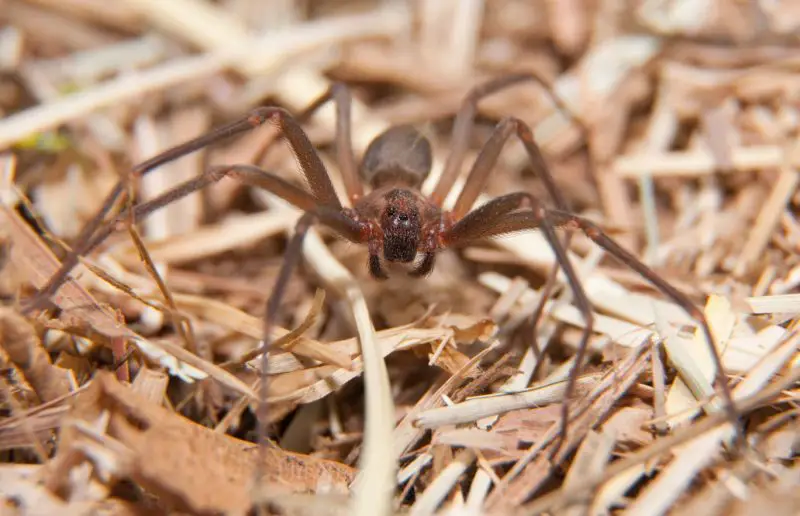
In Missouri, the brown recluse is not a rare desert spider drifting in from somewhere else. It is native. It has lived in barns, woodpiles, basements, and crawl spaces across the state for generations. Long before suburban subdivisions expanded across former farmland, the spider was already established in the Ozarks, the river valleys, and the wooded edges of small towns.
Yet what most Missouri families don’t realize about brown recluse bites is that the real story is less about aggression and more about misunderstanding. The majority of skin lesions blamed on this spider are not confirmed bites. At the same time, authentic bites tend to happen quietly, indoors, and without the dramatic encounters people expect.
Fear fills the gap between biology and perception.
The truth is more measured, more ecological, and often more preventable than the headlines suggest.
Table of Contents
- 1 The Spider at the Center of the Fear
- 2 Why Missouri Has So Many Confirmed Cases
- 3 How Brown Recluse Bites Actually Happen
- 4 The Misdiagnosis Problem in Missouri
- 5 What the Venom Actually Does
- 6 Why Families Often Discover Infestations Late
- 7 Seasonal Activity Patterns in Missouri
- 8 The Basement and Closet Factor
- 9 Why Children and Teens May Be More at Risk
- 10 Pest Control Realities
- 11 Psychological Amplification and Media Influence
- 12 When to Seek Medical Care
- 13 Long-Term Outlook in Missouri
- 14 FAQs About Brown Recluse Bites in Missouri
- 15 Final Thoughts
The Spider at the Center of the Fear
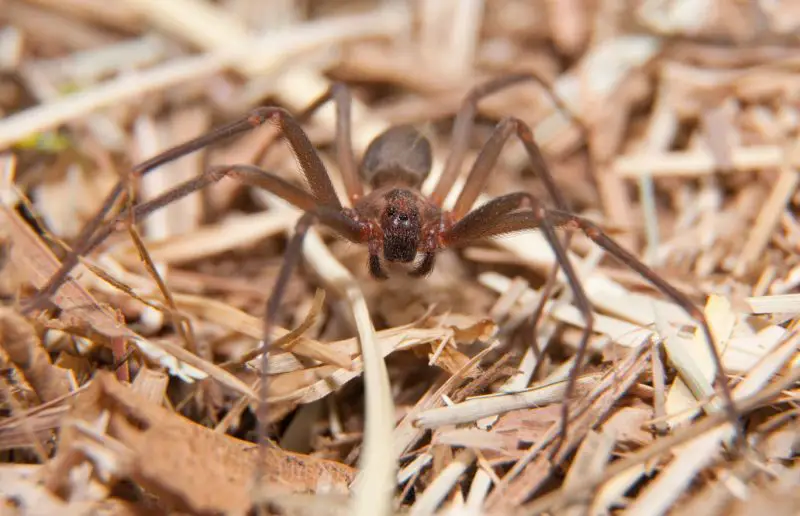
The species involved is the Brown Recluse Spider, and Missouri lies near the center of its natural geographic range. This is an important distinction. In many states, brown recluse sightings are rare and frequently misidentified, but in Missouri, stable populations genuinely exist. The spider is native here, adapted to regional climate and architecture, and has likely coexisted with human settlements for well over a century.
Physically, the brown recluse is medium-sized, typically light to dark brown, with long, slender legs and a violin-shaped marking on the cephalothorax. That marking has become iconic in public awareness campaigns, yet it is also responsible for widespread misidentification. Numerous harmless spiders share similar body coloration and proportions, and without close inspection of eye arrangement and body structure, confusion is common. Many spiders blamed for recluse bites are not recluses at all.
Behaviorally, the species prefers undisturbed, dry indoor environments. It hides in cardboard boxes, inside shoes left untouched, beneath clutter in closets, behind baseboards, and in attics or storage rooms. Outdoors, it may occupy woodpiles or rock crevices, but most verified bites in Missouri occur indoors where accidental compression takes place.
The spider does not hunt people. It hunts insects. Human contact is incidental, usually the result of shared shelter rather than active pursuit.
Why Missouri Has So Many Confirmed Cases
Missouri’s climate and housing patterns create ideal overlap between spider habitat and human living space. The state experiences hot summers, moderate humidity, and winters that are cold but rarely extreme enough to eliminate indoor arthropod populations. Brown recluses thrive in temperature-stable environments, and Missouri homes provide precisely that stability.
Basements are a defining feature of much of Missouri housing. These spaces maintain relatively consistent temperatures year-round and often contain stored items that remain undisturbed for months at a time. Crawl spaces beneath older homes create additional shelter networks. When cardboard boxes, stored clothing, and seasonal decorations accumulate, they create layered microhabitats protected from vibration and light.
Unlike pests that require food contamination or unsanitary conditions, brown recluses feed on small insects and can persist even in clean homes if hiding space remains available. Many families assume clutter alone is the cause. While clutter increases hiding opportunity, cleanliness does not eliminate structural refuge points such as wall voids or subfloor gaps.
Missouri’s combination of native range, climate suitability, and basement architecture explains why confirmed encounters occur more frequently here than in many other states.
How Brown Recluse Bites Actually Happen
Most confirmed brown recluse bites occur when the spider is pressed directly against skin. This commonly happens when someone puts on clothing or shoes that have not been worn recently, rolls onto a spider trapped in bedding, or reaches into storage containers where a spider has established refuge. The bite is defensive, triggered by compression rather than aggression.
The spider does not lunge, chase, or attack preemptively. It attempts to avoid confrontation. When escape is impossible and pressure is applied, it bites as a last resort. Many bites occur during sleep or early morning dressing routines because these are moments when undisturbed fabrics are suddenly moved.
The bite itself is often painless at first. Some individuals report a mild pinprick sensation, while others notice nothing until redness or irritation develops hours later. This delayed awareness contributes to diagnostic uncertainty. Without witnessing the spider at the moment of biting, confirmation becomes difficult.
Uncertainty fuels speculation. The absence of a captured spider complicates medical assessment and often leads to assumption rather than verification.
The Misdiagnosis Problem in Missouri
One of the most overlooked aspects of brown recluse awareness in Missouri is the frequency of misdiagnosis. Because the spider genuinely exists in high numbers across the state, physicians and patients alike may quickly attribute unexplained skin lesions to recluse bites. However, many necrotic or ulcerating wounds are bacterial infections, allergic reactions, or unrelated dermatological conditions.
MRSA infections, in particular, can mimic the appearance of a recluse bite, producing expanding redness and tissue damage. Without a confirmed spider specimen, differentiating between causes can be challenging. When bacterial infections are misattributed to venom, appropriate antibiotic treatment may be delayed.
Ironically, the spider’s authentic presence increases diagnostic bias. Because it is common, it becomes a convenient explanation. Yet research consistently indicates that true necrotic recluse bites are less frequent than public perception suggests.
Not every ulcerated lesion is venom-related. Medical evaluation should consider multiple causes before settling on a spider diagnosis.
What the Venom Actually Does
The venom of the Brown Recluse Spider contains enzymes that disrupt cell membranes and break down tissue at the bite site. In some cases, this leads to localized necrosis as damaged tissue loses blood supply and deteriorates. However, the majority of confirmed bites do not progress to severe necrosis.
Typical progression involves mild redness, localized swelling, and sometimes blister formation. In more significant cases, a central darkened area may develop over several days, occasionally forming an ulcer that requires wound care. Pain levels vary widely between individuals.
Systemic reactions such as fever, rash, or malaise are rare but possible, particularly in children or individuals with underlying health vulnerabilities. Most bites resolve with supportive care and monitoring.
Severity is unpredictable but statistically moderate. Extreme outcomes represent a small percentage of confirmed cases.
Why Families Often Discover Infestations Late
Brown recluses are nocturnal and secretive. They avoid open spaces and rarely roam during daylight hours. A home may contain dozens without regular sightings because they remain hidden in voids and storage zones.
Sticky monitoring traps placed in basements or closets sometimes reveal unexpectedly high counts. However, high trap numbers do not necessarily correspond to high bite risk. The spider prefers undisturbed environments and tends to avoid active human zones.
Families often discover their presence after spotting one in a bathtub, where smooth porcelain prevents climbing, or when reorganizing storage areas. By that point, the spider has likely been present for months.
Hidden does not mean newly arrived. It means successfully concealed within stable microhabitats.
Seasonal Activity Patterns in Missouri
Brown recluse movement increases during warmer months. Late spring through early fall sees heightened nocturnal exploration as insect prey becomes more abundant. Warmer indoor temperatures may slightly increase mobility, especially in homes without consistent climate control.
Winter does not eliminate them. They remain indoors year-round but reduce movement frequency in colder months. Missouri’s long warm season extends the period of potential encounter, particularly from May through September.
Season influences movement. Movement influences encounter probability. But presence is continuous, not seasonal migration.
The Basement and Closet Factor
Basements serve as ideal refuges due to stable temperature and limited disturbance. Cardboard boxes are especially attractive because their layered corrugation provides insulated hiding spaces. Shoes stored near entryways, coats in closets, and stacks of holiday decorations all create microcrevices.
These zones often remain untouched for weeks or months. When suddenly disturbed, spiders may be compressed unintentionally.
Simple behavioral adjustments significantly reduce risk. Shaking out shoes, wearing gloves when sorting stored items, and minimizing direct hand contact with unseen crevices reduce compression probability.
Prevention is routine-based rather than dramatic.
Why Children and Teens May Be More at Risk
Children playing on basement floors, reaching into toy storage, or sleeping in beds positioned directly against walls may increase accidental contact likelihood. Teenagers accessing garages, sheds, or sports storage areas may disturb hidden spiders.
The increased risk is behavioral, not biological. It reflects frequency of interaction with low-disturbance zones.
Family education about storage awareness and cautious handling of rarely used items can meaningfully reduce exposure probability.
Awareness reshapes routine. Routine reduces risk.
Pest Control Realities
Complete eradication of brown recluse spiders from established Missouri homes is difficult. They can survive long periods without food and retreat into inaccessible voids. Professional pest management may significantly reduce populations, particularly when combined with structural sealing and habitat reduction.
Decluttering decreases hiding density. Sealing cracks along baseboards, foundations, and utility penetrations limits movement corridors. Sticky traps provide monitoring rather than total elimination.
Chemical sprays alone are rarely sufficient if environmental conditions remain favorable. Integrated strategies produce better outcomes than isolated treatments.
Expectation should align with ecological resilience rather than immediate elimination.
Psychological Amplification and Media Influence
Missouri’s association with brown recluse spiders has amplified public concern. Media coverage of rare severe cases often lacks proportional context. Graphic images circulate widely, reinforcing the idea that necrosis is inevitable.
In reality, severe necrotic progression is uncommon relative to total bite numbers. The spider deserves respect and precaution, but not mythologized exaggeration.
Fear thrives on vivid imagery. Science offers measured assessment.
Balancing caution with proportion reduces unnecessary panic while preserving realistic prevention strategies.
When to Seek Medical Care
Any suspected bite that worsens rapidly, develops spreading redness, increasing pain, fever, or systemic symptoms warrants medical evaluation. Early assessment allows differentiation between venom reaction and bacterial infection.
Basic first aid includes cleaning the site, applying cold compresses, and monitoring progression. Unverified home remedies may worsen tissue damage and should be avoided.
Missouri healthcare providers are familiar with recluse presence and typically evaluate with both caution and differential diagnosis in mind.
Prompt care reduces complications. Delay increases risk.
Long-Term Outlook in Missouri
The Brown Recluse Spider is native and firmly established across Missouri. Eradication at a statewide level is unrealistic. Climate variability may influence seasonal movement patterns but will not eliminate presence.
Education, structural maintenance, and practical prevention habits remain the most effective mitigation tools.
Missouri families are not confronting invasion. They are living within the natural range of a secretive, defensive spider adapted to dry indoor refuges.
Understanding replaces myth.
Preparedness replaces panic.
And knowledge shifts the balance from fear to management.
FAQs About Brown Recluse Bites in Missouri
Are brown recluse spiders common in Missouri?
Yes, Missouri lies within the core natural range of the species.
Do they actively bite people?
No, bites occur when the spider is pressed against skin.
Are most skin lesions spider bites?
No, many suspected bites are misdiagnosed infections.
Can infestations exist without daily sightings?
Yes, they are secretive and often remain hidden.
Should every suspected bite be treated as severe?
Most bites are mild, but worsening symptoms require medical evaluation.
Final Thoughts
What most Missouri families don’t realize about brown recluse bites is that the danger lies less in aggression and more in misunderstanding. The spider is native, secretive, and defensive rather than confrontational.
Basements provide shelter.
Storage provides cover.
Compression triggers bites.
Climate sustains activity.
Fear amplifies perception, but ecology explains presence. Missouri’s landscape has long supported the brown recluse, and modern housing unintentionally extends that habitat indoors.
Knowledge does not eliminate the spider.
But it replaces myth with management.
And management, grounded in understanding, is far more powerful than panic.