
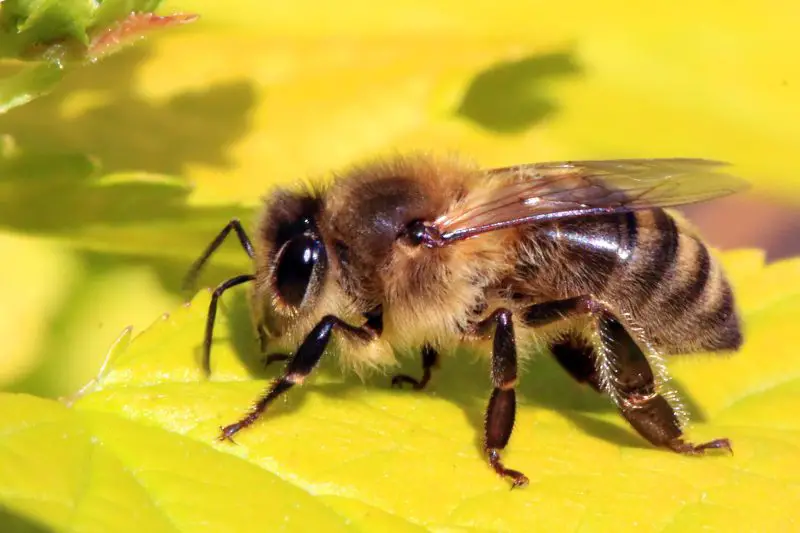
California is home to one of the richest bee communities in North America. From dry deserts and coastal cliffs to orchards, cities, and backyard gardens, bees thrive across the state in remarkable diversity. Some are familiar and social. Others are solitary, small, and easily overlooked. Together, they form the backbone of California’s pollination system.
Bees in California are not just honey producers. Most species are native pollinators that evolved alongside local plants. Many are active for only part of the year, emerging precisely when certain flowers bloom. Understanding which bees live around you helps with identification, safety, and conservation awareness.
Below is a detailed guide to 25 common bees in California, focusing on identification, behavior, nesting habits, and where you are most likely to encounter them.
Table of Contents
- 1 Types of Bees in California
- 1.1 Honey Bee (Apis mellifera)
- 1.2 Western Honey Bee (European Honey Bee)
- 1.3 Bumble Bee (Bombus spp.)
- 1.4 California Bumble Bee (Bombus californicus)
- 1.5 Carpenter Bee (Xylocopa spp.)
- 1.6 Valley Carpenter Bee (Xylocopa varipuncta)
- 1.7 Leafcutter Bee (Megachile spp.)
- 1.8 Alfalfa Leafcutter Bee (Megachile rotundata)
- 1.9 Mason Bee (Osmia spp.)
- 1.10 Blue Orchard Bee (Osmia lignaria)
- 1.11 Sweat Bee (Halictidae family)
- 1.12 Metallic Green Sweat Bee (Agapostemon spp.)
- 1.13 Long-Horned Bee (Melissodes spp.)
- 1.14 Digger Bee (Anthophora spp.)
- 1.15 Yellow-Faced Bee (Hylaeus spp.)
- 1.16 Mining Bee (Andrena spp.)
- 1.17 Squash Bee (Peponapis spp.)
- 1.18 Cuckoo Bee (Nomadinae subfamily)
- 1.19 Wool Carder Bee (Anthidium spp.)
- 1.20 Small Carpenter Bee (Ceratina spp.)
- 1.21 Teddy Bear Bee (Male Valley Carpenter Bee)
- 1.22 Hairy-Footed Flower Bee (Anthophora plumipes)
- 1.23 Desert Digger Bee (Anthophora urbana)
- 1.24 Sunflower Bee (Svastra spp.)
- 1.25 Masked Bee (Hylaeus modestus)
- 1.26 Western Leafcutter Bee (Megachile perihirta)
- 2 Final Thoughts
Types of Bees in California
Honey Bee (Apis mellifera)

Honey bees are the most recognizable bees in California. They have golden-brown bodies with dark bands, fuzzy thoraxes, and relatively slender shapes compared to native bees. Workers are about half an inch long, while queens are noticeably larger.
These bees are highly social and live in large colonies that may contain tens of thousands of individuals. They communicate through the famous waggle dance, which helps workers locate nectar sources miles away. Honey bees are active year-round in warmer parts of California.
Although not native to North America, honey bees play a major role in agriculture. They commonly nest in managed hives but also establish feral colonies inside tree cavities, walls, and abandoned structures.
Western Honey Bee (European Honey Bee)

The Western honey bee is a subspecies of the common honey bee and is the primary pollinator used in California’s massive agricultural industry. Almond orchards alone depend heavily on these bees during bloom season.
Their appearance is similar to standard honey bees, though some populations appear darker depending on genetics. These bees are highly adaptable and thrive in rural farmland and urban environments alike.
In California, Western honey bees are transported seasonally for crop pollination. This movement exposes them to stress, parasites, and pesticides, making them a focal point of conservation efforts.
Bumble Bee (Bombus spp.)

Bumble bees are large, round-bodied bees with dense hair and bold black-and-yellow patterns. Some species also show orange or white markings. Their loud buzzing flight makes them easy to notice.
Unlike honey bees, bumble bees live in much smaller colonies, usually underground in abandoned rodent burrows. Colonies last only one season, with new queens overwintering alone.
California hosts many native bumble bee species, some of which are declining. They are especially important for pollinating tomatoes and native wildflowers due to their ability to buzz-pollinate.
California Bumble Bee (Bombus californicus)

This native species is adapted to California’s climate and is commonly found in grasslands and open fields. It has a darker overall coloration with muted yellow bands.
California bumble bees are active from spring through fall, often foraging in cooler or windier conditions than other bees can tolerate. Their thick fur helps regulate body temperature.
Habitat loss has reduced their range, but they remain locally common in undisturbed landscapes with diverse flowering plants.
Carpenter Bee (Xylocopa spp.)
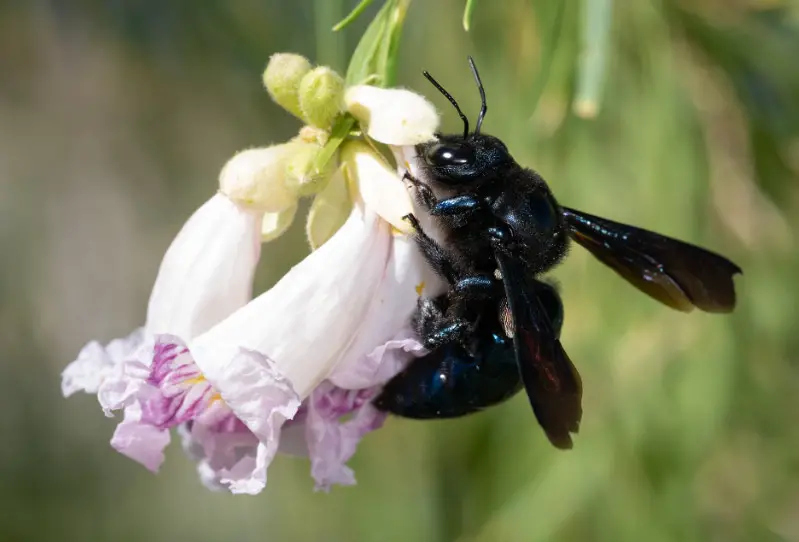
Carpenter bees are large, robust bees often mistaken for bumble bees. The key difference is their shiny, hairless black abdomen, which contrasts with the fuzzy abdomen of bumble bees.
These bees excavate tunnels in untreated wood to lay their eggs. In California, they commonly nest in decks, eaves, fences, and wooden siding.
Carpenter bees are generally non-aggressive. Males may hover defensively but lack stingers. Females can sting but rarely do unless handled.
Valley Carpenter Bee (Xylocopa varipuncta)

Often called the “teddy bear bee,” the Valley carpenter bee is one of California’s most striking native bees. Females are shiny black, while males are golden-blond and fuzzy.
This species is especially common in Southern California and the Central Valley. It thrives in urban gardens, parks, and desert edges.
Despite their size, Valley carpenter bees are gentle pollinators. They are vital for native plants that require strong bees to access nectar.
Leafcutter Bee (Megachile spp.)

Leafcutter bees are medium-sized bees with compact bodies and large heads. They are usually dark with pale abdominal bands and are known for carrying pollen on the underside of their abdomen.
These bees cut neat circular pieces from leaves to line their nests. In California, they often nest in hollow plant stems, soil cavities, or bee hotels.
Leafcutter bees are solitary and non-aggressive. They are efficient pollinators and commonly used in agricultural settings for crops like alfalfa.
Alfalfa Leafcutter Bee (Megachile rotundata)

This species is widely managed for crop pollination. It is smaller than honey bees but extremely efficient at pollinating alfalfa.
Alfalfa leafcutter bees are active during warm months and nest in pre-existing cavities. They rarely sting and pose no threat to humans.
In California, they are often found near agricultural fields but may also visit backyard flowers.
Mason Bee (Osmia spp.)

Mason bees are small to medium-sized bees with metallic blue, green, or black coloration. They lack pollen baskets and instead carry pollen on their abdomen.
These bees nest in cracks, hollow stems, and artificial nesting tubes. They seal their nests using mud, which gives them their common name.
Mason bees are early spring pollinators and are especially valuable for fruit trees in California’s orchards and gardens.
Blue Orchard Bee (Osmia lignaria)

The blue orchard bee is a metallic blue native species commonly found throughout California. It emerges early in the spring, often before honey bees become active.
This bee is gentle and solitary, making it ideal for backyard pollination. Many gardeners install nesting tubes to encourage their presence.
Blue orchard bees are highly efficient pollinators of almonds, apples, and cherries.
Sweat Bee (Halictidae family)

Sweat bees are among the most diverse bee groups in California, ranging from dull brown species to ones with striking metallic tones. Most are small to medium in size, with slender bodies and relatively short hair, which often causes people to mistake them for flies at first glance. Their wings are clear, and their movements are quick and erratic when foraging.
These bees are well known for their attraction to human sweat. The salt content draws them close to exposed skin, especially during hot weather. While this behavior can feel intrusive, sweat bees are not aggressive. Stings are rare and usually occur only if the bee is trapped or pressed against the skin, producing a mild, short-lived sensation.
In California, sweat bees thrive in gardens, lawns, parks, and open soil. Some species live entirely solitary lives, while others form small, loosely organized colonies with shared nesting areas. This flexibility allows them to adapt easily to both urban and natural environments.
Metallic Green Sweat Bee (Agapostemon spp.)

Metallic green sweat bees are instantly recognizable due to their vivid emerald or turquoise heads and thoraxes. The abdomen contrasts sharply, showing bold black-and-yellow striping that gives them a wasp-like appearance at a distance. Their glossy coloration often catches sunlight as they fly between flowers.
These bees nest underground, favoring bare or lightly vegetated soil. Individual females dig vertical tunnels where they create chambers for their larvae. They are most active from late spring through early fall, with peak activity during warm, sunny days.
In California landscapes, metallic green sweat bees are frequent visitors to daisies, sunflowers, asters, and other composite flowers. Their bold colors and calm foraging behavior make them one of the easiest native bees for beginners to identify.
Long-Horned Bee (Melissodes spp.)

Long-horned bees are named for the dramatic antennae found on males, which can be nearly as long as their bodies. Females lack these exaggerated antennae but share the same fuzzy build and warm brown or black coloration accented with pale yellow bands.
These bees are medium-sized and have a relaxed, floating flight pattern when visiting flowers. They are especially noticeable in late summer, a time when many other native bees begin to decline in number.
In California, long-horned bees are closely associated with open grasslands, roadside wildflowers, and home gardens. Sunflowers are a particular favorite, and large numbers may be seen foraging together during peak bloom.
Digger Bee (Anthophora spp.)

Digger bees are fast, powerful flyers with dense hair and thick bodies, giving them a bumble bee–like appearance. Their flight is often described as darting or zigzagging, making them easy to spot but hard to follow with the eye.
They nest in soil, often choosing compacted earth along slopes, paths, or embankments. Large numbers of burrow entrances may appear clustered together, which can look alarming, but each nest belongs to a single female. Despite nesting close together, digger bees are solitary and non-aggressive.
In California’s coastal regions, valleys, and foothills, digger bees are vital early-season pollinators. They emerge in spring and help support native wildflowers and early-blooming crops before many other bees become active.
Yellow-Faced Bee (Hylaeus spp.)
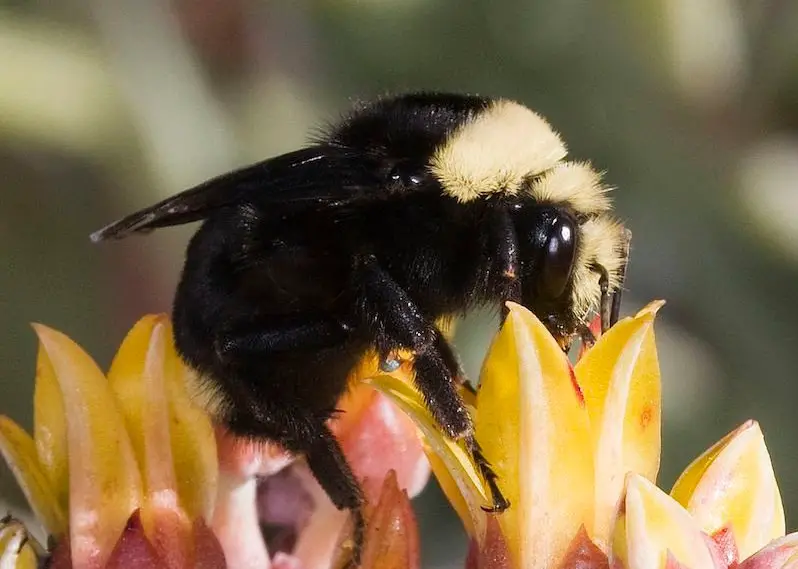
Yellow-faced bees are small, sleek bees with very little body hair. Their most noticeable feature is the yellow or pale markings on their face, which stand out against an otherwise dark body. Because they lack dense fuzz, they are often mistaken for tiny wasps.
Unlike most bees, yellow-faced bees carry pollen internally in their crop rather than externally on their bodies. This unique trait gives them a clean, polished appearance even after visiting flowers.
In California, these bees are well adapted to dry climates and urban settings. They nest in hollow plant stems, cracks in wood, and small cavities, allowing them to persist in both natural scrublands and densely developed areas.
Mining Bee (Andrena spp.)

Mining bees are among the earliest bees to appear each year. They are medium-sized, with fuzzy thoraxes and subtly striped abdomens, often in shades of brown, black, or gray. Their emergence in early spring coincides with blooming trees and native wildflowers.
These bees nest in the ground, sometimes forming large aggregations that suddenly appear on lawns, trails, or bare soil. Although the number of holes may look concerning, the bees are harmless and the nesting activity usually lasts only a few weeks.
Mining bees play a crucial role in pollinating fruit trees such as almonds, apples, and cherries across California. Their early activity makes them especially valuable in agricultural and natural ecosystems alike.
Squash Bee (Peponapis spp.)

Squash bees are specialized pollinators closely tied to plants in the squash family, including pumpkins, zucchini, and gourds. They resemble honey bees but tend to be slightly larger and more robust, with softer hair and muted coloring.
Their daily schedule is closely linked to squash flowers. Squash bees begin foraging at dawn, often before honey bees are active, collecting pollen as soon as the flowers open. By late morning, they retreat to their underground nests.
In California gardens and farms, squash bees significantly improve crop yields. Because they nest in soil near plants, minimal tilling and reduced pesticide use help support healthy populations.
Cuckoo Bee (Nomadinae subfamily)

Cuckoo bees stand out due to their wasp-like appearance. They often display bold red, yellow, black, or white patterns and lack the pollen-carrying hairs seen on most bees. Their bodies are smooth and streamlined.
Rather than building their own nests, cuckoo bees lay their eggs in the nests of other bee species. The larvae then consume the host’s provisions. While this behavior may seem harsh, it is a natural part of bee ecology.
In California, cuckoo bees indicate healthy native bee populations. They are not aggressive and rarely interact with humans, often going unnoticed despite their bright coloration.
Wool Carder Bee (Anthidium spp.)

Wool carder bees are stocky, fast-moving bees with bold yellow markings along their black bodies. Males are particularly noticeable due to their territorial behavior, aggressively chasing away other insects from favored flower patches.
These bees gather soft plant fibers, or “wool,” from fuzzy leaves such as lamb’s ear. They use this material to line their nests, which are typically located in cavities or crevices.
In California, wool carder bees are common in summer gardens, especially where ornamental plants with fuzzy foliage are grown. Despite their aggressive defense of territory, they pose little risk to people.
Small Carpenter Bee (Ceratina spp.)

Small carpenter bees are slender and understated, often metallic blue, green, or black. They are significantly smaller than the well-known large carpenter bees and lack the bulky appearance.
Instead of boring into wood, these bees nest in soft plant stems, such as raspberry canes or pithy twigs. Each female creates a narrow tunnel where she lays her eggs.
Across California, small carpenter bees are widespread and adaptable. They are gentle, rarely sting, and quietly contribute to pollination in both urban and rural environments.
Teddy Bear Bee (Male Valley Carpenter Bee)

Male Valley carpenter bees are instantly recognizable due to their plush, golden fur, which gives them a teddy bear–like look. Unlike females, males lack stingers and are completely harmless.
They are often seen hovering near nesting sites or flowers, displaying territorial behavior by chasing other males. This hovering can appear intimidating but poses no danger.
These bees are especially common in Southern California during spring and early summer, where they are frequent visitors to gardens, parks, and flowering trees.
Hairy-Footed Flower Bee (Anthophora plumipes)
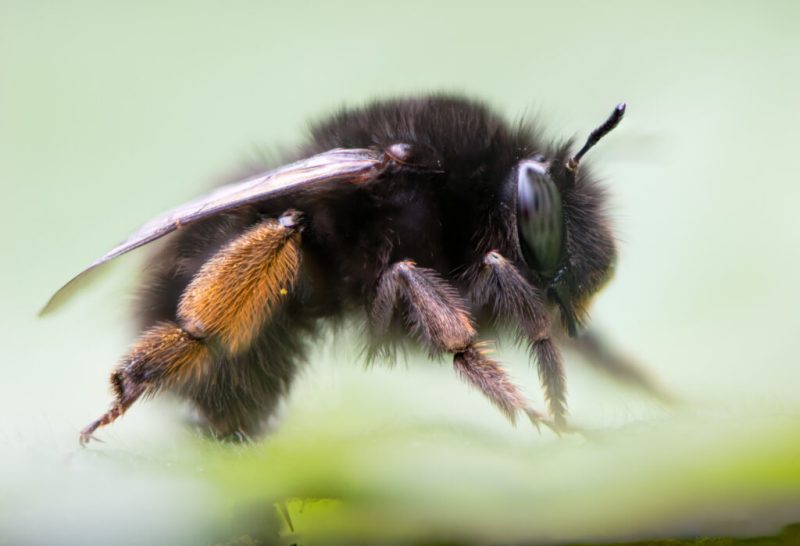
Hairy-footed flower bees have a robust build and distinctive long facial hair. Males and females differ in color, adding to identification challenges for beginners.
Their flight is fast and erratic, often described as darting between flowers. They prefer tubular blooms that match their feeding style.
In California, they are early spring pollinators, most often seen in coastal areas and urban gardens with diverse flowering plants.
Desert Digger Bee (Anthophora urbana)

Desert digger bees are adapted to California’s arid and semi-arid landscapes. They have sturdy bodies and powerful wings that allow them to forage efficiently in hot conditions.
They nest in hard-packed soil, often on exposed ground where vegetation is sparse. Their speed and agility frequently cause them to be mistaken for flies.
These bees play an important role in desert ecosystems by pollinating native plants that few other insects can service.
Sunflower Bee (Svastra spp.)

Sunflower bees are medium-sized bees with bold striping and dense hair. They are specialists, collecting pollen almost exclusively from sunflowers and closely related plants.
They are most active in late summer, coinciding with sunflower bloom periods. During this time, they may be seen in large numbers on individual plants.
In California, sunflower bees are common in open fields, prairies, and agricultural settings where sunflowers are grown.
Masked Bee (Hylaeus modestus)

Masked bees are small and sleek, with subtle yellow markings on the face that give them their name. Their lack of body hair makes them appear more wasp-like than typical bees.
They nest in hollow stems, beetle holes, and small crevices, often using resin or plant material to seal their nests. This flexibility allows them to thrive in urban environments.
Though discreet, masked bees are widespread across California and quietly contribute to pollination.
Western Leafcutter Bee (Megachile perihirta)

Western leafcutter bees are larger than many other Megachile species and have a shaggy, robust appearance. Females carry pollen on the underside of their abdomen, creating a bright yellow or orange patch when loaded.
They cut pieces of leaves to construct their nests, which may be located in soil, wood cavities, or hollow stems. Native plants are especially important to their life cycle.
In California, Western leafcutter bees are common in natural landscapes, restoration sites, and areas with abundant native flowering plants.
Final Thoughts
Bees in California represent an extraordinary range of shapes, behaviors, and ecological roles. From massive carpenter bees to tiny masked bees, each species contributes to pollination in a unique way. While honey bees often receive the most attention, native bees quietly perform much of the real work, sustaining wild plants and crops alike.
Learning to identify common bees helps reduce fear, encourages conservation, and supports healthier ecosystems. Protecting nesting sites, planting native flowers, and limiting pesticide use can make a meaningful difference. California’s bees are resilient, but they depend on informed human coexistence to continue thriving.