

In Michigan, the problem often starts quietly. You notice one tiny fly hovering near the sink. Then another appears above the shower drain. Within days, several cling to bathroom walls, resting in corners or fluttering weakly when disturbed. They seem to come from nowhere, yet they return every morning.
What most Michigan homeowners don’t realize is that these flies are not random invaders drifting in from outdoors. They are breeding inside plumbing systems, feeding on organic buildup that accumulates in drain lines. The issue is not seasonal coincidence. It is biological opportunity shaped by moisture, temperature, and stagnation inside pipes.
The flies are small.
The source is hidden.
And the solution depends on understanding what is happening below the surface.
Table of Contents
- 1 The Species Behind the Bathroom Swarm
- 2 Why Michigan Homes Are Vulnerable
- 3 The Hidden Biofilm Inside Your Drain
- 4 Why They Seem to Appear Overnight
- 5 Unused Drains and Guest Bathrooms
- 6 Basement Drains and Older Plumbing
- 7 Seasonal Patterns in Michigan
- 8 Why Bleach Alone Doesn’t Work
- 9 The Role of Bathroom Ventilation
- 10 Why They Hover Near Walls
- 11 Misidentification and Confusion
- 12 When Professional Inspection Is Necessary
- 13 Health Considerations
- 14 Prevention Strategies for Michigan Homes
- 15 Why the Problem Persists in Winter
- 16 Long-Term Outlook
- 17 FAQs About Drain Flies in Michigan
- 18 Final Thoughts
The Species Behind the Bathroom Swarm
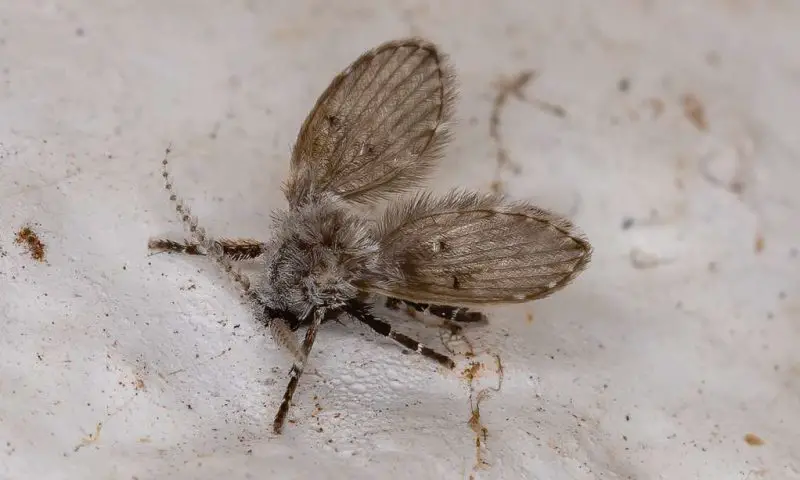
The tiny insects emerging from bathroom drains are most commonly the Drain Fly, also known as moth flies or sewer flies. Despite their delicate appearance, they are resilient insects adapted to humid, organic-rich environments.
Drain flies are fuzzy, gray or tan, and about the size of a fruit fly. Their wings are broad and heart-shaped, often held roof-like over their bodies at rest. They move slowly and erratically compared to faster kitchen fruit flies.
Unlike fruit flies, which are attracted to exposed produce, drain flies develop inside plumbing systems. Their larvae feed on the gelatinous film of bacteria, hair, soap residue, and organic matter that coats pipe walls.
The fly you see in the bathroom is only the final stage of a life cycle unfolding inside the drain.
Why Michigan Homes Are Vulnerable
Michigan’s climate creates ideal conditions for drain fly development, particularly in older homes with established plumbing systems. Cold winters drive residents indoors for extended periods. Homes remain sealed, humidity builds in bathrooms, and drains experience frequent water flow followed by periods of stagnation.
Temperature stability indoors is critical. While Michigan winters freeze outdoor soil, interior plumbing remains within a temperature range that supports insect development. Warm air from showers and baths raises humidity around drains, creating a microclimate perfect for larval growth.
In summer, increased humidity and occasional heavy rainfall may also affect sewer systems, pushing insects upward through plumbing vents or unused drains.
The problem is not the weather outside.
It is the moisture trapped inside pipes.
The Hidden Biofilm Inside Your Drain
Every bathroom drain accumulates a thin layer of organic buildup over time. Hair strands, soap scum, skin cells, and toothpaste residue combine with bacteria to form a sticky biofilm along pipe walls. This biofilm is not always visible from above.
Drain fly larvae feed on this material. They do not require standing water. They require moisture and organic matter. Even slow-draining sinks or tubs provide enough habitat for development.
The larvae are wormlike, translucent to gray, and remain embedded in the slime layer. After several days of feeding, they pupate within the drain and emerge as adults, crawling upward through the opening.
Spraying adult flies does nothing to remove the source.
The breeding ground remains intact unless the biofilm is physically disrupted.
Why They Seem to Appear Overnight
Many Michigan residents report that drain flies “suddenly” appear in clusters. The perception of overnight infestation stems from synchronized emergence.
Drain flies develop in groups because eggs are laid in batches. When pupation completes, multiple adults emerge within a short window. You may see several at once and assume rapid multiplication.
In reality, the lifecycle has been developing quietly for one to three weeks.
The timing reflects maturation.
Not spontaneous creation.
The flies did not arrive last night.
They matured last night.
Unused Drains and Guest Bathrooms
In colder Michigan months, guest bathrooms or basement sinks may go unused for extended periods. Water in the P-trap can evaporate slowly, reducing the barrier between sewer gases and indoor air.
When drains are unused, organic buildup accumulates undisturbed. Without regular flushing, biofilm thickens. This stagnant environment becomes ideal for egg laying.
When the room is eventually used again, adult flies may already be present.
Running water occasionally through unused drains reduces habitat suitability.
Neglect creates opportunity.
Activity returns when you do.
Basement Drains and Older Plumbing
Many Michigan homes include basement floor drains, particularly in older properties. These drains often collect dust, organic debris, and occasional standing water. In humid basements, biofilm may develop quickly.
Older plumbing systems with minor cracks or slow drainage provide additional surfaces for buildup. Tree root intrusion into sewer lines can also create partial blockages, slowing flow and increasing residue accumulation.
When sewer lines retain organic material, drain flies may breed deeper within the system. Adults can travel upward through plumbing vents or openings.
The visible flies may not originate from the sink alone.
They may be emerging from deeper within the pipe network.
Seasonal Patterns in Michigan
Drain fly activity may increase in spring and summer when humidity rises and water usage fluctuates. However, indoor heating during winter maintains suitable conditions for development year-round.
In summer, heavy rain events may disturb sewer systems, pushing insects upward. In winter, sealed homes trap humidity in bathrooms after hot showers, supporting larval growth.
The pattern is not strictly seasonal.
It is moisture-dependent.
Humidity drives development more than calendar months.
Why Bleach Alone Doesn’t Work
A common response to drain flies is pouring bleach down the drain. While bleach may kill some larvae, it does not reliably remove the biofilm lining pipe walls. The gelatinous layer remains, allowing recolonization.
Effective control requires mechanical cleaning. Using a drain brush or flexible pipe cleaner physically scrapes organic buildup from the interior surface. Enzymatic drain cleaners may help break down biofilm gradually, but mechanical removal is often necessary.
Adult flies live only a few weeks. Eliminating larvae interrupts the cycle.
Chemical shock is temporary.
Physical cleaning is structural.
The Role of Bathroom Ventilation
Poor bathroom ventilation increases humidity levels after showers. Steam condenses around drains and on surrounding surfaces. Consistent moisture supports biofilm development and egg survival.
In Michigan winters, many homeowners reduce ventilation to conserve heat. Exhaust fans may run less frequently. Over time, humidity remains elevated long enough to support insect development.
Improving ventilation reduces moisture persistence. Dry pipes are less hospitable to larvae.
Airflow matters.
Drying time matters.
Moisture is the foundation of the problem.
Why They Hover Near Walls
Adult drain flies are weak fliers. After emerging, they rest on nearby walls or ceilings, often within a few feet of the drain. Their slow, fluttering movement distinguishes them from fruit flies.
They are not drawn to food or light the way other small flies are. They remain close to breeding sites because their life cycle is short and their dispersal ability limited.
Seeing flies concentrated in one bathroom usually indicates a local source.
Migration between rooms is minimal.
Containment is possible.
Misidentification and Confusion
Drain flies are often mistaken for fruit flies or fungus gnats. However, fruit flies are typically associated with kitchen produce and move more quickly. Fungus gnats originate in overwatered houseplants.
Correct identification guides treatment. If flies are emerging from bathroom drains and resting on tile walls, the likely culprit is the Drain Fly.
Misidentification delays effective cleaning.
Observation clarifies strategy.
Knowing the species narrows the solution.
When Professional Inspection Is Necessary
If drain flies persist after thorough cleaning, the source may lie deeper in the sewer line. Cracked pipes, root intrusion, or partial blockages create hidden breeding sites.
Professional plumbing inspection using camera scopes may reveal buildup beyond accessible traps. Addressing structural plumbing issues eliminates recurring infestations.
Persistent activity signals unresolved habitat.
Surface cleaning cannot correct deep pipe damage.
Structural diagnosis becomes necessary.
Health Considerations
Drain flies are nuisance pests rather than disease vectors in typical residential settings. They do not bite or sting. However, their presence indicates unsanitary organic buildup inside drains.
While they do not transmit serious illness in normal conditions, reducing breeding habitat improves overall household sanitation.
The discomfort is psychological.
The solution is hygienic.
Cleaning restores confidence.
Prevention Strategies for Michigan Homes
Regularly flushing drains with hot water reduces buildup. Monthly mechanical cleaning of traps removes hair and soap residue. Running water in unused drains prevents stagnation.
Maintaining exhaust fan use after showers lowers humidity. Addressing slow drains promptly prevents thick biofilm formation.
Prevention focuses on moisture management and residue removal.
Consistency prevents recurrence.
Neglect invites return.
Why the Problem Persists in Winter
Many Michigan homeowners assume insects cannot survive in winter. While outdoor populations decline, indoor drain flies remain insulated from freezing temperatures.
Indoor heating stabilizes climate. Bathrooms remain humid. Pipes provide protected microhabitats.
The problem does not migrate seasonally.
It persists internally.
Climate control sustains it.
Long-Term Outlook
Drain flies will continue appearing in Michigan homes where moisture and organic buildup intersect. The issue is not geographic invasion but plumbing ecology.
Modern water usage patterns create conditions for survival. Older homes may face recurring challenges due to aging pipe systems.
Understanding the lifecycle transforms frustration into targeted action.
Clean the biofilm.
Dry the environment.
Interrupt the cycle.
The flies do not come from nowhere.
They come from inside the drain.
FAQs About Drain Flies in Michigan
Are drain flies harmful?
They are nuisance insects and do not bite, but they indicate organic buildup in pipes.
Why do they keep returning?
Larvae remain in biofilm unless physically removed.
Can cold weather eliminate them?
No. Indoor heating protects their lifecycle.
Do they breed in standing water?
They breed in moist organic film, not necessarily standing water.
How long does it take to eliminate them?
With thorough cleaning, most infestations resolve within two to three weeks.
Final Thoughts
Why tiny flies keep coming out of bathroom drains in Michigan comes down to moisture, residue, and overlooked pipe ecology. Cold winters do not prevent indoor insect development. Warm showers, sealed homes, and aging plumbing create stable breeding sites hidden from view.
The flies you see are the final stage of a cycle that began weeks earlier. Removing the adults changes nothing if the larvae remain embedded in slime-lined pipes.
Effective control is not dramatic.
It is methodical.
Clean the source.
Reduce moisture.
Maintain flow.
In Michigan homes, the answer lies beneath the drain cover, not outside the window.