

Flea problems in Nevada rarely begin with a dramatic outdoor swarm. There is no visible cloud of insects rising from dry desert soil. Instead, the issue often reveals itself gradually. A dog begins scratching more than usual. Ankles itch after walking across carpet. Tiny black specks appear along baseboards or pet bedding. What feels like a sudden indoor infestation often began quietly weeks earlier.
What Nevada residents don’t realize about fleas spreading indoors is that the state’s dry climate does not eliminate risk. In fact, indoor climate control, irrigation patterns, and pet movement create stable microenvironments where fleas can complete their life cycle even when outdoor humidity remains low. The desert does not protect homes. It shifts where the lifecycle concentrates.
The irritation feels immediate.
The biology is delayed.
And understanding that delay is the key to stopping indoor spread.
Table of Contents
- 1 The Primary Species Behind Indoor Infestations
- 2 Why Nevada’s Dry Climate Does Not Prevent Fleas
- 3 How Indoor Infestations Begin
- 4 The Life Cycle Most Residents Overlook
- 5 Why Fleas Appear Worse After Vacations
- 6 Irrigation, Lawns, and Wildlife Corridors
- 7 Multi-Pet Households and Spread
- 8 Why Carpets and Upholstery Matter
- 9 Climate Variability Across Nevada
- 10 Why DIY Treatments Often Fail
- 11 Health Considerations for Nevada Families
- 12 Seasonal Patterns in Nevada
- 13 Why Infestations Feel Sudden
- 14 Prevention Strategies for Nevada Homes
- 15 Long-Term Outlook in Nevada
- 16 FAQs About Fleas Spreading Indoors in Nevada
- 17 Final Thoughts
The Primary Species Behind Indoor Infestations
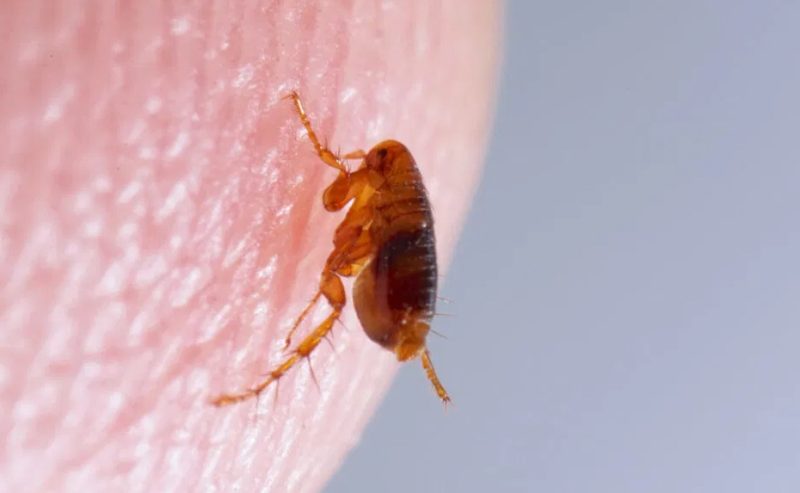
The flea responsible for most residential problems in Nevada is the Cat Flea. Despite its name, this species infests both cats and dogs and occasionally bites humans. It is highly adaptable and thrives in homes where pets provide regular blood meals.
Unlike mosquitoes or flies that breed outdoors and enter homes opportunistically, cat fleas establish full reproductive cycles indoors. Adult fleas live on pets. Eggs fall into carpets, upholstery, cracks in flooring, and pet bedding. Larvae develop in hidden, protected spaces before pupating and emerging as new adults.
The host carries the adults.
The house sustains the juveniles.
And the cycle continues unnoticed unless interrupted early.
Why Nevada’s Dry Climate Does Not Prevent Fleas
Nevada’s arid climate might suggest that fleas struggle to survive outdoors. Indeed, low humidity reduces larval survival in exposed soil. However, modern homes create controlled indoor climates with sufficient humidity and stable temperature to support flea development.
Air conditioning maintains moderate temperatures even during extreme summer heat. Evaporative coolers in some regions add moisture to indoor air. Carpets, upholstered furniture, and pet bedding trap organic debris that larvae feed upon.
In desert environments, fleas shift from outdoor reliance to indoor concentration. When irrigation supports lawns or shaded landscaping, outdoor survival improves near foundations. From there, pets act as transport vectors into living spaces.
The desert limits them outdoors.
It protects them indoors.
Environmental control changes distribution, not risk.
How Indoor Infestations Begin
Most indoor infestations begin when a pet acquires adult fleas from outdoor contact. This may occur during walks, at dog parks, in boarding facilities, or from wildlife that passes through yards. Even in dry regions, shaded pockets beneath shrubs or near irrigation lines can harbor fleas.
Once inside, adult females begin laying eggs within 24 to 48 hours after feeding. A single female can lay dozens of eggs per day. Eggs are not sticky and fall off the host into carpets and cracks.
Homeowners often treat pets promptly once scratching begins. However, by that time, eggs and larvae may already be embedded in flooring fibers and upholstery.
Treating the pet alone does not eliminate the developing stages.
The visible scratching reflects what is already reproducing unseen.
The Life Cycle Most Residents Overlook
Fleas pass through four stages: egg, larva, pupa, and adult. Only the adult stage lives on pets. The other three stages occur in the environment.
Eggs hatch into larvae that feed on organic debris and dried blood excreted by adult fleas. Larvae avoid light and burrow deep into carpets or beneath furniture. After several days, they spin cocoons and enter the pupal stage.
The pupal stage is particularly resilient. Fleas can remain inside cocoons for weeks or months, waiting for vibration, heat, and carbon dioxide signals that indicate a nearby host.
This delay explains why homeowners sometimes believe infestations persist despite treatment. Pupae emerge after initial control efforts, creating what feels like a resurgence.
It is not reinfestation.
It is delayed emergence.
The lifecycle builds in waves.
Why Fleas Appear Worse After Vacations
Nevada residents often report severe flea outbreaks after returning from travel. The pattern is consistent with pupal biology. When a home sits empty, developing pupae remain dormant. Upon return, vibration from footsteps and renewed host presence stimulates synchronized emergence.
Within hours or days, multiple newly emerged adults seek blood meals. The sudden spike in biting creates the impression that fleas multiplied dramatically during absence.
In reality, they were waiting.
Dormancy preserves survival.
Human return triggers activation.
Understanding this mechanism prevents misinterpretation of timing.
Irrigation, Lawns, and Wildlife Corridors
While Nevada is known for desert landscapes, many residential neighborhoods include irrigated lawns, shaded patios, and ornamental shrubs. These microhabitats retain moisture and moderate temperature at ground level.
Wildlife such as raccoons, feral cats, and rodents may pass through these areas, introducing fleas. Even in regions with sparse natural humidity, irrigation creates localized zones where eggs and larvae can survive long enough to transfer to pets.
Outdoor flea populations may remain lower than in humid states, but they are not absent. Irrigation shifts ecological balance.
Moisture creates opportunity.
Pets complete the bridge indoors.
Multi-Pet Households and Spread
Homes with multiple pets face higher indoor flea pressure because hosts remain continuously available. If one pet receives inconsistent preventative treatment, adults may feed and reproduce freely.
Fleas do not remain permanently attached to a single host. They can move between animals and temporarily bite humans if necessary. However, humans are not primary reproductive hosts.
When preventative treatments lapse, even briefly, population growth accelerates.
Consistency matters.
Gaps invite expansion.
Indoor spread depends on host availability.
Why Carpets and Upholstery Matter
Carpet fibers and upholstered furniture provide ideal developmental sites for flea eggs and larvae. Fibers trap organic debris, skin flakes, and dried blood particles that larvae consume. Vacuuming reduces debris and removes some eggs and larvae, but complete elimination requires repeated effort.
Hard flooring reduces harboring potential but does not eliminate risk entirely. Cracks between baseboards and floor edges may still support larval development.
Nevada’s prevalence of carpeted interiors, particularly in suburban developments, creates extensive microhabitat.
The floor is not neutral space.
It is developmental substrate.
Climate Variability Across Nevada
Northern Nevada experiences colder winters compared to southern counties. Outdoor flea survival may decline during freezing periods. However, indoor heating maintains stable temperatures that allow life cycles to continue uninterrupted.
Southern Nevada’s hotter summers do not necessarily suppress indoor populations because air conditioning stabilizes interior climate. Extreme outdoor heat may limit yard survival temporarily, but pets traveling through shaded or irrigated zones can still acquire fleas.
Regional variation influences outdoor pressure more than indoor persistence.
Indoor climate overrides desert extremes.
Fleas adapt to the built environment.
Why DIY Treatments Often Fail
Over-the-counter sprays and foggers may kill visible adults but often fail to penetrate deeply into carpet fibers where larvae and pupae reside. Foggers may also disperse chemicals unevenly, leaving protected zones intact.
Successful control requires integrated treatment: veterinarian-approved pet preventatives combined with thorough environmental cleaning and, when necessary, professional intervention.
Vacuuming daily during active infestation stimulates pupal emergence and removes developing stages. Washing pet bedding in hot water reduces egg density.
Partial treatment prolongs infestation.
Comprehensive strategy interrupts the cycle.
Health Considerations for Nevada Families
Fleas can transmit tapeworms to pets and may carry bacteria such as Bartonella. In humans, bites typically cause itching and localized irritation. Severe allergic reactions are rare but possible.
The primary impact is discomfort and stress rather than life-threatening illness. Prompt control measures reduce risk.
Understanding that fleas are environmental breeders rather than surface invaders shifts focus toward habitat management.
Sanitation supports control.
Awareness supports prevention.
Seasonal Patterns in Nevada
Flea activity often peaks in late spring and summer when outdoor hosts increase movement. However, indoor infestations can persist year-round if untreated.
Summer travel, boarding facilities, and increased pet interaction at parks may introduce new fleas into households. Winter slowdowns occur primarily outdoors, not indoors.
Season influences introduction rates.
Indoor climate governs persistence.
The cycle is continuous without intervention.
Why Infestations Feel Sudden
Homeowners often report that fleas “appeared overnight.” In reality, the life cycle requires weeks to build. Early stages remain invisible.
Eggs and larvae develop silently. Pupae wait in protective cocoons. Emergence synchronizes when hosts are present and vibration increases.
By the time adults are noticed biting ankles, multiple generations may already exist.
The delay between reproduction and detection creates the illusion of sudden invasion.
Biology unfolds quietly.
Perception reacts late.
Prevention Strategies for Nevada Homes
Consistent veterinary flea prevention for pets is the most effective defense. Maintaining regular cleaning schedules, including vacuuming carpets and washing bedding, reduces environmental stages.
Sealing cracks near baseboards, minimizing clutter, and managing irrigation to reduce excessive moisture near foundations decrease outdoor-to-indoor transfer.
Monitoring pets after boarding or travel allows early detection before indoor reproduction begins.
Prevention is simpler than eradication.
Consistency is more effective than reaction.
Long-Term Outlook in Nevada
Fleas will continue to exist in Nevada despite arid climate conditions. Indoor environmental stability ensures survival where hosts are present. Irrigation and landscaping create transitional zones between desert and domestic habitat.
Complete elimination statewide is unrealistic. However, individual homes can remain flea-free through consistent preventative measures and early intervention.
The desert does not eliminate fleas.
It concentrates them where moisture and hosts intersect.
Understanding that pattern reduces surprise and increases control.
FAQs About Fleas Spreading Indoors in Nevada
Can fleas survive in Nevada’s dry climate?
Yes. Indoor humidity and temperature allow full life cycle completion.
Why do fleas appear after vacations?
Dormant pupae emerge in response to vibration and host return.
Do fleas live permanently on pets?
Adults live on pets, but eggs and larvae develop in the environment.
Can humans sustain flea populations?
No. Humans are incidental hosts, not primary reproductive hosts.
Is professional treatment always required?
Early infestations may respond to integrated home and pet treatment, but severe cases often benefit from professional assistance.
Final Thoughts
What Nevada residents don’t realize about fleas spreading indoors is that desert climate does not prevent infestation. Indoor environmental stability, pet movement, irrigation, and delayed pupal emergence drive persistence.
Adults ride on pets.
Eggs fall into carpet.
Larvae hide in fibers.
Pupae wait for vibration.
Emergence feels sudden because development was silent.
The solution lies not in blaming climate, but in interrupting the cycle at every stage. Consistent prevention, environmental management, and early response transform what feels like invasion into a controllable pattern.
In Nevada, fleas adapt to dryness by shifting inward.
Understanding that shift restores control.