
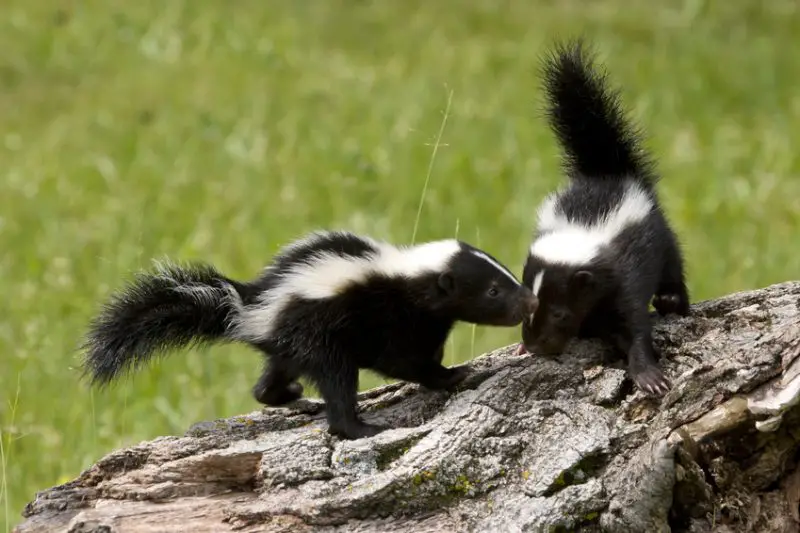
In many parts of Illinois, skunks are animals people notice most often during the early evening. A quiet walk after sunset, a brief glimpse near a roadside, or the unmistakable scent drifting through the air can make it seem as though skunks suddenly appear once daylight fades. During the day, they are rarely seen, leading to the impression that skunks only become active after dark or emerge unexpectedly at dusk.
This pattern is not accidental, nor is it the result of changing skunk populations. Skunks in Illinois have evolved behaviors that strongly favor low-light conditions. Their activity after dusk reflects a combination of physiology, predator avoidance, food availability, and long-term adaptation to both natural and human-altered landscapes. Darkness offers skunks advantages that daylight does not.
This article explains why skunks in Illinois appear more often after dusk, using wildlife biology, behavioral ecology, and regional habitat conditions as a foundation. Rather than relying on folklore or exaggeration, the focus remains on scientific reasons behind skunk behavior and how Illinois environments shape their daily routines.
Table of Contents
- 1 Skunks as Naturally Crepuscular and Nocturnal Animals
- 2 Vision and Sensory Adaptations Favor Low Light
- 3 Predator Avoidance in Illinois Landscapes
- 4 Temperature and Energy Efficiency
- 5 Food Availability Peaks After Dusk
- 6 Reduced Human Activity at Night
- 7 How Illinois Habitats Influence Skunk Timing
- 8 Seasonal Differences in Skunk Activity
- 9 The Role of Shelter and Den Use
- 10 Skunk Movement Patterns After Dusk
- 11 Why Skunks Are Rarely Seen at Dawn
- 12 How Artificial Lighting Affects Skunk Behavior
- 13 Common Misinterpretations of Skunk Activity
- 14 Skunks and Roadside Encounters After Dusk
- 15 Disease Concerns and Night Activity
- 16 Interaction With Pets After Dusk
- 17 Why Skunks Rarely Change This Behavior
- 18 Skunks as Important Nighttime Ecosystem Participants
- 19 How Weather Influences After-Dusk Activity
- 20 Observing Skunks Responsibly
- 21 FAQs About Why Skunks in Illinois Appear More Often After Dusk
- 21.1 Are skunks nocturnal or crepuscular?
- 21.2 Does dusk activity mean skunks are aggressive?
- 21.3 Why do skunks smell more noticeable at night?
- 21.4 Do skunks see well in the dark?
- 21.5 Are skunks dangerous to humans?
- 21.6 Why are skunks seen near roads at dusk?
- 21.7 Do skunks come out earlier in winter?
- 21.8 Can skunks adjust to human schedules?
- 21.9 Does feeding skunks change their behavior?
- 21.10 Is seeing a skunk after dusk normal?
- 22 Conclusion
Skunks as Naturally Crepuscular and Nocturnal Animals

Skunks are not strictly nocturnal, but they are best described as crepuscular, meaning they are most active during twilight hours around dusk and dawn. In Illinois, this crepuscular tendency often blends into full nocturnal activity, especially in areas with human development.
Evolutionarily, this activity pattern reduces risk. Twilight offers enough light for skunks to navigate while limiting visibility to predators that rely on sharp daylight vision. As night falls, skunks continue foraging under conditions that favor their senses and movement style.
Daytime inactivity does not mean skunks are asleep continuously. They often rest lightly, alert to disturbances, conserving energy until conditions improve. This rhythm explains why they are rarely seen during daylight but commonly noticed after dusk.
Vision and Sensory Adaptations Favor Low Light
Skunks do not rely heavily on sharp vision. Their eyesight is relatively poor compared to many predators, particularly at long distances. Instead, skunks depend on smell, hearing, and touch to locate food and detect threats.
Low-light conditions reduce the disadvantage of weak vision. At dusk and during nighttime, skunks are not competing visually with animals that see exceptionally well in bright light. Their strong sense of smell becomes the dominant sensory tool.
In Illinois habitats such as fields, woodlots, and suburban yards, scent cues are abundant at night. Cooler temperatures help odors linger longer, making it easier for skunks to follow scent trails and locate food sources.
Predator Avoidance in Illinois Landscapes
Avoiding predators is one of the strongest reasons skunks appear after dusk. Illinois supports several predators that pose a risk to skunks, including coyotes, foxes, bobcats, and large birds of prey.
Many of these predators are most effective hunters during daylight or early morning hours. By limiting daytime movement, skunks reduce encounters with visually oriented hunters such as hawks and eagles.
While skunks are famous for their defensive spray, using it is costly. Producing spray requires energy and leaves skunks temporarily vulnerable. Avoiding encounters through timing is safer than relying on defense.
Temperature and Energy Efficiency
Illinois experiences wide seasonal temperature swings. During warmer months, daytime heat can be stressful for skunks, especially given their thick fur and low body position close to the ground.
After dusk, temperatures drop, reducing the risk of overheating. Cooler air also lowers water loss and improves endurance during long foraging periods.
Even in winter, dusk activity remains beneficial. Movement during the coldest nighttime hours is often limited, but skunks still prefer low-light periods when disturbance is minimal and energy conservation is easier.
Food Availability Peaks After Dusk
Much of a skunk’s diet becomes more accessible after sunset. Skunks are omnivores, feeding on insects, grubs, small rodents, eggs, fruit, and carrion.
Many prey species skunks rely on are themselves nocturnal or crepuscular. Earthworms surface at night, insects become active, and small mammals move under cover of darkness.
In Illinois lawns, gardens, and agricultural edges, dusk often triggers a surge in insect activity. Skunks exploit this predictable pattern by timing their foraging accordingly.
Reduced Human Activity at Night
Human presence shapes skunk behavior significantly. Illinois is a heavily developed state, with farmland, towns, suburbs, and cities overlapping wildlife habitat.
During daylight, noise, vehicles, pets, and people increase risk for skunks. After dusk, these disturbances decrease, creating safer movement corridors.
Skunks quickly learn human schedules. In suburban areas, they adjust activity to times when foot traffic and vehicle movement drop, reinforcing their after-dusk visibility to people who are still outdoors.
How Illinois Habitats Influence Skunk Timing
Different habitats across Illinois influence how strongly skunks favor dusk activity. In rural farmland, open fields expose skunks during daylight, increasing reliance on twilight and night.
In forested areas, cover is better, but daylight still brings more predator and human activity. Dusk offers a balance between visibility and safety.
Urban and suburban skunks are often the most strictly nocturnal. Artificial lighting may extend visibility, but human disturbance remains lower at night, reinforcing dusk-centered activity.
Seasonal Differences in Skunk Activity
Skunk activity after dusk changes throughout the year. In spring and summer, dusk marks the start of peak foraging and breeding activity.
During fall, skunks increase feeding to build fat reserves. Dusk and early night become especially important as skunks forage longer hours.
In winter, skunks do not hibernate fully but enter periods of reduced activity. On mild evenings, they may emerge briefly after dusk to feed before returning to shelter.
The Role of Shelter and Den Use
Skunks spend daylight hours in dens, which may include burrows, hollow logs, brush piles, or spaces under buildings. These shelters provide protection from weather and predators.
Leaving the den after dusk reduces the chance of being observed during entry and exit. Darkness conceals movement, lowering risk.
In Illinois, where den sites are often close to human structures, this timing helps skunks avoid encounters with pets and people.
Skunk Movement Patterns After Dusk
After dusk, skunks follow established routes between shelter and feeding areas. These routes often include fence lines, hedgerows, drainage ditches, and field edges.
Using the same paths repeatedly reduces navigation effort and increases safety. Skunks become highly efficient nighttime travelers.
People who notice skunks frequently often live near these routes, creating the impression of sudden appearances when skunks are simply following predictable paths.
Why Skunks Are Rarely Seen at Dawn
While skunks may still be active near dawn, visibility drops sharply. As daylight increases, skunks retreat to shelter.
This retreat often happens quickly. A skunk that appears active at first light may vanish within minutes, reinforcing the belief that they only appear after dusk.
This pattern reflects risk assessment rather than fatigue.
How Artificial Lighting Affects Skunk Behavior
Artificial lighting changes how skunks use time. In some Illinois neighborhoods, streetlights extend usable hours slightly.
However, skunks still avoid peak human activity rather than darkness itself. They may forage under lights if disturbance is low, but timing remains centered around reduced human presence.
Light pollution can also affect prey behavior, indirectly shaping skunk activity patterns.
Common Misinterpretations of Skunk Activity
Many people assume increased skunk sightings after dusk indicate population growth. In reality, behavior changes visibility, not population size.
Others believe skunks are aggressive at night. Skunks are not more aggressive after dark; they are simply more active.
Understanding these misconceptions helps reduce fear and unnecessary conflict.
Skunks and Roadside Encounters After Dusk
Road crossings are a common reason skunks are noticed in the evening. As dusk approaches, traffic remains high while skunks begin moving.
This overlap increases visibility and risk. Skunks crossing roads after dusk are not disoriented; they are following natural movement schedules.
In Illinois, this pattern contributes to frequent roadside sightings and collisions during evening hours.
Disease Concerns and Night Activity
Skunks are sometimes associated with rabies concerns. While skunks can carry rabies, nighttime activity is normal and not a sign of illness.
Healthy skunks move steadily and purposefully. Abnormal behavior, such as disorientation or daytime wandering, is more concerning than normal dusk activity.
Understanding this distinction helps avoid unnecessary alarm.
Interaction With Pets After Dusk
Pet encounters often happen after dusk when skunks are active and dogs are let outside in the evening.
Skunks do not seek confrontation. Most spray incidents occur when skunks are surprised or cornered.
Awareness of skunk timing helps reduce these encounters through supervision and lighting management.
Why Skunks Rarely Change This Behavior
Skunks benefit strongly from dusk-centered activity. It balances feeding efficiency, safety, and energy conservation.
Changing this pattern would increase exposure to predators and humans. Natural selection reinforces consistency rather than flexibility in timing.
Even skunks raised near people retain this instinctive preference for low-light activity.
Skunks as Important Nighttime Ecosystem Participants
Skunks play valuable roles in Illinois ecosystems. By feeding on insects and rodents, they help regulate populations.
Their nighttime activity reduces competition with daytime species, spreading ecological pressure across time.
This temporal separation supports ecosystem balance rather than redundancy.
How Weather Influences After-Dusk Activity
Rain, wind, and temperature affect how active skunks are after dusk. Light rain may increase foraging by bringing prey to the surface.
Extreme cold or heavy storms reduce activity temporarily, but timing preferences remain unchanged.
Skunks adjust intensity, not schedule.
Observing Skunks Responsibly
Observing skunks should always be passive. Maintaining distance and avoiding sudden movements reduces stress.
Securing trash and pet food prevents attracting skunks unnecessarily.
Understanding their timing helps people coexist without interference.
FAQs About Why Skunks in Illinois Appear More Often After Dusk
Are skunks nocturnal or crepuscular?
They are primarily crepuscular but often active into the night.
Does dusk activity mean skunks are aggressive?
No. Increased activity does not indicate aggression.
Why do skunks smell more noticeable at night?
Cooler air carries scent farther, and skunks are more active.
Do skunks see well in the dark?
They rely more on smell and hearing than vision.
Are skunks dangerous to humans?
They avoid contact and pose little risk when left alone.
Why are skunks seen near roads at dusk?
Movement overlaps with evening traffic and reduced daylight.
Do skunks come out earlier in winter?
They may emerge briefly during milder winter evenings.
Can skunks adjust to human schedules?
Yes. They often shift activity to avoid people.
Does feeding skunks change their behavior?
Yes. Feeding can increase risk and dependency.
Is seeing a skunk after dusk normal?
Yes. It reflects natural behavior.
Conclusion
Skunks in Illinois appear more often after dusk because low-light conditions offer clear advantages. Reduced predation risk, cooler temperatures, increased food availability, and lower human disturbance all favor activity during twilight and night.
Rather than being mysterious or threatening, this behavior reflects efficient adaptation to Illinois landscapes. Understanding why skunks move when they do helps replace surprise with insight and supports coexistence with one of the state’s most recognizable nocturnal mammals.