
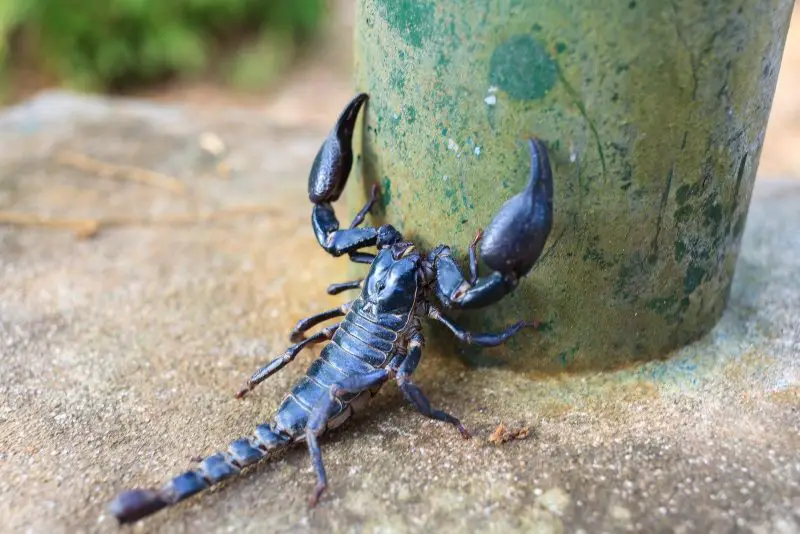
Finding a scorpion inside your home is one of those experiences that instantly grabs your attention. Whether it appears in a bathroom sink, crawls across a bedroom wall at night, or turns up in shoes left on the floor, the reaction is usually the same: surprise, concern, and a lot of questions.
In New Mexico, indoor scorpion sightings are not random accidents. They are the result of climate, landscape, building design, and seasonal behavior all intersecting in ways that make homes attractive to these ancient arachnids.
Scorpions do not wander inside by mistake. When they show up indoors, there is usually a clear reason.
Table of Contents
- 1 Scorpions Are Native to New Mexico’s Landscape
- 2 Why Homes Attract Scorpions in the First Place
- 3 Seasonal Patterns of Indoor Scorpion Activity
- 4 How Scorpions Get Inside Homes
- 5 Why Scorpions Are Often Found at Night
- 6 Scorpions and Human Health Concerns
- 7 Environmental Factors That Increase Indoor Scorpion Encounters
- 8 Why Some Homes Have Repeated Scorpion Problems
- 9 How Scorpions Behave Once Indoors
- 10 Preventing Scorpions From Entering Homes
- 11 Why Spraying Alone Often Fails
- 12 Living With Scorpions in New Mexico
- 13 When Professional Help Is Needed
- 14 FAQs About Scorpions Showing Up Indoors in New Mexico
- 14.1 Why am I finding scorpions inside my house?
- 14.2 Is it normal to see scorpions indoors in New Mexico?
- 14.3 Are scorpions attracted to clean houses?
- 14.4 Why do scorpions show up more often at night?
- 14.5 Are scorpions dangerous to humans?
- 14.6 Why are scorpions often found in bathrooms?
- 14.7 Does seeing one scorpion mean there are more?
- 14.8 How are scorpions getting inside my home?
- 14.9 Will spraying insecticide solve the problem?
- 14.10 When should I call a professional?
- 15 Final Thoughts
Scorpions Are Native to New Mexico’s Landscape
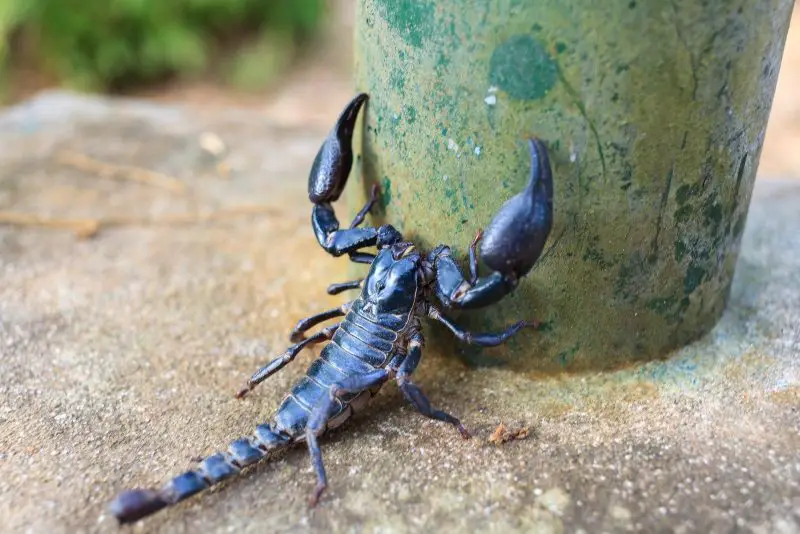
New Mexico’s deserts, grasslands, rocky foothills, and arid river valleys create ideal habitat for scorpions. Long before houses, roads, and cities existed, scorpions were already thriving in these environments.
The most commonly encountered species indoors include bark scorpions, striped scorpions, and desert grassland species. While the Arizona bark scorpion is the most medically significant in the Southwest, several native New Mexico species are capable of delivering painful stings.
Homes in New Mexico are often built directly into scorpion habitat rather than replacing it. When development expands into desert or foothill areas, scorpions do not disappear. They adapt.
Why Homes Attract Scorpions in the First Place
Shelter From Extreme Conditions
New Mexico experiences dramatic temperature swings. Summer heat can be intense during the day, while nights cool rapidly. Winters may bring freezing temperatures, even in desert regions.
Scorpions seek stable environments. Homes provide shelter from heat, cold, wind, and monsoon rains. Inside walls, under foundations, and beneath flooring, temperatures remain more consistent than outdoors.
For a scorpion, a house is not an invasion target. It is shelter.
Access to Moisture
Despite being desert-adapted, scorpions still need moisture to survive. In arid environments, water sources are limited and unpredictable.
Homes provide reliable access to moisture through bathrooms, kitchens, laundry rooms, air conditioning condensation lines, and leaky plumbing. Even small amounts of humidity can be enough to attract insects, which in turn attract scorpions.
This is why scorpions are frequently found in sinks, tubs, and showers.
A Reliable Food Supply
Scorpions do not enter homes unless food is available. They feed on insects such as crickets, cockroaches, silverfish, spiders, and ants.
If a home has an insect problem, scorpions may follow. Even a modest insect population can support occasional scorpion activity indoors.
In this sense, scorpions are indicators. Their presence often signals underlying pest issues rather than random infestation.
Seasonal Patterns of Indoor Scorpion Activity
Summer and Early Fall Peaks
Indoor scorpion sightings increase dramatically during late spring, summer, and early fall. Warm temperatures boost scorpion metabolism and activity levels.
During this period, scorpions hunt more frequently and travel farther in search of prey and mates. Increased movement increases the chances of encountering homes and entering through small openings.
Monsoon season also plays a role. Heavy rains flood burrows and crevices, forcing scorpions to seek higher, drier ground. Homes become convenient refuges.
Winter Shelter-Seeking Behavior
While scorpions are less active in winter, they do not disappear entirely. Cold temperatures slow them down but also push them toward sheltered locations.
Scorpions may overwinter inside walls, crawl spaces, garages, and foundations where temperatures remain above freezing. Some individuals remain hidden all winter and reappear indoors when temperatures warm.
How Scorpions Get Inside Homes
Tiny Entry Points Matter
Scorpions can flatten their bodies and squeeze through extremely small gaps. Cracks in foundations, gaps under doors, torn window screens, utility line penetrations, and weep holes all provide entry points.
Older homes are especially vulnerable, but even newer construction may have access points if sealing is incomplete.
Once inside, scorpions move along walls and edges rather than crossing open spaces, making them hard to detect.
Hitchhiking and Accidental Transport
Scorpions sometimes enter homes unintentionally by hitchhiking on firewood, potted plants, building materials, storage boxes, or outdoor furniture.
Bringing these items indoors, especially from garages or sheds, can introduce scorpions directly into living spaces.
Why Scorpions Are Often Found at Night
Scorpions are nocturnal hunters. They avoid daylight and emerge at night to search for prey.
Indoor sightings often occur after dark when lights are off and human activity is minimal. Bathrooms and kitchens may be used at night because they are quiet, humid, and attract insects.
This nocturnal behavior is why scorpion encounters frequently happen during nighttime trips to the bathroom or early morning hours.
Scorpions and Human Health Concerns
Understanding Sting Risk
Most New Mexico scorpions deliver stings that are painful but not life-threatening. Symptoms often include localized pain, swelling, numbness, and tingling.
However, stings from bark scorpions can be more serious, particularly for children, elderly individuals, and those with compromised health.
Indoor presence increases sting risk simply because of proximity. Scorpions sting defensively when pressed, stepped on, or trapped against skin.
Why Bathrooms Are High-Risk Areas
Scorpions frequently become trapped in sinks and tubs due to smooth surfaces they cannot climb. While this reduces escape, it increases human contact.
Reaching blindly into a sink or stepping barefoot into a shower at night increases sting risk.
Environmental Factors That Increase Indoor Scorpion Encounters
Desert Landscaping Around Homes
Rock mulch, stacked stone, woodpiles, and dense ground cover create ideal outdoor scorpion habitat near homes.
These features provide shelter and prey, increasing the likelihood that scorpions will eventually enter nearby structures.
Homes with minimal vegetation and gravel landscaping often experience more scorpion activity than those with irrigated lawns.
Nearby Construction and Land Disturbance
Construction displaces scorpions from established habitat. Grading, trenching, and excavation force them to relocate.
Homes near new developments or roadwork often experience temporary spikes in indoor scorpion sightings as displaced individuals search for shelter.
Why Some Homes Have Repeated Scorpion Problems
Structural Vulnerabilities
Homes with unsealed foundations, older door sweeps, and poorly sealed utility lines are more vulnerable to repeated entry.
Once scorpions establish shelter inside walls or foundations, they may remain for extended periods if conditions remain favorable.
Persistent Insect Populations
As long as insects remain available indoors or around the home, scorpions have a reason to stay.
Pest control focused only on scorpions without addressing insect populations often fails.
How Scorpions Behave Once Indoors
Scorpions do not build nests or colonies inside homes. Indoor sightings usually involve individual animals rather than infestations.
They move slowly, hide during the day, and hunt at night. If one scorpion is seen, others may be present nearby, especially during peak seasons.
However, repeated sightings often indicate environmental conditions that favor ongoing entry rather than permanent indoor residency.
Preventing Scorpions From Entering Homes
Sealing and Exclusion
Reducing entry points is the most effective long-term solution. Sealing cracks, installing tight-fitting door sweeps, repairing screens, and sealing utility penetrations all reduce access.
Scorpions cannot chew through barriers, so physical exclusion is highly effective.
Reducing Outdoor Habitat
Removing woodpiles, debris, stacked stone, and dense ground cover near foundations reduces shelter.
Keeping landscaping trimmed and minimizing rock mulch close to the home can significantly lower scorpion activity.
Controlling Insects
Reducing insect populations indoors and around the home removes scorpions’ food source.
This includes managing moisture, sealing food sources, and addressing insect infestations through integrated pest management.
Why Spraying Alone Often Fails
Many insecticides are less effective against scorpions due to their physiology. Spraying without addressing entry points and habitat often results in temporary reductions followed by continued sightings.
Successful control requires a combination of exclusion, habitat modification, and insect management rather than chemical treatment alone.
Living With Scorpions in New Mexico
Scorpions are a natural part of New Mexico’s ecosystem. Their presence indoors reflects how closely human development overlaps with desert wildlife habitat.
Understanding why scorpions enter homes helps reduce fear and improve prevention. Most encounters can be avoided through environmental adjustments rather than constant chemical control.
When Professional Help Is Needed
Persistent indoor sightings, bark scorpion concerns, or households with high-risk individuals may benefit from professional pest management services experienced with desert scorpions.
Professionals can identify entry points, assess habitat risks, and develop long-term prevention strategies.
FAQs About Scorpions Showing Up Indoors in New Mexico
Why am I finding scorpions inside my house?
Scorpions enter homes to seek shelter, moisture, and food. Houses provide stable temperatures, access to water, and insects that scorpions hunt, especially during hot summers or after heavy rains.
Is it normal to see scorpions indoors in New Mexico?
Yes. In New Mexico, scorpions are native wildlife, and indoor sightings are common, particularly in desert and foothill areas where homes overlap natural habitat.
Are scorpions attracted to clean houses?
Scorpions are not attracted to cleanliness itself. They are attracted to insects and moisture. Even clean homes can have enough insects or humidity to draw scorpions inside.
Why do scorpions show up more often at night?
Scorpions are nocturnal. They hunt at night when temperatures are cooler and prey is active, which is why indoor sightings usually happen after dark.
Are scorpions dangerous to humans?
Most scorpion stings in New Mexico are painful but not life-threatening. However, bark scorpion stings can be more serious, especially for children, elderly individuals, or those with health conditions.
Why are scorpions often found in bathrooms?
Bathrooms provide moisture and smooth surfaces where scorpions may become trapped. Insects attracted to water also make bathrooms a common hunting area.
Does seeing one scorpion mean there are more?
Not always, but it can indicate favorable conditions. Repeated sightings often suggest nearby shelter, entry points, or an available insect food source.
How are scorpions getting inside my home?
They enter through small gaps such as cracks in foundations, gaps under doors, torn screens, utility line openings, or weep holes. They can also hitchhike on firewood or stored items.
Will spraying insecticide solve the problem?
Spraying alone usually does not work long-term. Effective control requires sealing entry points, reducing outdoor habitat, and managing insects that scorpions feed on.
When should I call a professional?
If scorpions appear frequently indoors, if bark scorpions are present, or if someone in the home is at higher risk from stings, professional pest management can help identify and reduce the causes.
Final Thoughts
Scorpions show up indoors in New Mexico for practical reasons. Homes offer shelter from temperature extremes, access to moisture, and reliable food sources.
They are not aggressive invaders, but opportunistic survivors responding to environmental conditions.
By understanding scorpion behavior, addressing structural vulnerabilities, and reducing attractants, most homeowners can significantly reduce indoor encounters.
In New Mexico, living with scorpions is often less about elimination and more about coexistence through smart prevention and awareness.