
Carpet beetles are one of the most misunderstood household pests in Illinois. They do not behave like cockroaches. They do not spread like bed bugs. And they rarely trigger immediate panic. That is exactly why they cause long-term problems in homes across the state.
Most Illinois homeowners notice carpet beetles only after damage appears. Small holes in wool rugs. Thinning patches on carpets. Mysterious damage to stored clothing. Sometimes the first sign is not damage at all, but a skin irritation that feels like an allergic reaction and seems to come from nowhere.
What makes carpet beetles especially tricky is how quietly they operate. They do not infest in obvious clusters. They do not stay in one visible place. They live out of sight, feeding slowly, reproducing steadily, and spreading through homes without being noticed.
This article takes a detailed, practical look at carpet beetles in Illinois homes. It explains how they enter houses, where they hide, what damage they actually cause, and why so many homeowners misidentify the problem. Understanding carpet beetles is the first step toward controlling them without unnecessary chemicals or costly mistakes.
Table of Contents
- 1 Carpet Beetles Are Common Across Illinois
- 2 Why Carpet Beetles Are Often Misidentified
- 3 How Carpet Beetles Get Inside Illinois Homes
- 4 Why Larvae Are the Real Problem
- 5 Illinois Homes Provide Ideal Conditions
- 6 The Damage Homeowners Don’t Connect
- 7 Skin Reactions That Cause Confusion
- 8 Why Carpet Beetles Are Hard to Eliminate
- 9 Seasonal Patterns in Illinois
- 10 Why Clean Homes Still Get Carpet Beetles
- 11 How Infestations Spread Within a Home
- 12 Mistakes Illinois Homeowners Commonly Make
- 13 Practical Steps That Actually Work
- 14 Why Panic Leads to Poor Decisions
- 15 FAQs About Carpet Beetles in Illinois Homes
- 15.1 Are carpet beetles dangerous to humans?
- 15.2 Do carpet beetles bite?
- 15.3 Can carpet beetles live in beds?
- 15.4 Why do I see beetles near windows?
- 15.5 Can carpet beetles damage synthetic fabrics?
- 15.6 Will vacuuming alone get rid of them?
- 15.7 Are carpet beetles worse in older homes?
- 15.8 When should I call a professional?
- 16 Conclusion
Carpet Beetles Are Common Across Illinois
Carpet beetles are not a sign of a dirty home. They are found in urban apartments, suburban houses, and rural properties throughout Illinois.
Older homes with basements, attics, and original hardwood floors are especially vulnerable, but newer homes are not immune. Any structure with natural fibers, stored fabrics, or quiet undisturbed areas can support carpet beetles.
Illinois’ seasonal climate plays a role. Cold winters drive insects indoors. Warm springs and summers allow populations to grow. Once carpet beetles establish themselves inside, they can persist year-round.
Many infestations begin quietly in late winter or early spring, long before homeowners notice damage.
Why Carpet Beetles Are Often Misidentified
One of the biggest problems with carpet beetles is misidentification.
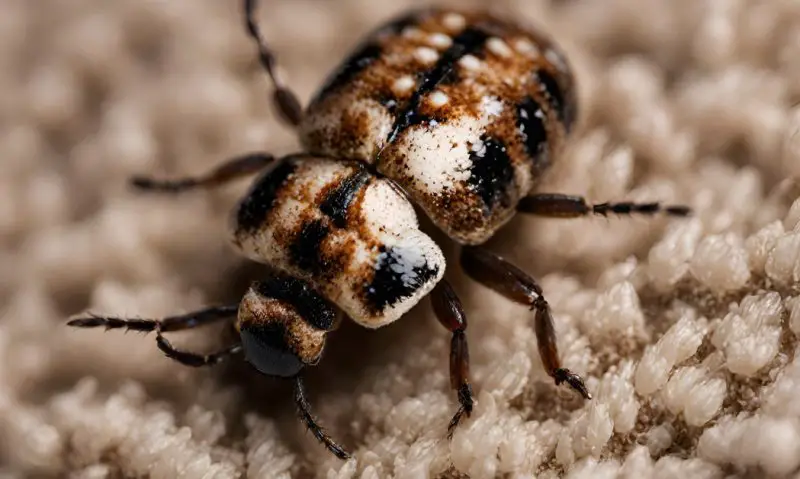
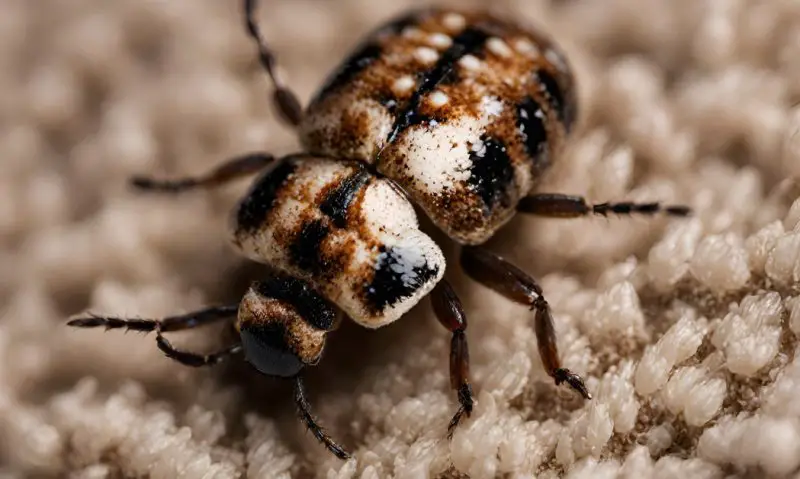
Adult carpet beetles are small, oval-shaped, and often mistaken for harmless outdoor beetles. They are commonly found near windows, light fixtures, or door frames, leading homeowners to assume they wandered in accidentally.
The real damage is caused by the larvae, not the adults.
Carpet beetle larvae look nothing like the adults. They are small, elongated, and covered in fine hairs. Many people mistake them for lint, dust, or fabric debris and vacuum them up without realizing what they are.
By the time larvae are noticed repeatedly, damage has often already occurred.
How Carpet Beetles Get Inside Illinois Homes
Carpet beetles do not need large openings to enter a home. They exploit small gaps that most homeowners never notice.
Common entry points include:
-
Gaps around windows and doors
-
Attic vents and soffits
-
Cracks in foundations
-
Openings around plumbing or utility lines
Adult carpet beetles are strong flyers and are often attracted to light. They may enter through open windows during warmer months or hitchhike inside on cut flowers, furniture, or secondhand items.
Once inside, they lay eggs in areas where food sources are available. The infestation begins silently.
Why Larvae Are the Real Problem
Adult carpet beetles feed primarily on pollen and nectar. They do little damage indoors.
Larvae, on the other hand, feed on natural fibers.
They consume materials most people never think about as food. Wool, silk, cotton, leather, feathers, fur, pet hair, and even dead insects all serve as nourishment.
This means carpet beetles do not limit themselves to carpets. They damage:
-
Area rugs and wall-to-wall carpeting
-
Clothing stored in closets or drawers
-
Upholstered furniture
-
Blankets, comforters, and pillows
-
Stored seasonal clothing and linens
Larvae prefer dark, undisturbed areas, which is why damage often goes unnoticed for months.
Illinois Homes Provide Ideal Conditions
Many Illinois homes unintentionally create perfect environments for carpet beetles.
Basements with stored boxes. Closets packed with seasonal clothing. Attics filled with insulation and forgotten items. These spaces are rarely disturbed, allowing larvae to feed and grow uninterrupted.
Homes with pets are particularly attractive. Pet hair accumulates in corners, under furniture, and along baseboards, providing an abundant food source.
Heating systems also play a role. Warm indoor temperatures allow carpet beetles to remain active even during winter, when outdoor populations decline.
The Damage Homeowners Don’t Connect
Carpet beetle damage is often mistaken for wear and tear.
Small holes in clothing are blamed on age. Thin carpet patches are blamed on foot traffic. Blanket damage is blamed on washing machines.
Unlike moths, carpet beetles do not leave neat patterns. Their feeding is irregular and scattered, making damage harder to recognize.
Because larvae move slowly and feed intermittently, damage accumulates gradually. By the time homeowners realize something is wrong, the infestation is usually well established.
Skin Reactions That Cause Confusion
One of the most surprising aspects of carpet beetles is their effect on human skin.
Carpet beetle larvae do not bite. However, the fine hairs on their bodies can cause skin irritation in sensitive individuals.
These reactions often appear as small red bumps or rashes, similar to insect bites or allergic reactions. They commonly occur on arms, neck, and legs.
Because no insect is ever seen biting, homeowners often suspect bed bugs, fleas, or mites. This leads to unnecessary panic and sometimes expensive treatments for pests that are not actually present.
Recognizing carpet beetles as the source of irritation can save time, money, and stress.
Why Carpet Beetles Are Hard to Eliminate
Carpet beetles are resilient because of where they live, not because they are aggressive.
They hide in areas that are difficult to reach. Under baseboards. Inside air ducts. Beneath heavy furniture. Inside wall voids.
Vacuuming helps, but it must be thorough and consistent. Infrequent cleaning removes visible insects but leaves eggs and larvae behind.
Chemical treatments often fail because they do not reach hidden feeding sites. Overuse of sprays can also drive beetles deeper into walls and insulation.
Effective control requires understanding behavior, not just applying products.
Seasonal Patterns in Illinois
Carpet beetle activity follows seasonal rhythms in Illinois.
Adults are most visible in spring and early summer. This is when homeowners often see beetles near windows and assume the issue is minor.
Larval feeding continues year-round indoors, but damage becomes more noticeable toward late winter, when stored fabrics are retrieved.
Spring is also when infestations often expand, as new adults emerge and lay eggs.
Understanding this timing helps homeowners respond before damage worsens.
Why Clean Homes Still Get Carpet Beetles
Cleanliness alone does not prevent carpet beetles.
Even spotless homes contain natural fibers. Even minimal pet hair accumulates. Even sealed closets contain wool or cotton items.
What matters more than cleanliness is access and neglect. Areas that are rarely cleaned or disturbed become feeding zones.
This is why carpet beetles are common in vacation homes, spare bedrooms, and storage areas.
Regular inspection matters more than perfection.
How Infestations Spread Within a Home
Carpet beetles spread gradually.
Larvae crawl slowly from one feeding source to another. Adults fly toward light and lay eggs near suitable materials.
Moving infested items spreads beetles faster. A sweater stored in a closet may be moved to a drawer, introducing larvae to new areas.
Secondhand furniture and clothing are common sources of new infestations.
Once spread, carpet beetles rarely confine themselves to one room.
Mistakes Illinois Homeowners Commonly Make
Several common mistakes allow carpet beetle problems to worsen.
Ignoring early signs. Misidentifying larvae. Treating the wrong pest. Using surface sprays only. Failing to inspect stored items.
Another mistake is focusing only on carpets. Many infestations continue because beetles are feeding elsewhere.
Effective control requires identifying all food sources, not just the most obvious ones.
Practical Steps That Actually Work
Successful carpet beetle control focuses on disruption rather than eradication.
Regular vacuuming of baseboards, corners, and under furniture removes larvae and eggs. Washing or dry cleaning infested clothing stops feeding cycles.
Storing natural fiber items in sealed containers reduces access. Reducing pet hair accumulation limits food availability.
In severe cases, professional treatment may be necessary, especially when infestations extend into wall voids or HVAC systems.
Consistency matters more than intensity.
Why Panic Leads to Poor Decisions
Carpet beetles do not cause disease. They do not infest mattresses like bed bugs. They do not spread rapidly from person to person.
Panic often leads to unnecessary chemical exposure, expensive treatments, and discarded belongings that could have been saved.
A calm, informed approach leads to better outcomes and long-term control.
FAQs About Carpet Beetles in Illinois Homes
Are carpet beetles dangerous to humans?
They do not transmit disease, but their larvae can cause skin irritation in sensitive individuals.
Do carpet beetles bite?
No. Skin reactions come from contact with larval hairs, not bites.
Can carpet beetles live in beds?
They do not infest mattresses, but larvae may be found nearby if natural fibers are present.
Why do I see beetles near windows?
Adult carpet beetles are attracted to light and often gather near windows in spring.
Can carpet beetles damage synthetic fabrics?
They prefer natural fibers, but may chew synthetic blends if food residues are present.
Will vacuuming alone get rid of them?
Vacuuming helps but must be frequent and combined with fabric care.
Are carpet beetles worse in older homes?
Older homes often have more access points and stored materials, increasing risk.
When should I call a professional?
If damage continues despite regular cleaning and fabric treatment, professional help may be needed.
Conclusion
Carpet beetles are one of the most overlooked household pests in Illinois. They do not announce themselves loudly or cause immediate crises. Instead, they work quietly, damaging belongings and creating confusion over time.
The real risk lies in misunderstanding. When homeowners know what carpet beetles are, where they hide, and how they behave, control becomes manageable.
Awareness replaces frustration. Prevention reduces damage. And Illinois homes remain comfortable, protected spaces rather than mystery zones filled with unanswered questions.