
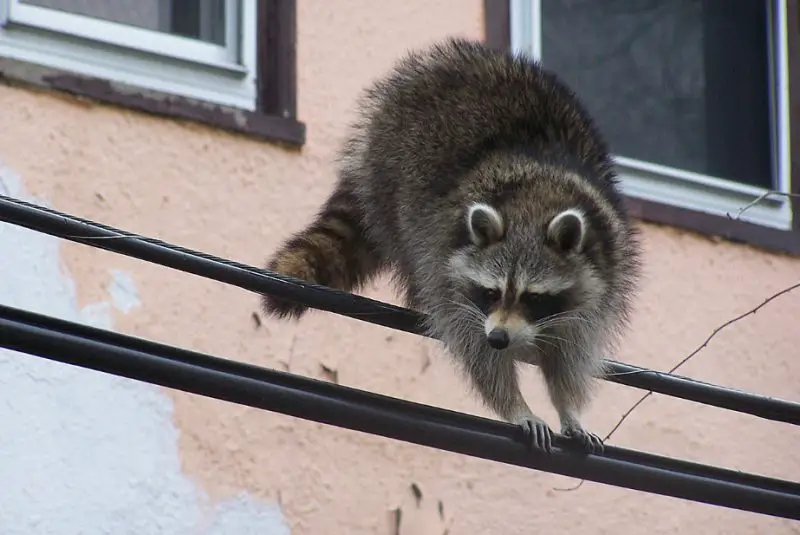
New York City never truly sleeps. Even when traffic thins and office lights fade, another population quietly takes over the streets, rooftops, and alleyways. Raccoons move through the city with a confidence that often surprises the people who catch brief glimpses of them.
Most residents think of raccoons as forest animals that wander into suburbs by accident. In reality, many raccoons in New York City are lifelong urban residents. They are not lost. They are not displaced. They are adapted.
This article explores the subtle, little-known ways raccoons navigate city life. Not just how they survive, but how they actively use the built environment to their advantage. From rooftops to subway corridors, from trash schedules to human routines, raccoons have learned to read the city in ways few people ever notice.
Table of Contents
- 1 Raccoons as Urban Specialists, Not Strays
- 2 How Raccoons Mentally Map the City
- 3 Navigating Vertically Through a Three-Dimensional City
- 4 Understanding Human Schedules Without Understanding Humans
- 5 The Role of Darkness in Raccoon Navigation
- 6 How Raccoons Use Smell to Read the City
- 7 Subway Systems and Underground Corridors
- 8 How Raccoons Learn From Each Other
- 9 Navigating Around Humans Without Being Seen
- 10 Adapting to Seasonal Changes in the City
- 11 The Quiet Intelligence Behind Problem Solving
- 12 How Injuries and Risks Shape Navigation Choices
- 13 Why Raccoons Rarely Get “Lost” in the City
- 14 Human Structures as Navigation Tools
- 15 Why Encounters Feel Sudden to Humans
- 16 Coexisting With Urban Raccoons
- 17 Why Raccoons Thrive Where Others Fail
- 18 FAQs About Raccoons in New York City
- 18.1 Do raccoons actually live their entire lives in New York City?
- 18.2 Are raccoons active during the day in the city?
- 18.3 How far can a raccoon travel in one night?
- 18.4 Do raccoons recognize individual buildings?
- 18.5 Are raccoons dangerous to people?
- 18.6 Why do raccoons appear suddenly on rooftops?
- 18.7 Can raccoons find their way back if relocated?
- 18.8 Does city noise affect raccoon navigation?
- 19 Final Thoughts
Raccoons as Urban Specialists, Not Strays
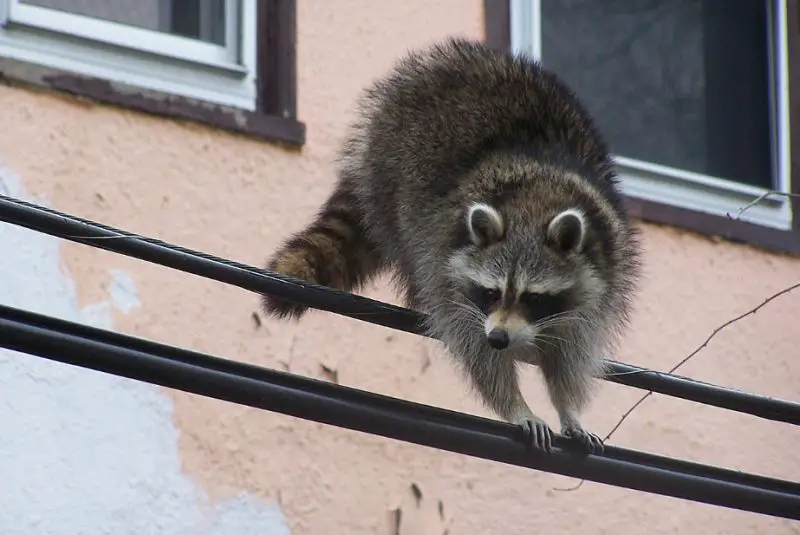
Urban raccoons are not simply rural animals squeezed into city limits. Over generations, they have become specialists in human-dominated landscapes.
City raccoons show different behavior patterns than their rural counterparts. They are bolder around structures, more tolerant of noise, and far more skilled at problem-solving involving artificial objects. Dumpsters, latches, lids, and doors are not obstacles. They are puzzles.
New York City offers an unusually dense environment. Vertical buildings, narrow passages, and constant human movement might seem hostile to wildlife. For raccoons, it is a layered landscape full of opportunity.
How Raccoons Mentally Map the City
One of the most impressive abilities of urban raccoons is spatial memory. They do not wander randomly. They build detailed mental maps of their surroundings.
A raccoon may remember the location of a specific trash bin that overflows every Tuesday night. It may remember which fire escape leads to a rooftop with leftover food. It may know which alley offers a quiet escape route when disturbed.
These mental maps are updated constantly. Construction changes routes. New buildings create new shelter. Closed restaurants remove food sources. Raccoons adapt by revising their internal city map.
This is not instinct alone. It is learned behavior refined over time.
New York City is vertical, and raccoons use that dimension fully.
Fire escapes function like ladders. Drainpipes become climbing routes. Tree branches act as bridges between buildings. Rooftops serve as highways connecting blocks without touching the street.
Raccoons often prefer elevated travel. It reduces encounters with humans and vehicles. It also offers better vantage points for spotting food and threats.
At night, a raccoon may travel several city blocks without ever setting foot on the sidewalk. To residents below, it appears as if raccoons vanish between sightings. In reality, they are moving above eye level.
Understanding Human Schedules Without Understanding Humans
Raccoons do not need to understand people to understand patterns.
They learn trash collection schedules quickly. Certain nights mean overflowing bags. Others mean sealed bins and empty sidewalks. Over time, raccoons synchronize their movements with these rhythms.
Late-night restaurant closures are another cue. When staff leave, leftover food appears. Delivery zones become feeding sites. Alleys behind businesses turn into predictable food corridors.
Even human noise levels matter. Raccoons learn when streets are busiest and when foot traffic drops. They time their activity to minimize conflict.
This is not coincidence. It is pattern recognition refined through experience.
Artificial lighting reshapes the night, but raccoons have adapted.
Streetlights create predictable shadows and illuminated zones. Raccoons learn where they are visible and where darkness offers cover. They move through shadowed edges, hugging walls and low structures.
Bright lights do not necessarily scare raccoons. Instead, they learn to avoid direct exposure. A well-lit street may be crossed quickly, while darker side streets become preferred routes.
Moonlight plays a role as well. On bright nights, raccoons may limit rooftop movement. On darker nights, they become more active above ground.
How Raccoons Use Smell to Read the City
Vision is only part of urban navigation. Smell is equally important.
Trash smells tell raccoons not only where food exists, but how recently it was placed. Fresh smells indicate new opportunities. Older odors suggest competition or depletion.
Scent also helps raccoons avoid danger. The smell of dogs, humans, or unfamiliar animals influences route choice. Certain buildings become avoided zones due to repeated negative encounters.
Over time, the city develops a scent map as detailed as its physical one.
Subway Systems and Underground Corridors
Occasionally, raccoons appear in subway stations or tunnels. While these encounters are rare, they reveal another layer of urban navigation.
Storm drains, utility corridors, and underground passages form hidden pathways beneath the city. Raccoons may enter these spaces seeking warmth, shelter, or alternative routes.
These environments are dangerous, and raccoons do not use them casually. But when surface routes are disrupted, underground options become part of their navigation toolkit.
It is another example of flexibility rather than recklessness.
How Raccoons Learn From Each Other
Urban knowledge spreads socially.
Young raccoons learn routes, shelters, and feeding spots by following their mothers. Over time, individuals develop personal preferences, but foundational knowledge is passed down.
This creates neighborhood-specific raccoon cultures. One block may see frequent rooftop activity. Another may see raccoons favoring ground-level gardens. These differences are learned, not accidental.
When an experienced raccoon dies or leaves an area, patterns may change until others rediscover or replace that knowledge.
Most people never see raccoons despite their proximity. This is intentional.
Raccoons pause and observe. They listen for footsteps. They freeze when startled. They retreat silently rather than flee noisily.
In many cases, a raccoon may watch a person pass just a few feet away without being noticed. Their stillness is a form of navigation, not passivity.
Avoidance, rather than confrontation, defines successful urban movement.
Adapting to Seasonal Changes in the City
Seasonal shifts reshape New York City, and raccoons respond accordingly.
Winter reduces food availability but increases shelter demand. Raccoons may cluster in warm spaces such as attics, abandoned structures, or underground cavities.
Spring brings construction noise and landscaping changes. Routes adjust. Summer offers abundant food but higher human activity. Nighttime navigation becomes more cautious.
Fall introduces another shift. Tourists increase. Trash volume spikes. Raccoons take advantage of abundance while preparing for leaner months.
The Quiet Intelligence Behind Problem Solving
Opening containers. Lifting lids. Sliding panels. These actions are not random.
Raccoons possess highly sensitive forepaws with strong tactile awareness. They learn through touch, repetition, and experimentation.
In the city, this intelligence translates into navigation skills. A locked gate becomes a delayed route, not a dead end. A blocked alley becomes a detour.
Raccoons remember successful solutions and reuse them. Failure is part of learning, not discouragement.
Urban life is dangerous. Cars, glass, traps, and aggressive pets pose real threats.
Raccoons that survive close calls often alter behavior. They avoid certain crossings. They shift routes away from high-risk zones.
Over time, this creates safer travel corridors used repeatedly. These routes may not be obvious to humans, but they exist.
Navigation is shaped as much by danger as by opportunity.
Why Raccoons Rarely Get “Lost” in the City
People often assume animals in cities are confused or disoriented. Raccoons prove otherwise.
Their navigation relies on landmarks, smells, and spatial memory. Even when displaced short distances, many raccoons find their way back.
This ability reduces panic and wandering. It allows raccoons to establish stable territories within chaotic environments.
The city becomes familiar, not overwhelming.
Buildings are not barriers. They are tools.
Walls guide movement. Corners provide cover. Stairwells offer elevation. Even fences define boundaries that raccoons learn to work around.
In some ways, human construction simplifies navigation by creating consistent shapes and routes.
Nature and architecture merge into a single navigable landscape.
Why Encounters Feel Sudden to Humans
When people suddenly notice a raccoon, it feels like the animal appeared out of nowhere.
In reality, the raccoon was already there, moving quietly, observing, waiting. Human attention simply caught up.
This disconnect fuels myths about boldness or aggression. Most raccoons prefer to remain unnoticed.
Visibility is the exception, not the rule.
Coexisting With Urban Raccoons
Understanding navigation helps reduce conflict.
Securing trash removes food incentives. Sealing entry points limits shelter access. Motion lights disrupt preferred routes.
These changes do not harm raccoons. They simply redirect movement elsewhere.
Coexistence is not about elimination. It is about reducing overlap.
Why Raccoons Thrive Where Others Fail
Many animals struggle in cities. Raccoons thrive.
Their success comes from flexibility, intelligence, and the ability to learn. They read the city as a dynamic system rather than a static environment.
Every alley, rooftop, and routine becomes information.
FAQs About Raccoons in New York City
Do raccoons actually live their entire lives in New York City?
Yes. Many urban raccoons are born, raised, and die within city limits.
Are raccoons active during the day in the city?
Mostly no. Daytime activity usually signals disturbance or food scarcity.
How far can a raccoon travel in one night?
Several miles, especially using rooftops and connected structures.
Do raccoons recognize individual buildings?
Yes. They remember specific locations tied to food or shelter.
Are raccoons dangerous to people?
Direct attacks are rare. Most avoid humans whenever possible.
Why do raccoons appear suddenly on rooftops?
They often use rooftops as regular travel routes.
Can raccoons find their way back if relocated?
Often yes, especially if moved short distances.
They adapt quickly and use sound cues to time movement.
Final Thoughts
Raccoons in New York City are not wandering survivors clinging to scraps. They are skilled urban navigators.
They read patterns, memorize routes, adapt to structures, and quietly move through a world built for humans. Most of the time, they do it without being seen.
Understanding how raccoons navigate city life changes how we view them. Not as pests or intruders, but as intelligent neighbors living parallel lives just out of sight.