
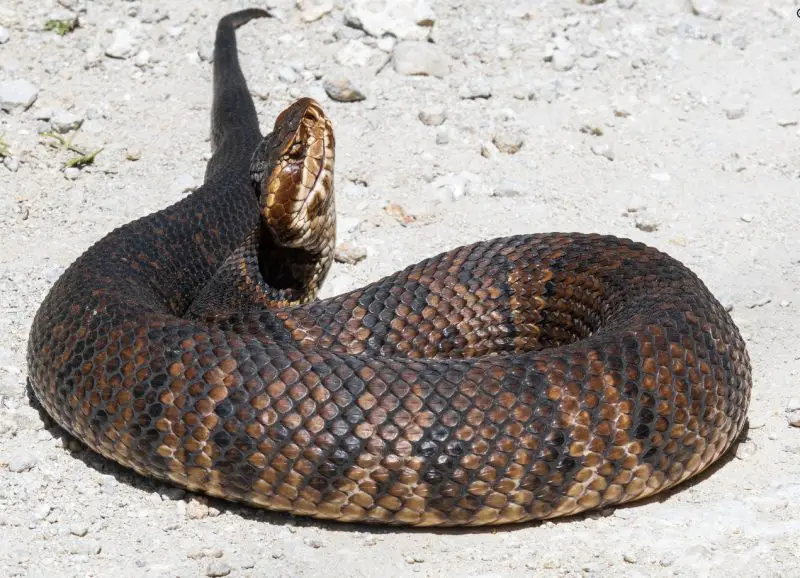
Water moccasins, often called cottonmouths, have long been surrounded by dramatic stories across the American South and parts of the Mid-Atlantic. In Virginia, especially in wetlands, river corridors, and coastal plain habitats, these snakes sometimes appear unexpectedly near people. That surprise alone often fuels rumors that they actively chase humans.
Many outdoor enthusiasts, anglers, hikers, and homeowners near wetlands have heard the claim at some point. Someone insists a snake followed them. Another recalls a close encounter near water. Over time, these accounts shape a reputation that may not fully reflect the snake’s actual behavior.
Understanding how water moccasins behave in Virginia’s ecosystems helps separate myth from biological reality. When you look closely at their ecology, movement patterns, and defensive instincts, the picture becomes far less alarming and far more logical.
Table of Contents
- 1 What Water Moccasins Actually Are
- 2 Do Water Moccasins Really Chase People?
- 3 Where Water Moccasins Live in Virginia
- 4 Why Encounters Feel Sudden
- 5 Behavior That Shapes Public Perception
- 6 Comparing Cottonmouths With Harmless Water Snakes
- 7 Are Water Moccasins Aggressive Toward Humans?
- 8 Ecological Role of Cottonmouths in Virginia
- 9 Human Expansion and Wildlife Interaction
- 10 Typical Encounter Scenarios
- 11 Practical Safety Tips
- 12 What To Do If You Encounter One
- 13 Understanding Venom Risk Realistically
- 14 Seasonal Patterns in Virginia
- 15 Why the Chasing Myth Persists
- 16 Climate Influence on Visibility
- 17 Identifying Real Risk Versus Perceived Risk
- 18 Living Safely Alongside Native Wildlife
- 19 FAQs About Water Moccasins in Virginia
- 19.1 Do water moccasins actually chase people?
- 19.2 Where are cottonmouths most common in Virginia?
- 19.3 Are they dangerous to humans?
- 19.4 How can I avoid encounters?
- 19.5 Are all water snakes in Virginia cottonmouths?
- 19.6 What should I do if bitten?
- 19.7 Do cottonmouths enter homes?
- 19.8 Are they protected wildlife?
- 20 Final Thoughts
What Water Moccasins Actually Are
Venomous Semi-Aquatic Pit Vipers
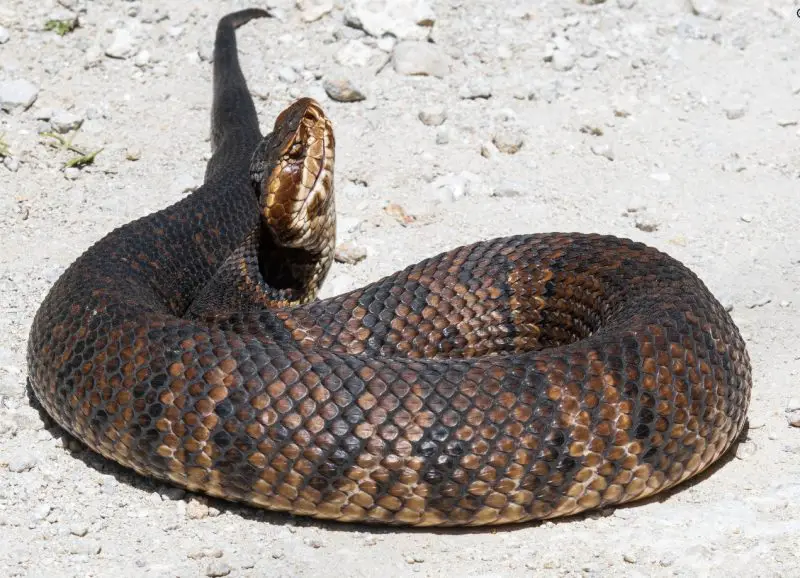
Water moccasins, commonly known as cottonmouths, belong to the pit viper family, a group that also includes rattlesnakes and copperheads. Their scientific name, Agkistrodon piscivorus, reflects their strong association with aquatic environments and fish-based diets. Like other pit vipers, they possess specialized heat-sensing pits located between the eyes and nostrils. These organs allow them to detect warm-blooded prey even in low light, giving them a significant hunting advantage during dawn, dusk, or nighttime conditions.
Physically, water moccasins are built for both land and water. Their bodies are thick and muscular, allowing efficient swimming and steady movement along muddy shorelines. Keeled scales reduce glare and improve camouflage, helping them blend into wetland vegetation, fallen logs, or shaded water edges. These traits are particularly useful in parts of Virginia where swamps, tidal marshes, slow rivers, and wetlands provide ideal habitat.
Unlike many terrestrial snakes, cottonmouths spend considerable time in aquatic settings. They often float with only the head visible, bask on partially submerged logs, or patrol shallow shoreline areas while searching for food. Their diet is highly varied and includes fish, frogs, rodents, birds, carrion, and occasionally other snakes. This ecological flexibility allows them to persist across diverse habitats and adapt to changing environmental conditions.
The Cottonmouth Warning Display
The name “cottonmouth” comes from the bright white interior lining of the snake’s mouth. When threatened, the snake may coil slightly and open its mouth wide, displaying that pale interior. This posture is frequently misunderstood as aggressive intent, yet biologically it functions as a defensive warning rather than a prelude to attack.
This display communicates discomfort and encourages potential predators, including humans, to maintain distance. Many animals instinctively recognize visual warning signals, and the cottonmouth display serves exactly that purpose. By advertising its defensive capability, the snake often avoids the need for physical confrontation altogether.
Humans sometimes interpret the behavior emotionally, especially when startled near water. However, field observations show that snakes performing this display typically prefer retreat once given space. Understanding this distinction helps reduce unnecessary fear and clarifies why bites are relatively uncommon compared with the number of encounters.
Do Water Moccasins Really Chase People?
Defensive Movement Often Misread
Reports of water moccasins “chasing” people usually stem from misunderstanding natural escape behavior. When startled, cottonmouths generally seek immediate refuge in water, thick vegetation, or shaded cover. These escape routes often follow predictable environmental gradients such as shoreline direction, vegetation density, or temperature differences.
If a person happens to stand between the snake and that refuge, the snake may move toward the same direction simply to escape. From the human perspective, this can feel intentional or threatening. Biologically, it represents avoidance rather than pursuit. Wildlife biologists consistently document this pattern during field observations.
Most encounters resolve quickly once a clear escape path becomes available. The perception of pursuit often disappears when observers step aside and allow the snake space to leave.
Energy Conservation Matters
Snakes operate under strict energy budgets. Hunting, digestion, and thermoregulation already demand significant physiological resources. Pursuing large animals such as humans would provide no nutritional benefit while increasing risk of injury or death.
Venom production itself requires metabolic energy. Using venom defensively without necessity would reduce future hunting efficiency. For this reason, snakes evolved behavioral strategies emphasizing avoidance over confrontation whenever possible.
From an evolutionary perspective, aggressive pursuit of humans would be counterproductive. Avoidance increases survival, which is why it remains the dominant behavioral response documented in wild populations.
Where Water Moccasins Live in Virginia
Coastal Plain and Wetland Habitats
Water moccasins in Virginia are primarily associated with southeastern coastal plain environments. These include tidal marshes, swamps, slow-moving rivers, oxbow lakes, and freshwater wetlands. Such habitats provide consistent water sources, dense vegetation for cover, and abundant prey populations.
Wetland ecosystems also offer essential basking sites where snakes regulate body temperature. Logs, mud banks, shoreline grasses, and floating vegetation create ideal thermoregulation platforms. Access to both sun and shade allows cottonmouths to maintain physiological balance.
Northern mountainous regions of Virginia tend to support fewer cottonmouths due to cooler climates, different vegetation patterns, and less suitable aquatic habitat structure.
Habitat Overlap With Human Activity
Fishing areas, kayaking routes, wildlife refuges, and suburban developments often overlap with wetland habitats. As residential growth expands toward scenic waterways, encounters with native wildlife naturally increase.
This does not necessarily indicate population growth or aggressive behavior. Often, it reflects increased proximity between human activity and long-established wildlife territories. Understanding this context helps explain why sightings sometimes seem more frequent.
Awareness of habitat overlap encourages realistic expectations rather than unnecessary alarm.
Why Encounters Feel Sudden
Seasonal Activity Patterns
Snake activity fluctuates seasonally. Spring warming stimulates movement after winter dormancy, prompting increased basking and feeding behavior. Summer heat may push snakes toward cooler shoreline areas or shaded vegetation where people also spend time.
Autumn dispersal before cooler weather can increase movement again. These natural seasonal cycles can create the impression of sudden population increases even when overall numbers remain stable.
Recognizing these cycles helps interpret sightings more accurately.
Human Outdoor Patterns
Peak outdoor recreation typically coincides with warmer months when snakes are most active. Fishing, hiking, boating, and wildlife observation increase during these periods, naturally raising the probability of encounters.
Greater human presence increases observation rates, not necessarily snake abundance. Understanding this distinction helps reduce exaggerated perceptions of risk.
Behavior That Shapes Public Perception
Freeze-Then-Move Response
Cottonmouths frequently rely on camouflage before movement. Remaining motionless reduces detection by predators. When a perceived threat approaches closely, the snake may suddenly move toward cover.
This abrupt motion can startle observers and appear aggressive. In reality, it represents a delayed escape strategy designed to minimize exposure while maintaining safety.
Recognizing this behavior reduces misinterpretation.
Warning Signals Before Biting
Cottonmouths typically display several defensive signals before resorting to biting. These may include coiling posture, mouth gaping, head elevation, tail vibration, or slow repositioning.
Such behaviors serve to prevent physical conflict. Most bites occur only when escape options are limited or when the snake is handled, stepped on, or cornered.
Understanding these warning signs improves safety and reduces unnecessary fear.
Comparing Cottonmouths With Harmless Water Snakes
Frequent Misidentification
Virginia hosts multiple non-venomous water snake species, particularly those in the genus Nerodia. These snakes share aquatic habitats and sometimes similar coloration, leading to frequent misidentification.
Harmless water snakes often flee rapidly toward water when startled. If that path happens to pass near a person, it can reinforce the myth of snakes chasing humans.
Accurate identification significantly reduces unnecessary alarm.
Key Identification Differences
Cottonmouths generally display heavier bodies, triangular heads, vertical pupils, and more subdued banding. They also perform the characteristic mouth-opening defensive display.
Non-venomous water snakes typically appear slimmer, with round pupils and more pronounced patterning. Behavioral differences also exist, though they can be subtle.
Observation from a safe distance is always recommended.
Are Water Moccasins Aggressive Toward Humans?
Scientific Evidence
Research consistently shows cottonmouths prefer avoidance. Documented bites usually involve accidental stepping, handling attempts, cornering, or deliberate provocation.
Unprovoked attacks remain extremely rare. Maintaining distance dramatically reduces risk.
Education about snake behavior often replaces fear with informed caution.
Venom Use in Context
Venom primarily aids prey capture rather than defense. Defensive bites occur only when escape fails. This biological reality explains why most encounters end without incident.
Awareness remains the most effective prevention strategy.
Ecological Role of Cottonmouths in Virginia
Predator Balance
Cottonmouths regulate populations of amphibians, fish, rodents, and other small animals. This helps maintain ecological balance in wetland ecosystems.
Predator presence supports vegetation health, disease control among prey species, and overall biodiversity stability.
Healthy wetlands often include functioning predator communities.
Scavenging Contribution
They also consume carrion, aiding nutrient cycling and reducing decomposition buildup. This ecological service, though less visible, supports wetland ecosystem health.
Human Expansion and Wildlife Interaction
Development Near Wetlands
Residential development near scenic waterways continues to increase in parts of Virginia. This expansion naturally raises wildlife encounter frequency.
In many cases, humans are moving into established wildlife habitat rather than wildlife moving toward people.
Understanding this dynamic encourages balanced coexistence.
Artificial Water Features
Stormwater ponds, decorative lakes, irrigation systems, and drainage canals create additional aquatic habitat. These environments attract prey species, indirectly attracting snakes.
Such infrastructure can unintentionally expand suitable habitat.
Typical Encounter Scenarios
Fishing Locations
Anglers frequently encounter cottonmouths because both occupy productive aquatic environments. Most snakes quietly retreat when approached.
Remaining calm prevents escalation.
Boating and Kayaking
Floating logs, vegetation mats, and shorelines serve as basking sites. Passing boats may startle snakes into water, which can appear sudden but reflects escape behavior.
Residential Wetland Edges
Homes near marshes, ponds, or creeks may occasionally see passing snakes. Movements typically relate to seasonal dispersal or prey tracking rather than attraction to humans.
Practical Safety Tips
Stay on clear paths near water.
Wear sturdy footwear outdoors.
Use flashlights at night.
Avoid reaching into concealed spaces.
Supervise pets near wetlands.
These precautions greatly reduce risk while allowing continued outdoor enjoyment.
What To Do If You Encounter One
Remain calm and avoid sudden movements. Slowly step back and allow the snake a clear escape route.
Never attempt to handle or kill it. Most encounters resolve peacefully once distance increases.
Observation from a safe distance poses minimal risk.
Understanding Venom Risk Realistically
Cottonmouth venom can cause pain, swelling, and tissue effects. Modern medical care greatly reduces serious outcomes when treatment is prompt.
Seeking immediate medical evaluation after any suspected bite remains essential.
Prevention through awareness is always preferable.
Seasonal Patterns in Virginia
Spring increases basking and feeding activity.
Summer supports peak movement.
Autumn may involve dispersal.
Mild coastal winters allow occasional activity.
Seasonal awareness helps anticipate encounters.
Why the Chasing Myth Persists
Unexpected wildlife encounters become memorable stories. Anecdotes spread rapidly through communities and social media, sometimes overshadowing scientific evidence.
Repeated storytelling reinforces myths even when data suggests otherwise.
Balanced education helps correct misconceptions.
Climate Influence on Visibility
Weather patterns affect prey populations, vegetation density, and water levels. These environmental factors influence snake movement.
Extended warm seasons may increase activity periods, shaping encounter frequency.
Understanding environmental context reduces unnecessary alarm.
Identifying Real Risk Versus Perceived Risk
Statistically, snake bites remain rare compared with many other outdoor hazards such as heat exposure, insect stings, or water accidents.
Perspective supports balanced caution rather than excessive fear.
Preparedness improves outdoor confidence.
Living Safely Alongside Native Wildlife
Education and awareness are central to coexistence. Understanding habitat, behavior, and seasonal patterns helps reduce conflict.
Wetlands are complex ecosystems where predators play vital roles. Responsible awareness benefits both wildlife and communities.
Knowledge replaces fear. And informed coexistence keeps both people and ecosystems safer.
FAQs About Water Moccasins in Virginia
Do water moccasins actually chase people?
No scientific evidence supports active pursuit. Apparent chasing usually reflects escape behavior toward water or cover.
Where are cottonmouths most common in Virginia?
They are primarily found in southeastern coastal plain wetlands, marshes, swamps, and slow rivers.
Are they dangerous to humans?
They are venomous but generally defensive. Most bites occur when snakes are handled or cornered.
How can I avoid encounters?
Stay on clear paths, watch where you step near water, and avoid disturbing vegetation.
Are all water snakes in Virginia cottonmouths?
No. Many harmless species resemble them. Proper identification helps reduce unnecessary fear.
What should I do if bitten?
Seek medical care immediately. Avoid home remedies and remain calm while awaiting treatment.
Do cottonmouths enter homes?
Rarely. Most sightings near homes involve nearby water features or natural habitat overlap.
Are they protected wildlife?
Regulations vary, but they are generally considered native wildlife with ecological importance.
Final Thoughts
Water moccasins in Virginia do not actively chase people. Most encounters reflect misunderstanding of natural escape behavior rather than aggression.
These snakes play valuable ecological roles in wetlands and aquatic ecosystems. Their presence often signals healthy habitat rather than danger.
With awareness, respectful distance, and accurate information, coexistence becomes straightforward. Understanding replaces fear, and outdoor spaces remain both safe and ecologically balanced.