
Stories about aggressive snakes tend to travel fast. Someone claims a snake chased them down a trail. Another insists a large water snake followed their kayak. Before long, rumors spread that water moccasins — also called cottonmouth snakes — are actively pursuing people in certain areas. Occasionally, these stories even surface in connection with New York State, raising concern among hikers, anglers, and outdoor enthusiasts.
But here is the key fact right away: true water moccasins do not live naturally in New York State. Reports of them chasing people there are almost always cases of mistaken identity, folklore, or misunderstanding snake behavior. Understanding the science behind snake behavior, species distribution, and human perception helps clarify why these stories persist.
This article explores whether water moccasins exist in New York, why people think snakes chase them, which species are actually present, and how to safely coexist with snakes in northeastern environments.
Table of Contents
- 1 What Exactly Is a Water Moccasin?
- 2 Do Water Moccasins Live in New York?
- 3 Why People Think They Are Being Chased
- 4 Snakes Commonly Mistaken for Cottonmouths in New York
- 5 Actual Snake Behavior Around Humans
- 6 Climate Limits for Cottonmouths
- 7 Why the Myth Persists
- 8 Are There Any Venomous Snakes in New York?
- 9 What To Do If You Encounter a Snake
- 10 Protecting Pets and Family
- 11 Ecological Role of Snakes
- 12 Psychological Fear vs. Reality
- 13 FAQs About Water Moccasins in New York
- 13.1 Do water moccasins live in New York?
- 13.2 Have any ever been found there?
- 13.3 Why do people think they are chased?
- 13.4 Are northern water snakes dangerous?
- 13.5 What venomous snakes live in New York?
- 13.6 Should hikers worry?
- 13.7 Can climate change bring cottonmouths north?
- 13.8 How to identify a cottonmouth?
- 13.9 What should I do if bitten?
- 13.10 Are snakes aggressive generally?
- 14 Conclusion
What Exactly Is a Water Moccasin?
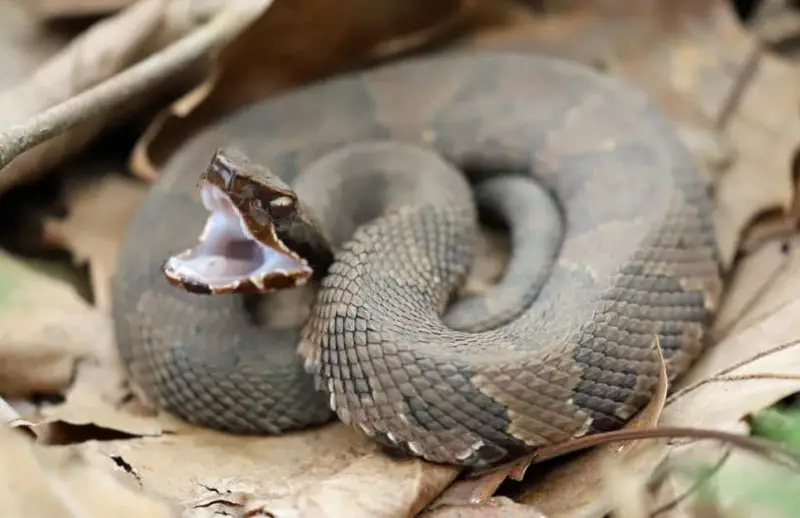
A venomous snake of the Southeast
Water moccasins, commonly called cottonmouth snakes, are semi-aquatic venomous snakes native mainly to the southeastern United States. They belong to the pit viper family, the same group that includes copperheads and rattlesnakes. These snakes are well adapted to wet environments and are often associated with swamps, marshes, slow rivers, ponds, and floodplain wetlands where prey is abundant.
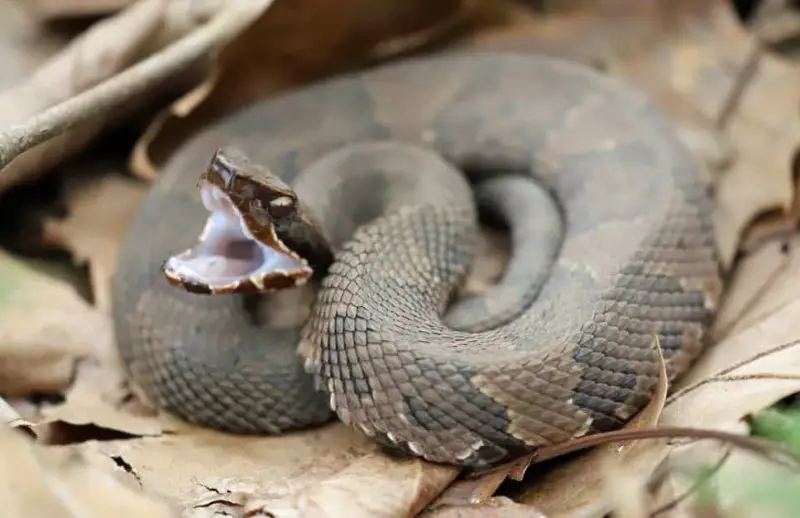
Their nickname “cottonmouth” comes from a distinctive defensive display. When threatened, they may open their mouth wide to reveal a bright white interior. This display acts as a warning signal rather than an attack posture. It is meant to discourage predators or perceived threats from approaching further.
Despite their reputation, cottonmouths generally prefer to avoid humans. Like most wildlife, they conserve energy by retreating rather than confronting large animals. Bites usually occur only when a snake is accidentally stepped on, handled, or cornered with no escape route.
Typical habitat range
Water moccasins are primarily found in warm southern climates. They are especially common in states such as Florida, Georgia, Alabama, Mississippi, Louisiana, eastern Texas, Arkansas, Tennessee, and the Carolinas. These regions provide the warm temperatures and wet habitats necessary for their survival.
Their natural distribution does not extend into New York State. The colder climate, especially harsh winters, presents significant challenges for a species adapted to warmer environments. Extended freezing periods can reduce survival rates dramatically, preventing stable populations from establishing further north.
Habitat differences also play a role. Southern wetlands often provide year-round suitable temperatures and prey availability, while northern ecosystems experience more pronounced seasonal shifts that limit cottonmouth expansion.
Do Water Moccasins Live in New York?
Scientific consensus: No
Wildlife surveys, herpetology research, and state environmental agencies consistently confirm that cottonmouth snakes are not native to New York. Verified breeding populations have never been documented in the state. Reports of sightings almost always involve misidentified native species.
Several nonvenomous snakes in New York share similar coloration or aquatic habits. People unfamiliar with local species may easily mistake these harmless snakes for cottonmouths, especially when encountering them unexpectedly near water.
Education about local wildlife significantly reduces these misidentifications. Understanding which species actually live in the region helps prevent unnecessary fear.
Rare escape or relocation cases
Occasionally, exotic pets escape or are intentionally released. In rare cases, a southern snake species might be found temporarily outside its normal range. However, surviving a full New York winter would be extremely difficult for a cottonmouth.
These isolated incidents do not represent established populations. Without suitable climate conditions and breeding opportunities, long-term survival is unlikely.
Therefore, even if a single individual appears briefly, it does not indicate that cottonmouths are becoming native to the region.
Why People Think They Are Being Chased
Defensive movement mistaken for pursuit
Snakes typically move toward water, dense vegetation, or underground shelter when startled. If a person happens to stand between the snake and its escape route, the snake may move in that direction. From the human perspective, this can look like chasing.
In reality, the snake is simply trying to reach safety. Its priority is escape, not confrontation. Snakes gain no advantage from pursuing humans, who are far larger and not potential prey.
Understanding escape behavior helps explain many reported “chasing” encounters.
Human perception and fear response
Fear strongly influences perception. When people are startled by a snake, adrenaline heightens awareness but can distort interpretation of movement. Rapid motion may feel threatening even when defensive.
The brain tends to prioritize survival cues, sometimes exaggerating perceived danger. Memories formed during stressful moments may later feel more dramatic than the actual event.
This psychological response contributes significantly to persistent snake myths.
Speed and sudden motion
Snakes can move quickly over short distances, particularly when startled. Sudden motion combined with surprise often leaves a strong impression.
Even brief movement toward a nearby hiding spot may feel like intentional pursuit. Over time, retelling the experience can further amplify the perceived threat.
Such exaggeration is common in wildlife storytelling.
Snakes Commonly Mistaken for Cottonmouths in New York
Northern water snakes
Northern water snakes are probably the most frequently misidentified species in New York. They inhabit lakes, rivers, ponds, streams, and wetlands throughout the state. Their dark coloration and aquatic habits often resemble those of cottonmouths to inexperienced observers.
These snakes are nonvenomous, though they may act defensively when threatened. They sometimes flatten their bodies, hiss, or strike if cornered, which can appear aggressive.
Despite their intimidating behavior, they pose little danger to humans and play a beneficial ecological role by controlling fish, amphibian, and rodent populations.
Eastern milk snakes
Milk snakes are another species occasionally mistaken for more dangerous snakes. Their patterned coloration may darken with age or under certain lighting conditions, leading to confusion.
They are harmless constrictors that help control rodent populations. Farmers and homeowners often benefit from their presence, even if they are not always welcomed initially.
Misidentification frequently occurs when people encounter them unexpectedly indoors or in barns.
Black rat snakes
Large black rat snakes can appear intimidating due to their size and glossy dark coloration. They are excellent climbers and sometimes enter barns, attics, or wooded yards in search of rodents.
Despite their size, they are nonvenomous and generally shy. Most encounters end with the snake retreating once it senses human presence.
Their appearance often triggers unnecessary alarm because of mistaken assumptions about venomous species.
Actual Snake Behavior Around Humans
Avoidance is the primary instinct
Most snakes, whether venomous or harmless, prefer to avoid humans whenever possible. Humans represent a large potential threat, not prey. Retreat conserves energy and reduces injury risk.
Snakes rely on camouflage and stealth. Confrontation would expose them to danger without benefit.
Thus, avoidance remains their primary behavioral strategy.
Defensive displays
When escape is impossible, snakes may display defensive behaviors. These include flattening the body, vibrating the tail, hissing, or opening the mouth. These actions are warnings rather than attacks.
The goal is to persuade the perceived threat to back away. Physical contact usually occurs only if the threat continues.
Recognizing these displays helps reduce unnecessary panic.
Bites as last resort
Snake bites typically occur under specific circumstances:
Accidental stepping on a snake
Attempting to handle or capture it
Cornering it without escape
Intentional provocation
Unprovoked bites are extremely rare. Awareness and caution prevent most incidents.
Climate Limits for Cottonmouths
Cold intolerance
Cottonmouth snakes are adapted to warm southern climates. Extended freezing temperatures challenge their metabolism, hibernation patterns, and overall survival.
New York winters often exceed their tolerance limits. Sustained cold periods make long-term population establishment unlikely.
Climate remains a major natural barrier to northward expansion.
Habitat differences
Southern wetlands provide year-round suitable temperatures, stable prey availability, and appropriate vegetation. Northern ecosystems experience stronger seasonal fluctuations that limit species adapted to warm climates.
These ecological differences help explain why cottonmouths remain primarily southern reptiles.
Why the Myth Persists
Cultural storytelling
Snake encounters often become exaggerated through retelling. Each retelling may add dramatic details, gradually transforming ordinary events into frightening stories.
These narratives persist across generations and communities.
Internet misinformation
Photos or videos taken in southern states are sometimes misattributed to northern locations online. Social media spreads such misinformation rapidly, fueling confusion.
Without context, viewers may assume the species exists locally.
Visual similarity among species
Dark, aquatic snakes resemble cottonmouths superficially. Lighting, distance, and observer experience influence identification accuracy.
Misidentification reinforces persistent myths about snake presence.
Are There Any Venomous Snakes in New York?
Yes, but not cottonmouths
New York does have a few native venomous snakes, including timber rattlesnakes, eastern massasauga rattlesnakes, and northern copperheads. These species are relatively rare and generally avoid human contact.
Knowing which species are actually present improves outdoor safety without promoting unnecessary fear.
Conservation considerations
Some venomous snakes in New York face population pressures due to habitat loss and human persecution. Conservation efforts aim to protect these species while educating the public about coexistence.
Accurate knowledge supports both safety and conservation goals.
What To Do If You Encounter a Snake
Stay calm and give space
Most snake encounters end safely if you remain calm, step back slowly, and allow the snake a clear escape route. Sudden movements may increase stress for both human and animal.
Do not attempt handling
Many snake bites occur when people try to capture or kill snakes. Observing from a distance is safest. Respecting wildlife boundaries prevents unnecessary conflict.
Learn identification basics
Familiarity with common local snake species reduces fear. Field guides, educational programs, and wildlife resources help improve identification skills.
Knowledge replaces uncertainty with confidence.
Protecting Pets and Family
Yard management
Keeping grass trimmed, removing brush piles, and minimizing rodent attractants can reduce snake presence near homes. Habitat management is often the most effective deterrent.
Supervise pets outdoors
Pets may provoke snakes unintentionally. Supervision reduces risk and helps prevent unnecessary encounters.
Ecological Role of Snakes
Natural pest control
Snakes play an important role in controlling rodent populations. This benefits agriculture, ecosystems, and human health indirectly.
Biodiversity importance
Snakes are key components of food webs. They serve both as predators and prey, contributing to ecological balance. Protecting biodiversity supports healthy ecosystems.
Psychological Fear vs. Reality
Evolutionary fear response
Humans evolved caution toward snakes, which historically improved survival. This instinct remains strong even when actual risk is low.
Understanding biology helps balance instinctive fear with scientific knowledge.
Education reduces anxiety
Learning about snake behavior, distribution, and ecology reduces panic. Familiarity encourages calm, respectful coexistence with wildlife.
Most encounters with snakes are harmless and brief.
FAQs About Water Moccasins in New York
Do water moccasins live in New York?
No, established populations are not documented.
Have any ever been found there?
Rare escaped pets may occur, but not wild populations.
Why do people think they are chased?
Misinterpretation of defensive movement.
Are northern water snakes dangerous?
They are nonvenomous but may bite defensively.
What venomous snakes live in New York?
Primarily rattlesnakes and copperheads.
Should hikers worry?
Basic awareness is sufficient.
Can climate change bring cottonmouths north?
Possible long-term shifts, but currently unlikely.
How to identify a cottonmouth?
Regional location is key — not found in NY.
What should I do if bitten?
Seek medical attention immediately.
Are snakes aggressive generally?
Most avoid humans whenever possible.
Conclusion
Water moccasins do not naturally live in New York State, and credible evidence does not support claims of them chasing people there. Most sightings involve harmless native species, especially northern water snakes, whose defensive movements can be misunderstood as aggression.
Snakes play essential ecological roles and generally prefer to avoid human interaction. Education, awareness, and calm behavior during encounters significantly reduce risk.
Understanding the difference between myth and biology helps replace fear with informed respect. In New York’s diverse landscapes, snakes remain an important but often misunderstood part of the natural environment — rarely dangerous, almost never aggressive, and certainly not pursuing people intentionally.