

Stories about aggressive snakes have circulated for generations, especially in regions where wetlands, rivers, and wooded landscapes bring humans closer to wildlife. In eastern Kansas, rumors about water moccasins chasing people often surface during fishing trips, hikes, or backyard sightings near water. These accounts can sound alarming, especially to residents unfamiliar with snake behavior, but separating fact from folklore requires looking closely at biology, geography, and documented wildlife research.
Many people assume any large water snake in Kansas must be a cottonmouth, another name for the water moccasin. The truth is more nuanced. Species distribution maps, herpetological surveys, and regional wildlife data paint a different picture. Understanding where these snakes actually live and how they behave helps reduce unnecessary fear while improving safety awareness around native wildlife.
The reality is that snake encounters are usually brief, defensive, and avoidable. When myths spread without context, they can create exaggerated perceptions of risk. By examining habitat patterns, identification challenges, and snake behavior, it becomes easier to understand whether water moccasins truly chase people in eastern Kansas or whether the idea reflects misunderstanding rather than reality.
Table of Contents
- 1 Are Water Moccasins Actually Found in Eastern Kansas
- 2 Why People Still Believe They Are Present
- 3 Do Cottonmouths Chase Humans Anywhere
- 4 Defensive Displays Can Be Misinterpreted
- 5 Eastern Kansas Habitat Encourages Snake Encounters
- 6 Common Look-Alike Species in Eastern Kansas
- 7 Seasonal Patterns Influence Sightings
- 8 Human Behavior Shapes Encounter Outcomes
- 9 Ecological Benefits of Aquatic Snakes
- 10 Cultural Roots of the Chasing Snake Myth
- 11 Scientific Research on Snake Aggression
- 12 Education Reduces Fear
- 13 When Snake Concerns Should Be Taken Seriously
- 14 Future Distribution Possibilities
- 15 FAQs About Water Moccasins in Eastern Kansas
- 15.1 Do water moccasins live in eastern Kansas
- 15.2 Why do people think they chase humans
- 15.3 Are water snakes in Kansas dangerous
- 15.4 What should I do if I see a water snake
- 15.5 Can climate change bring cottonmouths north
- 15.6 Are snake bites common in Kansas
- 15.7 How can I identify a cottonmouth
- 15.8 Should I worry about snakes near water
- 16 Final Thoughts
Are Water Moccasins Actually Found in Eastern Kansas
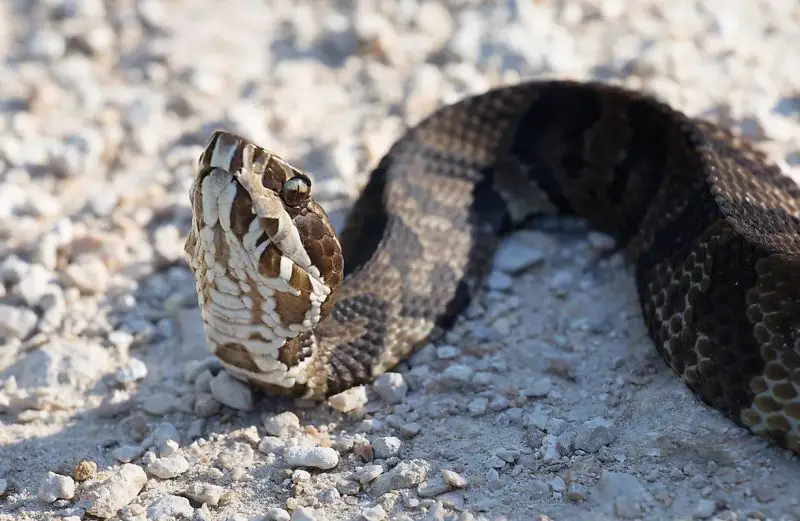
Water moccasins, scientifically known as Agkistrodon piscivorus, are primarily associated with the southeastern United States where warm winters, wetlands, slow-moving waterways, and abundant prey provide ideal conditions. Their core range includes states such as Texas, Louisiana, Mississippi, Alabama, Florida, Georgia, the Carolinas, Arkansas, and portions of Tennessee and southern Missouri. These areas offer the climate stability and habitat continuity that allow cottonmouth populations to persist year-round.
Kansas sits near the outer edge of many reptile distribution zones, and eastern Kansas in particular shares some habitat characteristics with neighboring southern states. However, confirmed established populations of water moccasins there remain extremely unlikely. Most wildlife agencies, academic herpetology surveys, and field research databases report no verified breeding populations in eastern Kansas. Occasional reports still surface, but they typically involve misidentified native water snakes rather than true cottonmouths.
The region does host several aquatic snake species that strongly resemble cottonmouths at a glance. Northern water snakes and plain-bellied water snakes are especially common along rivers, lakes, and wetlands. Their coloration can range from brown to nearly black, and they often display similar swimming posture and defensive behavior. In low light, murky water, or dense vegetation, distinguishing features become harder to see. This visual similarity explains why persistent regional myths continue even without scientific confirmation.
Why People Still Believe They Are Present
Human perception often fills gaps in biological knowledge with familiar expectations. Wetlands, marshes, and riverbanks naturally evoke caution because they host diverse wildlife. When people encounter a large snake near water, many instinctively assume it must be venomous, even when nonvenomous species are far more common locally.
Storytelling reinforces this assumption over time. A single misidentified sighting can evolve into regional folklore, repeated across generations. Hunters, anglers, farmers, and outdoor enthusiasts sometimes share cautionary stories to promote awareness, but details can gradually shift away from biological accuracy. These narratives often become accepted truths simply through repetition.
Modern media accelerates this process. Social media posts, dramatic photographs, and anecdotal reports spread quickly, often without verification. Once labeled as a cottonmouth, an image or story can circulate widely. Corrections rarely gain the same visibility, allowing perception to outweigh scientific evidence.
Do Cottonmouths Chase Humans Anywhere
Even in areas where water moccasins genuinely occur, wildlife research consistently shows they rarely pursue humans intentionally. Snakes prioritize survival efficiency, and confrontation with large mammals typically represents risk rather than opportunity. Venom production requires energy, and injury during conflict could threaten a snake’s survival.
Situations often interpreted as chasing usually involve misunderstandings. A snake moving toward water while a person walks in the same direction can appear to be pursuit. Escape routes sometimes align with human movement, especially along narrow shorelines or trails. Defensive repositioning when cornered may also give the impression of following behavior.
Herpetologists observing snake behavior in the wild report that most snakes attempt escape whenever possible. Investigative movement triggered by vibrations, footsteps, or sudden motion can look like pursuit but typically reflects curiosity or defensive awareness rather than aggression.
Defensive Displays Can Be Misinterpreted
Cottonmouths and many nonvenomous water snakes use defensive displays intended to deter predators without physical confrontation. These behaviors can include opening the mouth widely to reveal a pale interior, vibrating the tail, flattening the body, or briefly holding ground before retreating.
To unfamiliar observers, such displays may appear aggressive or threatening. If a person continues approaching, the snake may reposition repeatedly to maintain a safe distance. This movement can create the illusion that the snake is following or chasing when it is actually attempting to manage perceived threat distance.
Recognizing these signals helps reduce unnecessary fear. Defensive behavior is a warning, not an invitation to conflict.
Eastern Kansas Habitat Encourages Snake Encounters
Eastern Kansas features rivers, reservoirs, wetlands, agricultural irrigation channels, and wooded riparian corridors. These environments support abundant aquatic wildlife, including several snake species adapted to water habitats. Even without cottonmouths, such environments naturally produce frequent snake sightings.
Warm summer temperatures increase reptile activity. Recreational activities like fishing, boating, hiking, and farming place people in the same habitats where snakes forage or bask. Increased human presence naturally leads to more encounters without necessarily increasing actual risk.
Environmental factors influencing snake visibility include shoreline vegetation, driftwood accumulations, muddy banks, seasonal flooding, and fluctuating prey populations. These habitat dynamics can make snakes more visible at certain times of year.
Common Look-Alike Species in Eastern Kansas
Northern water snakes are among the most commonly misidentified species. Their coloration varies widely, sometimes appearing nearly identical to cottonmouths. They are strong swimmers and may briefly hold position when disturbed, reinforcing mistaken assumptions about aggression.
Plain-bellied water snakes also inhabit the region. Their darker dorsal coloration and lighter undersides can resemble cottonmouth patterns under certain lighting conditions. Juveniles of several species may display especially confusing markings.
Although these snakes are nonvenomous, they play important ecological roles. They help regulate fish, amphibian, and rodent populations, contributing to wetland ecosystem balance. Misidentification can lead to unnecessary fear or harm toward beneficial wildlife.
Seasonal Patterns Influence Sightings
Snake encounters generally increase during warmer months when reptiles become more active metabolically. Spring emergence from winter dormancy, summer feeding activity, and fall basking periods all contribute to increased visibility.
Outdoor recreation also peaks during these seasons. More people spending time near lakes, rivers, and fields naturally results in more sightings. This does not necessarily indicate population growth.
Extreme weather conditions such as flooding, drought, or heat waves can temporarily alter movement patterns. Unusual sightings during such events sometimes reinforce myths about species presence.
Human Behavior Shapes Encounter Outcomes
Many snake incidents involve human actions that unintentionally increase risk. Approaching wildlife too closely, attempting capture, or disturbing natural habitat can provoke defensive responses.
Maintaining distance, remaining calm, supervising pets, and being mindful near water edges significantly reduce risk. Most snakes avoid confrontation when given space.
Respectful observation supports safe coexistence.
Ecological Benefits of Aquatic Snakes
Aquatic snakes contribute to ecosystem stability by regulating prey populations. Fish, amphibians, insects, and small mammals all form part of their diet. Balanced predator populations help maintain wetland health and biodiversity.
Predator presence often indicates functioning ecosystems. Removing snakes unnecessarily can disrupt ecological balance and produce unintended environmental consequences.
Cultural Roots of the Chasing Snake Myth
Stories of aggressive snakes appear across many cultures. Historically, cautionary tales helped communities remain alert in potentially hazardous environments. Over time, these warnings sometimes evolved into exaggerated narratives.
In North America, cottonmouths became symbolic of swamp danger in literature, folklore, and outdoor storytelling. These cultural associations continue influencing perception even in regions outside their natural range.
Scientific Research on Snake Aggression
Behavioral research consistently shows low aggression toward humans unless snakes feel threatened. Most bites occur during handling, harassment, or accidental contact rather than unprovoked pursuit.
Field telemetry and observational studies demonstrate that snakes typically prioritize escape routes when available. This scientific consensus supports the conclusion that chasing behavior largely reflects misunderstanding.
Education Reduces Fear
Accurate wildlife education helps communities respond calmly and safely. Learning species identification, habitat distribution, and behavioral patterns reduces unnecessary anxiety.
Wildlife agencies, conservation groups, and educational programs play important roles in promoting coexistence. Knowledge encourages balanced perspectives.
When Snake Concerns Should Be Taken Seriously
Even though cottonmouths are unlikely in eastern Kansas, caution remains appropriate around any unidentified snake. Frequent sightings near homes, indoor encounters, or uncertainty about species identification may warrant professional guidance.
Wildlife authorities can assist with identification and safe management when necessary.
Future Distribution Possibilities
Climate change, habitat modification, and wildlife movement patterns may influence species distribution over time. Some reptiles gradually expand northward under favorable conditions.
However, stable colonization requires suitable winter survival conditions, continuous habitat, and sufficient prey. Current evidence still indicates eastern Kansas lies outside typical cottonmouth range, though monitoring continues.
FAQs About Water Moccasins in Eastern Kansas
Do water moccasins live in eastern Kansas
No confirmed established populations exist. Most sightings involve nonvenomous water snakes.
Why do people think they chase humans
Misinterpretation of defensive behavior and local folklore often create that impression.
Are water snakes in Kansas dangerous
Most aquatic snakes there are nonvenomous and avoid people when possible.
What should I do if I see a water snake
Keep distance, stay calm, and allow the snake an escape route.
Can climate change bring cottonmouths north
Possible long term shifts exist, but stable populations currently remain unlikely.
Are snake bites common in Kansas
Serious bites are rare and usually involve accidental contact or handling.
How can I identify a cottonmouth
Professional identification is best, as many species resemble each other.
Should I worry about snakes near water
Awareness is wise, but most encounters are harmless when distance is maintained.
Final Thoughts
Reports of water moccasins chasing people in eastern Kansas largely stem from misidentification, folklore, and misunderstanding of snake behavior rather than confirmed wildlife evidence. Cottonmouths rarely inhabit the region, and even where they do occur, intentional pursuit of humans remains biologically unlikely.
Understanding habitat patterns, species identification, and defensive behavior helps replace fear with informed awareness. Respectful coexistence, cautious outdoor practices, and continued wildlife education support both human safety and ecological balance.
Knowledge transforms uncertainty into confidence. With accurate information, encounters with aquatic snakes can remain moments of curiosity rather than sources of anxiety.