
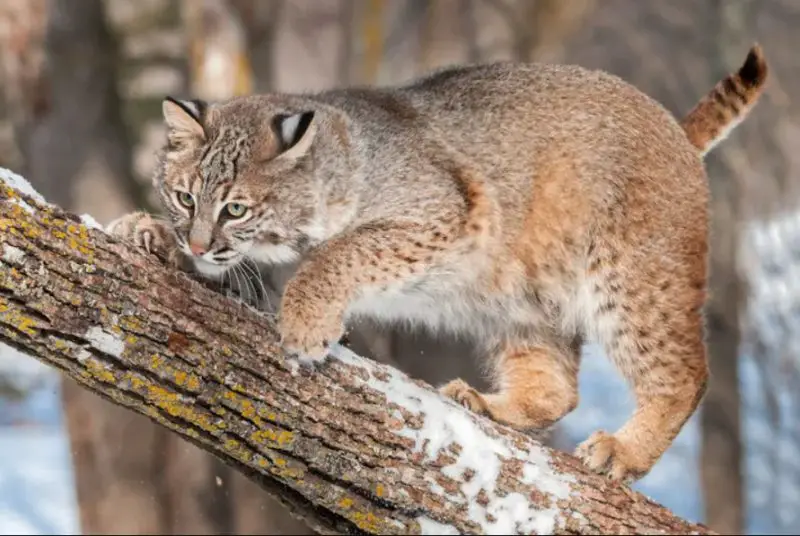
Bobcats have quietly become one of Michigan’s most successful wild predators. They move through forests, wetlands, farmland edges, and even suburban greenbelts with remarkable stealth. Most residents rarely see them directly, yet trail cameras and wildlife surveys confirm their presence across much of the state.
At the same time, domestic cats are everywhere in Michigan. Some live indoors, others roam freely outdoors, and feral colonies exist in both rural and urban areas. Because these two felines sometimes share the same landscapes, a persistent question continues to surface: can bobcats and domestic cats actually breed together?
The short answer is that while the idea fascinates many people, confirmed hybridization between bobcats and domestic cats in the wild is extremely rare and widely considered biologically unlikely. Understanding why requires looking at genetics, behavior, habitat overlap, and common wildlife misconceptions.
Table of Contents
- 1 Bobcats in Michigan: Distribution and Habitat
- 2 Domestic Cats Across Michigan Landscapes
- 3 Genetic Compatibility Between Bobcats and Domestic Cats
- 4 Behavioral Barriers That Limit Hybridization
- 5 Scientific Evidence About Hybridization
- 6 Why Hybrid Myths Persist in Michigan
- 7 Predation Versus Hybridization
- 8 Identifying Bobcats Versus Domestic Cats
- 9 Ecological Importance of Bobcats in Michigan
- 10 Human Expansion and Wildlife Interaction
- 11 Protecting Domestic Cats in Bobcat Areas
- 12 Conservation and Public Education
- 13 Long-Term Outlook for Bobcats in Michigan
- 14 FAQs About Bobcats and Domestic Cats in Michigan
- 14.1 Do bobcats commonly breed with domestic cats in Michigan?
- 14.2 Can bobcats attack domestic cats?
- 14.3 How can I tell if I saw a bobcat or a large house cat?
- 14.4 Are bobcats dangerous to humans?
- 14.5 Why do people think hybrids exist?
- 14.6 Should outdoor cats be supervised in bobcat areas?
- 14.7 Do wildlife agencies monitor bobcats?
- 14.8 Is hybridization harmful if it occurs?
- 15 Final Thoughts
Bobcats in Michigan: Distribution and Habitat
Statewide Presence
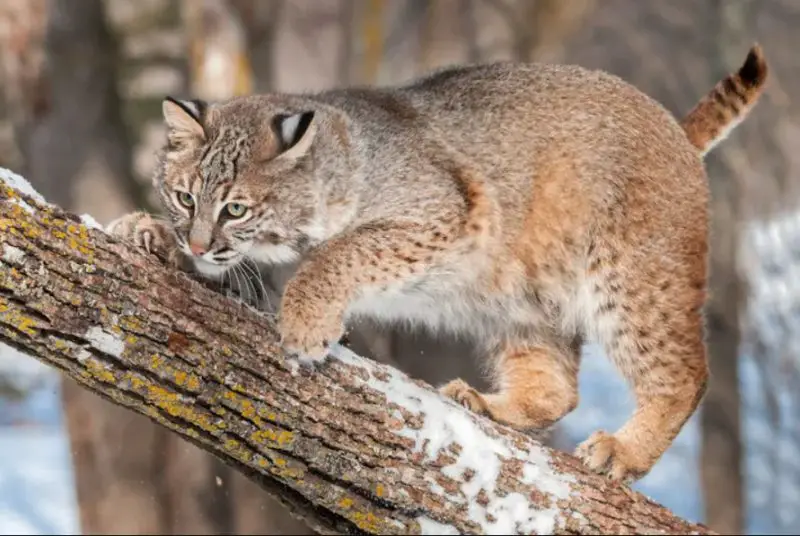
Bobcats now occupy much of Michigan, from the dense forests of the Upper Peninsula to large portions of the northern Lower Peninsula, with gradual expansion reported farther south in recent years. Forests, wetlands, brushlands, agricultural edges, and river corridors all provide suitable conditions. These environments offer prey abundance, denning cover, and relatively low human disturbance compared with highly urbanized zones.
They tend to favor landscapes where thick vegetation, fallen timber, rocky outcrops, or brushy terrain allow stealth hunting. Wetlands and forest edges are particularly productive because they support rabbits, rodents, birds, and other small prey. Such transitional habitats often act as core bobcat territories.
Despite this broad distribution, bobcats remain difficult to observe directly. Their activity peaks at dawn, dusk, and nighttime hours, and their camouflage allows them to blend easily with forest shadows. As a result, many Michigan residents live near bobcats without realizing it.
Adaptability Near Human Development
Michigan’s expanding suburbs have created patchwork landscapes where natural habitat intersects with residential development. Bobcats have demonstrated surprising adaptability in these areas when prey remains available.
Suburban greenbelts, wooded backyards, drainage corridors, and farmland edges can support small bobcat populations. Their presence in such locations does not necessarily indicate population growth or increased aggression. More often, it reflects habitat overlap as housing spreads into previously undeveloped areas.
This growing overlap naturally raises questions about interactions with pets, particularly outdoor domestic cats. Curiosity about potential hybridization often begins with simple wildlife sightings near residential neighborhoods.
Domestic Cats Across Michigan Landscapes
Outdoor Pets and Feral Populations
Domestic cats are widespread throughout Michigan in several forms. Some are household pets allowed outdoor access, while others serve as barn cats on farms and ranches. Free roaming neighborhood cats and established feral colonies also exist in both rural and urban environments.
Many of these cats occupy habitats similar to those used by bobcats. Wooded edges, wetlands, farmland margins, and suburban green spaces provide shelter and hunting opportunities. This ecological overlap increases the chances of encounters, though it does not necessarily imply breeding interaction.
Feral cats in particular function as independent predators. They hunt rodents, birds, reptiles, and insects, often filling ecological niches similar to smaller wild carnivores. This overlap sometimes fuels speculation about hybrid ancestry when unusual individuals are observed.
Visual Diversity and Misidentification
Domestic cats show extraordinary variation in coat color, size, fur thickness, and body shape. Outdoor survival can make feral cats appear more muscular, weathered, or wild looking than typical indoor pets.
This diversity often leads to misidentification. Large feral cats with shortened tails, thick winter coats, or unusual markings are sometimes mistaken for bobcat hybrids. Lighting conditions, distance, and brief sightings can easily distort perception.
In many cases, animals initially assumed to be hybrids are simply domestic cats displaying natural variation. Accurate identification often requires careful observation or genetic testing rather than visual impression alone.
Genetic Compatibility Between Bobcats and Domestic Cats
Different Genera Within the Cat Family
Bobcats belong to the species Lynx rufus within the genus Lynx, while domestic cats belong to Felis catus within the genus Felis. Although both are members of the broader cat family Felidae, their evolutionary paths diverged millions of years ago.
This divergence affects reproductive physiology, courtship behavior, genetic compatibility, and embryonic development. Hybridization among felines tends to occur more readily between species within the same genus. Bobcats and domestic cats do not share that close relationship.
As a result, successful interbreeding faces significant biological barriers. Even if mating attempts occurred, genetic differences could prevent viable offspring.
Chromosome Similarity Does Not Guarantee Breeding
Some discussions emphasize that both species have similar chromosome counts, suggesting hybridization might be possible. However, chromosome number alone does not determine compatibility.
Gene arrangement, hormonal timing, behavioral cues, and embryonic development processes all influence whether reproduction succeeds. Small genetic mismatches can prevent fertilization or cause developmental failure.
To date, scientific research has not confirmed stable wild populations of bobcat domestic cat hybrids. Genetic analysis remains the only reliable method for verifying hybrid ancestry.
Behavioral Barriers That Limit Hybridization
Territorial Instincts
Bobcats maintain defined territories marked through scent, scratching, and visual signals. These territories help regulate population density and reduce conflict with other predators.
Domestic cats also establish territories, though typically on a smaller scale. When a bobcat encounters a domestic cat, it is far more likely to perceive it as prey or competition rather than a potential mate.
Territorial behavior alone significantly reduces the likelihood of breeding interaction between the two species.
Differences in Breeding Cycles
Bobcats generally breed once annually, most often in late winter. Domestic cats, especially those not spayed or neutered, can breed multiple times per year depending on environmental conditions.
This mismatch in reproductive timing limits opportunities for mating encounters even where habitats overlap. Seasonal breeding patterns act as a natural barrier to hybridization.
Communication Differences
Feline courtship involves scent marking, vocalization patterns, body posture, and subtle behavioral signals.
Bobcats and domestic cats use related but distinct communication systems. These differences reduce mutual recognition during breeding season, making successful mating less likely.
Scientific Evidence About Hybridization
Lack of Verified Wild Hybrids
Most wildlife biologists agree that confirmed bobcat domestic cat hybrids in the wild are extremely rare or unsupported by consistent evidence. Many animals initially labeled as hybrids are later identified as something else.
Common explanations include large feral domestic cats, juvenile bobcats misidentified from a distance, domestic cats with unusual coat patterns, or other wildlife seen briefly.
Genetic testing remains essential for confirmation, and widespread hybrid populations have not been documented.
Captive Breeding Attempts
Occasional historical reports describe captive breeding attempts between bobcats and domestic cats. Results were inconsistent, and viable offspring were rarely produced. Stable hybrid lines were not established.
These findings suggest that natural hybridization in the wild faces even greater challenges due to uncontrolled conditions, behavioral barriers, and environmental factors.
Why Hybrid Myths Persist in Michigan
Misidentification in Natural Settings
Wildlife sightings often occur in low light or dense vegetation. Movement, distance, and environmental conditions can distort perception.
A bobcat glimpsed briefly may appear smaller or larger than expected. A feral domestic cat living outdoors may appear unusually rugged. Human memory sometimes fills gaps with assumptions, reinforcing hybrid speculation.
Social Media Amplification
Photos and videos of unusual animals spread rapidly online. Once labeled as hybrids, images often circulate widely without verification. Repetition can make rare or unsupported claims seem common.
Digital storytelling accelerates wildlife myths faster than scientific evidence can correct them.
Human Fascination With Hybrids
Hybrid animals capture public imagination. The idea of wild and domestic species interbreeding sparks curiosity and discussion. This fascination helps sustain rumors even when biological evidence remains limited.
Predation Versus Hybridization
Natural Predator Prey Dynamics
Bobcats primarily hunt rabbits, rodents, birds, and other small mammals. Very small domestic cats left outdoors unsupervised may occasionally be vulnerable, particularly at night.
This represents predator prey interaction rather than breeding behavior. Distinguishing between these scenarios helps clarify public concerns.
Territorial Encounters More Common
Adult domestic cats sometimes encounter bobcats near shared hunting areas. Most bobcats avoid confrontation unless cornered or protecting offspring.
Such encounters rarely involve mating attempts. Territorial avoidance remains the dominant behavior.
Identifying Bobcats Versus Domestic Cats
Physical Identification Clues
Typical bobcat features include a short bobbed tail with a dark tip, tufted ears, spotted or mottled coat patterns, longer hind legs relative to body size, and prominent facial ruffs.
Domestic cats may share individual traits but seldom display the full combination. Careful observation often clarifies identification.
Behavioral Indicators
Bobcats move cautiously, frequently staying near cover and avoiding prolonged exposure. Domestic cats often appear more relaxed around human environments.
Movement patterns, posture, and response to disturbance often provide clearer identification than coloration alone.
Ecological Importance of Bobcats in Michigan
Predator Balance
Bobcats help regulate populations of rodents, rabbits, and other small mammals. This contributes to agricultural protection, forest regeneration, and disease control among prey species.
Balanced predator populations strengthen ecosystem stability and biodiversity.
Biodiversity Contributions
As mid sized predators, bobcats influence prey behavior and distribution. These indirect effects shape vegetation patterns and ecological balance.
Healthy bobcat populations often indicate functioning habitat conditions.
Human Expansion and Wildlife Interaction
Development Into Natural Habitat
Suburban growth continues to expand into wooded areas, wetlands, and agricultural landscapes across Michigan. Wildlife sightings increase naturally when people build closer to established habitat.
Bobcats are not necessarily moving toward humans. Often, humans are moving toward existing wildlife territories.
Attractants Around Homes
Outdoor pet food, unsecured garbage, rodent infestations, dense landscaping, and water features can attract prey species, indirectly drawing predators.
Managing these attractants helps reduce wildlife encounters.
Protecting Domestic Cats in Bobcat Areas
Indoor Living Benefits
Indoor cats generally live longer and face fewer hazards such as predators, vehicles, disease exposure, and extreme weather. Indoor housing also protects native wildlife from domestic predation.
Supervised Outdoor Access
If outdoor access is desired, supervised yard time, enclosed patios, nighttime indoor housing, and avoiding outdoor feeding can significantly reduce risk.
Responsible pet management supports coexistence between wildlife and domestic animals.
Conservation and Public Education
Importance of Accurate Information
Misunderstanding wildlife behavior can lead to unnecessary fear or inappropriate management actions. Accurate information supports coexistence, conservation goals, and public safety.
Community Reporting Helps Science
Public wildlife sightings provide useful data when responsibly reported. Wildlife agencies combine these reports with surveys, camera traps, and genetic studies to monitor populations effectively.
Reliable information improves long-term wildlife management.
Long-Term Outlook for Bobcats in Michigan
Bobcat populations in Michigan appear stable or gradually increasing where habitat remains suitable. Continued habitat connectivity, prey availability, and responsible land management will shape future trends.
Current scientific evidence suggests hybridization with domestic cats will remain extremely rare and unlikely to significantly affect ecosystems.
With informed awareness, responsible pet ownership, and ongoing conservation efforts, coexistence between people, domestic animals, and native bobcats remains entirely achievable.
FAQs About Bobcats and Domestic Cats in Michigan
Do bobcats commonly breed with domestic cats in Michigan?
No confirmed widespread hybrid populations exist. Most evidence suggests hybridization is extremely rare or biologically unlikely.
Can bobcats attack domestic cats?
Small unsupervised pets may occasionally be vulnerable, especially at night, but such events are uncommon.
How can I tell if I saw a bobcat or a large house cat?
Look for a short bobbed tail, ear tufts, spotted coat, and cautious movement. These traits usually indicate a bobcat.
Are bobcats dangerous to humans?
Attacks on humans are extremely rare. Bobcats typically avoid people.
Why do people think hybrids exist?
Misidentification, unusual feral cats, and social media stories often contribute to hybrid myths.
Should outdoor cats be supervised in bobcat areas?
Yes. Supervision, indoor housing at night, or enclosed outdoor spaces greatly reduce risk.
Do wildlife agencies monitor bobcats?
Yes. Surveys, camera traps, and genetic studies help track populations and ecological trends.
Is hybridization harmful if it occurs?
Occasional hybridization has minimal ecological impact, but current evidence suggests it remains rare.
Final Thoughts
Bobcats have become a quiet but important part of Michigan’s wildlife landscape. Their adaptability allows them to thrive across forests, wetlands, farmland edges, and even suburban green spaces. Meanwhile, domestic cats remain widespread companions that sometimes share these environments.
Despite curiosity and occasional rumors, scientific evidence strongly suggests that bobcats rarely, if ever, breed with domestic cats in the wild. Genetic differences, behavioral barriers, territorial instincts, and reproductive timing all work against frequent hybridization.
Understanding these realities helps shift the conversation from myth to informed coexistence. With responsible pet ownership, habitat awareness, and continued wildlife education, humans, domestic animals, and native predators can share Michigan landscapes safely and sustainably.