
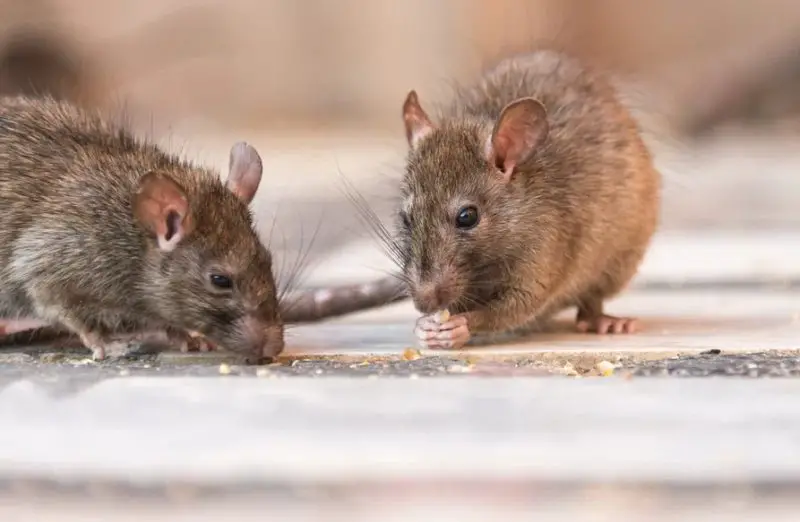
New York City is often described as a city of rats. They live in subway tunnels, alleyways, parks, basements, waterfronts, and construction sites. They are seen darting across platforms, climbing trash bags, and disappearing into sewer grates. Because rats are everywhere and often look different from one neighborhood to the next, a persistent question keeps resurfacing.
Can rats in New York interbreed between species?
Some rats look larger. Some have different fur tones. Others behave differently or appear in unusual places. When people notice these differences, hybridization seems like a logical explanation. But as with many urban wildlife myths, the answer depends on genetics, species boundaries, and how human perception works in dense cities.
To understand what is actually happening among New York’s rats, it is necessary to look closely at which rat species live in the city, how they differ, and whether biology allows them to mix.
Table of Contents
- 1 New York Is Home to Two Main Rat Species
- 2 Norway Rats Dominate Most of New York City
- 3 Roof Rats Exist, but Are Far Less Common
- 4 These Two Rat Species Look Similar but Are Not the Same
- 5 Genetic Incompatibility Prevents Interbreeding
- 6 Why Sharing a Genus Does Not Guarantee Hybridization
- 7 Behavior Further Reduces Any Chance of Mixing
- 8 Competition Encourages Separation, Not Mixing
- 9 Why New York Rats Look So Different
- 10 Diet Has a Huge Impact on Appearance
- 11 Age and Sex Are Often Misinterpreted
- 12 Lighting and Environment Distort Perception
- 13 Misidentification Adds to Hybrid Myths
- 14 Genetic Studies Confirm Species Separation
- 15 Why Hybrid Stories Persist in New York
- 16 Media and Pop Culture Reinforce the Idea
- 17 Disease Myths Often Get Linked to Hybridization
- 18 Why Stable Hybrid Populations Would Not Persist
- 19 What New York Experts Say
- 20 Why Understanding This Matters
- 21 What To Do If You See an Unusual Rat
- 22 Rats Are Thriving Because Cities Allow It
- 23 FAQs About Rat Species and Hybridization in New York
- 23.1 Can rats in New York interbreed between species
- 23.2 What rat species live in New York City
- 23.3 Have hybrid rats ever been confirmed in New York
- 23.4 Why do some New York rats look much larger than others
- 23.5 Are roof rats common in New York
- 23.6 Do Norway rats and roof rats live in the same places
- 23.7 Does sharing the same genus mean rats can hybridize
- 23.8 Are “mutant” or “super rats” real
- 23.9 Do hybrid rats spread more disease
- 23.10 What should I do if I see an unusual-looking rat
- 24 Final Thoughts
New York Is Home to Two Main Rat Species
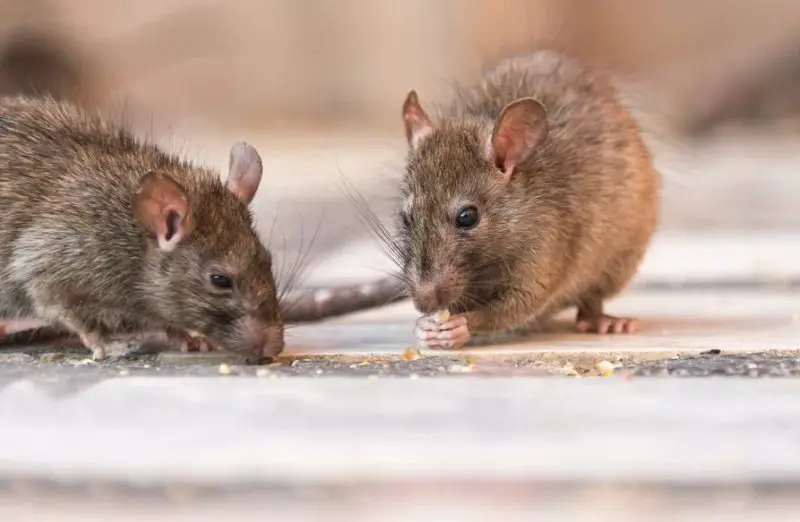
Despite the city’s reputation, New York does not have many rat species.
Nearly all rats encountered in New York belong to one of two species.
The Norway rat (Rattus norvegicus)
The roof rat (Rattus rattus)
Both species are non-native. They arrived through shipping routes centuries ago and spread alongside human development. Today, they dominate urban environments across the city.
Understanding these two species is key to understanding the hybrid question.
Norway Rats Dominate Most of New York City
The Norway rat is by far the most common rat in New York.
Despite its name, it did not originate in Norway. It likely came from Asia and spread globally through trade. In New York, Norway rats thrive at ground level and below.
They favor sewers, basements, subway tunnels, trash rooms, docks, and burrows along foundations. They are strong diggers and powerful swimmers. Their bodies are stocky, their heads are blunt, and their tails are shorter than their bodies.
When people think of the “New York City rat,” they are almost always thinking of a Norway rat.
Roof Rats Exist, but Are Far Less Common
Roof rats also live in New York, but in much smaller numbers.
Roof rats prefer warmer climates and higher elevations within buildings. They are more common in southern states, but small populations exist in parts of New York, especially near ports, warehouses, and older buildings.
They are slimmer than Norway rats, with longer tails and larger ears. Roof rats are excellent climbers and often live in attics, rafters, and upper floors.
Because they are less common, many New Yorkers have never knowingly seen one.
These Two Rat Species Look Similar but Are Not the Same
At a glance, Norway rats and roof rats look alike.
Both are brown or gray. Both have long tails. Both behave furtively and avoid humans. In low light, differences are hard to see.
But genetically, they are distinct species with different evolutionary histories.
They diverged long ago and followed separate evolutionary paths shaped by different environments.
That separation matters.
Genetic Incompatibility Prevents Interbreeding
The most important answer is straightforward.
Rats in New York do not interbreed between species.
Norway rats and roof rats are genetically incompatible. Their chromosome structures and reproductive systems do not align in a way that allows viable offspring.
There are no confirmed cases of natural hybrids between Rattus norvegicus and Rattus rattus anywhere in the world.
Despite living in the same cities, they remain reproductively isolated.
Why Sharing a Genus Does Not Guarantee Hybridization
Both rat species belong to the genus Rattus.
This leads many people to assume interbreeding should be possible. But genus-level similarity is not enough.
Hybridization requires very close genetic compatibility, often between species that diverged relatively recently. Even small differences in chromosome arrangement can prevent successful reproduction.
Many animals share a genus and still cannot interbreed.
Rats are no exception.
Behavior Further Reduces Any Chance of Mixing
Even if genetics allowed interbreeding, behavior would still prevent it.
Norway rats and roof rats occupy different niches. They prefer different elevations, different shelter types, and different movement patterns.
Norway rats stay close to the ground. Roof rats move above it. Their paths rarely intersect in meaningful ways.
They also communicate differently and establish separate social structures.
Opportunity matters in reproduction, and opportunity is limited.
Competition Encourages Separation, Not Mixing
When the two species do encounter one another, the interaction is not cooperative.
Norway rats are larger and more aggressive. They often displace roof rats from ground-level areas. Roof rats avoid these confrontations by staying above.
This competitive exclusion reinforces separation rather than blending.
Nature favors avoidance, not hybridization.
Why New York Rats Look So Different
If rats do not interbreed, why do they look so different across the city?
The answer lies in variation, environment, and adaptation.
Norway rats vary widely in size, color, and behavior depending on food availability, population density, and habitat.
A rat feeding consistently on restaurant waste will look very different from one surviving in a park or abandoned lot.
Size differences are not genetic hybrids. They are environmental outcomes.
Diet Has a Huge Impact on Appearance
Urban rats eat what humans throw away.
In areas with abundant, high-calorie food, rats grow larger and heavier. In areas with scarce resources, they remain smaller and leaner.
This creates the illusion of different “types” of rats within the same species.
Nutrition shapes bodies faster than genetics.
Age and Sex Are Often Misinterpreted
Large rats are often assumed to be hybrids.
In reality, they are usually adult males. Male Norway rats can be significantly larger than females or juveniles.
Young rats look slimmer and faster. Older rats appear bulky and slow.
Without context, these differences seem dramatic.
Lighting and Environment Distort Perception
Most rat sightings occur at night.
Artificial lighting, shadows, wet pavement, and motion blur distort size and shape. Rats running across open spaces appear larger than they are.
Fear exaggerates perception. A rat seen unexpectedly often feels enormous.
Memory amplifies the impression.
Misidentification Adds to Hybrid Myths
Some animals mistaken for rats are not rats at all.
Large mice, muskrats, young opossums, and even squirrels are sometimes misidentified in low light. When an animal does not match expectations, hybridization becomes an explanation.
Misidentification fuels myth.
Genetic Studies Confirm Species Separation
Rats are among the most studied mammals in the world.
They are used extensively in laboratories, disease research, and urban ecology studies. Their genetics are well understood.
Genetic testing consistently confirms that urban rat populations remain distinct species with no evidence of interbreeding.
If hybrids existed, they would have been detected quickly.
Why Hybrid Stories Persist in New York
New York is dense, stressful, and constantly changing.
People notice patterns. They compare neighborhoods. They share stories. Online videos of unusually large rats spread rapidly.
Hybrid explanations feel intuitive and dramatic.
Science is quieter.
Media and Pop Culture Reinforce the Idea
Movies, cartoons, and headlines exaggerate rats.
“Super rats,” “mutant rats,” and “hybrid rats” make for catchy stories. They capture attention but do not reflect biological reality.
Repetition turns fiction into assumed possibility.
Disease Myths Often Get Linked to Hybridization
Some people assume hybrid rats are more dangerous.
Disease risk is not linked to hybrid status. It is linked to sanitation, population density, and human infrastructure.
Pure Norway rats already carry diseases. Hybridization is not required.
Blaming hybrids distracts from real public health solutions.
Why Stable Hybrid Populations Would Not Persist
Even if a hybrid were possible, it would need to survive, reproduce, and compete successfully.
Hybrid animals often struggle with mismatched traits. Natural selection removes poorly adapted combinations.
But in the case of New York rats, hybrids do not even reach that stage.
The barrier exists at the genetic level.
What New York Experts Say
Urban ecologists and pest management professionals agree.
New York rats do not interbreed between species. Differences in appearance reflect environment, age, sex, and behavior, not genetics.
Management strategies focus on sanitation, exclusion, and population control, not hybrid concerns.
Why Understanding This Matters
Belief in hybrid rats can lead to misunderstanding and misplaced fear.
It can also distract from effective solutions. Trash management. Building maintenance. Infrastructure repair.
Accurate understanding leads to better responses.
What To Do If You See an Unusual Rat
Observe carefully.
Consider location, size, behavior, and context. Avoid assumptions based on appearance alone.
If rats are present, address attractants and entry points rather than worrying about species mixing.
Rats Are Thriving Because Cities Allow It
Rats succeed in New York because the city provides shelter, food, and warmth.
Their survival is not due to genetic mixing. It is due to adaptability within species.
Understanding that helps explain why they persist.
FAQs About Rat Species and Hybridization in New York
Can rats in New York interbreed between species
No. The two main rat species in New York are genetically incompatible and cannot produce offspring together.
What rat species live in New York City
Almost all rats are either Norway rats (Rattus norvegicus) or roof rats (Rattus rattus).
Have hybrid rats ever been confirmed in New York
No. There are no scientifically verified cases of hybrids between Norway rats and roof rats.
Why do some New York rats look much larger than others
Size differences are caused by diet, age, sex, and habitat, not hybridization.
Are roof rats common in New York
They exist in small numbers, mainly near ports and older buildings, but are far less common than Norway rats.
Do Norway rats and roof rats live in the same places
They may share the same city, but Norway rats stay near ground level while roof rats prefer higher structures.
Does sharing the same genus mean rats can hybridize
No. Belonging to the same genus does not guarantee genetic compatibility.
Are “mutant” or “super rats” real
No. These are media exaggerations. Large rats are usually well-fed adult males.
Do hybrid rats spread more disease
No. Disease risk is linked to sanitation and population density, not hybrid status.
What should I do if I see an unusual-looking rat
Focus on reducing food sources and sealing entry points rather than assuming hybridization.
Final Thoughts
Rats in New York do not interbreed between species.
Norway rats and roof rats remain genetically separate despite sharing urban environments. Differences in size, color, and behavior come from diet, habitat, age, and perception, not hybridization.
What people see are not hybrids. They are highly adaptable animals responding to the city humans built.
Understanding that reality replaces myth with clarity, and clarity is essential for managing urban wildlife in New York.