
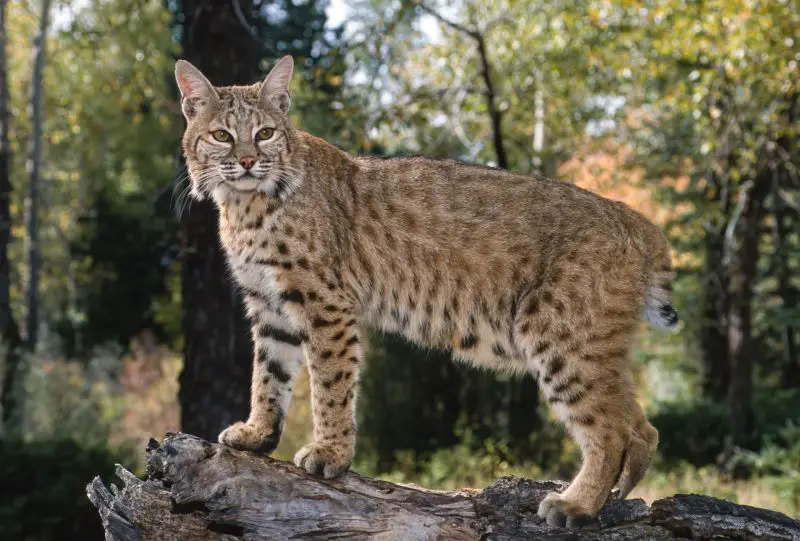
Across South Carolina, bobcat sightings have become more common over the past two decades. Trail cameras capture fleeting images along forest edges. Hunters notice tracks crossing sandy roads. Rural homeowners occasionally glimpse a spotted cat slipping into cover at dusk. At the same time, domestic cats remain a constant presence around farms, small towns, and suburban developments.
When people see a cat that looks larger than a house cat but smaller than expected for a wild predator, a familiar question often follows.
Are bobcats in South Carolina mating with house cats?
The idea feels believable. Bobcats resemble oversized domestic cats. Feral cats roam freely in many rural areas. Both belong to the cat family. Stories circulate online about “bobcat hybrids,” strange kittens, or mysterious cats that seem half wild and half domestic.
But wildlife biology is governed by strict rules. Appearance alone does not determine compatibility. To answer this question accurately, it is necessary to look at genetics, behavior, reproduction, and decades of scientific evidence.
Table of Contents
- 1 Bobcats Are Native and Well Established in South Carolina
- 2 Domestic Cats Follow a Completely Different Evolutionary Path
- 3 Genetic Incompatibility Prevents Hybridization
- 4 Why Shared Chromosome Counts Cause Confusion
- 5 No Confirmed Hybrids Have Ever Been Found
- 6 Behavior Creates an Additional Barrier
- 7 Size and Physical Risk Make Mating Unrealistic
- 8 Why South Carolina Residents Think Hybrids Exist
- 9 Misidentified Domestic Cats Fuel Many Reports
- 10 Bobcats Vary Widely in Appearance
- 11 Trail Cameras Distort Reality
- 12 Feral Cats Add Another Layer of Confusion
- 13 Increased Sightings Do Not Mean Biological Change
- 14 What South Carolina Wildlife Experts Say
- 15 Why Hybrid Myths Appear Across Many Species
- 16 Real Domestic Cat Hybrids Add Confusion
- 17 Why Understanding This Matters
- 18 What To Do If You See an Unusual Cat
- 19 Protecting Pets in Bobcat Country
- 20 Bobcats Play an Important Ecological Role
- 21 FAQs About Bobcats and House Cats in South Carolina
- 21.1 Can bobcats in South Carolina mate with house cats
- 21.2 Has a bobcat–house cat hybrid ever been confirmed
- 21.3 Why do bobcats and domestic cats look similar
- 21.4 Why do some people believe hybrids exist
- 21.5 Do bobcats recognize house cats as potential mates
- 21.6 Are feral cats different from wild cats
- 21.7 Can bobcats be dangerous to house cats
- 21.8 Do unusual-looking cats indicate hybrid ancestry
- 21.9 What do South Carolina wildlife officials say
- 21.10 What should I do if I see a strange-looking cat
- 22 Final Thoughts
Bobcats Are Native and Well Established in South Carolina
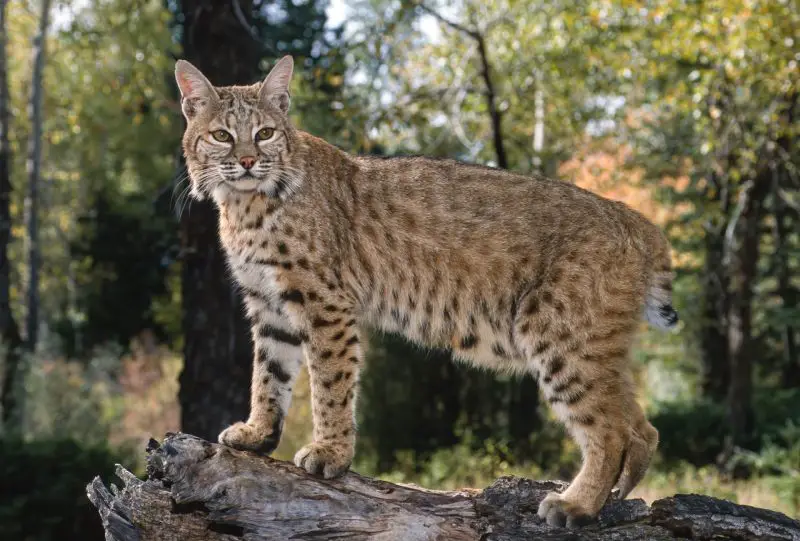
Bobcats (Lynx rufus) are native to South Carolina and have occupied the region for thousands of years. Unlike some states where bobcats were nearly eliminated, South Carolina maintained remnant populations even during periods of heavy hunting and habitat change.
Today, bobcats are found statewide. They inhabit pine forests, mixed hardwoods, swamps, agricultural edges, and brushy corridors. They are especially common in areas with abundant prey such as rabbits, rodents, and small deer.
Despite their wide distribution, bobcats remain elusive. They are primarily nocturnal or crepuscular, highly territorial, and cautious around humans. Even in areas where they are common, sightings are usually brief.
As bobcat populations stabilized and human development expanded into forested areas, encounters naturally increased. Increased visibility often leads to increased speculation.
Domestic Cats Follow a Completely Different Evolutionary Path
Domestic cats are not simply smaller versions of wild cats.
House cats belong to the species Felis catus. They descend from the African wildcat and were domesticated thousands of years ago. Over time, their evolution has been shaped by life alongside humans, artificial selection, and altered survival pressures.
Bobcats belong to a different genus entirely. They are members of the genus Lynx, a group that includes bobcats, Canada lynx, Eurasian lynx, and Iberian lynx. These cats evolved separately from domestic cats for millions of years.
This deep evolutionary split is far more important than superficial resemblance.
Genetic Incompatibility Prevents Hybridization
The most important fact in this discussion is straightforward.
Bobcats and domestic cats cannot interbreed.
Although both species have 38 chromosomes, chromosome number alone does not determine reproductive compatibility. The structure, arrangement, and pairing of those chromosomes differ significantly between Lynx and Felis.
For fertilization to succeed, chromosomes must align precisely during cell division. In the case of bobcats and house cats, they do not. Embryos cannot develop normally.
There are no scientifically verified cases of bobcat–house cat hybrids anywhere in the world.
The shared chromosome number is often cited as “proof” that bobcats and domestic cats can mate.
This is a misunderstanding.
Many animals share chromosome counts without being able to interbreed. Compatibility depends on chromosome structure, gene order, and reproductive mechanisms, not just the total number.
In this case, the similarity in number masks profound genetic incompatibility.
No Confirmed Hybrids Have Ever Been Found
Modern wildlife science relies heavily on genetic testing.
Unusual-looking cats are frequently analyzed using DNA. These tests can identify ancestry with high precision. In every investigated case involving supposed bobcat–house cat hybrids, results fall into predictable categories.
Pure bobcats
Pure domestic cats
Domestic cat hybrids involving other wild species such as Asian leopard cats or servals
Bobcats are never part of these domestic hybrids.
If bobcat–house cat hybrids existed, they would have been documented by now. They have not.
Behavior Creates an Additional Barrier
Even if genetics allowed it, behavior would still prevent mating.
Bobcats are solitary, territorial predators. They communicate through scent marking, vocalizations, and specific body language. Their breeding behavior is tightly timed and highly selective.
Domestic cats, even feral ones, do not share these signals. Their courtship behaviors, vocalizations, and social cues differ significantly.
Bobcats do not recognize domestic cats as potential mates. They are far more likely to view them as prey or competitors.
Recognition is essential in reproduction, and recognition does not occur.
Size and Physical Risk Make Mating Unrealistic
Physical differences further reduce any possibility.
Adult bobcats are substantially larger and stronger than domestic cats. An attempted mating would pose severe injury risk to a house cat with no evolutionary benefit to the bobcat.
Animals do not engage in high-risk behavior without reproductive payoff. Natural selection eliminates such interactions quickly.
Why South Carolina Residents Think Hybrids Exist
If hybridization is impossible, why does the belief persist?
Several factors contribute.
Bobcats are more visible than they were decades ago. Domestic cats roam freely in rural areas. People see cats in unexpected places. When an animal does not fit neatly into a category, hybridization becomes an appealing explanation.
Expectation fills gaps in observation.
Misidentified Domestic Cats Fuel Many Reports
Many domestic cats look surprisingly wild.
Some breeds and mixed-breed cats have spotted coats, muscular builds, and short tails. Large feral cats can appear imposing, especially when seen briefly.
Lighting, distance, and movement exaggerate size. A cat glimpsed at dusk near a tree line may appear much larger than it truly is.
Once the idea of hybrids exists, misidentification reinforces belief.
Bobcats Vary Widely in Appearance
Bobcats themselves show considerable variation.
Winter coats are thicker and fluffier. Summer coats are sleeker. Color ranges from pale gray to reddish brown. Spot patterns differ between individuals. Males are much larger than females.
A small female bobcat may be mistaken for a large domestic cat. A large male may appear unusually imposing.
Variation within a species is often underestimated.
Trail Cameras Distort Reality
Trail cameras contribute heavily to hybrid myths.
Wide-angle lenses stretch proportions. Night mode exaggerates eye shine and body length. Lack of scale makes size difficult to judge.
A bobcat close to a camera can look enormous. A domestic cat at the right angle can look wild.
Images without context invite speculation.
Feral Cats Add Another Layer of Confusion
Feral cats behave differently from pets.
They are cautious, nocturnal, and skilled hunters. Some live far from human structures and avoid people entirely.
When residents encounter feral cats in wooded areas, they may assume the animal is wild or hybridized.
Behavior alone is not evidence of ancestry.
Increased Sightings Do Not Mean Biological Change
Sightings feel more frequent today, but biology has not changed.
Trail cameras are widespread. Social media encourages sharing wildlife encounters. More people live near natural areas.
Visibility increases perception.
Bobcats are not hybridizing. People are simply noticing them more often.
What South Carolina Wildlife Experts Say
Wildlife biologists in South Carolina are clear on this topic.
Bobcats and domestic cats do not interbreed. There is no evidence supporting the existence of hybrids. Reports of unusual cats are consistently explained by known species, age variation, or domestic animals.
Hybridization is not considered a management concern.
Why Hybrid Myths Appear Across Many Species
Bobcat–house cat myths are part of a larger pattern.
Similar rumors exist about foxes and dogs, coyotes and dogs, and many other animals. Humans are drawn to boundary-crossing stories.
Hybrids feel mysterious and exciting.
Nature is far more conservative.
Real Domestic Cat Hybrids Add Confusion
Some real domestic cat hybrids exist.
Bengal cats come from Asian leopard cats. Savannah cats come from servals. These hybrids are created intentionally under controlled conditions.
Their existence leads people to assume other hybrids must occur naturally.
Bobcats are not part of this group.
Why Understanding This Matters
Belief in bobcat–house cat hybrids is not harmless.
It can lead to fear, unnecessary killing of animals, or abandonment of pets. It distracts from real issues such as habitat conservation, responsible pet ownership, and coexistence.
Accurate understanding supports better decisions.
What To Do If You See an Unusual Cat
If you encounter a cat that looks unusual, observe carefully.
Note size, tail length, ear shape, behavior, and habitat. Consider lighting, season, and distance. Avoid assuming hybrid ancestry based on a brief sighting.
If necessary, report concerns to wildlife officials and let experts evaluate.
Protecting Pets in Bobcat Country
While bobcats do not mate with house cats, they can prey on small pets.
Keeping cats indoors or supervised reduces risk. Removing attractants such as outdoor food limits wildlife visits.
Understanding real risks matters more than imagined ones.
Bobcats Play an Important Ecological Role
Bobcats help regulate rodent and rabbit populations. They contribute to balanced ecosystems across South Carolina’s forests and fields.
Their continued presence reflects healthy habitats.
Protecting them requires separating fact from fiction.
FAQs About Bobcats and House Cats in South Carolina
Can bobcats in South Carolina mate with house cats
No. Bobcats and domestic cats are genetically incompatible and cannot produce offspring.
Has a bobcat–house cat hybrid ever been confirmed
No. There are no scientifically verified cases anywhere in the world.
Why do bobcats and domestic cats look similar
They share distant feline ancestry, but physical resemblance does not mean reproductive compatibility.
Why do some people believe hybrids exist
Increased bobcat sightings, feral cats, low-light encounters, and trail camera distortion fuel misidentification.
Do bobcats recognize house cats as potential mates
No. Bobcats are solitary and do not share courtship behaviors or signals with domestic cats.
Are feral cats different from wild cats
Behaviorally yes, but genetically they are still domestic cats.
Can bobcats be dangerous to house cats
Yes. Bobcats may prey on small pets, which is unrelated to hybridization.
Do unusual-looking cats indicate hybrid ancestry
Usually no. Coat variation, age, sex, and season explain most differences.
What do South Carolina wildlife officials say
They confirm bobcats and domestic cats do not interbreed.
What should I do if I see a strange-looking cat
Observe calmly, avoid assumptions, and report sightings to wildlife authorities if needed.
Final Thoughts
The idea that bobcats in South Carolina mate with house cats is understandable, but it is not supported by biology.
Bobcats and domestic cats are separated by genetics, behavior, and evolution. What people see are normal animals shaped by age, season, environment, and perception.
Bobcats in South Carolina remain bobcats. Domestic cats remain domestic cats.
Understanding that reality replaces myth with clarity and allows people to appreciate wildlife for what it truly is, not what fear or imagination suggests.