
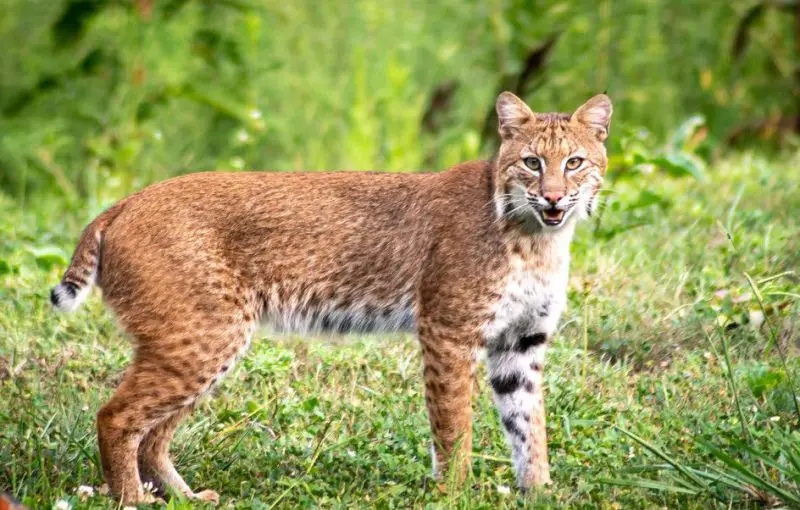
The question sounds simple, but it touches genetics, behavior, ecology, and long-standing wildlife myths in the southeastern United States. In Alabama, where bobcats are widespread and domestic cats are everywhere humans live, encounters happen often enough to spark rumors. A large cat seen near a yard. An unusually built kitten. A neighbor’s story about a “half-wild” cat.
From there, the idea spreads.
But biology does not bend to anecdote. To understand whether bobcats in Alabama can truly breed with domestic cats, the answer requires careful examination of genetics, reproductive barriers, behavior, and documented evidence. What people think they see matters. What actually happens in nature matters more.
Table of Contents
- 1 Bobcats and Domestic Cats Share a Distant Ancestry
- 2 Chromosome Differences Create a Hard Barrier
- 3 Size and Physical Mismatch Matter More Than People Think
- 4 Behavioral Incompatibility Is the Biggest Obstacle
- 5 Habitat Separation Reduces Opportunities Further
- 6 No Verified Bobcat–Domestic Cat Hybrids Exist
- 7 Why People Believe Hybrids Exist in Alabama
- 8 Misidentified Wildcats Fuel the Confusion
- 9 Genetic Testing Tells the Real Story
- 10 Why Other Cat Hybrids Exist but This One Does Not
- 11 Reproductive Timing Is Another Barrier
- 12 Predation Risk Changes the Narrative
- 13 Wildlife Agencies Reject the Hybrid Claim
- 14 The Role of Social Media in Spreading the Myth
- 15 What Alabama Residents Are Actually Seeing
- 16 Why This Question Keeps Coming Back
- 17 Living Safely with Bobcats in Alabama
- 18 Final Answer
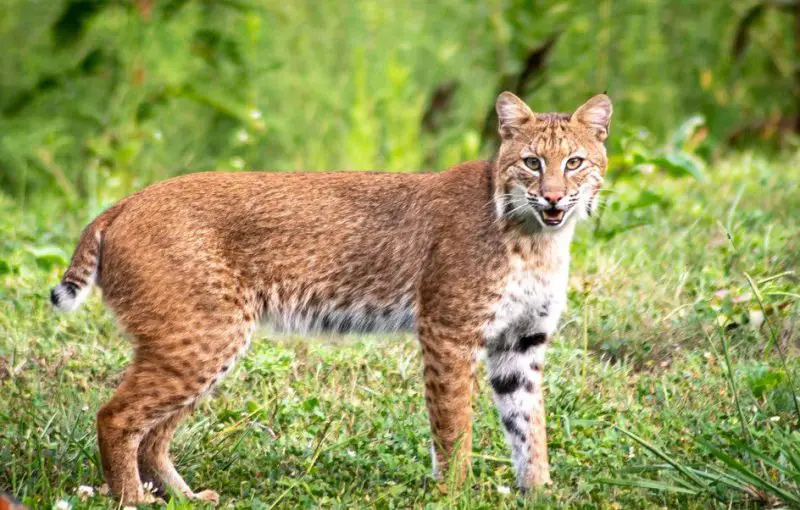
Bobcats and domestic cats belong to the same biological family, Felidae. That shared lineage is often where the confusion begins. To non-specialists, family membership sounds like compatibility.
In reality, it does not work that way.
Domestic cats descend from small wildcats that evolved alongside early human settlements. Bobcats evolved separately in North America, adapting to forests, swamps, scrublands, and rugged terrain. Their evolutionary paths diverged long ago, shaping very different bodies, instincts, and reproductive systems.
Sharing a family does not guarantee the ability to reproduce. Many animals within the same family are genetically incompatible, just as horses and donkeys can breed only under rare conditions and produce sterile offspring.
Bobcats and domestic cats are far more genetically distant than most people realize.
Chromosome Differences Create a Hard Barrier
One of the most important factors in reproduction is chromosome number.
Domestic cats have 38 chromosomes. Bobcats have 38 chromosomes as well. At first glance, this appears promising and is often cited as “proof” that hybridization should be possible.
But chromosome count alone is misleading.
The structure, arrangement, and gene sequencing within those chromosomes differ significantly. Matching numbers do not guarantee compatibility during meiosis, the process that creates sperm and eggs. Even small structural differences can prevent viable fertilization or proper embryo development.
In mammals, successful hybridization requires far more than matching chromosome counts. Gene alignment, developmental timing, and epigenetic regulation all play critical roles. In bobcats and domestic cats, these systems do not align.
This creates a biological wall that speculation cannot cross.
Size and Physical Mismatch Matter More Than People Think
Adult bobcats are not simply “big cats.” In Alabama, adult males commonly weigh 20 to 35 pounds, with powerful shoulders, thick necks, and muscular hindquarters. Females are smaller but still significantly larger and stronger than domestic cats.
Domestic cats typically weigh 8 to 12 pounds. Their skeletal structure, muscle mass, and mating posture differ substantially.
Even if behavioral barriers did not exist, physical compatibility alone would present serious challenges. Natural mating would be difficult, dangerous, and unlikely to result in successful copulation.
In nature, size mismatches often stop hybridization before genetics ever become relevant.
Behavioral Incompatibility Is the Biggest Obstacle
Reproductive behavior is not instinctively flexible. Species rely on highly specific signals to recognize suitable mates.
Bobcats use scent marking, vocalizations, and body language that domestic cats do not recognize or respond to. Their breeding season behavior is intense, territorial, and often aggressive by domestic cat standards.
Domestic cats, especially those living near humans, follow entirely different mating cues. Their vocalizations, scent signals, and social tolerance do not match bobcat behavior.
When animals do not recognize each other as potential mates, breeding does not occur. This barrier is one of the strongest in wildlife biology, and it applies fully here.
In Alabama, where bobcats remain wild and wary, there is no evidence that they treat domestic cats as reproductive partners.
Habitat Separation Reduces Opportunities Further
Bobcats in Alabama occupy forests, swamps, pine plantations, bottomland hardwoods, and large tracts of undeveloped land. Even when they move near human edges, they avoid sustained contact.
Domestic cats cluster around homes, barns, neighborhoods, and feeding areas. Their activity patterns, movement routes, and daily rhythms rarely overlap with bobcats for extended periods.
Brief encounters may happen. Prolonged interaction does not.
Hybridization requires repeated close contact during specific breeding windows. Alabama’s landscape and the bobcat’s behavior make this extremely unlikely.
No Verified Bobcat–Domestic Cat Hybrids Exist
Despite decades of wildlife monitoring, genetic sampling, and public interest, there are no verified, peer-reviewed cases of bobcats successfully breeding with domestic cats anywhere in North America.
Not in Alabama.
Not in neighboring states.
Not under controlled conditions.
Claims occasionally surface online or through anecdotal reports. None withstand genetic testing. When tested, suspected hybrids are consistently revealed to be domestic cats with unusual traits or other wildcat species entirely.
In science, absence of evidence across thousands of observations matters. If bobcat–domestic cat hybrids were possible, credible documentation would exist by now.
It does not.
Why People Believe Hybrids Exist in Alabama
Belief does not arise from nowhere. Several factors make Alabama fertile ground for this myth.
Bobcats are common statewide, yet elusive. People hear them more often than they see them. Their screams, tracks, and fleeting glimpses create mystery.
Domestic cats in rural areas often grow large, muscular, and wary. Without regular veterinary care, their appearance can drift far from the “house pet” image.
Add poor lighting, distance, fear, and storytelling, and the brain fills gaps quickly.
A big cat becomes a hybrid.
An aggressive cat becomes part bobcat.
An unusual kitten becomes proof.
None of this requires deception. It requires only uncertainty.
Misidentified Wildcats Fuel the Confusion
Alabama hosts other wild animals that are commonly misidentified.
Young bobcats, especially juveniles, can look deceptively small. Their proportions are odd. Their behavior is curious rather than fully cautious.
Feral domestic cats with tufted ears, short tails, or spotted coats also confuse observers. Selective breeding and natural variation can produce striking patterns without any wild ancestry.
Without genetic testing, visual identification is unreliable. Humans are not good at distinguishing hybrids from look-alikes, especially when expectations guide perception.
Genetic Testing Tells the Real Story
When suspected hybrids are tested, the results are clear.
DNA analysis can identify species lineage with high accuracy. In every documented case involving alleged bobcat–domestic cat hybrids, genetic testing has confirmed pure domestic cat ancestry or misidentified wildcats.
No bobcat genes appear.
No mixed lineage emerges.
Science does not rely on appearance alone. Genetics leaves no room for guesswork.
Why Other Cat Hybrids Exist but This One Does Not
People often point to known hybrids like the Bengal cat or Savannah cat as evidence that bobcats should also hybridize with domestic cats.
The comparison fails on several levels.
Those hybrids involve species with far closer genetic relationships and, critically, human intervention. They are bred intentionally, often using artificial insemination, selective pairing, and controlled environments.
Even then, fertility issues, behavioral challenges, and health concerns are common.
Bobcats have never been successfully crossed with domestic cats, even under experimental conditions. Natural hybridization would be far less likely.
Reproductive Timing Is Another Barrier
Bobcats in Alabama have a defined breeding season, typically late winter into early spring. Domestic cats, especially those around humans, breed year-round.
For hybridization to occur, both species would need synchronized reproductive readiness, compatible behavior, and prolonged contact. The odds of all conditions aligning are extremely low.
Nature does not favor coincidence.
Predation Risk Changes the Narrative
One uncomfortable truth often overlooked is that bobcats view small animals as prey.
Domestic cats fall within the size range of bobcat prey, especially kittens and small adults. While not a primary food source, predation does occur.
Some encounters interpreted as “aggressive mating behavior” may actually be predatory interactions misunderstood after the fact.
This further undermines the idea of consensual breeding.
Wildlife Agencies Reject the Hybrid Claim
State and federal wildlife agencies do not recognize bobcat–domestic cat hybrids as real or occurring. Management plans, research papers, and conservation strategies make no allowance for such animals.
If hybrids existed, they would complicate population genetics, disease transmission, and legal protections. Agencies would be deeply interested.
They are not, because evidence does not exist.
The Role of Social Media in Spreading the Myth
Modern myths travel faster than facts. A single photo labeled “bobcat hybrid” can reach thousands within hours. Context disappears. Verification never happens.
Once seen, the image lodges in memory. The next unusual cat encountered confirms the belief.
Correction rarely spreads as far as the original claim.
What Alabama Residents Are Actually Seeing
In nearly all cases, sightings fall into one of three categories.
A true bobcat seen briefly.
A large feral domestic cat with unusual markings.
A young bobcat mistaken for a hybrid.
None require interbreeding to explain.
Nature already provides enough variation to confuse the eye.
Why This Question Keeps Coming Back
The idea of hybrids taps into something human. It suggests boundary crossing. It feels secret. It implies something rare and undiscovered.
But wildlife biology is not driven by mystery. It is driven by patterns, constraints, and evidence.
Some boundaries exist for good reason. Genetics enforces them.
Living Safely with Bobcats in Alabama
Bobcats are a natural part of Alabama’s ecosystems. They regulate prey populations and avoid humans whenever possible.
They are not interested in domestic cats as mates. They are not stalking neighborhoods to create hybrids.
Responsible pet management matters more than myth. Keeping cats indoors, securing food sources, and respecting wildlife space reduces negative encounters.
Fear fades when understanding replaces rumor.
Final Answer
No, bobcats in Alabama cannot breed with domestic cats.
Despite shared ancestry and overlapping ranges, strong genetic, behavioral, physical, and ecological barriers prevent hybridization. There are no verified cases, no genetic evidence, and no scientific support for the claim.
What people report as hybrids are misidentifications shaped by fear, rarity, and storytelling.
Bobcats remain bobcats.
Domestic cats remain domestic cats.
Nature keeps the line intact.