
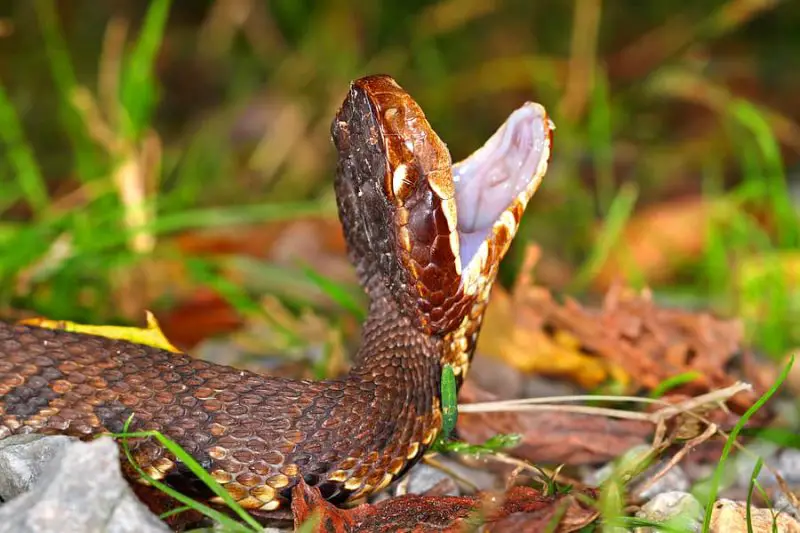
Across Illinois, few animals inspire as much fear, rumor, and persistent storytelling as the water moccasin. Known widely as the cottonmouth, this venomous snake carries a reputation that goes far beyond what science supports. Ask residents in southern Illinois, especially near wetlands or slow-moving waterways, and many will confidently tell you the same thing.
Water moccasins chase people.
This belief is not new, and it is not limited to one generation. It circulates through fishing stories, family warnings, social media posts, and firsthand accounts shared with absolute certainty. Yet when wildlife biologists study cottonmouth behavior, a very different picture emerges.
So why does this belief persist so strongly in Illinois? The answer lies not in aggression, but in perception, landscape, behavior, and how human fear reshapes memory.
Table of Contents
- 1 Cottonmouths Exist at the Edge of Illinois
- 2 Illinois Landscapes Create Close Encounters
- 3 Cottonmouths Do Not Flee Like Other Snakes
- 4 Defensive Displays Are Misread as Aggression
- 5 Why Cottonmouths Often Move Toward People
- 6 Illinois Terrain Makes Movement Look Intentional
- 7 Swimming Behavior Adds to the Illusion
- 8 Short Defensive Advances Are Remembered Incorrectly
- 9 Misidentification Plays a Major Role in Illinois
- 10 Fear Alters Perception and Memory
- 11 Stories Spread Faster Than Corrections
- 12 Scientific Observation Tells a Different Story
- 13 Why Illinois Residents Trust Experience Over Science
- 14 Understanding Behavior Changes Outcomes
- 15 Living Safely With Cottonmouths in Illinois
- 16 FAQs About Water Moccasins and Chasing Myths in Illinois
- 16.1 Do water moccasins really chase people in Illinois
- 16.2 Why do so many Illinois residents believe they were chased
- 16.3 Are cottonmouths aggressive by nature
- 16.4 Why don’t cottonmouths flee like other snakes
- 16.5 Can cottonmouths swim toward people
- 16.6 Are most snakes blamed for chasing actually cottonmouths
- 16.7 Do cottonmouths strike without warning
- 16.8 Where in Illinois are cottonmouths found
- 16.9 How can people avoid negative encounters
- 16.10 Should cottonmouths be killed if encountered
- 17 Final Thoughts
Cottonmouths Exist at the Edge of Illinois
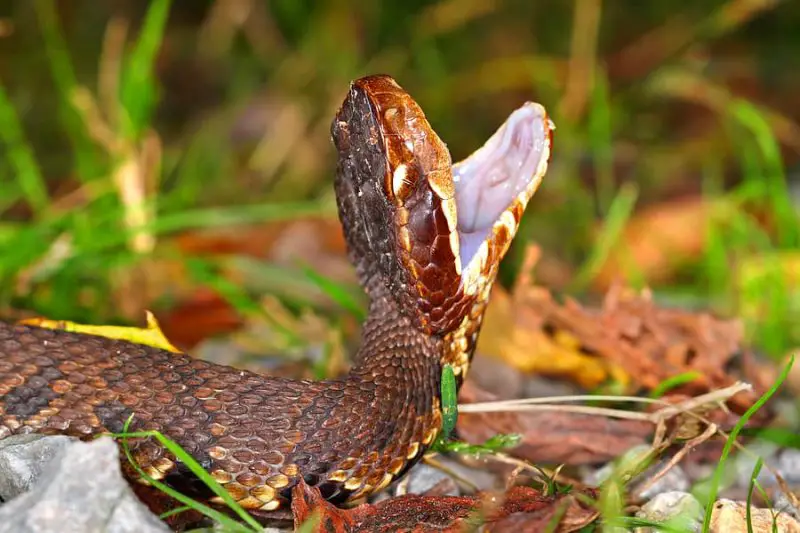
Illinois lies near the northern boundary of the cottonmouth’s natural distribution, and this geographic detail matters more than most people realize. Cottonmouths are not spread evenly across the state. They are largely restricted to the far southern region, particularly areas connected to the Cache River watershed, cypress swamps, bottomland hardwood forests, and slow-moving backwaters of the Mississippi and Ohio Rivers.
Because their range in Illinois is limited, encounters are relatively infrequent compared to states farther south. This rarity amplifies perception. When a dangerous animal is encountered often, people learn its behavior through repetition. When it is encountered rarely, every sighting feels extraordinary.
In southern Illinois, a single encounter can shape belief for years. One story told at a fishing spot gets repeated at family gatherings. Another spreads through a small community. Over time, the animal becomes defined not by consistent behavior, but by the most emotionally intense accounts.
Where exposure is low, fear fills the knowledge gap. Unfamiliarity prevents normalization. Instead of learning that cottonmouths behave predictably, people learn that they are unpredictable, and unpredictability breeds myth.
Illinois Landscapes Create Close Encounters
Southern Illinois landscapes naturally compress human and cottonmouth movement into the same narrow spaces. Wetlands, bottomland forests, drainage ditches, levees, retention ponds, and slow creeks dominate the terrain. These habitats are exactly what cottonmouths evolved to use.
Humans use these same corridors repeatedly. Fishing access points, boat ramps, flooded trails, irrigation canals, culverts, and creek crossings funnel people into areas where cottonmouths rest, hunt, or move between water sources.
Unlike open landscapes where animals can retreat unseen, these environments limit escape options. Banks are steep. Vegetation is dense. Water edges are abrupt. When a person approaches, a snake may already be boxed in by water on one side and thick cover on the other.
Encounters in these settings feel intimate. The snake is close. The human is close. Movement is immediately noticeable. There is little distance to soften interpretation, and distance is critical to how humans judge intent.
Cottonmouths Do Not Flee Like Other Snakes
One of the most important contributors to the chasing myth is that cottonmouths behave differently than many other snakes people encounter.
Most nonvenomous snakes rely on speed. They flee immediately at the first vibration or shadow. People grow accustomed to this response and subconsciously expect it.
Cottonmouths are built differently. They are thick-bodied, muscular, and adapted for ambush rather than rapid escape on land. Sprinting away wastes energy and may expose them to predators. Instead, they rely on stillness, camouflage, and intimidation.
When threatened, cottonmouths often remain in place. They coil. They gape their mouth, exposing the bright white interior. They vibrate their tail. They hold position.
To humans, this violates expectation. A snake that does not flee feels bold. Boldness feels aggressive. Aggression feels intentional.
But from a biological standpoint, this is a warning strategy, not a pursuit strategy.
Defensive Displays Are Misread as Aggression
Cottonmouths are designed to avoid conflict whenever possible. Venom production is energetically expensive. A defensive bite carries risk, even for the snake. Injury, infection, or retaliation can be fatal.
Because of this, cottonmouths rely heavily on intimidation displays to stop a perceived threat at a distance. The open mouth is not an attack posture. It is a visual signal meant to be unmistakable.
The message is simple. Do not approach.
Humans, however, interpret movement and visibility differently. A visible snake feels like an active threat. A hidden snake feels passive. When a cottonmouth remains visible and holds its ground, people interpret that as confidence or aggression.
The same behavior sends opposite messages depending on species. This miscommunication sits at the heart of the chasing belief.
Why Cottonmouths Often Move Toward People
Many chasing stories begin with a person moving toward water and a snake moving in the same direction. From the human perspective, the snake changed course and followed.
From the cottonmouth’s perspective, water is safety.
Water is the primary escape route for cottonmouths. It provides cover, temperature regulation, and a rapid retreat from terrestrial threats. When startled, cottonmouths instinctively move toward water rather than away from it.
In southern Illinois, water is everywhere. Creeks, ditches, ponds, flooded grass, and backwaters create a landscape where escape routes are predictable. If a person stands between the snake and water, the snake’s escape path aligns with the person’s position.
This creates the illusion of pursuit when, in reality, the snake is choosing the only viable exit.
Illinois Terrain Makes Movement Look Intentional
Southern Illinois is notably flat. Floodplains and wetlands offer few elevation changes, slopes, or obstacles that would signal avoidance clearly.
In hilly or rocky terrain, animals flee downhill, zigzag, or disappear behind cover. These movements clearly indicate retreat. In flat wetlands, movement is direct.
A snake traveling in a straight line across open ground looks purposeful. Without changes in elevation or cover, there are no visual cues to suggest avoidance. The brain fills in intent where context is missing.
Linear movement is misread as deliberate approach, even when it is simply the shortest route to safety.
Swimming Behavior Adds to the Illusion
Cottonmouths are powerful swimmers, and water changes how humans perceive motion.
When swimming, a cottonmouth creates ripples that exaggerate speed and direction. Humans instinctively track moving water patterns, not the animal itself. If the ripples appear to follow, the brain concludes the snake is following.
In reality, both human and snake are often moving toward the same shoreline or landing point. The snake is not tracking the person. It is tracking the nearest exit.
Water removes reference points, making speed and distance harder to judge. This sensory ambiguity fuels fear-based interpretation.
Short Defensive Advances Are Remembered Incorrectly
In rare cases, cottonmouths may move forward briefly when a threat is very close. This is a defensive bluff meant to create space.
These movements are short and stop once distance is restored. They are not sustained. They are not pursuit.
Human memory, however, does not record events evenly. Under stress, the brain prioritizes moments of perceived danger. The brief forward motion is remembered vividly. The stop, pause, or retreat is forgotten.
Over time, memory simplifies.
It moved toward me becomes it chased me.
Misidentification Plays a Major Role in Illinois
Illinois hosts several nonvenomous water snakes that closely resemble cottonmouths. Northern water snakes are especially common and frequently misidentified.
These snakes are widespread, defensive when handled, and often found in the same habitats. Their behavior can include erratic movement, sudden direction changes, and rapid swimming along shorelines.
When people already expect cottonmouths to chase, any unusual movement confirms the belief. The species identification happens after the conclusion, not before.
Expectation shapes interpretation more than observation does.
Fear Alters Perception and Memory
Fear changes how the brain processes information in measurable ways. Adrenaline narrows attention. Peripheral details disappear. Motion feels faster. Distances feel shorter.
After the event, memory reconstructs the experience using emotional intensity rather than precise detail. The brain creates a coherent story that explains the fear.
This does not mean people fabricate experiences. It means memory prioritizes meaning over accuracy under stress.
Fear makes pursuit feel real even when it was not.
Stories Spread Faster Than Corrections
Southern Illinois has a strong outdoor culture. Fishing, hunting, farming, and land ownership bring people into close contact with wildlife.
Stories serve a social function. They warn. They entertain. They reinforce group knowledge.
Dangerous stories spread fastest.
Social media accelerates this process dramatically. A dramatic encounter gains attention. A calm explanation does not. Repetition replaces evidence, and the myth becomes accepted truth.
Scientific Observation Tells a Different Story
Decades of herpetological research tell a consistent story.
Cottonmouths are defensive animals.
They rely on warning displays.
They retreat when given space.
They strike only when escape feels impossible.
There is no evidence that cottonmouths intentionally pursue humans.
Field observations, telemetry studies, and bite data all support this conclusion.
Why Illinois Residents Trust Experience Over Science
Personal experience carries emotional weight. A person who felt chased trusts that feeling more than an abstract explanation.
Correction can feel dismissive, especially when fear was real, even if interpretation was not.
Because cottonmouth encounters in Illinois are relatively rare, each story carries disproportionate influence. There are fewer neutral encounters to counterbalance extreme ones.
Emotion spreads faster than data.
Understanding Behavior Changes Outcomes
Understanding cottonmouth behavior does not mean minimizing danger. Cottonmouths are venomous, and caution is necessary.
But understanding replaces panic with informed response.
Maintaining distance.
Avoiding sudden movement.
Watching footing near water.
Allowing clear escape routes.
These actions prevent nearly all negative encounters.
Living Safely With Cottonmouths in Illinois
Most conflicts are avoidable. Cottonmouths do not seek confrontation. They seek security.
When people understand what these snakes are actually doing, past encounters often make sense.
What felt like pursuit was escape.
What felt like aggression was warning.
What felt personal was coincidence shaped by landscape.
Replacing myth with understanding does not reduce safety.
It improves it.
FAQs About Water Moccasins and Chasing Myths in Illinois
Do water moccasins really chase people in Illinois
No. There is no scientific evidence that cottonmouths intentionally pursue humans.
Why do so many Illinois residents believe they were chased
Because cottonmouths often move toward water when startled, and people may be standing between the snake and its escape route.
Are cottonmouths aggressive by nature
No. They rely on defensive displays like coiling, mouth gaping, and holding their ground to avoid conflict.
Why don’t cottonmouths flee like other snakes
Their heavy bodies make rapid escape less efficient, so intimidation works better than speed.
Can cottonmouths swim toward people
They may swim in the same direction as a person if both are heading toward shore, which is often misread as chasing.
Are most snakes blamed for chasing actually cottonmouths
Often no. Many encounters involve nonvenomous water snakes that are commonly misidentified.
Do cottonmouths strike without warning
Rarely. Most bites happen when snakes are stepped on, handled, or trapped.
Where in Illinois are cottonmouths found
They are mainly limited to southern Illinois, especially wetland and floodplain areas.
How can people avoid negative encounters
Watch where you step, give snakes space, and avoid sudden movements near water.
Should cottonmouths be killed if encountered
No. Killing snakes increases bite risk and disrupts local ecosystems.
Final Thoughts
The belief that water moccasins chase people in Illinois is powerful, persistent, and understandable.
It is built from fear, close encounters, flat terrain, defensive behavior, and human storytelling.
But it is not supported by biology.
Cottonmouths are not hunters of people. They are defensive animals navigating shared spaces with limited escape routes.
Replacing myth with understanding does not reduce caution. It improves it.
And in the wetlands of southern Illinois, that understanding matters.