
Florida’s wetlands are among the most biologically dense landscapes in North America. Swamps, marshes, floodplain forests, slow rivers, and seasonal wetlands overlap across much of the state, creating ideal conditions for snakes. Dozens of species live side by side, often sharing the same water, the same banks, and sometimes the same hiding spots.
Because so many snakes coexist in close proximity, a natural question keeps coming up.
Can different snake species in Florida wetlands interbreed?
The short answer is almost always no.
The long answer explains why the idea persists, when hybridization can occur in rare cases, and why Florida’s snakes largely remain genetically separate despite living so close together.
Table of Contents
- 1 Florida Has One of the Highest Snake Diversities in the U.S.
- 2 What Hybridization Actually Requires
- 3 Most Florida Snake Species Are Too Genetically Distant
- 4 Venomous and Nonvenomous Snakes Cannot Interbreed
- 5 Rare Hybridization Can Occur Within the Same Genus
- 6 Water Snakes Are the Most Likely Candidates
- 7 Hybrid Snakes Do Not Form Stable Populations
- 8 Snake Mating Behavior Is Highly Specific
- 9 Breeding Seasons Rarely Align Perfectly
- 10 Why People Think Hybrid Snakes Exist in Florida
- 11 Water Snakes Are Constantly Misidentified
- 12 Cottonmouth Confusion Fuels Myths
- 13 Florida’s Wetlands Intensify Misperception
- 14 Genetic Testing Does Not Support Widespread Hybridization
- 15 Why Hybridization Happens in Some Animals but Rarely in Snakes
- 16 What Florida Wildlife Experts Say
- 17 Why This Question Matters
- 18 What To Do If You See an Unusual Snake
- 19 Florida’s Snakes Remain Distinct
- 20 FAQs About Snake Hybridization in Florida Wetlands
- 20.1 Can different snake species interbreed in Florida wetlands?
- 20.2 Can venomous snakes hybridize with nonvenomous snakes?
- 20.3 Are cottonmouths known to hybridize with other snakes?
- 20.4 Which snakes are most likely to hybridize, if any?
- 20.5 Do hybrid snakes form stable populations in Florida?
- 20.6 Why do some snakes look like hybrids?
- 20.7 Are water snakes commonly mistaken for hybrids?
- 20.8 Does sharing the same wetland increase hybridization?
- 20.9 Has genetic testing confirmed hybrid snakes in Florida?
- 20.10 Should an unusual snake sighting be reported?
- 21 Final Thoughts
Florida Has One of the Highest Snake Diversities in the U.S.
Florida supports more than 45 native snake species, more than almost any other state east of the Mississippi River. Wetlands alone host a complex mix of aquatic, semi-aquatic, and terrestrial snakes that regularly overlap in habitat.
Common wetland-associated species include:
-
Cottonmouths
-
Banded water snakes
-
Florida green water snakes
-
Brown water snakes
-
Eastern diamondback rattlesnakes
-
Pigmy rattlesnakes
-
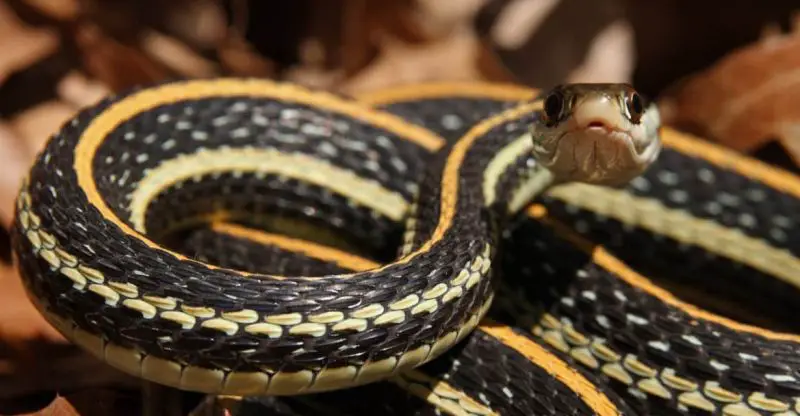
Eastern garter snakes
-
Ribbon snakes
-
Kingsnakes
-
Rat snakes
Many of these species are seen in the same marshes, canals, and floodplains. To casual observers, this overlap makes hybridization seem plausible.
But proximity alone does not lead to interbreeding.
What Hybridization Actually Requires
For two snake species to interbreed successfully, four conditions must all be met:
-
Very close genetic relationship
-
Compatible chromosome structure
-
Matching reproductive timing
-
Compatible mating behavior
If any one of these fails, hybridization does not occur.
In Florida wetlands, most snake species fail multiple of these requirements.
Most Florida Snake Species Are Too Genetically Distant
Snakes may look similar, but many belong to entirely different genera or even different families.
For example:
-
Cottonmouths belong to Agkistrodon
-
Water snakes belong to Nerodia
-
Rattlesnakes belong to Crotalus or Sistrurus
-
Kingsnakes belong to Lampropeltis
These lineages diverged millions of years ago. That evolutionary distance alone makes reproduction impossible.
A cottonmouth cannot breed with a water snake.
A rattlesnake cannot breed with a rat snake.
A venomous snake cannot breed with a nonvenomous snake.
These pairings are biologically impossible.
Venomous and Nonvenomous Snakes Cannot Interbreed
One of the most common myths in Florida involves venomous snakes breeding with nonvenomous ones.
This does not happen.
Venomous snakes (vipers and coral snakes) and nonvenomous snakes differ fundamentally in:
-
Skull structure
-
Fang development
-
Venom glands
-
Chromosome organization
These differences prevent fertilization entirely.
A cottonmouth cannot hybridize with a water snake, even though they share wetlands and look similar at a glance.
Rare Hybridization Can Occur Within the Same Genus
Hybridization can occur in snakes, but only under very narrow conditions.
It is typically limited to:
-
Closely related species
-
Within the same genus
-
With overlapping ranges
-
With overlapping breeding seasons
In Florida, this applies mainly to some nonvenomous snakes, especially within Nerodia (water snakes) and occasionally Lampropeltis (kingsnakes).
Even then, confirmed hybrids are extremely rare.
Water Snakes Are the Most Likely Candidates
Florida has several species of Nerodia water snakes living in the same wetlands.
Examples include:
-
Banded water snake
-
Florida green water snake
-
Brown water snake
These species are closely related and sometimes overlap in range.
In rare cases, hybridization between Nerodia species has been documented elsewhere in the southeastern United States. However, these events are uncommon, localized, and do not result in stable hybrid populations.
Most water snakes still mate exclusively with their own species.
Hybrid Snakes Do Not Form Stable Populations
Even when hybrid snakes are born, they almost never persist as a population.
Why?
Hybrids often face:
-
Reduced fertility
-
Lower survival rates
-
Poor camouflage
-
Mismatched behavior
Natural selection removes poorly adapted individuals quickly. Without strong survival advantages, hybrid lineages disappear within one or two generations.
This is why Florida does not have recognizable hybrid snake populations.
Snake Mating Behavior Is Highly Specific
Snakes rely heavily on pheromones to identify mates.
Each species produces a unique chemical signature. Males follow scent trails with extreme specificity. If the pheromone does not match exactly, the male does not respond.
This chemical communication system acts as a powerful reproductive barrier.
Even snakes that look nearly identical will ignore one another if pheromones do not match.
Breeding Seasons Rarely Align Perfectly
Timing matters.
Different snake species breed at different times:
-
Some breed in late winter
-
Others in spring
-
Others in early summer
Even small differences in breeding timing reduce hybridization chances dramatically. In Florida wetlands, many species share habitat but not breeding windows.
Why People Think Hybrid Snakes Exist in Florida
Most hybrid claims are rooted in misidentification, not biology.
Florida snakes show enormous variation in:
-
Color
-
Pattern
-
Size
-
Behavior
A single species can look dramatically different depending on age, sex, location, and season.
When people encounter an unfamiliar-looking snake, hybridization feels like a reasonable explanation.
Water Snakes Are Constantly Misidentified
Nonvenomous water snakes are the biggest source of confusion.
They vary widely in color and pattern. Some are dark and heavy-bodied. Others are pale or banded. Juveniles often look completely different from adults.
These variations are frequently mistaken for “mixes” between species.
In reality, they are normal expressions of genetic diversity within a single species.
Cottonmouth Confusion Fuels Myths
Cottonmouths are often confused with water snakes.
When people see a snake that looks “half cottonmouth, half something else,” they assume hybridization. In reality, they are usually seeing:
-
A dark water snake
-
A juvenile cottonmouth
-
Poor lighting or distance
Cottonmouths do not hybridize with other snakes.
Florida’s Wetlands Intensify Misperception
Wetlands distort perception.
Low light, reflections, moving water, vegetation, and brief encounters all make identification difficult. Snakes often flee quickly, leaving only partial impressions.
The brain fills in missing details.
Hybridization becomes an easy explanation for uncertainty.
Genetic Testing Does Not Support Widespread Hybridization
Modern genetic tools are precise.
When unusual snakes are tested, results overwhelmingly show known species, not hybrids. Florida wildlife agencies and researchers have not identified widespread or stable hybrid snake populations.
If hybridization were common, genetic evidence would be abundant.
It is not.
Why Hybridization Happens in Some Animals but Rarely in Snakes
Some animals hybridize more easily than others.
Snakes, however, have:
-
Strong chemical mate recognition
-
Specific courtship behaviors
-
Narrow reproductive compatibility
These traits make hybridization the exception, not the rule.
What Florida Wildlife Experts Say
Herpetologists agree on this point.
Hybridization between snake species in Florida is rare, limited, and biologically constrained. Most species remain genetically isolated despite sharing habitat.
Venomous snakes do not hybridize with nonvenomous snakes. Different genera do not hybridize. Stable hybrid populations do not exist.
Why This Question Matters
Belief in hybrid snakes can fuel fear and misinformation.
It may lead people to assume snakes are becoming more dangerous or unpredictable, which is not true. Florida’s snakes behave as they always have.
Understanding real biology helps promote coexistence instead of fear.
What To Do If You See an Unusual Snake
If you encounter a snake that looks unfamiliar:
-
Do not assume hybridization
-
Observe safely from a distance
-
Consider lighting, age, and natural variation
-
Let experts handle identification if needed
Avoid killing snakes based on uncertainty.
Florida’s Snakes Remain Distinct
Despite living side by side in wetlands, Florida’s snake species maintain clear genetic boundaries.
They may share water, banks, and prey, but they do not freely mix genes.
The wetlands are crowded, not blended.
FAQs About Snake Hybridization in Florida Wetlands
Can different snake species interbreed in Florida wetlands?
In most cases, no. Different snake species in Florida are genetically incompatible, especially if they belong to different genera or families.
Can venomous snakes hybridize with nonvenomous snakes?
No. Venomous and nonvenomous snakes have major genetic and anatomical differences that make interbreeding impossible.
Are cottonmouths known to hybridize with other snakes?
No. Cottonmouths do not hybridize with water snakes or any other snake species.
Which snakes are most likely to hybridize, if any?
Rare hybridization has been documented only among very closely related nonvenomous snakes within the same genus, such as some water snakes.
Do hybrid snakes form stable populations in Florida?
No. Even when rare hybrids occur, they do not persist or form self-sustaining populations.
Why do some snakes look like hybrids?
Natural variation in color, pattern, size, age, and lighting conditions often makes snakes appear unusual or unfamiliar.
Are water snakes commonly mistaken for hybrids?
Yes. Water snakes vary widely in appearance and are frequently misidentified as hybrids or venomous species.
Does sharing the same wetland increase hybridization?
No. Sharing habitat does not override genetic, behavioral, and reproductive barriers.
Has genetic testing confirmed hybrid snakes in Florida?
Genetic testing consistently identifies known species. There is no evidence of widespread hybridization.
Should an unusual snake sighting be reported?
Only if necessary for safety or conservation. Experts can identify species without assuming hybrid ancestry.
Final Thoughts
So, can different snake species interbreed in Florida wetlands?
In rare, tightly limited cases among closely related nonvenomous species, hybridization is biologically possible. But it is uncommon, unstable, and does not shape Florida’s snake populations.
For the vast majority of species, especially venomous snakes, interbreeding simply does not occur.
What people are seeing are Florida’s snakes doing what they have always done—coexisting, adapting, and remaining distinct in one of the most complex ecosystems in North America.