
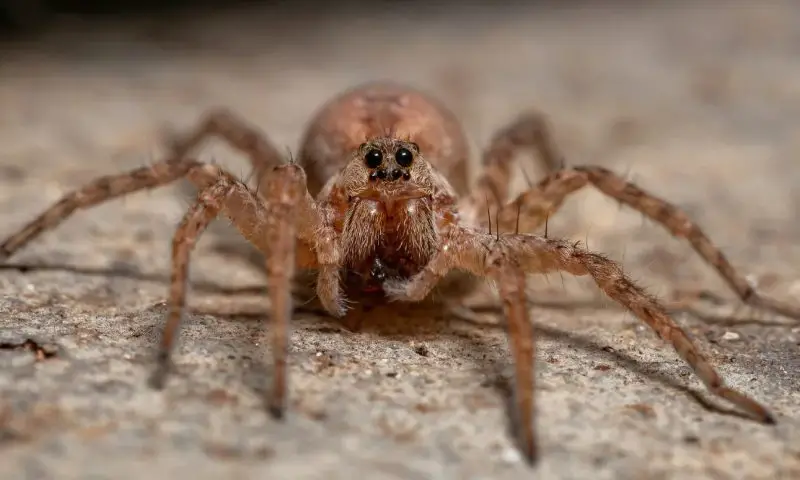
Seeing a large spider dart across the floor can be unsettling, especially in Arizona, where people are already accustomed to hearing about venomous wildlife. Wolf spiders, with their size, speed, and ground-hunting behavior, often trigger immediate concern. Many homeowners wonder whether these spiders pose a genuine threat or whether their reputation is driven more by appearance than reality.
Despite their intimidating look, wolf spiders are widely misunderstood. They are common throughout Arizona, regularly encountered indoors and outdoors, and frequently mistaken for far more dangerous species. Understanding what wolf spiders are, how they behave, and how their venom actually affects humans reveals a very different picture from the one suggested by fear and rumor.
Table of Contents
- 1 What Exactly Is a Wolf Spider?
- 2 Why Wolf Spiders Are So Common in Arizona
- 3 Wolf Spider Behavior Around Humans
- 4 Do Wolf Spiders Have Venom?
- 5 What Does a Wolf Spider Bite Feel Like?
- 6 Common Misidentifications in Arizona
- 7 Why Wolf Spiders Enter Homes
- 8 Why Wolf Spiders Are Often Seen at Night
- 9 Are Wolf Spiders Dangerous to Pets or Children?
- 10 Ecological Benefits of Wolf Spiders
- 11 Why Killing Wolf Spiders Often Backfires
- 12 How to Reduce Wolf Spider Encounters Indoors
- 13 When Professional Help Is Appropriate
- 14 Why Wolf Spiders Are More Frightening Than Dangerous
- 15 FAQs About Wolf Spiders in Arizona
- 15.1 Are wolf spiders dangerous to humans in Arizona?
- 15.2 Can wolf spider bites cause serious health problems?
- 15.3 Are wolf spiders aggressive?
- 15.4 Why do wolf spiders come inside houses?
- 15.5 Are wolf spiders the same as brown recluse spiders?
- 15.6 Are wolf spiders dangerous to pets or children?
- 15.7 Should I kill wolf spiders if I see them?
- 15.8 Do wolf spiders mean I have an infestation?
- 15.9 When should I call a professional?
- 16 Final Thoughts
What Exactly Is a Wolf Spider?
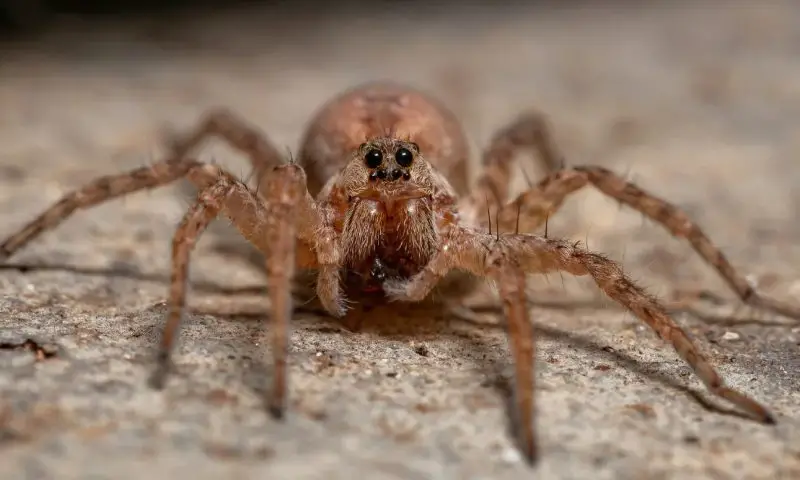
Wolf spiders belong to the family Lycosidae, a large and diverse group of spiders found on nearly every continent. Arizona is home to multiple wolf spider species that have adapted well to desert conditions, grasslands, agricultural areas, and urban neighborhoods.
Unlike web-building spiders, wolf spiders are active hunters. They chase down insects rather than waiting for prey to become trapped in silk. This hunting style makes them more visible to people, especially when they wander across patios, garages, or living room floors at night.
Their physical features contribute strongly to their reputation. Wolf spiders are often brown or gray, with thick legs, robust bodies, and excellent camouflage that helps them blend into soil and leaf litter. Many species also have distinctive eye patterns that reflect light, making their eyes shine when illuminated at night.
Why Wolf Spiders Are So Common in Arizona
Arizona’s environment provides ideal conditions for wolf spiders. Warm temperatures, open terrain, and abundant insect populations allow them to thrive year-round. Desert landscapes, rocky foothills, and irrigated residential areas all support the insects wolf spiders feed on.
Human development has not displaced wolf spiders so much as it has created new hunting grounds. Yards, gardens, and outdoor lighting attract insects, and spiders naturally follow. Homes built near desert edges or open land are especially likely to encounter wolf spiders, particularly during seasonal changes.
Wolf spiders do not invade houses intentionally. Most indoor encounters occur when spiders wander inside while hunting or seeking shelter from extreme heat, cold nights, or heavy monsoon rains.
Wolf Spider Behavior Around Humans
One of the most important facts about wolf spiders is that they are not aggressive. They do not seek out humans, defend territory, or attack without cause. When confronted, their first instinct is to flee.
Bites occur almost exclusively when a spider is trapped against skin, such as when someone puts on shoes left outdoors, rolls over onto a spider in bed, or attempts to handle one directly. Even in these situations, many wolf spiders choose escape rather than biting.
Their speed often contributes to fear, but it is a defensive advantage, not a sign of aggression. Rapid movement allows wolf spiders to avoid threats rather than confront them.
Do Wolf Spiders Have Venom?
Yes, wolf spiders do possess venom, as do nearly all spiders. Venom is used to subdue insect prey, not to harm humans. The key question is whether that venom is medically dangerous.
For wolf spiders, the answer is no. Their venom is considered mild and is not classified as medically significant. It does not cause tissue necrosis, systemic illness, or long-term complications in healthy individuals.
In this regard, wolf spiders are fundamentally different from truly dangerous spiders such as the Arizona bark scorpion or black widow spiders.
What Does a Wolf Spider Bite Feel Like?
Confirmed wolf spider bites are uncommon, but when they do occur, symptoms are typically mild. Most people describe localized pain similar to a bee sting, along with redness, slight swelling, or itching at the bite site.
In some cases, minor numbness or tingling may occur for a short period. These symptoms usually resolve within a few hours to a couple of days without medical treatment.
Serious reactions are rare. Allergic responses are possible, as with any bite or sting, but they are not specific to wolf spider venom and are uncommon overall.
Common Misidentifications in Arizona
One reason wolf spiders are often feared is that they are frequently confused with more dangerous species. Their size and ground-hunting behavior lead many people to mistake them for brown recluse spiders or other venomous arachnids.
Brown recluse spiders, however, are not native to most of Arizona, and verified populations are extremely limited. Many spiders blamed for necrotic wounds or unexplained bites are later identified as wolf spiders, even though wolf spider venom does not cause tissue damage.
Misidentification contributes significantly to the myth that wolf spiders are dangerous.
Why Wolf Spiders Enter Homes
Indoor appearances are usually accidental rather than intentional. Wolf spiders may wander inside while chasing insects or seeking shelter from environmental extremes.
Arizona’s climate plays a role here. During summer, extreme heat can drive spiders toward cooler, shaded areas. During monsoon season, heavy rains flood burrows and ground cover, pushing spiders into higher, drier spaces, including homes.
In winter, cooler nighttime temperatures can also lead spiders to seek insulated structures such as garages, crawl spaces, and ground-floor rooms.
Why Wolf Spiders Are Often Seen at Night
Wolf spiders are primarily nocturnal. Their hunting activity increases after sunset, when insects are active and temperatures drop.
This nocturnal behavior means people are more likely to encounter them during nighttime trips to the kitchen or bathroom. Outdoor lights that attract insects can also draw wolf spiders closer to buildings, increasing the chance of indoor entry.
Are Wolf Spiders Dangerous to Pets or Children?
For pets and children, wolf spiders pose minimal risk. A curious pet may provoke a defensive bite, but symptoms are usually mild and temporary.
Small pets that attempt to eat spiders may experience brief mouth irritation, but serious outcomes are rare. As with humans, the greatest risk comes from misidentifying other species as wolf spiders and assuming all spiders pose equal danger.
Ecological Benefits of Wolf Spiders
Despite their reputation, wolf spiders provide valuable ecological services. They are efficient predators of insects that many people consider pests, including cockroaches, crickets, ants, and other spiders.
By reducing insect populations naturally, wolf spiders help limit the need for chemical pest control. Their presence often indicates a healthy ecosystem rather than a dangerous infestation.
Why Killing Wolf Spiders Often Backfires
Eliminating individual wolf spiders rarely solves underlying problems. If insects remain abundant, new spiders will continue to arrive.
Focusing on exclusion and habitat management is more effective than repeated extermination. Sealing entry points, reducing outdoor insect attraction, and managing moisture levels indoors can significantly reduce encounters.
How to Reduce Wolf Spider Encounters Indoors
Preventive steps include sealing cracks around doors and windows, repairing torn screens, and reducing clutter in garages and storage areas. Outdoor lighting can be adjusted to attract fewer insects, which in turn reduces spider activity near entrances.
Keeping firewood, debris, and dense vegetation away from the foundation also limits shelter opportunities for spiders near the home.
When Professional Help Is Appropriate
Most wolf spider encounters do not require professional pest control. However, frequent sightings combined with high insect activity or confusion with venomous species may justify an inspection.
Professionals can identify species accurately, locate entry points, and recommend targeted solutions rather than blanket pesticide use.
Why Wolf Spiders Are More Frightening Than Dangerous
Fear of wolf spiders is largely psychological. Their size, speed, and hunting behavior trigger instinctive reactions, especially in people who are uncomfortable with spiders in general.
From a biological and medical standpoint, wolf spiders are low-risk animals that coexist with humans far more often than most people realize.
FAQs About Wolf Spiders in Arizona
Are wolf spiders dangerous to humans in Arizona?
No. Wolf spiders are not medically dangerous. Their venom is mild, and bites are rare and usually cause only minor, short-term irritation.
Can wolf spider bites cause serious health problems?
In healthy individuals, serious reactions are extremely unlikely. Symptoms are typically limited to localized pain, redness, or mild swelling.
Are wolf spiders aggressive?
No. Wolf spiders avoid people and bite only when trapped or handled. Their fast movement is a defensive behavior, not aggression.
Why do wolf spiders come inside houses?
They usually enter accidentally while hunting insects or seeking shelter from heat, cold nights, or heavy monsoon rains.
Are wolf spiders the same as brown recluse spiders?
No. Wolf spiders are often mistaken for brown recluses, but they are different species. Brown recluses are not common in most of Arizona.
Are wolf spiders dangerous to pets or children?
They pose minimal risk. Bites are rare, and serious effects are very uncommon for both pets and children.
Should I kill wolf spiders if I see them?
Killing them is usually unnecessary. Reducing insects and sealing entry points is more effective than extermination.
Do wolf spiders mean I have an infestation?
Not necessarily. Seeing one or two spiders usually reflects outdoor activity rather than an indoor infestation.
When should I call a professional?
If spiders appear frequently, if insect activity is high, or if you are unsure of the species, professional identification can help.
Final Thoughts
Wolf spiders in Arizona are not the threat they are often believed to be. They are non-aggressive hunters with mild venom that poses little risk to humans. Their presence indoors usually reflects environmental conditions rather than danger.
Understanding their behavior, recognizing common misidentifications, and focusing on prevention rather than fear allows homeowners to manage encounters calmly and effectively.
In Arizona, wolf spiders are not signs of danger. They are reminders that even in modern homes, desert wildlife still shares the landscape.