
In Texas, people expect danger to come with sound or size. Rattlesnakes warn before striking. Wasps announce themselves with a buzz. Even mosquitoes leave an itch that tells you something happened. Fire ants do none of that. They arrive quietly, often unnoticed, until the pain erupts all at once.
Every year, thousands of Texans end up in emergency rooms because of fire ant stings. Some arrive with severe allergic reactions. Others come in shock, dizzy, nauseated, or covered in painful pustules after being stung dozens or hundreds of times. Many never saw the ants until it was too late.
Fire ants are not just a nuisance in Texas. They are one of the most medically significant insects in the state. Their venom, delivery method, and aggressive behavior make them uniquely dangerous, especially for children, the elderly, outdoor workers, and anyone with allergies.
Understanding why fire ants send so many people to the ER means understanding how they live, how they attack, and how their venom affects the human body.
Table of Contents
- 1 Why Texas Has Such a Severe Fire Ant Problem
- 2 What Fire Ants Actually Are
- 3 Fire Ant Mounds and Why People Step on Them
- 4 How a Fire Ant Attack Unfolds
- 5 The Venom Inside a Fire Ant Sting
- 6 Why Fire Ant Venom Is Medically Significant
- 7 Allergic Reactions and Anaphylaxis
- 8 Why Children Are at Higher Risk
- 9 Elderly Adults and Medical Complications
- 10 Outdoor Workers and Repeated Exposure
- 11 Fire Ant Stings Versus Bee and Wasp Stings
- 12 The Classic Fire Ant Pustule
- 13 When Fire Ant Stings Become a Medical Emergency
- 14 Why ER Visits Are So Common in Texas
- 15 Fire Ants After Floods
- 16 First Aid After Fire Ant Stings
- 17 Medical Treatment in the ER
- 18 Long-Term Sensitization and Immunotherapy
- 19 Fire Ant Control Around Homes
- 20 Why Fire Ants Continue to Spread
- 21 The Psychological Impact of Fire Ant Attacks
- 22 Why Fire Ants Are Not Going Away
- 23 Prevention Without Panic
- 24 FAQs About Texas Fire Ants and Their Venom
- 24.1 Why are fire ant stings so common in Texas
- 24.2 How dangerous are fire ant stings
- 24.3 Why do fire ants sting so many times
- 24.4 What is in fire ant venom
- 24.5 Why do fire ant stings leave white pustules
- 24.6 Who is most at risk from fire ant stings
- 24.7 When should fire ant stings be treated as an emergency
- 24.8 Are fire ants more dangerous after floods
- 24.9 Can repeated fire ant stings make reactions worse over time
- 24.10 How can Texans reduce fire ant sting risk
- 25 Final Thoughts
Why Texas Has Such a Severe Fire Ant Problem
Texas provides near-perfect conditions for fire ants. Warm temperatures, long growing seasons, disturbed soil, and expanding suburbs all favor their spread.
Fire ants thrive in lawns, pastures, parks, playgrounds, road edges, and agricultural land. Any place where soil is turned, irrigated, or compacted becomes potential habitat.
Urban growth has not displaced fire ants. It has helped them. Construction zones, newly laid sod, drainage ditches, and roadside shoulders all create ideal nesting conditions.
Unlike insects that remain seasonal, fire ants remain active for most of the year in Texas. Mild winters allow colonies to survive and expand continuously.
What Fire Ants Actually Are
The most problematic species in Texas is the red imported fire ant. Despite the name, it is now firmly established and functionally native in much of the state.
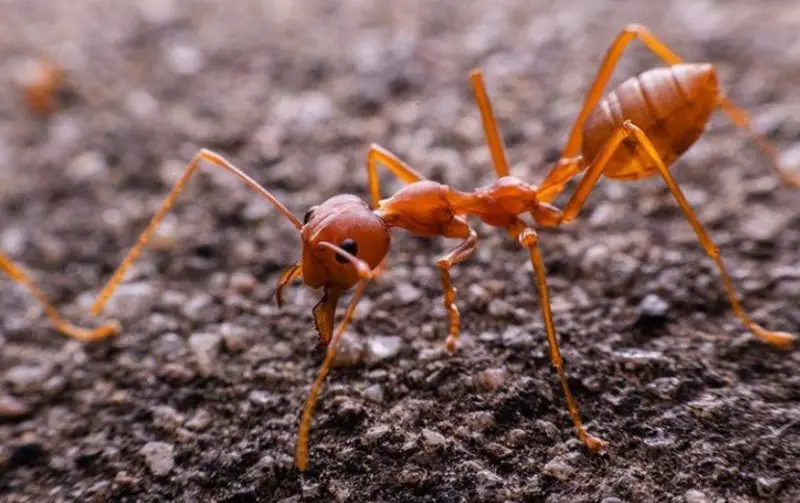
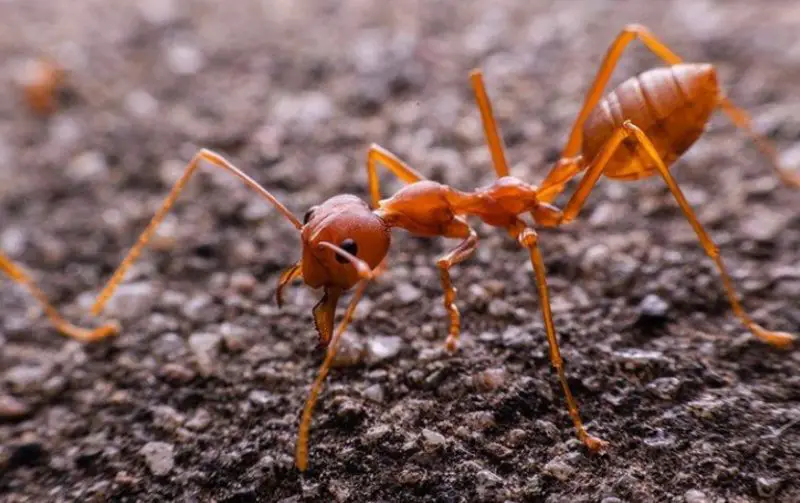
Fire ants are small, reddish-brown ants with darker abdomens. Individually, they look unimpressive. Collectively, they become dangerous.
A single colony can contain hundreds of thousands of ants. Multiple queens may live in one mound, allowing colonies to rebound quickly even after partial destruction.
Fire ants are highly territorial. They respond to vibration and disturbance with coordinated aggression, swarming upward and attacking as a group.
Fire Ant Mounds and Why People Step on Them
Fire ant mounds do not always look dramatic. Some rise several inches above ground. Others appear as flat patches of loose soil with no obvious opening.
People step on them accidentally while mowing, walking pets, gardening, or playing outside. Children often trigger attacks while running or sitting on grass.
Once disturbed, fire ants do not scatter. They climb.
How a Fire Ant Attack Unfolds
Fire ants attack in a way that feels sudden and overwhelming.
They latch onto skin with their mandibles. Then they sting repeatedly, pivoting in a circular pattern. Each ant can sting multiple times.
Victims often feel burning pain within seconds. By the time they look down, dozens of ants may already be attached.
Unlike bees, fire ants do not lose their stingers. They keep stinging until removed.
This behavior explains why a single encounter can result in dozens or even hundreds of stings.
The Venom Inside a Fire Ant Sting
Fire ant venom is not injected like bee venom. It is delivered through a stinger after the ant anchors itself to skin.
The venom contains alkaloids and proteins that cause intense local inflammation. These compounds damage tissue, trigger immune responses, and create the signature pustules that appear later.
For most people, the venom causes burning pain followed by itching and blistering. For others, it triggers something far more dangerous.
Why Fire Ant Venom Is Medically Significant
Fire ant venom affects people in three main ways.
First, it causes direct tissue injury. The sting damages skin cells, leading to swelling, redness, and pustule formation.
Second, it activates the immune system. Histamine release leads to itching, inflammation, and discomfort.
Third, in allergic individuals, it triggers systemic reactions. Blood pressure can drop. Airways can constrict. The immune system overreacts.
This third response is what sends many Texans to the ER.
Allergic Reactions and Anaphylaxis
Fire ants are among the leading causes of insect-related anaphylaxis in Texas.
Anaphylaxis is a rapid, life-threatening allergic reaction. Symptoms may include difficulty breathing, swelling of the throat, dizziness, vomiting, hives, and loss of consciousness.
These reactions can occur within minutes of stings. Without prompt treatment, they can be fatal.
Many people do not know they are allergic until their first severe reaction.
Why Children Are at Higher Risk
Children are more vulnerable for several reasons.
They are closer to the ground. They play barefoot or sit on grass. They may not recognize mounds as dangerous.
Children are also smaller, meaning venom doses are effectively higher relative to body size.
In severe cases, children stung multiple times can experience systemic toxicity even without a true allergy.
Elderly Adults and Medical Complications
Older adults often have underlying health conditions that make fire ant stings more dangerous.
Heart disease, asthma, compromised immune systems, and medications such as beta blockers can complicate allergic reactions.
Delayed treatment increases risk. Many older adults attempt to manage symptoms at home before seeking help.
Outdoor Workers and Repeated Exposure
Farmers, landscapers, construction workers, utility crews, and oil field workers face repeated exposure to fire ants.
Repeated stings increase the likelihood of developing sensitivity over time. Someone who tolerated stings years ago may suddenly experience severe reactions later.
Occupational exposure accounts for a significant portion of ER visits related to fire ants in Texas.
Fire Ant Stings Versus Bee and Wasp Stings
Fire ant stings differ in key ways.
Bees typically sting once. Wasps sting multiple times but rarely in coordinated swarms.
Fire ants attack en masse. The total venom load can be much higher.
The pustules left by fire ant stings are unique. These sterile, white-filled blisters can last days and may scar if infected or scratched.
The Classic Fire Ant Pustule
Within 6 to 24 hours after stings, small white pustules form at sting sites.
These pustules are filled with fluid, not pus from infection. However, scratching can introduce bacteria and cause secondary infections.
In some cases, scars remain for weeks or months.
When Fire Ant Stings Become a Medical Emergency
Emergency care is needed if any of the following occur:
-
Difficulty breathing
-
Swelling of the lips, tongue, or throat
-
Dizziness or fainting
-
Rapid heartbeat
-
Severe nausea or vomiting
-
Confusion or weakness
Multiple stings, especially in children or elderly adults, also warrant medical evaluation.
Why ER Visits Are So Common in Texas
Texas leads the nation in fire ant-related emergency visits.
The reasons are simple. High population. Widespread fire ant colonies. Long outdoor seasons. Frequent exposure.
Many ER visits occur after mowing lawns, attending outdoor events, or storms that flood mounds and force ants to the surface.
Flooding is especially dangerous. Fire ants form floating rafts, climbing onto anything above water, including people.
Fire Ants After Floods
After heavy rain or flooding, fire ants become even more dangerous.
Colonies break apart and float. They cling to debris, vegetation, and animals.
People wading through floodwaters may unknowingly contact dense clusters of ants.
Many severe sting incidents occur during and after floods in Texas.
First Aid After Fire Ant Stings
For mild reactions, immediate steps include washing the area with soap and water, applying cold compresses, and using antihistamines or hydrocortisone cream.
Avoid popping pustules. Keep nails clean to prevent infection.
Pain usually peaks within hours and improves over days.
Medical Treatment in the ER
In emergency settings, treatment focuses on stabilizing allergic reactions.
Epinephrine is the primary treatment for anaphylaxis. Oxygen, IV fluids, antihistamines, and steroids may also be used.
Patients with known allergies are often advised to carry epinephrine auto-injectors.
Long-Term Sensitization and Immunotherapy
Some individuals develop increasing sensitivity after repeated stings.
Venom immunotherapy is available and highly effective for people with severe reactions. It reduces the risk of future anaphylaxis dramatically.
Doctors may recommend allergy testing after serious reactions.
Fire Ant Control Around Homes
Complete eradication is unrealistic. Management is the goal.
Reducing mounds near homes, treating lawns, and avoiding barefoot outdoor activity lower risk.
Professional pest control may be necessary in high-risk areas, especially around playgrounds or schools.
Why Fire Ants Continue to Spread
Fire ants spread through human activity. Soil movement, nursery plants, equipment transport, and construction help colonies expand.
Climate trends also favor their continued spread northward.
Texas remains the epicenter.
The Psychological Impact of Fire Ant Attacks
People who experience severe stings often develop lasting fear of outdoor spaces.
Children may avoid playing outside. Adults may hesitate to garden or exercise outdoors.
Education helps restore confidence. Knowing where ants live and how to avoid them reduces fear.
Why Fire Ants Are Not Going Away
Fire ants are resilient. They adapt quickly. They rebound after control efforts.
They are now part of Texas’s ecological reality, for better or worse.
Ignoring them increases risk. Understanding them reduces it.
Prevention Without Panic
Most fire ant encounters do not lead to ER visits. Awareness matters more than fear.
Watching for mounds, wearing shoes, teaching children to recognize danger, and responding quickly to stings save lives.
Fire ants are dangerous not because they hunt humans, but because they defend their territory relentlessly.
FAQs About Texas Fire Ants and Their Venom
Why are fire ant stings so common in Texas
Texas has warm weather, long outdoor seasons, and widespread fire ant colonies. Lawns, parks, farms, and construction sites all provide ideal nesting conditions.
How dangerous are fire ant stings
For most people, stings cause painful burning and pustules. For allergic individuals, multiple stings can trigger life-threatening anaphylaxis that requires emergency care.
Why do fire ants sting so many times
Fire ants latch onto skin and sting repeatedly. They do not lose their stinger, allowing a single ant to deliver multiple stings in seconds.
What is in fire ant venom
Fire ant venom contains alkaloids and proteins that damage skin tissue, cause inflammation, and can trigger severe immune reactions in sensitive individuals.
Why do fire ant stings leave white pustules
The pustules are a reaction to venom, not infection. They form within 6–24 hours and should not be popped to avoid scarring or infection.
Who is most at risk from fire ant stings
Children, older adults, outdoor workers, and people with insect allergies face the highest risk of severe reactions or ER visits.
When should fire ant stings be treated as an emergency
Emergency care is needed if breathing problems, throat swelling, dizziness, vomiting, or collapse occurs, or if a child receives many stings at once.
Are fire ants more dangerous after floods
Yes. Flooding forces fire ants to form floating rafts, increasing accidental contact and the likelihood of mass stings.
Can repeated fire ant stings make reactions worse over time
Yes. Repeated exposure can increase sensitivity, causing more severe reactions even if earlier stings were mild.
How can Texans reduce fire ant sting risk
Wear shoes outdoors, watch for mounds, supervise children, treat yards when needed, and carry epinephrine if you have a known allergy.
Final Thoughts
Texas fire ants are small, but their impact is massive. Their venom sends thousands of people to emergency rooms each year, turning routine outdoor moments into medical crises.
The danger lies in numbers, speed, and chemistry. A silent mound. A sudden swarm. A venom the body may not tolerate.
Understanding fire ants does not mean avoiding the outdoors. It means respecting what lives there.
In Texas, that respect can be the difference between a painful inconvenience and a trip to the ER.