
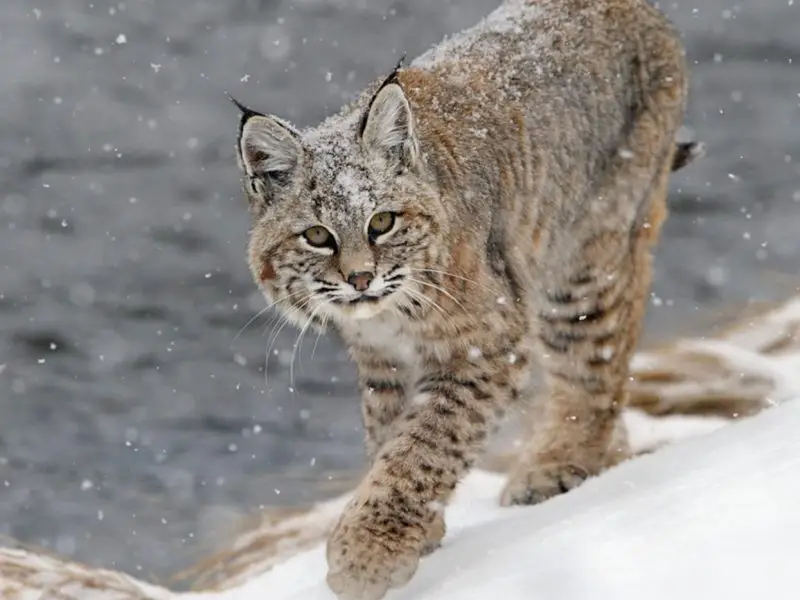
Bobcats move quietly across Vermont forests, farmland edges, and mountain ridges. Domestic cats live much closer to people, wandering barns, backyards, and rural roads. Because their territories sometimes overlap, a common question keeps resurfacing. Do these two cats ever breed together?
It sounds possible at first. They share similar appearances in some cases. Both are adaptable hunters. Both belong to the cat family. Yet wildlife science paints a very different picture once biology, behavior, and ecology are examined closely.
Rumors persist, especially after sightings of unusually large cats or striking coat patterns. But speculation is not evidence. To understand what really happens in Vermont, it helps to look at how bobcats live, how domestic cats behave, and what genetics tells us about interbreeding.
Table of Contents
- 1 Bobcats in Vermont Today
- 2 Domestic Cats Living in Rural Vermont
- 3 Biological Possibility of Interbreeding
- 4 Why Hybrid Rumors Persist
- 5 Typical Encounters Between Bobcats and House Cats
- 6 Ecological Role of Bobcats in Vermont
- 7 Hypothetical Risks If Hybridization Occurred
- 8 Keeping Domestic Cats Safe in Bobcat Habitat
- 9 Scientific Perspective From Wildlife Experts
- 10 FAQs About Bobcats Mating With Domestic Cats
- 10.1 Do bobcats mate with domestic cats in Vermont?
- 10.2 Could mating attempts happen?
- 10.3 Are bobcat house cat hybrids documented anywhere?
- 10.4 Are outdoor cats at risk from bobcats?
- 10.5 How can I identify a bobcat?
- 10.6 Do bobcats frequently attack pets?
- 10.7 Why do bobcats avoid domestic cats?
- 10.8 Are bobcats protected wildlife in Vermont?
- 10.9 Could habitat changes increase interactions?
- 10.10 Should sightings be reported?
- 11 Conclusion
Bobcats in Vermont Today
Distribution Across the State
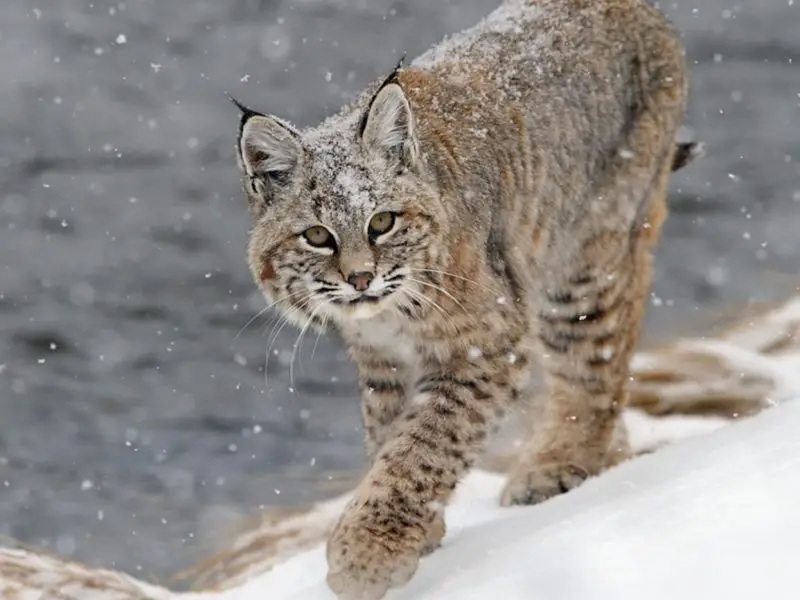
Bobcats are native throughout Vermont and their population has steadily rebounded after decades of decline linked to habitat loss, hunting pressure, and human expansion. Today, they occupy nearly every county in the state, although densities vary depending on habitat quality and prey availability. Forested mountains, rural valleys, and transitional woodland edges remain their strongest strongholds.
Northern hardwood forests provide exceptional cover. Thick understory vegetation allows stealth movement, while fallen logs, rocky outcrops, and brush piles create den opportunities. Vermont’s patchwork landscape of forest, farmland, and wetland corridors actually benefits bobcats because it offers both concealment and hunting grounds.
Prey abundance plays a major role in where bobcats settle. Snowshoe hares, cottontail rabbits, voles, squirrels, grouse, and small mammals support their diet year round. Areas with stable prey populations typically show higher bobcat activity.
Winter conditions also influence distribution. Deep persistent snow can reduce hunting efficiency because bobcats have relatively small feet compared with species like lynx. As a result, they often favor regions where wind patterns, vegetation cover, or elevation reduce snow depth.
Sightings occasionally occur near suburban edges or small towns, particularly where green corridors connect forests to developed areas. Still, bobcats generally prefer landscapes with minimal human disturbance, dense cover, and reliable prey sources.
Daily Behavior and Territorial Nature
Bobcats are famously solitary. Adult individuals establish territories that they patrol regularly, marking boundaries with scent glands, urine, scat, and scratch marks on trees or logs. These signals communicate presence to other bobcats without requiring direct confrontation.
Male territories can span several square miles and may overlap the ranges of multiple females. Female territories are typically smaller but carefully defended, especially when raising kittens. Direct adult encounters outside breeding season are uncommon and often avoided.
Activity peaks during twilight hours. Dawn and dusk provide ideal lighting conditions for ambush hunting while reducing exposure to humans and larger predators. This crepuscular rhythm is consistent across much of their North American range.
Bobcats move quietly and deliberately. They use terrain features like ridgelines, stream corridors, and dense brush to travel unseen. Even in areas where they are common, most people rarely spot them.
This independent lifestyle significantly reduces opportunities for social interaction with other species, including domestic cats. Territorial instincts and cautious behavior create a natural barrier long before genetics comes into play.
Bobcat Breeding Patterns
Bobcats typically breed once each year, most often between late winter and early spring. Timing is influenced by daylight length, temperature trends, and prey availability. Seasonal breeding ensures kittens are born when food becomes more plentiful.
Courtship is brief compared with domestic cats. Vocalizations, scent marking, and short periods of tolerance between adults signal readiness. After mating, the pair separates quickly.
Females raise kittens alone. Dens are carefully chosen for concealment and protection. Rocky crevices, hollow logs, brush piles, and dense thickets are common choices. These sites shield kittens from weather, predators, and disturbance.
Newborn kittens remain hidden for several weeks. As they grow stronger, the mother gradually introduces them to short exploratory trips before teaching hunting skills.
This tightly synchronized breeding cycle contrasts strongly with domestic cats, whose reproductive timing is far more flexible.
Domestic Cats Living in Rural Vermont
Outdoor and Barn Cats
Rural Vermont has a long tradition of barn cats. Farms often keep cats for rodent control, and many households allow pets to roam outdoors. These cats may patrol fields, barns, woodlots, and garden edges.
Even free roaming domestic cats usually maintain smaller territories than bobcats. Most remain within a few hundred yards of food sources, shelter, and familiar human activity. This localized movement limits direct encounters with wild predators.
Behavior during potential encounters also differs sharply. Domestic cats typically detect predator presence through scent or sound and retreat quickly. Survival instincts favor avoidance over confrontation.
However, outdoor lifestyles still expose domestic cats to environmental risks including weather, vehicles, disease, and occasionally wild predators. This context often shapes public concern about bobcats.
Domestic Cat Reproductive Cycles
Domestic cats are capable of breeding multiple times per year. Females can enter heat repeatedly, especially during warmer months or when living indoors with artificial lighting. This flexibility contrasts with the strict seasonal breeding of bobcats.
Their courtship behaviors differ as well. Vocalizations, scent signals, and tolerance thresholds vary significantly between species. Domestic cats often display social tolerance that wild cats rarely show outside breeding windows.
Because breeding timing rarely overlaps and communication signals differ, successful cross species mating becomes highly unlikely. Biological rhythms alone reduce the chances considerably.
Timing, behavior, and environment all work together to keep the species reproductively separate.
Biological Possibility of Interbreeding
Genetic Distance Between Species
Bobcats belong to the species Lynx rufus, while domestic cats belong to Felis catus. Although both are members of the broader cat family, their evolutionary paths diverged long ago. This genetic distance reduces compatibility at the reproductive level.
Successful hybridization typically requires closer genetic relationships than those between bobcats and domestic cats. Chromosomal differences, reproductive physiology, and behavioral cues all create barriers.
Even if mating attempts occurred, viable offspring would be extremely unlikely based on current scientific understanding.
Wildlife genetics research consistently supports this separation.
Lack of Verified Hybrid Cases
Rumors about bobcat domestic cat hybrids appear periodically, often fueled by unusual coat patterns or large body size in domestic cats. However, no scientifically verified hybrids have been documented in the wild.
DNA analysis has repeatedly clarified suspected cases. Animals thought to be hybrids almost always turn out to be either pure bobcats or domestic cats with naturally variable traits.
Hybridization does occur among some feline species. Bengals, for example, originate from Asian leopard cat crosses with domestic cats. But comparable verified crosses involving bobcats have not been confirmed.
Scientific evidence continues to support reproductive separation.
Behavioral Barriers
Behavior may be the strongest barrier of all. Bobcats are cautious, territorial, and generally avoid unfamiliar animals. Domestic cats tend to react defensively to larger predators.
Courtship requires repeated proximity, tolerance, and compatible signaling. Those conditions rarely exist between these species.
Shared habitat does not equal shared social space. Animals can occupy the same region without meaningful interaction.
This behavioral distance reinforces genetic isolation.
Why Hybrid Rumors Persist
Physical Resemblance
Certain domestic cats naturally resemble wildcats. Spotted coats, short tails, ear tufts, and muscular builds can suggest wild ancestry. Owners sometimes interpret these traits as evidence of bobcat lineage.
In reality, domestic cat genetics produce wide variation. Selective breeding and natural diversity explain most unusual appearances.
Visual similarity alone does not indicate hybridization.
Misidentified Wild Cats
Young bobcats occasionally wander near human settlements, especially during dispersal periods. People unfamiliar with wildlife may assume these animals are large stray cats.
Feral domestic cats living outdoors can also develop robust physiques and weathered coats that mimic wild characteristics. Poor lighting conditions often increase confusion.
Misidentification remains one of the most common sources of hybrid rumors.
Viral Online Stories
Social media amplifies unusual sightings quickly. A compelling photo or anecdote can circulate widely without verification.
Wildlife biology relies on documented observation, genetic testing, and repeatable evidence. Anecdotes alone cannot confirm hybridization.
So far, credible scientific evidence does not support these claims.
Typical Encounters Between Bobcats and House Cats
Predator Prey Relationship
In rare cases, bobcats may view small domestic cats as potential prey. This is not typical but has been documented in rural environments.
Bobcats primarily hunt wild prey such as rabbits, rodents, and birds. Opportunistic predation usually occurs only when natural prey is scarce or an easy opportunity arises.
Keeping domestic cats indoors significantly reduces this risk.
Mutual Avoidance
Most encounters involve avoidance rather than aggression. Domestic cats detect predator cues and retreat. Bobcats generally avoid areas with strong human presence unless hunting.
Avoidance benefits both animals by reducing injury risk and energy expenditure.
Coexistence often occurs quietly without direct conflict.
Territorial Separation
Bobcat territories can cover several square miles. Domestic cats usually remain near homes or barns where food and shelter are available.
Even when ranges overlap geographically, daily movement patterns rarely intersect.
Spatial separation naturally limits encounters.
Ecological Role of Bobcats in Vermont
Natural Population Control
Bobcats help regulate populations of rabbits, rodents, and other small mammals. This natural control supports ecosystem balance and reduces agricultural pest pressure.
Predators stabilize food webs. Their absence can lead to population surges among prey species.
Balanced ecosystems often depend on healthy predator presence.
Indicator of Habitat Quality
Stable bobcat populations suggest intact habitats with sufficient prey and cover. Their presence often reflects successful conservation and habitat management.
Forests that support bobcats typically support diverse wildlife communities.
Bobcats serve as ecological indicators.
Coexistence With Humans
Sightings have increased partly because populations recovered and monitoring improved. Education helps residents understand bobcat behavior and reduce unnecessary fear.
Knowledge encourages coexistence.
Understanding replaces myth with science.
Hypothetical Risks If Hybridization Occurred
Genetic Integrity Concerns
Hybridization between domestic and wild species has affected wolves, wildcats, and other animals elsewhere. Such mixing can dilute genetic adaptations.
Bobcats appear largely protected from this risk due to strong biological barriers.
Current evidence indicates minimal concern.
Disease Transmission
Domestic cats can carry diseases transmissible to wildlife, including feline leukemia and parasites. Limiting contact reduces potential spread.
Vaccination, indoor living, and responsible pet care protect both wildlife and pets.
Healthy boundaries benefit ecosystems.
Keeping Domestic Cats Safe in Bobcat Habitat
Indoor Living Advantages
Indoor cats generally live longer and face fewer hazards. They avoid predators, traffic, severe weather, and many infectious diseases.
Indoor living also reduces wildlife predation by domestic cats.
Safety improves on both sides.
Timing Outdoor Activity
If outdoor access is allowed, daytime hours are safer. Bobcats hunt primarily after dusk and before sunrise.
Supervised outdoor time reduces risk further.
Simple timing adjustments can make a difference.
Secure Outdoor Enclosures
Enclosed outdoor spaces, often called catios, allow cats fresh air without exposure to predators. These structures are increasingly popular in rural communities.
They combine enrichment with safety.
Protection does not require confinement indoors at all times.
Scientific Perspective From Wildlife Experts
Research Findings
Wildlife biologists consistently report no confirmed bobcat domestic cat hybrids. Genetic distance, behavioral isolation, and ecological factors all reinforce separation.
Scientific monitoring continues through field studies, camera traps, and genetic sampling.
Current evidence strongly supports species distinction.
Ongoing Observation
Wildlife agencies regularly track bobcat populations using modern technology. GPS collars, remote cameras, and genetic analysis help researchers understand movement patterns and health.
If hybridization were occurring, it would likely appear in these datasets.
To date, none has been confirmed. Evidence continues to support reproductive separation between bobcats and domestic cats.
FAQs About Bobcats Mating With Domestic Cats
Do bobcats mate with domestic cats in Vermont?
There is no verified scientific evidence that bobcats breed with domestic cats. Biological and behavioral barriers make it extremely unlikely.
Could mating attempts happen?
Theoretically possible, but differences in behavior, size, and breeding cycles make successful mating improbable.
Are bobcat house cat hybrids documented anywhere?
No confirmed cases exist. Suspected hybrids usually turn out to be pure bobcats or domestic cats after genetic testing.
Are outdoor cats at risk from bobcats?
Risk exists but remains low. Keeping cats indoors or supervised outdoors significantly reduces danger.
How can I identify a bobcat?
Bobcats have short tails with black tips, tufted ears, spotted coats, and are larger than most domestic cats.
Do bobcats frequently attack pets?
Attacks are uncommon but can occur in rural areas, especially at night.
Why do bobcats avoid domestic cats?
Wild bobcats typically avoid human environments and unfamiliar animals. Avoidance reduces conflict.
Are bobcats protected wildlife in Vermont?
Yes. Regulations help maintain healthy populations and support conservation.
Could habitat changes increase interactions?
Possible, but biological barriers to breeding would likely remain strong.
Should sightings be reported?
Wildlife agencies often welcome reports to help track population trends.
Conclusion
The idea of bobcats in Vermont mating with domestic cats captures curiosity but lacks scientific support. Genetics, behavior, habitat preferences, and breeding cycles all create strong barriers between the two species. Encounters may occur, yet they usually involve avoidance rather than interaction.
Understanding these realities helps reduce myths while promoting responsible pet care. Bobcats play a valuable ecological role, contributing to balanced wildlife populations. Domestic cats thrive best under human protection.
Knowledge replaces fear. Responsible coexistence benefits wildlife, pets, and the people who share the landscape with both.