
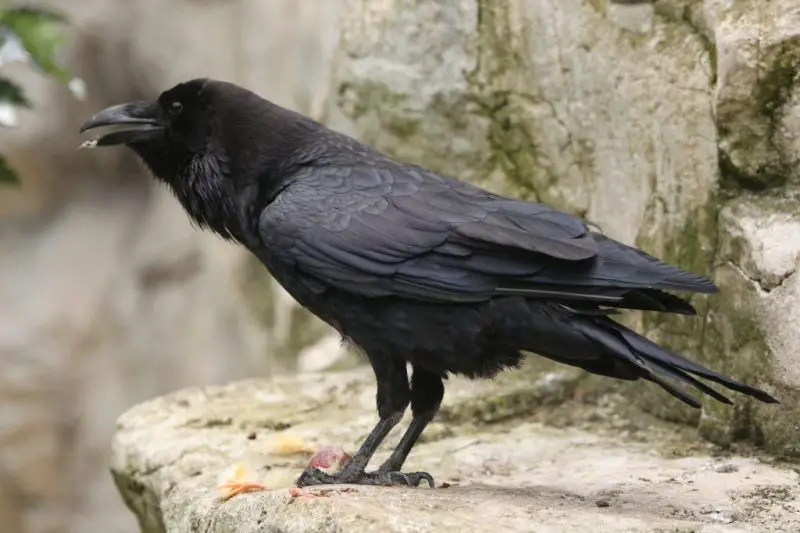
Winter in Oregon is not a uniform experience. The Cascade Mountains face heavy snowfall and deep cold, while coastal regions remain wet, stormy, and windy. Valley regions sit somewhere between the two, with freezing mornings, cold rainfall, and occasional snow. Across these environments, ravens must survive months where food changes dramatically and many natural sources disappear.
Winter challenges ravens in terms of calorie intake, food availability, and access. However, ravens are exceptionally equipped to deal with these conditions. They are highly intelligent, opportunistic, and capable of exploiting nearly every available resource. Their winter diet in Oregon is therefore a fascinating example of adaptation, ecological intelligence, and behavioral strategy.
Ravens are not just surviving winter in Oregon; they are thriving. They do so by widening their diet, adjusting feeding patterns, and using memory and observation to locate dependable resources. Understanding what ravens eat during winter reveals why they are among the most successful birds in the Pacific Northwest.
Table of Contents
- 1 How Oregon’s Winter Conditions Shape Raven Feeding
- 2 What Ravens Eat During Winter in Oregon
- 3 How Ravens Use Behavior to Survive Winter
- 4 FAQs About What Ravens Eat in Winter in Oregon
- 4.1 Do ravens struggle to find food in winter?
- 4.2 Do ravens mainly rely on carrion in winter?
- 4.3 Do ravens hunt during winter?
- 4.4 Do ravens eat berries or plants in winter?
- 4.5 Do human environments help ravens survive winter?
- 4.6 Are coastal ravens better supported in winter?
- 4.7 Do ravens store food for later?
- 4.8 Does intelligence really influence raven survival?
- 5 Final Thoughts
How Oregon’s Winter Conditions Shape Raven Feeding
Weather and Environment Strongly Influence Food Access
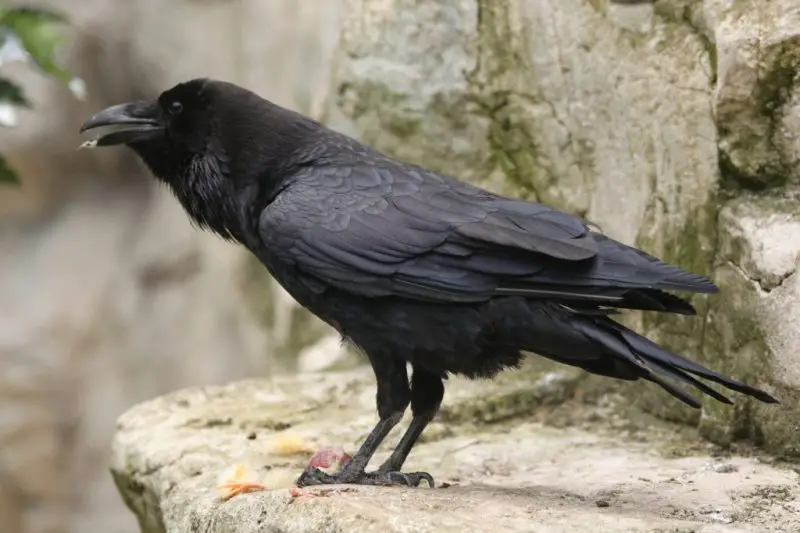
Oregon’s winter climate directly shapes raven feeding behavior. In mountain environments, deep snow restricts ground access and buries many natural foods. Ravens in these locations rely more heavily on carrion, scavenging, and large animal remains. Meanwhile, ravens in the Willamette Valley encounter cold rain and frost rather than consistent snow, allowing more access to ground-based resources.
Coastal ravens experience yet another environment. Winter storms bring constant wind, drifting sand, and heavy rainfall, but marine resources remain available year-round. Washed-up marine animals, fishing waste, and shoreline life provide ongoing food. This regional variation means Oregon ravens do not experience a single winter diet pattern but multiple adaptive strategies depending on location.
Because ravens are powerful fliers and wide-ranging explorers, they can adjust their territories based on conditions. They do not remain confined to a single feeding location unless it is highly productive. Instead, they travel to exploit new opportunities, maintaining a flexible winter lifestyle that significantly improves survival.
Intelligence Plays a Central Role in Winter Survival
Ravens are among the smartest birds in the world, and winter makes that intelligence essential. They remember previous food locations, study behavior of other animals, learn from experience, and quickly adjust strategies when one food source declines. This mental capability allows them to use environments in ways many bird species cannot.
In winter, ravens engage in behaviors such as watching predators, tracking human activity, and returning to reliable food supply zones. They are capable of problem-solving, manipulating objects, accessing closed containers, and uncovering hidden food. This makes ravens not only survivors but strategic winter planners. Their winter diet in Oregon is therefore shaped as much by intelligence as by environment.
What Ravens Eat During Winter in Oregon
Carrion and Roadkill
Carrion is one of the most significant winter food sources for ravens, particularly in colder mountain and forest regions. Many animals naturally die during winter because of starvation, cold exposure, or weakened physical condition. Vehicle collisions also create consistent carrion along roadways. Ravens take advantage of these predictable food sources, often arriving early and feeding efficiently.
Ravens are skilled at locating carcasses from long distances. They follow movement patterns of scavengers and predators, using visual and behavioral cues to detect where a kill might occur. Large carcasses such as elk, deer, livestock, and even marine mammals along the coast can sustain ravens for extended periods. High-calorie fat and protein support winter metabolism and body heat maintenance.
Ravens do not rely on carrion randomly; they depend on it strategically. Studies and field observations repeatedly show ravens following wolves, coyotes, mountain lions, and even human hunters to access remains. In this ecological role, ravens act as important scavengers, helping clean ecosystems and supporting nutrient recycling. Carrion is not only survival—it’s an ecological function they perform extremely well.
Human Food Sources and Garbage
Winter brings ravens closer to human environments, where they take advantage of exposed or poorly managed food resources. Garbage dumps, roadside trash, campgrounds, landfills, rural homesteads, barns, and urban neighborhoods all provide potential feeding opportunities. Human waste offers high caloric value, including meat scraps, processed foods, and discarded animal remains.
Ravens are intelligent enough to learn how to open bags, search dumpsters, and exploit weak food storage systems. In fishing towns and coastal areas, ravens often gather near docks, harbors, and seafood processing zones where discarded fish and shellfish provide winter nutrition. These food resources are especially valuable because they are predictable and often available when natural resources decline.
This behavior does create management considerations. Ravens that grow accustomed to human food may frequent populated areas more often, potentially competing with other wildlife or causing nuisance concerns. However, from a survival perspective, human-associated food plays a meaningful role in Oregon raven winter survival, particularly in populated regions.
Small Mammals and Other Prey
While carrion forms a major portion of the winter diet, ravens are capable hunters as well. They occasionally capture live prey when conditions allow. Mice, voles, juvenile rabbits, and other small mammals may be targeted, especially when weakened or exposed by cold weather conditions. Ravens use sharp bills, intelligence, and patience to secure prey.
Hunting tends to occur more frequently in valley and agricultural areas where small mammals remain active. Snow occasionally exposes tunneling mammals or freezes the ground in a way that reduces their mobility. Ravens take advantage of these circumstances, striking quickly when opportunity arises. Although not their dominant winter feeding method, hunting remains an important supplemental protein source.
Interestingly, ravens sometimes coordinate hunting behavior with their intelligence. Studies have documented cooperative hunting and strategic waiting, suggesting ravens do not simply rely on chance but employ deliberate techniques. This further proves their role as adaptive winter predators when needed.
Birds, Eggs, and Opportunistic Predation
Ravens are opportunistic predators when it comes to birds and eggs. In winter, nest availability declines significantly compared to spring, but opportunities still exist in certain regions. Lower elevation areas or milder winter pockets may still support bird nesting or roosting behavior. Ravens exploit weak individuals, injured birds, or those caught in winter storms.
When conditions allow, ravens raid nests for eggs or young birds, although this is less common in deep winter and more frequent in late winter or early spring. However, when such opportunities appear, ravens rarely ignore them. Opportunistic predation remains a small but meaningful part of the winter diet, contributing valuable nutrients.
This behavior highlights how ravens avoid strict feeding categories. They are neither purely scavengers nor purely hunters; instead, they are whatever winter conditions allow them to be. Such adaptability helps maintain stable winter survival rates.
Insects and Invertebrates
Winter reduces insect populations dramatically, but insects do not disappear entirely. Some beetles overwinter under bark, larvae exist inside decaying trees, and invertebrates remain in soil pockets or decomposing material. Ravens use their strong bills to search under bark, break into rotting logs, and explore exposed ground areas.
These insects provide protein and supplemental nutrients that help maintain dietary diversity. In forest ecosystems, ravens play a role similar to woodpeckers in winter by extracting hidden insects. Even though insects do not form a primary winter food base, they contribute to overall nutritional support when accessible.
Their ability to locate insects during winter demonstrates behavioral awareness and persistence. They do not rely on one food type; they build survival from many small advantages.
Seeds, Berries, and Plant Material
Ravens are omnivores, meaning plant material plays a meaningful role in their winter survival. They feed on seeds, leftover agricultural grains, wild berries, and dried plant material. Winter berries such as hawthorn, mountain ash, and various shrub fruits can remain available in colder months, offering carbohydrate-rich energy.
In agricultural landscapes, ravens may feed on corn remnants, spilled grains, and crop debris. These resources are especially useful when animal-based foods decline. Plant material also helps maintain digestive function, balancing a protein-heavy winter diet. Their willingness to use multiple plant sources further proves their dietary flexibility.
Plant foods may not be as calorie-dense as carrion or human waste, but they provide consistent fallback nutrition. This makes them an important stabilizing component of the raven winter diet in Oregon.
Coastal and Marine Food Sources
Along Oregon’s coastline, ravens benefit from one of the richest winter environments available—a constantly changing ocean shoreline. Winter storms deposit marine animals, fish remains, crabs, shell fragments, and dead seabirds along beaches. Ravens feed readily on these coastal opportunities.
Fishing harbors provide additional resources, including discarded fish parts and seafood waste. Ravens frequent docks, piers, and marine facilities where human-related food becomes accessible. Coastal ravens often demonstrate high winter resilience because marine ecosystems rarely experience complete food collapse.
The coastal environment essentially acts as a continuous buffet, refreshed by tides and storms. This forms one of the most stable winter feeding systems for ravens in the state.
How Ravens Use Behavior to Survive Winter
Memory, Observation, and Social Learning
Ravens excel in winter because they are not only physically capable but mentally advanced. They remember where food sources occurred previously, whether natural or human-related. They observe other animals, track patterns, and recognize environmental signals indicating where food might appear.
Social learning also plays a role. Ravens communicate with one another, share awareness of food sites, and sometimes gather around large food resources like carcasses. This social and cognitive intelligence dramatically improves winter food success.
Storing and Saving Food
Caching is one of the most sophisticated raven survival strategies. When ravens find abundant food, they hide excess in snow, soil, rocks, or tree crevices for later use. They remember cache locations and return when conditions worsen. This behavior represents planning, foresight, and survival strategy rarely seen at such complexity in birds.
Caching provides a critical food safety net during severe winter storms, extended cold snaps, or sudden food shortages. It reinforces ravens’ status as some of the most intelligent winter survivors in Oregon.
FAQs About What Ravens Eat in Winter in Oregon
Do ravens struggle to find food in winter?
They face challenges, but their intelligence and diverse diet allow them to find food more successfully than many bird species.
Do ravens mainly rely on carrion in winter?
Carrion is extremely important, especially in mountain and forest regions, but it is only one part of a varied winter diet.
Do ravens hunt during winter?
Yes, they occasionally hunt small mammals and weakened birds when conditions make it possible.
Do ravens eat berries or plants in winter?
Yes, plant material, seeds, and berries help support their diet when animal-based food is limited.
Do human environments help ravens survive winter?
Absolutely. Dumps, farms, towns, and fishing areas provide reliable feeding opportunities during difficult months.
Are coastal ravens better supported in winter?
Often yes. Coastal environments provide continuous marine-based food, supporting strong survival rates.
Do ravens store food for later?
Yes, caching is a major survival behavior that helps them handle severe winter periods.
Does intelligence really influence raven survival?
Very much so. Their ability to learn, remember, and adapt is a central reason they succeed in winter.
Final Thoughts
Winter in Oregon puts ravens in a constantly changing feeding environment, yet they succeed through intelligence, adaptability, and highly flexible diets. They feed on carrion, garbage, small prey, insects, berries, seeds, agricultural crops, and marine resources, shifting strategies as conditions demand. Their winter survival reflects not only ecological opportunity but advanced behavioral adaptation.
Ravens are more than survivors; they are highly efficient winter specialists. Their ability to plan, problem-solve, and exploit nearly every resource available makes them one of the most successful winter birds in Oregon.