

Winter in Wyoming presents one of the harshest natural environments in North America. Temperatures drop dramatically at night, snow accumulates deeply, and wind exposure removes warmth rapidly from open landscapes. Under these conditions, food availability declines sharply compared to warmer seasons. Elk must rely on limited winter food sources and highly efficient survival strategies to maintain energy balance.
Elk do not simply continue feeding as they do in summer. Their winter diet becomes specialized, centered around vegetation that remains accessible above or beneath the snow. Every feeding decision is shaped by snow depth, terrain conditions, energy efficiency, and weather severity. Their ability to adapt diet and behavior is critical to winter survival.
Table of Contents
- 1 How Winter Conditions Shape Elk Diet and Feeding Strategy
- 2 Frozen Grasses Beneath the Snow
- 3 Sedges and Rushes in Wetland and Valley Habitats
- 4 Shrubs: The Core of the Winter Survival Diet
- 5 Bark and Woody Browse During Extreme Winters
- 6 Hidden Forbs and Residual Vegetation
- 7 When Elk Move Toward Agricultural Areas
- 8 Winter Feeding Behavior and Survival Strategy
- 9 Weather Strongly Influences Winter Diet
- 10 Why the Winter Diet Is Critically Important
- 11 Habitat Conservation Remains Essential
- 12 FAQs About What Elk Eat in Wyoming Winters
- 12.1 Do elk starve in winter?
- 12.2 What foods are most important to elk in winter?
- 12.3 Do elk dig through snow to find food?
- 12.4 Do elk eat tree bark in winter?
- 12.5 Why do elk move to lower elevations in winter?
- 12.6 Do elk sometimes feed on farmland?
- 12.7 Do predators affect elk feeding behavior?
- 12.8 Does winter diet influence herd health?
- 13 Final Thoughts
How Winter Conditions Shape Elk Diet and Feeding Strategy
Snow Depth Is the Primary Limiting Factor
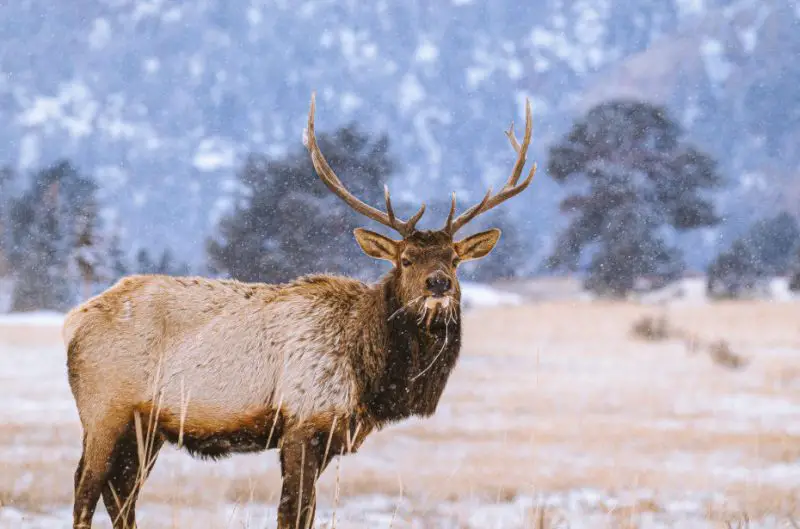
Snow depth directly determines which plants elk can reach. When snow remains shallow, elk can scrape away snow layers and continue grazing relatively easily. However, as snow becomes deeper, harder, and more compact, many plants become inaccessible and movement requires significantly more effort. At this point, feeding becomes more selective and restricted to habitats with better exposure.
Elk typically shift toward valleys, foothills, wind-exposed slopes, and river corridors during heavy winter periods. These locations tend to have reduced snow cover, more exposed vegetation, and easier travel conditions. This movement is not random; it is a consistent behavioral response observed in winter ecology studies of elk populations.
Energy Conservation Is Equal to Food Intake
Winter survival is an energy equation. Elk must maintain enough caloric intake to sustain body heat, activity, and physiological functions, while minimizing energy loss. Deep snow increases metabolic effort and movement cost, meaning elk cannot afford unnecessary travel. Feeding efficiency becomes as important as food availability itself.
Elk conserve energy by resting frequently, traveling strategically, and feeding in groups to reduce stress and alert risk. They also choose locations where environmental conditions offer advantages, such as reduced wind, moderate slopes, and adequate visibility. These behavioral adaptations contribute significantly to winter survival success.
Frozen Grasses Beneath the Snow
Nutritionally Lower, but Still Functional
Even though grasses lose nutritional value by winter, they remain a significant part of the elk diet in early and mid-winter. Elk use their hooves to paw through snow and expose layers of dried grasses below. These grasses provide fiber and moderate caloric value, contributing to digestive stability and baseline energy supply.
While not sufficient as a sole winter diet for extended periods, grasses act as foundational winter forage wherever snow depth allows access. Valleys, foothills, and wind-swept areas often remain important grazing zones during the earlier portion of winter.
Sedges and Rushes in Wetland and Valley Habitats
Vegetation That Persists Longer Into Winter
Sedges and rushes are commonly found in riparian corridors, meadows, and moist valley systems. These plants often remain accessible longer than open-range grasses because of different snow accumulation patterns. They also typically retain slightly higher moisture and nutrient levels, making them valuable winter forage.
As a result, elk frequently concentrate in lowland habitats throughout cold months. These areas create dependable winter feeding zones, especially when upland terrain becomes deeply covered with snow. In many Wyoming ecosystems, these habitats are essential components of winter survival range.
Shrubs: The Core of the Winter Survival Diet
Shrubs represent the most important food source for elk once deep snow restricts ground grazing. Shrubs extend above snow cover, retain structural plant material through winter, and remain accessible in conditions where grass is buried. Without shrub availability, elk survival rates would decline sharply during severe winters.
Sagebrush
Sagebrush is one of the most critical winter forage species for elk in Wyoming. It is widely distributed, resilient under snow and wind, and consistently available throughout winter range. Elk browse sagebrush leaves and stems, which provide necessary nutrients even when other vegetation has disappeared.
Although sagebrush is not a preferred food source in other seasons, it becomes indispensable in winter. Ecological observations consistently demonstrate that sagebrush habitats support large wintering elk populations across the region.
Bitterbrush, Serviceberry, and Chokecherry
Shrubs such as bitterbrush, serviceberry, and chokecherry also play significant roles in sustaining elk during harsh weather. Elk feed on twigs, woody stems, and any remaining leaf material. These shrubs may appear dormant and barren in winter, yet they still contain valuable nutrients and fiber.
Their greatest advantage is accessibility. Since they remain exposed above snow level, elk do not expend excessive energy digging for food. This energy efficiency makes shrub browsing one of the most effective winter feeding strategies.
Willows in Riparian Zones
Willows are another key winter food source located primarily near streams and rivers. Snow tends to be lighter in riparian environments due to water flow and wind patterns, leaving willow stems accessible. Many elk herds rely heavily on these habitats when upland snow conditions become too severe.
Bark and Woody Browse During Extreme Winters
Food Used During the Harshest Periods
During particularly severe winters, when shrubs thin out or snow depths remain too high for extended periods, elk may shift to bark and woody materials. Aspen and cottonwood trees are common emergency feeding sources, while some conifers may also be used. This dietary shift is typically a response to extreme resource limitation.
This behavior does not indicate preference; it indicates necessity. Woody browse supplies fiber and limited energy but importantly provides additional biological support during late winter when conditions are most challenging.
Adapted Digestive System Supports Tough Diets
Elk are ruminants with multi-chambered stomachs that efficiently process fibrous vegetation. This complex digestive system allows elk to use woody stems, bark, and coarse shrubs more effectively than many other herbivores. From a biological perspective, this is one of their strongest winter survival advantages.
This capability helps elk remain functional and maintain metabolic stability even during prolonged food shortages. It is a key evolutionary trait supporting their success in harsh climates such as Wyoming.
Hidden Forbs and Residual Vegetation
Beneath snow layers, fragments of dried forbs and seasonal plants occasionally remain available. Elk may dig to uncover these hidden sources when conditions allow. Although not abundant, these scattered food remnants provide additional nutritional support.
In winter ecology, even minor contributions to diet can be meaningful. These occasional plant discoveries help supplement overall intake and support endurance during long cold periods.
When Elk Move Toward Agricultural Areas
In some regions, winter conditions push elk toward agricultural fields and ranchlands. Elk may feed on winter wheat, alfalfa remnants, crop residue, or stored hay. These resources provide higher caloric value and can significantly support survival in difficult winters.
However, this frequently leads to human–wildlife conflict. Farmers must protect livestock feed, while elk require reliable winter nutrition. Wildlife management agencies often implement controlled feeding programs or habitat management strategies to reduce pressure on agricultural lands while supporting elk populations.
Winter Feeding Behavior and Survival Strategy
Feeding Strategy Focused on Efficiency
Elk do not feed continuously in winter. Instead, they alternate between feeding, resting, and ruminating to conserve energy. This behavioral rhythm allows them to maintain body heat, reduce unnecessary exertion, and utilize consumed food as efficiently as possible.
Habitat selection also plays a major role. Elk typically prefer locations with some shelter, moderate slopes, solar exposure, and adequate predator visibility. These choices demonstrate a strategic approach to winter survival rather than random movement patterns.
Night Feeding Still Plays a Role
Despite severe nighttime cold, elk commonly continue feeding during night hours. Reduced human disturbance, environmental quiet, and physiological need for consistent intake all contribute to nighttime feeding behavior. Winter survival requires flexibility in both diet and feeding schedule.
This continuous adjustment helps elk cope with long seasonal stress periods and fluctuating environmental conditions.
Weather Strongly Influences Winter Diet
In mild winters, elk may rely on grazing vegetation for longer periods before shifting heavily to shrubs. In severe winters, shrubs and woody browse become primary resources much sooner. Snow depth, storm frequency, wind exposure, and temperature shifts continuously reshape diet patterns.
Winter feeding ecology is dynamic rather than fixed. Elk survival depends on constant behavioral and dietary adaptation.
Why the Winter Diet Is Critically Important
Stored Fat and Winter Forage Work Together
Elk accumulate fat reserves during late summer and autumn to prepare for upcoming winter shortage. Winter forage supports metabolic function, slows excessive fat loss, and sustains body condition. Without sufficient winter nutrition, elk weaken rapidly and mortality risk increases.
Winter feeding does not replace stored energy; it sustains and stabilizes it. This combination is what allows elk to endure Wyoming’s demanding conditions.
Winter Nutrition Influences Reproduction
Winter diet also has long-term biological consequences. Poor winter nutrition results in lower body strength, reduced reproductive success, and lower calf survival rates in spring. This directly influences herd health and population stability.
Therefore, the winter diet is not only about surviving one season. It is essential for maintaining strong elk populations across future years.
Habitat Conservation Remains Essential
Healthy winter range is fundamental for elk survival. Shrublands, foothills, valleys, riparian corridors, and meadow systems must remain preserved to provide reliable winter forage. Habitat loss, fragmentation, and development reduce access to critical feeding resources and increase stress on elk populations.
Conservation and responsible land management help ensure that elk continue to thrive across Wyoming’s winter landscapes.
FAQs About What Elk Eat in Wyoming Winters
Do elk starve in winter?
Some elk do during extremely harsh winters, but most survive by relying on stored fat, adaptive feeding behavior, and available winter vegetation.
What foods are most important to elk in winter?
Sagebrush, bitterbrush, shrubs, dried grasses, sedges, and woody browse are key winter foods in Wyoming.
Do elk dig through snow to find food?
Yes. Elk frequently paw through snow to uncover grasses and hidden vegetation when conditions allow.
Do elk eat tree bark in winter?
Yes. Bark and woody stems become important emergency food sources during severe winters.
Why do elk move to lower elevations in winter?
Lower elevations generally have reduced snow depth and better access to shrubs and vegetation.
Do elk sometimes feed on farmland?
Yes. Elk may feed on crops, hay, and winter wheat when natural winter forage becomes limited.
Do predators affect elk feeding behavior?
Yes. Predators such as wolves and mountain lions influence where elk feed and how cautious they must be.
Does winter diet influence herd health?
Absolutely. Winter nutrition affects survival, body condition, reproduction, and calf success in spring.
Final Thoughts
Winter in Wyoming places elk under intense environmental pressure, forcing them to rely on frozen grasses, resilient shrubs, woody browse, wetland vegetation, and carefully controlled energy use. Their winter diet is shaped by snow depth, habitat quality, weather severity, and natural biological adaptation. Every feeding decision contributes to survival success.
When spring eventually arrives, the elk that endure reflect strong natural resilience and the importance of healthy winter habitats. Their ability to survive Wyoming’s winter nights depends not on abundance, but on adaptation, biology, and the limited yet essential foods that sustain them through the coldest months.