

Winter in Ohio does not push wildlife into disappearance. It reshapes movement.
As snow settles and temperatures drop, many mammals adjust their routines rather than vanish. Near homes, sheds, woodlines, and neighborhood edges, several species remain active all winter long. Their presence is not accidental. It reflects biology, adaptation, and the way human landscapes unintentionally support survival during colder months.
Understanding which mammals stay active near Ohio homes during winter helps explain tracks in the snow, nighttime movement caught on cameras, tipped trash cans, and unexpected encounters. These animals are not invading. They are responding to food access, shelter, and thermal stability created by human environments.
Below are seven mammals commonly active near homes during winter in Ohio, with clear identification traits and winter-specific behavior that explains why they are still around when many people assume wildlife is gone.
Table of Contents
- 1 Why Some Mammals Stay Active Near Ohio Homes in Winter
- 2 1. Raccoon (Procyon lotor)
- 3 2. Eastern Gray Squirrel (Sciurus carolinensis)
- 4 3. White-Tailed Deer (Odocoileus virginianus)
- 5 4. Red Fox (Vulpes vulpes)
- 6 5. Coyote (Canis latrans)
- 7 6. Virginia Opossum (Didelphis virginiana)
- 8 7. Striped Skunk (Mephitis mephitis)
- 9 How to Identify Winter Mammal Activity Near Your Home
- 10 FAQs About Mammals Active Near Homes During Winter in Ohio
- 10.1 Are mammals more dangerous near homes in winter?
- 10.2 Why do I see more wildlife in winter than summer?
- 10.3 Do these animals sleep all winter?
- 10.4 Are winter mammals sick or desperate?
- 10.5 Should I remove bird feeders in winter?
- 10.6 Is it safe to block crawl spaces in winter?
- 10.7 Do winter sightings mean population increases?
- 10.8 Will wildlife leave once spring arrives?
- 11 Final Thoughts
Why Some Mammals Stay Active Near Ohio Homes in Winter
Ohio winters bring freezing nights, snow cover, and limited natural food. Yet complete hibernation is rare among mammals living close to people.
Urban and suburban areas alter winter survival in several ways. Homes radiate heat. Trash, pet food, bird feeders, and compost remain accessible. Shrubs, decks, crawl spaces, and drainage corridors provide wind protection. Snow itself becomes insulation, trapping warmth near the ground.
Mammals that remain active near homes are typically adaptable generalists. They adjust diet, reduce movement when necessary, and take advantage of stable microclimates. Winter activity does not always mean constant movement. Many species switch to short foraging trips, returning quickly to shelter.
These behaviors create the illusion of sudden appearance when, in reality, the animals never left.
1. Raccoon (Procyon lotor)

Raccoons are among the most visible winter mammals near Ohio homes, especially during milder stretches.
They do not fully hibernate. Instead, raccoons enter periods of torpor, sleeping for days or weeks during severe cold, then emerging during warmer intervals. This pattern makes them seem unpredictable in winter neighborhoods.
In snowy conditions, raccoon tracks often appear near trash bins, garages, attics, and creek corridors. Their hand-like prints are distinctive, showing five long toes and a rounded palm. Winter raccoons rely heavily on fat reserves but will actively seek food when temperatures rise above freezing.
Near homes, raccoons are drawn to unsecured garbage, outdoor pet food, fallen bird seed, and compost. Attics and chimneys become appealing because they offer dry, insulated shelter. Winter raccoon activity increases after snowstorms followed by temperature spikes, when natural food is harder to access.
2. Eastern Gray Squirrel (Sciurus carolinensis)
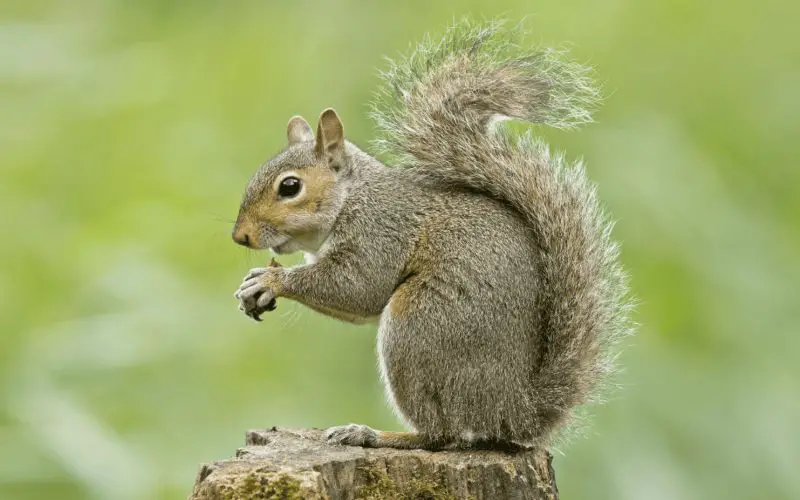
Eastern gray squirrels remain fully active throughout winter in Ohio.
They do not hibernate and instead rely on cached food stored in fall. Acorns, walnuts, and seeds buried in shallow soil become critical winter resources. Snow does not stop them. In fact, squirrels can smell buried food beneath several inches of snow.
Near homes, gray squirrels are highly visible because yards often contain mature trees, bird feeders, and ornamental plantings that provide both food and cover. Their winter fur appears thicker, and they reduce unnecessary movement, often traveling the same established routes.
In cold weather, squirrels may be seen sunning themselves on roofs or tree branches during clear days. They also use attics, wall voids, and chimneys as nesting sites when access points exist. Winter squirrel activity tends to peak in the morning and early afternoon when temperatures are highest.
3. White-Tailed Deer (Odocoileus virginianus)
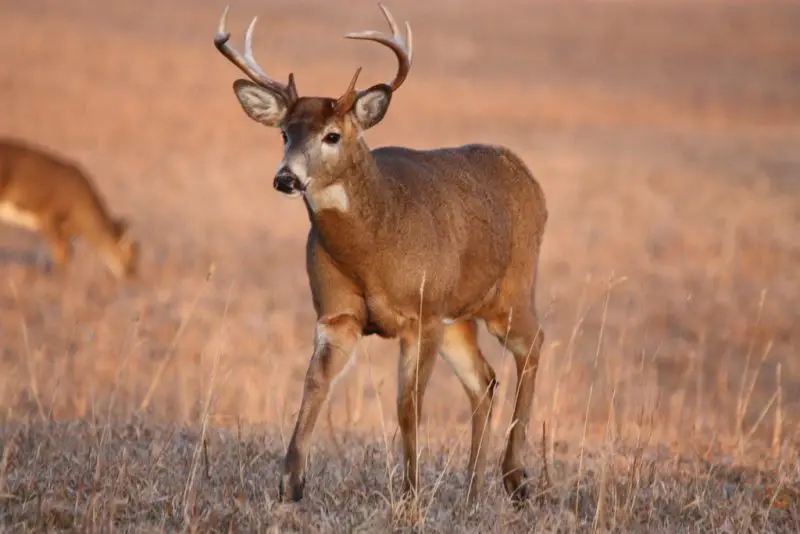
White-tailed deer remain active all winter in Ohio, including near suburban and rural homes.
As snow deepens, deer alter movement patterns. They form winter groups and follow packed trails to conserve energy. Near neighborhoods, deer are often drawn to ornamental shrubs, evergreen hedges, and residual crops, which remain accessible when forest browse is buried.
Winter deer show darker coats, reduced range, and increased tolerance of human proximity. Tracks often appear along fence lines, yard edges, and driveways where snow is compacted.
In severe winters, deer seek thermal cover, such as dense pine stands or wind-protected residential areas. This explains why they may appear closer to homes than during warmer months. Their activity is typically crepuscular, peaking at dawn and dusk, even in winter.
4. Red Fox (Vulpes vulpes)
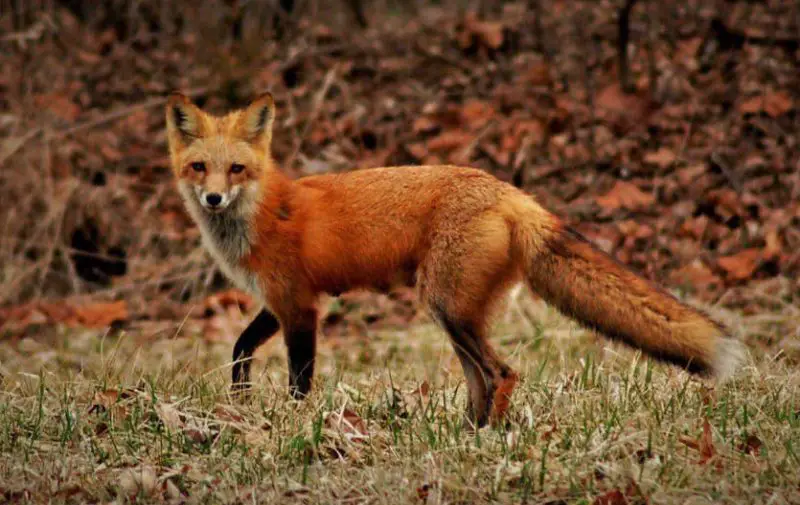
Red foxes are highly active winter predators throughout Ohio.
Unlike some mammals, foxes thrive in cold conditions. Their thick winter coats and efficient hunting style allow them to remain mobile even during deep snow. Foxes often hunt small mammals beneath the snow using sound, performing characteristic vertical leaps to pin prey.
Near homes, red foxes travel along property edges, drainage corridors, rail lines, and quiet streets. They are most active at night and early morning. Tracks show a narrow, straight walking pattern, often in a near-perfect line.
Winter foxes are not attracted to people but are drawn to rodent populations supported by human activity. Bird feeders, compost, and outbuildings indirectly support fox presence by sustaining prey. During breeding season in late winter, vocalizations may be heard after dark.
5. Coyote (Canis latrans)
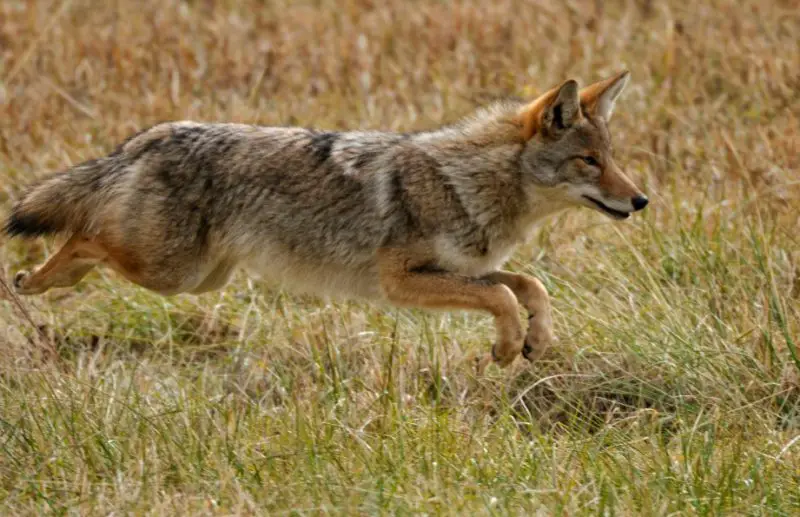
Coyotes remain active year-round and are increasingly common near Ohio neighborhoods during winter.
Winter activity intensifies due to breeding season, which occurs from January through March. Coyotes travel more frequently, vocalize more often, and expand territory during this period. Snow makes their movement patterns easier to track.
Near homes, coyotes follow greenbelts, frozen creeks, golf courses, and utility corridors. They are primarily nocturnal but may appear during daylight in low-disturbance areas.
Coyotes are not drawn to homes themselves but to food availability. Rodents, rabbits, deer carcasses, and unsecured attractants play a role. Winter coyotes often use suburban areas as quiet travel routes rather than hunting grounds, passing through rather than staying.
6. Virginia Opossum (Didelphis virginiana)
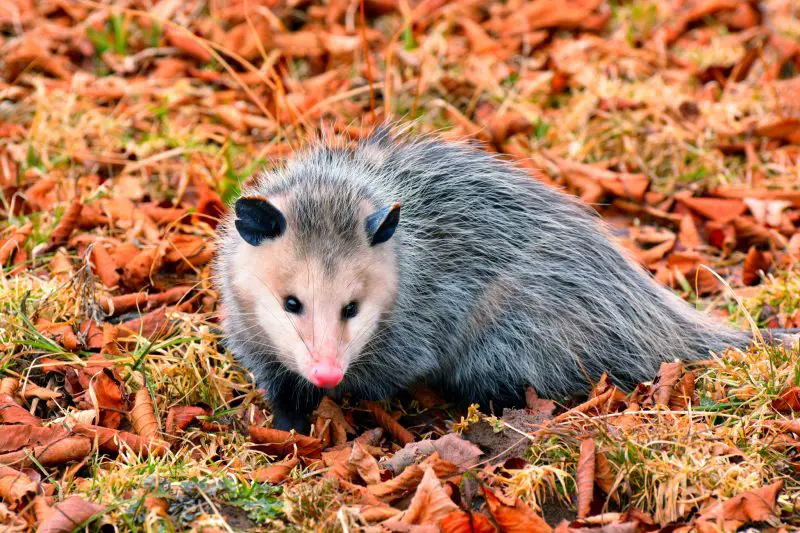
Opossums remain active in winter but are highly vulnerable to cold.
Unlike true cold-adapted mammals, opossums lack dense fur and fat reserves. They cannot hibernate and must forage year-round. As a result, they are often seen near homes during winter because residential areas offer warmth and accessible food.
Winter opossums move slowly and cautiously. They rely on crawl spaces, garages, sheds, and debris piles for shelter. Frostbite injuries on ears and tails are common during severe cold.
Near homes, opossums feed on garbage, pet food, fallen fruit, and carrion. Their tracks show five toes with an opposable thumb on the hind foot, making them easy to identify in snow. Opossums are typically nocturnal and avoid direct interaction with people.
7. Striped Skunk (Mephitis mephitis)
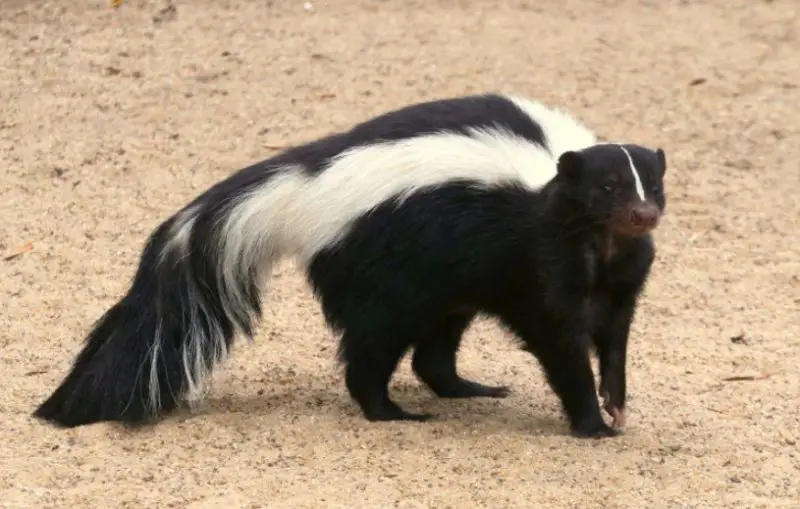
Striped skunks remain intermittently active throughout Ohio winters.
They enter a state of winter dormancy, staying underground for extended periods but emerging during warmer spells. Skunks often share dens in winter, conserving heat through communal sheltering.
Near homes, skunks use crawl spaces, decks, and foundation voids as den sites. Winter foraging is limited, but they will seek food when conditions allow. Tracks appear as waddling patterns with paired prints.
Skunks are more noticeable during late winter when mating season begins. Activity increases temporarily, especially on mild nights. Their presence near homes is usually tied to shelter availability rather than food abundance.
How to Identify Winter Mammal Activity Near Your Home
Winter makes identification easier, not harder.
Snow preserves tracks, movement patterns, and entry points. Pay attention to repeated trails, scat placement, disturbed snow near structures, and consistent timing of sightings.
Most winter mammals follow predictable paths. They conserve energy by reusing routes, staying close to cover, and minimizing exposure. Homes often sit directly along these travel corridors.
Recognizing behavior prevents misinterpretation. These animals are not behaving aggressively or abnormally. They are doing what winter requires.
FAQs About Mammals Active Near Homes During Winter in Ohio
Are mammals more dangerous near homes in winter?
Most winter mammals are not aggressive. They are focused on conserving energy and finding food. Encounters usually happen because of proximity, not hostility.
Why do I see more wildlife in winter than summer?
Snow removes cover and concentrates food. Animals become easier to spot, even if population levels have not changed.
Do these animals sleep all winter?
Only a few enter true hibernation. Most reduce activity but remain alert and mobile when conditions allow.
Are winter mammals sick or desperate?
No. Winter behavior reflects normal adaptation. Slower movement does not mean illness. It means energy conservation.
Should I remove bird feeders in winter?
Bird feeders can indirectly attract mammals by increasing rodent activity. Managing spillage reduces unintended attraction.
Is it safe to block crawl spaces in winter?
Yes, but only if no animal is already inside. Sealing active dens can cause animals to seek alternative entry points.
Do winter sightings mean population increases?
Not necessarily. Winter concentrates movement into visible areas. It changes behavior, not population size.
Will wildlife leave once spring arrives?
Yes. As natural food returns and temperatures rise, activity near homes usually decreases.
Final Thoughts
Winter does not empty Ohio’s landscapes. It reshapes them.
The mammals active near homes during winter are not intruders. They are survivors navigating cold, scarcity, and opportunity. Human environments provide warmth, shelter, and predictable resources, making neighborhoods part of the winter ecosystem.
Understanding which mammals remain active, and why, turns surprise into awareness. Tracks in the snow tell stories. Movement at night has logic. Winter wildlife presence is not random.
It is adaptation in motion.