
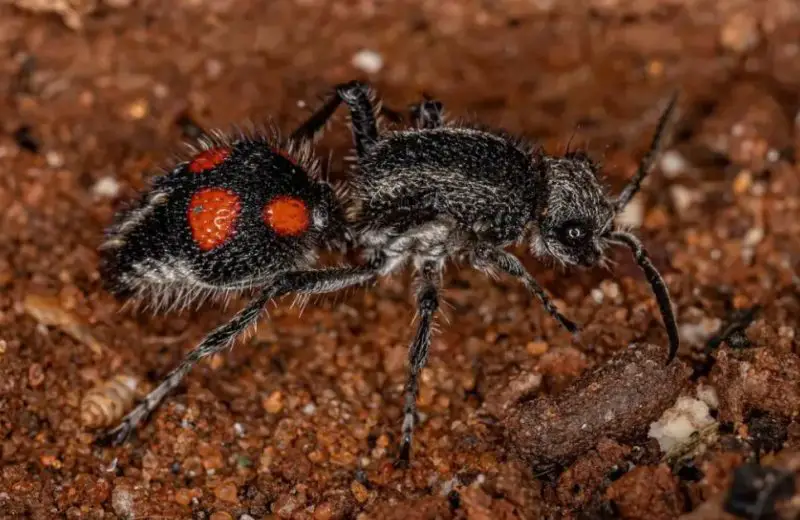
Velvet ants are among the most misunderstood insects people occasionally encounter in the western United States. Despite the name, they are not true ants at all but a type of solitary wasp known for their fuzzy appearance, vivid warning colors, and extremely painful sting. In Oregon, sightings are less common than in southern states, yet they do occur, especially in dry open habitats, sandy soils, and natural landscapes where ground-nesting bees and wasps are present.
When someone encounters one, the reaction is often surprise followed quickly by curiosity or concern. The insect’s striking red, orange, black, or patterned coloration signals caution, and the nickname “cow killer” sometimes associated with certain species has contributed to their dramatic reputation. While the sting can indeed be intense, serious medical consequences are rare for most people.
Understanding why velvet ant stings hurt so much, where they are found in Oregon, and how to avoid unpleasant encounters helps reduce unnecessary fear while promoting safe coexistence with native wildlife.
Table of Contents
- 1 What Exactly Is a Velvet Ant
- 2 Velvet Ant Presence in Oregon
- 3 Why Their Sting Hurts So Much
- 4 Defensive Behavior Rather Than Aggression
- 5 Why People Notice Them Suddenly
- 6 Habitat Conditions That Support Velvet Ants
- 7 Ecological Role of Velvet Ants
- 8 Are Velvet Ant Stings Dangerous
- 9 Comparing Velvet Ant Stings With Other Insects
- 10 Common Misconceptions About Velvet Ants
- 11 Safety Tips for Avoiding Stings
- 12 What To Do If You Are Stung
- 13 Why Oregon Encounters Are Usually Limited
- 14 Outdoor Awareness Without Fear
- 15 Wildlife Education and Public Understanding
- 16 Long-Term Coexistence in Oregon Landscapes
- 17 FAQs About Velvet Ants in Oregon
- 17.1 Are velvet ants common in Oregon?
- 17.2 Do they live indoors?
- 17.3 Why is the sting so painful?
- 17.4 Are they aggressive?
- 17.5 Can the sting cause serious harm?
- 17.6 How can I avoid them?
- 17.7 Do they damage property?
- 17.8 Are they beneficial?
- 17.9 Should they be exterminated?
- 17.10 Do sightings mean infestation?
- 18 Final Thoughts
What Exactly Is a Velvet Ant
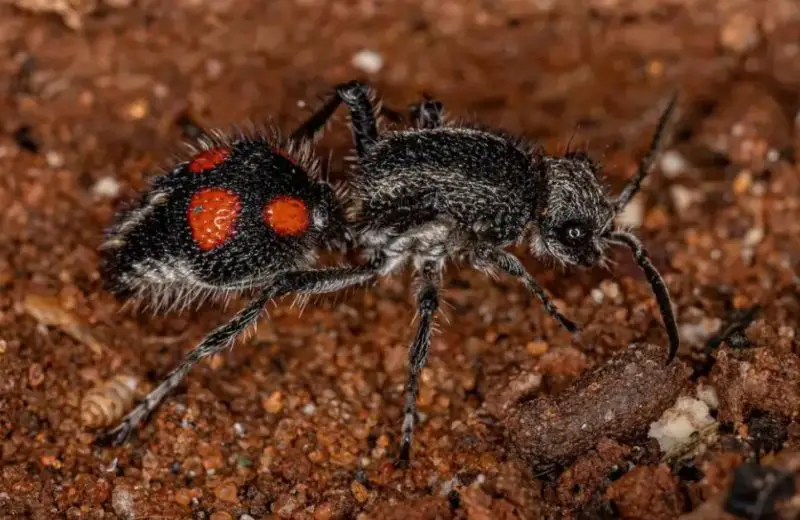
Velvet ants are not actually ants at all, even though their appearance often causes confusion. They belong to the wasp family Mutillidae, a group of solitary parasitic wasps known for their dense hair, bright warning colors, and powerful defensive sting. Female velvet ants lack wings and closely resemble large, fuzzy ants, while males have wings and look more like traditional wasps. This striking difference between males and females is one reason the insect is frequently misunderstood.
The thick hair covering their bodies creates the “velvet” appearance that inspired their common name. These hairs are not merely cosmetic. They help protect the insect from predators, regulate body temperature, and sometimes trap scent cues important for communication. Combined with bright red, orange, black, or patterned coloration, the fuzzy body acts as a clear warning signal in nature.
Unlike social ants or many wasps, velvet ants live solitary lives. They do not build colonies, form swarms, or defend communal nests. Instead, individual females roam independently across suitable habitats searching for the underground nests of other insects, particularly ground-nesting bees and wasps. After locating a host nest, the female lays an egg inside it. The developing larva then uses resources from the host nest to grow.
Their vivid coloration, chemical defenses, tough outer body, and extremely painful sting together form a survival strategy. Because females cannot fly, these defenses compensate for their relative vulnerability compared with winged insects.
Velvet Ant Presence in Oregon
Velvet ants are present in Oregon, although they are not considered widespread pests or common household insects. They tend to occur in specific habitats where environmental conditions support both their life cycle and the insects they parasitize. Dry grasslands, sandy soils, woodland edges, and natural open landscapes provide particularly favorable conditions.
Sightings most often occur in outdoor settings such as parks, hiking trails, rural properties, sandy gardens, coastal dune environments, or undeveloped natural preserves. These locations support ground-nesting bees and wasps that velvet ants depend on for reproduction.
Urban encounters do happen occasionally, especially where landscaping mimics natural habitats with dry soil, ornamental grasses, or flowering plants. However, velvet ants rarely establish themselves indoors and generally remain outdoor insects.
Their presence typically reflects a functioning natural ecosystem rather than a pest infestation. Seeing one individual does not usually indicate a larger population nearby.
Why Their Sting Hurts So Much
Velvet ant stings are widely known for their intensity. Entomologists often place them among the more painful insect stings in North America. Several biological factors explain why the sting feels so strong despite the insect’s relatively small size.
Female velvet ants possess a long, smooth stinger that allows venom to penetrate effectively when they feel threatened. Their venom contains compounds that strongly stimulate nerve endings, producing immediate sharp pain. This defensive mechanism evolved to deter predators quickly.
Unlike many wasps that use venom primarily for hunting prey, velvet ants use their sting almost exclusively for defense. When they sting, it is typically because they feel trapped, handled, or threatened. The goal is not aggression but rapid deterrence.
People often describe the sensation as burning, electric, or intensely sharp. The initial pain may peak quickly and gradually fade over time. For most individuals, the effects remain localized and temporary.
Defensive Behavior Rather Than Aggression
Velvet ants are defensive insects, not aggressive ones. They do not actively seek contact with humans, and most stings occur accidentally when someone touches, handles, or unknowingly steps on one.
Their defensive response usually follows a predictable sequence. First, their bright coloration acts as a visual warning. If disturbance continues, they may move quickly away. Some species can produce faint squeaking sounds through stridulation, adding another deterrent signal. Stinging usually occurs only if contact persists.
Because females lack wings, they rely heavily on these defensive adaptations. Their powerful sting helps compensate for limited mobility compared with flying wasps.
Understanding this defensive behavior helps reduce fear and prevents unnecessary attempts to eliminate them.
Why People Notice Them Suddenly
Many Oregon residents report seeing velvet ants unexpectedly. This perception often results from seasonal and environmental factors rather than sudden population increases.
Warm weather boosts insect activity, particularly when ground-nesting bees and wasps are abundant. Increased outdoor recreation during summer months raises the chance of encounters as well.
Velvet ants are solitary wanderers. A single individual crossing a patio, garden path, or hiking trail may be the only one nearby, yet its unusual appearance attracts immediate attention.
Landscaping changes, gardening, construction, or soil disturbance can also temporarily expose insects that normally remain hidden.
Sudden visibility does not necessarily indicate a growing population.
Habitat Conditions That Support Velvet Ants
Velvet ants prefer environments that support their host species. Ground-nesting bees and wasps require loose, well-drained soils, abundant flowering plants, and relatively undisturbed ground conditions.
Ideal velvet ant habitats often include sandy or well-drained soil, warm sunny areas, minimal soil disturbance, and diverse flowering vegetation. These conditions support both nectar sources for adults and nesting sites for host insects.
Oregon’s varied geography provides pockets of suitable habitat, particularly in drier inland regions, valley grasslands, coastal dunes, and transitional woodland edges.
Habitat diversity explains why sightings vary widely across the state.
Ecological Role of Velvet Ants
Despite their intimidating reputation, velvet ants contribute positively to ecosystem balance. Their parasitic relationship with ground-nesting bees and wasps helps regulate insect populations naturally.
By limiting excessive population growth of certain species, they support biodiversity and ecological stability. Adult velvet ants also visit flowers for nectar, playing a minor role in pollination.
Their presence generally indicates healthy natural environments rather than ecological imbalance.
Understanding their ecological function encourages appreciation rather than fear.
Are Velvet Ant Stings Dangerous
For most healthy individuals, velvet ant stings are painful but not medically dangerous. Typical symptoms include immediate sharp pain, localized swelling, redness, and temporary sensitivity around the sting site.
Serious allergic reactions remain rare but are possible with any insect sting. Individuals with known venom allergies should take normal outdoor precautions.
Medical attention may be needed if symptoms include difficulty breathing, extensive swelling, dizziness, or prolonged severe pain. In most cases, however, symptoms subside without complications.
Awareness helps balance caution with realistic risk assessment.
Comparing Velvet Ant Stings With Other Insects
Pain perception varies from person to person, but velvet ant stings are often compared with those from wasps, hornets, or fire ants. Some entomologists rank them high on sting pain scales because of the immediate intensity.
Unlike social wasps, velvet ants rarely sting repeatedly because encounters usually involve a single insect. Avoiding direct handling almost eliminates risk.
Their sting is defensive rather than predatory.
Respectful distance generally prevents problems.
Common Misconceptions About Velvet Ants
Several myths surround velvet ants. The nickname “cow killer” suggests lethal potential, yet there is no scientific evidence they harm large animals significantly. The name simply reflects the intensity of the sting.
Another misconception is that they infest homes. Velvet ants are solitary outdoor insects and rarely establish indoor populations.
Some people assume they are aggressive. In reality, they sting only when threatened.
Accurate information helps reduce unnecessary alarm.
Safety Tips for Avoiding Stings
Simple precautions significantly reduce sting risk. Wearing closed-toe shoes outdoors, avoiding handling unfamiliar insects, using gloves when gardening, checking outdoor seating before use, and teaching children not to touch unknown insects all help prevent accidental contact.
These measures allow safe outdoor activity while protecting beneficial insect species.
Awareness remains the most effective prevention.
What To Do If You Are Stung
If a sting occurs, remaining calm is helpful. Washing the area with soap and water reduces irritation risk. Applying a cold compress helps minimize swelling. Over-the-counter pain relief may ease discomfort if needed.
Avoid scratching the area, as this can prolong irritation. Monitor for signs of allergic reaction and seek medical care if symptoms escalate.
Most stings resolve naturally without complications.
Why Oregon Encounters Are Usually Limited
Oregon’s climate is cooler than many southern states where velvet ants are more abundant. While suitable habitats exist, widespread urban populations are uncommon.
Environmental diversity creates localized populations rather than large infestations. Some residents may never encounter them, while others occasionally do.
Climate boundaries continue influencing distribution patterns as environmental conditions shift.
Scientific monitoring helps track changes over time.
Outdoor Awareness Without Fear
Encounters with unfamiliar insects can cause anxiety, especially when painful stings are possible. However, understanding insect behavior helps replace fear with informed awareness.
Most wildlife prefers avoidance over confrontation. Velvet ants are no exception. Observing them from a safe distance allows appreciation of their unique biology without risk.
Respectful awareness supports safe coexistence.
Wildlife Education and Public Understanding
Public education plays an important role in reducing unnecessary fear. Accessible scientific information, community outreach, and nature education programs help residents recognize insects accurately.
Better understanding promotes conservation while reducing panic reactions.
Knowledge supports coexistence between people and wildlife.
Long-Term Coexistence in Oregon Landscapes
Oregon’s ecological diversity supports many insect species, including occasional velvet ants. Learning how these species fit into natural systems helps communities adapt comfortably.
Maintaining natural habitats, minimizing unnecessary pesticide use, and practicing simple outdoor awareness encourage ecological balance.
Coexistence does not require eliminating wildlife.
It simply requires understanding and respect.
FAQs About Velvet Ants in Oregon
Are velvet ants common in Oregon?
They are present but generally uncommon compared with warmer southern states. Sightings tend to be localized rather than widespread.
Do they live indoors?
Rarely. They are outdoor insects and do not form indoor colonies.
Why is the sting so painful?
Their venom strongly stimulates nerve endings, and they use the sting primarily for defense.
Are they aggressive?
No. They sting only when threatened or handled.
Can the sting cause serious harm?
Usually not, though allergic reactions are possible as with any insect sting.
How can I avoid them?
Wear protective footwear outdoors and avoid handling unfamiliar insects.
Do they damage property?
No. They do not chew wood, fabrics, or structures.
Are they beneficial?
Yes. They help regulate other insect populations and occasionally pollinate plants.
Should they be exterminated?
Generally no. They are solitary insects and not household pests.
Do sightings mean infestation?
No. Most encounters involve a single wandering individual.
Final Thoughts
Velvet ant stings in Oregon can certainly be painful, but they rarely pose serious danger. These insects are solitary wasps adapted for survival in natural habitats, using bright coloration and a strong defensive sting to avoid predators rather than to attack humans.
Their occasional presence reflects healthy ecosystems rather than pest outbreaks. Understanding their biology, habitat preferences, and defensive behavior helps reduce unnecessary fear while encouraging safe coexistence.
Simple awareness, respectful distance, and basic outdoor precautions are usually all that is needed. With knowledge replacing myth, encounters with velvet ants become less alarming and more an opportunity to appreciate the remarkable diversity of Oregon’s natural world.