
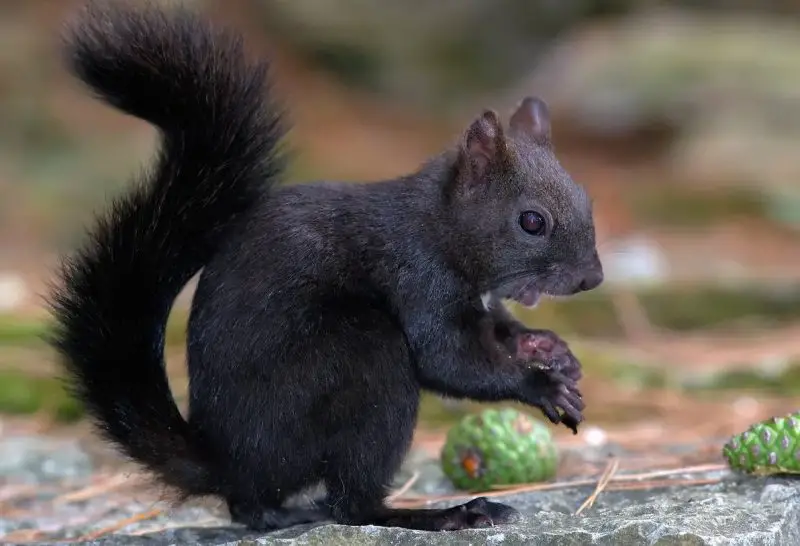
Walk through certain parks, college campuses, or wooded neighborhoods in Indiana and you might notice something striking. Among the familiar gray squirrels, a few appear jet black. Not dark gray. Not brown. Completely black from nose to tail.
For many residents, the change seems sudden. One year there are only gray squirrels. The next, several black ones appear. Some people assume pollution, disease, or even crossbreeding with another species. Others think it signals environmental change.
In reality, black squirrels are neither new nor mysterious. They represent a natural color variation of the eastern gray squirrel, shaped by genetics, climate, habitat, and long-term ecological dynamics. The reason they sometimes appear “suddenly” involves population shifts, survival advantages, and human observation patterns.
Understanding this phenomenon requires exploring genetics, wildlife adaptation, climate influences, and how urban environments shape animal populations.
Table of Contents
- 1 The Squirrels Most People See in Indiana
- 2 The Genetics Behind Black Fur
- 3 Why Black Squirrels Sometimes Seem to Appear Suddenly
- 4 Historical Presence of Black Squirrels in the Midwest
- 5 Climate Advantages of Dark Fur
- 6 Urban Environments Favor Black Squirrels
- 7 Migration and Population Expansion
- 8 Are Black Squirrels a Different Species?
- 9 Do Black Squirrels Behave Differently?
- 10 Diet and Ecological Role
- 11 Predation and Survival Factors
- 12 Disease and Health Concerns
- 13 Human Influence on Squirrel Populations
- 14 Why Campus Populations Often Show More Black Squirrels
- 15 Seasonal Visibility Changes
- 16 Ecological Stability and Long-Term Trends
- 17 Public Curiosity and Wildlife Awareness
- 18 Should People Be Concerned?
- 19 FAQs About Black Squirrels in Indiana
- 19.1 Are black squirrels rare in Indiana?
- 19.2 Did pollution cause squirrels to turn black?
- 19.3 Can gray squirrels have black babies?
- 19.4 Are black squirrels more aggressive?
- 19.5 Do black squirrels live longer?
- 19.6 Are black squirrels invasive?
- 19.7 Why do some areas have many black squirrels?
- 19.8 Should people feed black squirrels differently?
- 20 Conclusion
The Squirrels Most People See in Indiana
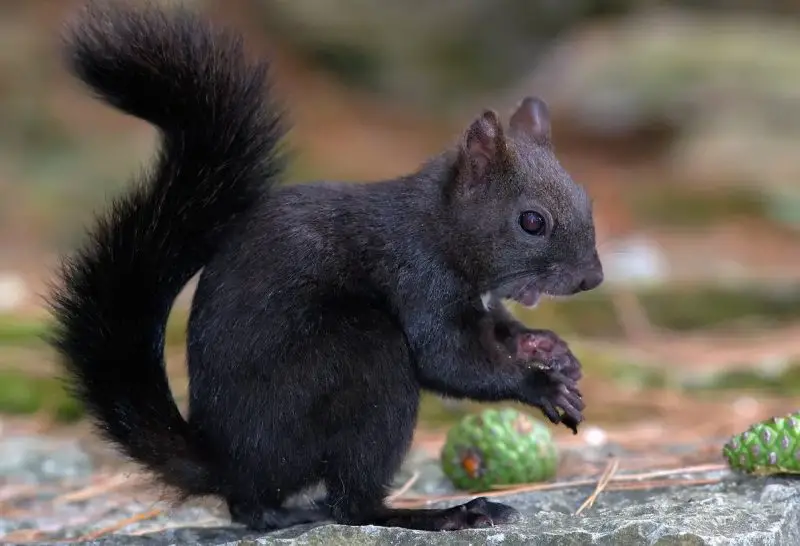
Indiana’s most common squirrel species is the eastern gray squirrel. These animals thrive across forests, suburbs, farms, parks, and city campuses. Their adaptability makes them one of the most successful mammals in the Midwest.
Most eastern gray squirrels display the classic gray coat with white underparts and bushy tails edged in white. However, this species also includes a melanistic color morph, meaning individuals with unusually dark pigmentation.
These melanistic squirrels are what people call black squirrels. They are not a separate species. They are genetically the same species as gray squirrels, just expressing a different coat color.
That distinction matters because it explains why black squirrels can suddenly appear in otherwise gray populations.
The Genetics Behind Black Fur
The black coloration comes from a genetic mutation affecting melanin production. Melanin is the pigment responsible for darker coloration in many animals, including humans.
In black squirrels, a mutation increases eumelanin, the pigment responsible for black or very dark brown coloration. This mutation can be inherited like other genetic traits.
If two gray squirrels carry the melanistic gene, they can produce black offspring even if neither parent appears black. This recessive inheritance pattern often explains sudden appearances within populations.
A squirrel population may carry the gene quietly for generations before environmental conditions allow black individuals to become more visible or numerous.
Genetics sets the stage. Environment determines whether the trait spreads.
Why Black Squirrels Sometimes Seem to Appear Suddenly
People often interpret wildlife changes through short timeframes. If black squirrels were rarely seen for years and then appear in noticeable numbers, it feels abrupt.
Several factors contribute to this perception.
Population fluctuations can increase visibility. A few successful breeding seasons may produce more black offspring. Migration between nearby habitats can introduce new individuals. Human attention also plays a role. Once someone notices a black squirrel, others begin looking more carefully.
Nothing biologically sudden is happening. Instead, subtle shifts accumulate until they become visible.
Wildlife change often happens quietly before it becomes noticeable.
Historical Presence of Black Squirrels in the Midwest
Black squirrels are not new to Indiana. Historical records and naturalist observations show melanistic gray squirrels have existed across the Midwest for centuries.
Indigenous ecological knowledge and early settler accounts describe darker squirrel variants in forested regions long before modern urbanization.
However, population densities fluctuated due to hunting, habitat change, urban expansion, and predator dynamics. These pressures sometimes reduced visible numbers of black squirrels.
As landscapes stabilized and conservation awareness increased, some populations rebounded.
What looks new is often a reappearance.
Climate Advantages of Dark Fur
One scientific hypothesis suggests black squirrels may have advantages in colder climates.
Dark fur absorbs more solar radiation than lighter fur. In colder seasons, this can help animals retain warmth more efficiently. Even small temperature advantages can improve survival during harsh winters.
Indiana’s winters vary, but periodic cold snaps may favor melanistic individuals slightly. Over time, this advantage can increase the proportion of black squirrels in certain regions.
Climate does not create black squirrels. Genetics does that. But climate may influence how common they become.
This interaction between genes and environment drives many wildlife color variations.
Urban Environments Favor Black Squirrels
Cities and suburban areas often provide conditions that favor melanistic squirrels.
Dark fur may provide better camouflage against asphalt, shadows, tree bark darkened by pollution, or urban structures. Reduced predation pressure in cities also allows color variants to persist more easily.
Predators like hawks, foxes, and coyotes may be less abundant in dense urban areas. Without strong predation selecting against unusual coloration, black squirrels can thrive.
Some universities in the Midwest even became known for black squirrel populations after deliberate introductions decades ago. These populations spread naturally over time.
Urban ecology often reshapes wildlife appearance in subtle ways.
Migration and Population Expansion
Wildlife does not respect human boundaries. Squirrels move between wooded corridors, suburban neighborhoods, and city parks.
If a nearby population contains black squirrels, gradual migration can introduce the gene into new areas. Over several breeding cycles, sightings increase.
This process can take years, but human perception compresses time. What actually unfolds slowly may appear sudden when threshold visibility is reached.
Habitat connectivity plays a major role. Green corridors, rivers, rail lines, and forest patches all help squirrels disperse.
Indiana’s mixed landscapes provide many such pathways.
Are Black Squirrels a Different Species?
No. This misconception is extremely common.
Black squirrels in Indiana are almost always eastern gray squirrels expressing melanism. They interbreed freely with gray individuals.
There is no separate “black squirrel species” native to Indiana. Coat color alone does not define species status.
Understanding this prevents unnecessary concern about invasive species or ecological imbalance.
Nature produces variation. Species boundaries remain intact.
Do Black Squirrels Behave Differently?
Behaviorally, black squirrels are nearly identical to gray squirrels. They forage, nest, breed, and communicate in the same ways.
Some anecdotal reports suggest black squirrels appear bolder around humans. However, this likely reflects urban adaptation rather than coat color.
Individuals living in cities often become accustomed to human presence regardless of fur color.
Personality variation exists within all wildlife populations. Color alone does not dictate behavior.
Diet and Ecological Role
Black squirrels occupy the same ecological niche as gray squirrels.
They consume nuts, seeds, fruits, fungi, buds, insects, and occasionally bird eggs. Their caching behavior helps disperse seeds, supporting forest regeneration.
This ecological role remains unchanged regardless of coat color.
From an ecosystem perspective, black squirrels function exactly like their gray counterparts.
Color difference does not equal ecological difference.
Predation and Survival Factors
Predators influence squirrel coloration through natural selection.
In heavily forested environments, gray fur may provide better camouflage. In urban or mixed habitats, black fur may offer equal or greater concealment.
Predator pressure varies regionally. Where predators are fewer, color variation increases.
This dynamic partly explains why black squirrels appear more frequently in towns and campuses than deep rural forests.
Predation shapes visibility over time.
Disease and Health Concerns
Some people worry black fur signals disease or contamination.
This is not supported scientifically. Melanism is a stable genetic trait, not a symptom of illness. Black squirrels are generally as healthy as gray ones.
Disease outbreaks affecting squirrels typically produce visible symptoms unrelated to coat color, such as lethargy or skin issues.
Black fur itself is not a health warning.
This distinction helps prevent unnecessary alarm.
Human Influence on Squirrel Populations
Human activity indirectly shapes wildlife coloration.
Urban landscaping, supplemental feeding, reduced hunting, and habitat fragmentation all influence survival patterns. Some color morphs thrive better under human-modified conditions.
Even cultural attitudes matter. In areas where black squirrels are appreciated rather than hunted, populations stabilize.
Wildlife adaptation often reflects human presence more than natural selection alone.
Indiana’s expanding suburban environments create new ecological opportunities.
Why Campus Populations Often Show More Black Squirrels
Many Midwestern college campuses became famous for black squirrels after intentional introductions decades ago. These introductions aimed to create distinctive campus wildlife identities.
From those initial populations, squirrels spread outward into surrounding communities.
Indiana campuses with mature trees, limited predators, and abundant food create ideal habitats. Over time, melanistic individuals become more common.
Students noticing black squirrels for the first time often assume they are new, when in fact they may have lived there for years.
Visibility depends on observation.
Seasonal Visibility Changes
Black squirrels can appear more noticeable during certain seasons.
In winter, leafless trees reduce visual clutter. Snow backgrounds make dark fur stand out dramatically. People spending more time outdoors in pleasant weather also increase sightings.
Seasonal lighting conditions can alter perceived coloration as well.
These factors influence perception without changing population biology.
Observation timing matters.
Ecological Stability and Long-Term Trends
Current research suggests black squirrel populations in parts of the Midwest are stable rather than rapidly expanding.
Local fluctuations occur, but there is no evidence of runaway population shifts driven by color genetics alone.
Wildlife populations constantly balance genetics, environment, predation, food availability, and human influence.
Black squirrels represent one visible piece of that broader ecological puzzle.
Understanding context prevents overinterpretation.
Public Curiosity and Wildlife Awareness
Growing public interest in urban wildlife contributes to increased reporting. Community groups, photography forums, and neighborhood apps amplify sightings.
People now document wildlife changes more actively than in previous decades.
This awareness benefits conservation but can also create exaggerated impressions of sudden change.
Observation has increased faster than biological change.
That distinction is important.
Should People Be Concerned?
Generally, no.
Black squirrels are a normal genetic variation. They pose no additional risks, ecological threats, or health concerns compared to gray squirrels.
Their presence often reflects healthy biodiversity rather than environmental harm.
Concern should focus instead on habitat preservation, responsible pet management, and minimizing human-wildlife conflict.
Color variation itself is harmless.
FAQs About Black Squirrels in Indiana
Are black squirrels rare in Indiana?
They are less common than gray squirrels but not rare. Local populations fluctuate depending on genetics, habitat, and environmental conditions.
Did pollution cause squirrels to turn black?
No. Black fur results from a natural genetic mutation affecting pigmentation, not environmental contamination.
Can gray squirrels have black babies?
Yes. If both parents carry the melanistic gene, offspring may display black fur even if parents appear gray.
Are black squirrels more aggressive?
There is no scientific evidence supporting increased aggression. Behavior differences usually reflect individual personality or urban adaptation.
Do black squirrels live longer?
No consistent lifespan difference has been documented. Survival depends more on predators, habitat, and food availability.
Are black squirrels invasive?
No. They are simply color variants of native eastern gray squirrels.
Why do some areas have many black squirrels?
Genetic concentration, urban environments, reduced predation, and habitat connectivity can increase local populations.
Should people feed black squirrels differently?
No. Feeding wildlife is generally discouraged regardless of fur color. Natural foraging supports healthier ecosystems.
Conclusion
Black squirrels appearing in Indiana are not a sudden mystery, environmental warning, or new species invasion. They represent a natural genetic variation within the eastern gray squirrel population, shaped by climate influences, urban habitats, migration patterns, and human observation trends.
What feels sudden is usually the moment when subtle ecological shifts become visible. Wildlife populations constantly adapt, and color variation is one of nature’s simplest expressions of that adaptation.
Rather than signaling a problem, black squirrels often reflect resilience. They show how animals adjust to changing landscapes while maintaining ecological balance.
Seeing one can be surprising at first. But ultimately, it is simply another example of nature’s diversity quietly unfolding in everyday surroundings.