
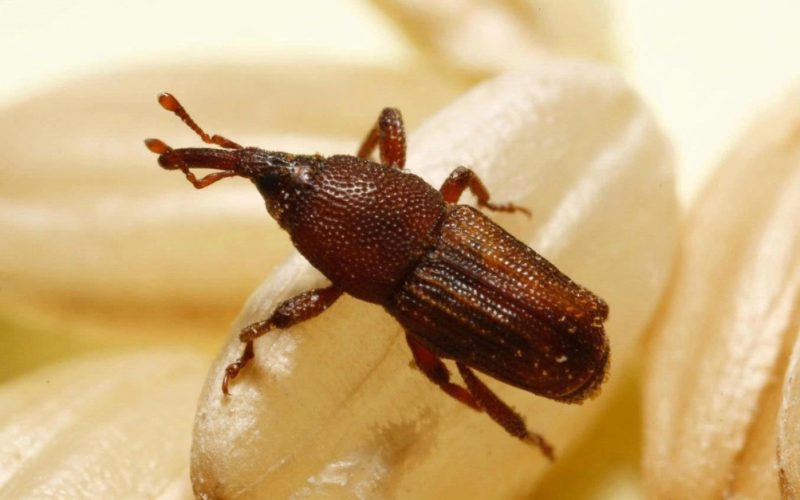
Pantry weevils do not wander through Texas kitchens by accident.
When small dark beetles appear inside a rice container, many homeowners assume they crawled in from elsewhere. The instinct is to blame cleanliness, storage habits, or even poor sealing on the container itself.
In reality, pantry weevils show up in rice because that is where they were already headed long before anyone opened the lid.
In Texas, warm temperatures, long storage times, and large pantry inventories create ideal conditions for these insects to survive unnoticed. By the time they become visible, the process has usually been underway for weeks or months.
Table of Contents
- 1 What Pantry Weevils Really Are
- 2 Why Rice Is Their Favorite Target
- 3 Weevils Are Already Inside the Rice
- 4 Why Texas Kitchens Accelerate the Problem
- 5 Why Pantry Weevils Appear Suddenly
- 6 Why Containers Don’t Always Prevent Infestations
- 7 How Weevils Spread Through a Pantry
- 8 Why Clean Kitchens Still Get Weevils
- 9 Why Texas Stores and Supply Chains Matter
- 10 What Weevils Feed On Inside Rice Containers
- 11 Are Pantry Weevils Dangerous?
- 12 Why Freezing and Heat Matter in Texas
- 13 Why Weevils Keep Coming Back
- 14 How Long Weevils Can Survive Indoors
- 15 Why Sprays Are the Wrong Solution
- 16 What Texas Homeowners Usually Miss
- 17 How Pantry Weevils Move Between Containers
- 18 Why Bulk Buying Increases Risk
- 19 What Stops Pantry Weevils Long Term
- 20 Why Texas Kitchens See This More Than Some States
- 21 FAQs About Pantry Weevils in Texas Kitchens
- 22 Final Thoughts
What Pantry Weevils Really Are
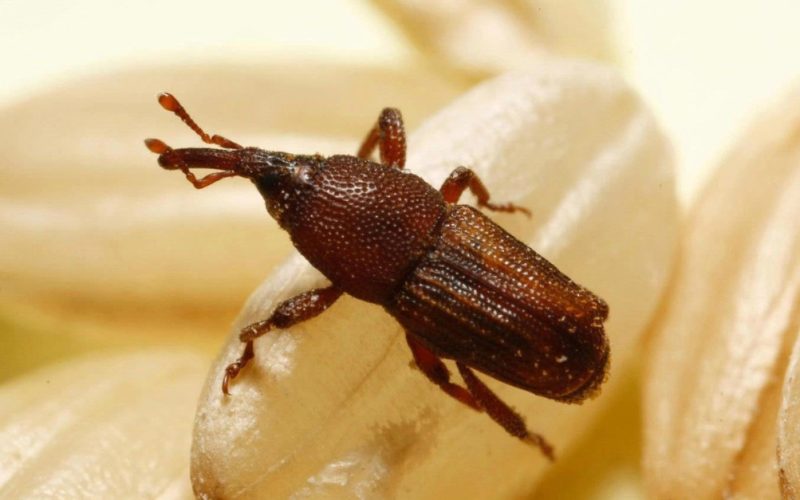
Pantry weevils are small beetles that belong primarily to the genus Sitophilus, a group that has evolved alongside stored grains for thousands of years. In Texas kitchens, the most common species include rice weevils, granary weevils, and maize weevils, all of which behave in very similar ways once they enter a home.
These beetles are compact and hard-bodied, usually dark brown to nearly black. Their most recognizable feature is the elongated snout at the front of the head, which sets them apart from other pantry insects like flour beetles or moths. This snout is not decorative. It is a tool designed specifically for boring into grains.
Their small size allows them to remain hidden easily. When they stay inside grains, they can go completely unnoticed for long periods. Many infestations begin and develop without a single visible insect on the shelf.
Unlike ants or cockroaches, pantry weevils are not general scavengers. They are specialists. Their biology is tightly linked to dry, stored grains and seeds. They do not survive on crumbs, grease, or household waste.
Rice, wheat, corn, pasta, flour, and animal feed all fall within their preferred range, which explains why pantries are their primary habitat.
Why Rice Is Their Favorite Target
Rice provides nearly ideal conditions for pantry weevils.
Each grain is dry, firm, and large enough to support a developing larva. A single grain can house one weevil from egg to adulthood without exposing it to the outside environment. This makes rice especially valuable as a breeding resource.
Rice is also stored differently than many foods. In Texas households, it is often purchased in large quantities and kept for long periods. It may sit untouched for weeks or months, creating a quiet, stable environment where insects can develop without interruption.
Unlike fresh foods that are used quickly, rice allows weevils time. Time is the most important factor in completing their life cycle.
Even sealed bags are not a guarantee of protection. Rice weevils are capable of chewing through thin plastic packaging, and in many cases, they do not need to. They emerge from inside the grains themselves.
Weevils Are Already Inside the Rice
One of the most misunderstood aspects of pantry weevils is how they get into containers in the first place.
In most infestations, they do not crawl in from the outside.
Rice weevils often arrive already inside the rice. Eggs are laid in individual grains during harvesting, processing, or storage long before the product ever reaches a grocery store. These eggs are microscopic and completely invisible to the naked eye.
Once the rice is brought home and stored in a warm kitchen, development begins. Larvae hatch and grow entirely inside the grain, feeding from the inside out. Nothing moves. Nothing crawls. There are no visible signs.
When adult weevils finally chew their way out, it looks like the infestation appeared overnight. In reality, it has been developing quietly for weeks.
Why Texas Kitchens Accelerate the Problem
Texas kitchens provide conditions that allow weevils to develop faster than in many other states.
Warm indoor temperatures persist for most of the year. Even during winter, homes rarely remain cool enough to slow insect development. Pantries stay warm, dark, and undisturbed.
Humidity fluctuates seasonally, but pantry interiors often remain relatively stable. Combined with warmth, this creates an ideal environment for eggs to hatch and larvae to mature.
Bulk storage habits amplify the issue. Many Texas households keep large bags of rice, sometimes transferred into containers that are opened infrequently. The longer rice sits, the more opportunity weevils have to complete multiple generations without being noticed.
Why Pantry Weevils Appear Suddenly
Weevil infestations feel sudden because visibility comes late in the process.
For weeks, larvae develop inside grains. There is no crawling. No flying. No obvious activity on shelves.
Once adults emerge, everything changes. Weevils begin moving through containers, along shelves, and sometimes onto countertops or walls. That movement is what finally catches attention.
The infestation did not start suddenly. It reached a stage where it could no longer stay hidden.
Why Containers Don’t Always Prevent Infestations
Many homeowners rely on sealed containers for protection, assuming that once rice is transferred, the problem is solved.
Unfortunately, not all containers offer the same level of defense.
Thin plastic, cardboard boxes, and poorly sealed lids allow weevils to escape and spread. Even strong containers cannot stop weevils that were already inside the rice before it was stored.
Glass and metal containers help limit movement and slow spread, but they do not reverse an infestation once eggs or larvae are present. This is why weevils sometimes appear even in containers labeled “airtight.”
How Weevils Spread Through a Pantry
Once adult weevils emerge, they begin searching for new food sources.
They crawl slowly but persistently, guided by scent. Nearby rice, flour, pasta, cereal, and pet food become targets. Infestations often spread to multiple items before the original source is identified.
Large Texas pantries with many stored goods provide abundant opportunities for this spread to happen quietly.
Why Clean Kitchens Still Get Weevils
Pantry weevils are not attracted to spills, crumbs, or trash.
They respond only to stored grains.
A spotless kitchen with neatly organized shelves can still experience a serious infestation if contaminated food is present. Cleaning surfaces may make the space look better, but it does nothing to remove eggs hidden inside grains.
Cleanliness affects appearance, not risk.
Why Texas Stores and Supply Chains Matter
Texas relies on long transportation routes and large distribution networks. Rice may travel hundreds or thousands of miles from processing facilities to store shelves.
During transport and storage, temperature control is inconsistent. Warm conditions allow eggs inside grains to remain viable rather than being destroyed.
By the time rice reaches a home pantry, the potential for infestation is already set. Home storage simply provides the final stage for development.
What Weevils Feed On Inside Rice Containers
Weevils feed directly on the grain itself.
Larvae hollow out the interior of rice kernels, leaving shells behind. Adult weevils feed on intact grains, broken fragments, and grain dust that accumulates in containers.
This feeding contaminates rice with waste and fragments, reducing quality even when insects are not immediately visible.
Are Pantry Weevils Dangerous?
Pantry weevils do not bite, sting, or transmit disease. They pose no direct danger to people or pets.
However, infested rice is no longer suitable for consumption. Contamination, waste buildup, and reduced nutritional quality make disposal the safest option.
The primary impact of weevils is food loss, not physical harm.
Why Freezing and Heat Matter in Texas
Temperature plays a crucial role in weevil survival.
Cold temperatures halt development. Freezing rice kills eggs, larvae, and adults. High heat also disrupts survival when applied correctly.
In Texas kitchens, room temperatures favor weevils rather than suppress them. Without intentional temperature control, stored rice remains vulnerable over time.
Why Weevils Keep Coming Back
Recurring infestations usually mean the original source was never fully removed.
One forgotten bag tucked into a corner can restart the cycle. Even small amounts of infested rice are enough to repopulate an entire pantry.
Large pantries increase the chance that a hidden source goes unnoticed during cleanup.
How Long Weevils Can Survive Indoors
Adult weevils can live several months under favorable conditions. Eggs and larvae remain protected inside grains throughout development.
As long as food remains available, populations persist quietly. Without intervention, infestations can continue indefinitely.
Why Sprays Are the Wrong Solution
Insect sprays should never be used in pantries.
They contaminate food and fail to reach eggs hidden inside grains. Killing visible adults does nothing to stop larvae developing out of sight.
Effective control focuses on food removal and prevention, not chemicals.
What Texas Homeowners Usually Miss
One of the most common mistakes is keeping “almost empty” bags of rice.
Partial bags stored in secondary cabinets or corners often become breeding reservoirs. Pet food and bird seed stored nearby are also frequently overlooked.
These hidden sources allow infestations to restart even after major cleanup.
How Pantry Weevils Move Between Containers
Weevils are not strong fliers. They rely mainly on crawling.
They move shelf to shelf, container to container, following grain odors. Open containers and loose lids make this movement easier and faster.
Why Bulk Buying Increases Risk
Bulk buying reduces cost but increases exposure time.
The longer rice is stored, the greater the chance eggs will develop and adults will emerge. Texas households that buy in bulk must take additional steps to prevent infestations.
What Stops Pantry Weevils Long Term
Long-term control focuses on breaking the life cycle.
Inspecting rice before storage, freezing it before long-term use, using sealed glass or metal containers, and reducing pantry clutter all work together to prevent reinfestation.
Why Texas Kitchens See This More Than Some States
Texas combines warm indoor temperatures, large pantry storage habits, and long supply chains.
States with cooler climates or smaller storage volumes experience slower development and fewer visible infestations.
In Texas, conditions favor speed, persistence, and repeat problems unless prevention is deliberate.
FAQs About Pantry Weevils in Texas Kitchens
Did weevils crawl in from outside?
No. They usually come from eggs already inside the rice.
Can I eat rice with weevils?
It is not recommended due to contamination.
Why did they appear after months?
Eggs take time to develop before adults emerge.
Will airtight containers solve the problem?
They help prevent spread but do not eliminate existing eggs.
Are weevils seasonal in Texas?
They can appear year-round due to warm indoor conditions.
Should I spray the pantry?
No. Remove food sources instead.
Can one bag infest everything?
Yes. A single source can spread through an entire pantry.
Do they go away on their own?
Only if all infested food is removed.
Final Thoughts
Pantry weevils appear in rice containers in Texas kitchens because the infestation often begins long before the rice reaches the home.
Warm conditions, long storage times, and bulk buying habits allow weevils to develop quietly. When adults emerge, the problem feels sudden, but the cause is not new.
Understanding that difference shifts the focus from panic to prevention.
When the source is removed and storage habits change, pantry weevils disappear and stay gone.