
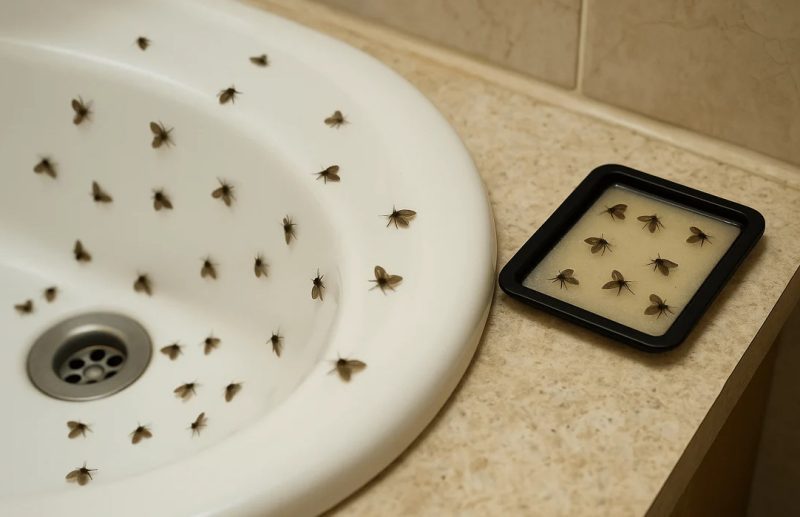
Tiny flies appearing around bathroom drains are becoming a surprisingly common complaint in many Texas homes. Homeowners often notice them resting on tiles, hovering near sinks, or suddenly emerging after a shower. At first glance, they may look harmless, but their repeated appearance raises concerns about hygiene, plumbing conditions, and indoor environmental health.
While these insects rarely indicate serious danger, they usually signal environmental conditions that deserve attention. Warm climate patterns, plumbing moisture, lifestyle habits, and building design all contribute to why these flies seem increasingly visible. Understanding what they are and why they appear helps homeowners respond calmly rather than react out of frustration or worry.
The good news is that these situations are usually manageable. With knowledge of their biology, environmental triggers, and prevention strategies, most households can address the issue effectively while maintaining comfortable living spaces.
Table of Contents
- 1 What Those Tiny Bathroom Flies Usually Are
- 2 Texas Climate Encourages Drain Fly Activity
- 3 Bathroom Drains Naturally Collect Organic Material
- 4 Plumbing Design Can Influence Fly Presence
- 5 Hidden Moisture Sources Often Contribute
- 6 Water Conservation Habits May Play a Role
- 7 The Drain Fly Life Cycle Explains Persistence
- 8 Seasonal Patterns Affect Visibility
- 9 Houseplants and Nearby Moisture Can Add to the Issue
- 10 Distinguishing Drain Flies From Other Small Flies
- 11 Are Drain Flies Dangerous
- 12 Human Behavior Influences Indoor Ecology
- 13 Ventilation Plays a Critical Role
- 14 Preventive Maintenance Makes a Difference
- 15 Psychological Impact on Homeowners
- 16 Texas Housing Trends Influence Indoor Conditions
- 17 Long-Term Outlook for Drain Fly Issues in Texas
- 18 FAQs About Tiny Flies in Texas Bathroom Drains
- 18.1 Why do tiny flies keep appearing in my bathroom drain
- 18.2 Are drain flies dangerous to humans
- 18.3 How can I stop them from coming back
- 18.4 Do clean homes still get drain flies
- 18.5 Does Texas humidity make the problem worse
- 18.6 Should I call a plumber or pest professional
- 18.7 Can they come from outside
- 18.8 Will they go away on their own
- 19 Final Thoughts
What Those Tiny Bathroom Flies Usually Are

Most tiny flies found in bathroom drains are drain flies, sometimes called moth flies or sewer gnats. They belong to a group of insects adapted specifically to damp environments where organic material accumulates. Their fuzzy wings, slow movement, and tendency to rest on nearby walls make them easy to spot compared with faster household flies.
Unlike fruit flies, which gravitate toward exposed food, drain flies prefer biofilm buildup inside plumbing systems. This biofilm consists of soap residue, skin cells, hair fragments, toothpaste particles, bacteria, and organic debris that gradually collect along pipe interiors. It provides both nutrition and protection for larvae developing out of sight.
Because bathrooms naturally generate moisture through daily activities, they create ideal breeding conditions when organic buildup exists. Even homes that appear clean can unknowingly support small populations hidden deeper inside plumbing systems.
Texas Climate Encourages Drain Fly Activity
Texas weather plays a major role in indoor insect ecology. Warm temperatures dominate much of the year, while humidity levels vary by region but often remain sufficient to support insect development. Coastal areas experience consistent humidity, while inland regions see fluctuating moisture tied to rainfall, irrigation, and indoor water use.
Air conditioning systems also influence indoor environments. Cooling systems remove some humidity but can create localized condensation near vents, pipes, and bathroom fixtures. Combined with daily shower use, this moisture creates microclimates that remain stable enough for insects to breed year-round.
Climate alone does not cause infestations. Instead, it creates environmental stability that allows small populations to persist unnoticed until they become visible.
Bathroom Drains Naturally Collect Organic Material
Everyday routines contribute gradually to pipe buildup. Soap, shampoo residue, skin cells, hair, cosmetics, and toothpaste create thin organic layers inside drains. Over time, these materials combine with bacteria and moisture to form the biofilm drain flies depend on.
Even regularly cleaned bathrooms often have hidden buildup deeper within plumbing curves where routine cleaning cannot reach. The U-shaped traps beneath sinks and tubs are designed to retain water for odor control, but they can also retain organic residue.
Because this process occurs slowly, infestations may seem sudden even though breeding conditions have existed for weeks or months.
Plumbing Design Can Influence Fly Presence
Modern plumbing systems prioritize sanitation and efficiency, but certain design features unintentionally support insect development. Pipe traps, vent systems, and slow-drain areas retain moisture consistently. Older homes may have rough pipe interiors where biofilm forms more easily.
Texas homes built during rapid development phases sometimes feature complex plumbing layouts connecting multiple bathrooms, laundry rooms, and kitchens. Shared vent stacks or poorly ventilated pipes can maintain humidity longer than expected.
Infrastructure rarely causes infestations directly, but it influences how easily organic residue accumulates and how long moisture remains available.
Hidden Moisture Sources Often Contribute
Bathroom drains are not always the sole breeding sites. Small moisture pockets elsewhere can sustain populations that appear to originate from drains. Common hidden sources include slow leaks under sinks, condensation behind walls, damp floor mats, or toilet seal seepage.
HVAC systems, especially in humid regions of Texas, can also create condensation near ducts or drainage pans. These damp zones sometimes go unnoticed until insects appear.
Identifying all moisture sources helps prevent recurring problems rather than addressing only visible symptoms.
Water Conservation Habits May Play a Role
Texas residents increasingly adopt water-saving practices due to drought concerns and conservation efforts. Low-flow fixtures, reduced water usage, and intermittent drain flushing benefit the environment but may allow organic residue to accumulate more easily inside pipes.
When water flow decreases, biofilm can remain undisturbed longer. This does not mean conservation causes infestations, but it highlights the importance of occasional flushing and maintenance.
Balancing conservation with periodic plumbing care helps maintain both sustainability and indoor comfort.
The Drain Fly Life Cycle Explains Persistence
Drain flies reproduce quickly when conditions are favorable. Adults lay eggs in moist organic buildup, and larvae hatch within a couple of days. These larvae feed on biofilm before pupating and emerging as adults within one to three weeks.
Because generations overlap, infestations often persist even after visible adults disappear temporarily. Eliminating breeding habitat is essential to breaking the cycle. Simply removing adult flies provides only short-term relief.
Understanding the life cycle helps homeowners focus on root causes rather than symptoms.
Seasonal Patterns Affect Visibility
Texas summers accelerate insect development due to warmth and humidity. Increased shower use, irrigation, and outdoor activity may also raise indoor moisture levels. During cooler months, indoor heating can create localized humidity pockets, especially in poorly ventilated bathrooms.
Seasonal travel also plays a role. Homes left vacant for periods may experience unnoticed breeding activity, which becomes visible upon return.
Seasonality influences visibility more than existence. Populations often remain stable year-round but become more noticeable during favorable conditions.
Houseplants and Nearby Moisture Can Add to the Issue
Bathrooms often host indoor plants because of natural humidity and filtered light. Overwatered plant soil can attract fungus gnats, which sometimes get mistaken for drain flies. These insects may circulate near drains, leading homeowners to misidentify the source.
Leaky faucets, damp towels, and wet surfaces can also contribute to general humidity levels. Even small amounts of standing water support insect breeding.
A holistic view of bathroom moisture helps identify all contributing factors.
Distinguishing Drain Flies From Other Small Flies
Correct identification ensures appropriate solutions. Drain flies appear fuzzy and moth-like, moving slowly and resting on walls. Fruit flies are typically tan or reddish and hover near food sources. Fungus gnats hover near plants, while phorid flies run quickly across surfaces.
Misidentification delays effective treatment. Understanding species differences helps target prevention strategies correctly.
Are Drain Flies Dangerous
Drain flies rarely bite or transmit disease in typical household settings. They are generally considered nuisance pests rather than health threats. However, their presence may indicate moisture conditions that could eventually encourage mold growth or plumbing deterioration if ignored.
Addressing underlying environmental conditions improves both comfort and home maintenance.
Human Behavior Influences Indoor Ecology
Daily routines influence insect habitat unintentionally. Long showers, damp towels left hanging, and limited ventilation all contribute to humidity. Household cleaning habits, ventilation practices, and plumbing maintenance collectively shape indoor insect ecology.
Simple behavioral adjustments often reduce conditions supporting drain fly development.
Ventilation Plays a Critical Role
Bathrooms with poor airflow retain moisture longer. Exhaust fans, open windows, and dehumidifiers help reduce humidity levels significantly. Improved ventilation discourages microbial growth and insect breeding.
Air circulation remains one of the simplest and most effective preventive measures.
Preventive Maintenance Makes a Difference
Routine maintenance reduces the likelihood of infestations. Flushing drains with hot water, using enzymatic cleaners periodically, and mechanically scrubbing pipe interiors when needed disrupt breeding habitat.
Repairing leaks promptly, drying surfaces after use, and ensuring adequate ventilation further discourage insect populations. Consistency proves more effective than occasional intensive cleaning.
Psychological Impact on Homeowners
Persistent tiny flies can cause disproportionate stress. Bathrooms symbolize cleanliness and comfort, so insects feel especially intrusive there. Understanding their biological basis often reduces anxiety and promotes rational solutions.
Most infestations are manageable with consistent maintenance rather than drastic measures.
Texas Housing Trends Influence Indoor Conditions
Rapid residential development across Texas introduces varied plumbing systems, insulation styles, and ventilation designs. Apartments, suburban homes, and older properties each present unique moisture dynamics.
Shared plumbing systems in multi-unit buildings can allow insects to move between units. Awareness and communication among residents sometimes help identify building-wide moisture issues.
Long-Term Outlook for Drain Fly Issues in Texas
Given Texas climate patterns and indoor lifestyle habits, drain fly sightings will likely remain common. However, awareness, routine maintenance, and moisture management significantly reduce long-term problems.
Understanding environmental triggers allows homeowners to respond proactively rather than reactively.
FAQs About Tiny Flies in Texas Bathroom Drains
Why do tiny flies keep appearing in my bathroom drain
They usually breed in moist organic buildup inside pipes where larvae feed on biofilm.
Are drain flies dangerous to humans
They rarely pose health risks and typically act as nuisance insects rather than disease carriers.
How can I stop them from coming back
Regular drain cleaning, moisture control, and fixing leaks help break their breeding cycle.
Do clean homes still get drain flies
Yes. Even clean drains can contain hidden organic buildup supporting larvae.
Does Texas humidity make the problem worse
Warm temperatures and humidity create stable indoor environments that help insects reproduce.
Should I call a plumber or pest professional
Persistent infestations may benefit from professional inspection to identify hidden moisture or plumbing issues.
Can they come from outside
They sometimes enter through plumbing vents or windows but usually breed indoors.
Will they go away on their own
Without addressing moisture and organic buildup, populations often persist or return.
Final Thoughts
Tiny flies emerging from bathroom drains usually reflect environmental conditions rather than serious sanitation failures. Texas climate patterns, plumbing design, humidity, and everyday household habits all contribute to indoor insect ecology. Recognizing these factors helps homeowners interpret sightings calmly instead of assuming major problems.
With consistent maintenance, moisture control, and occasional plumbing inspection, most infestations resolve effectively. Education, awareness, and preventive care remain the most reliable tools for maintaining comfortable, pest-free bathrooms while supporting healthy indoor environments.